THE ORIGINAL COLLECTION · SINCE 2010

Environment
press releases.

Research announcements from universities, hospitals and scientific institutions. Explore the stories, people and discoveries behind the headlines.

Original publication datesPage 154
FIND A STORY

Find a past release.

Dates and source material belong to the original release.

Read our research explainers

Browse the collection · original publication order

Some corals may survive climate change without paying a metabolic price
Environment

Some corals may survive climate change without paying a metabolic price

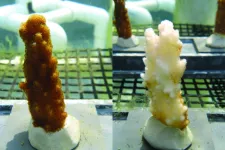
UNIVERSITY PARK, Pa. — If, as the saying goes, ‘nothing in life is free,’ then corals might pay a price for being resilient to climate change. Indeed, the prevailing belief among scientists has been that corals must suffer reduced growth or other tradeoffs when they partner with symbiotic algae that help them tolerate warmer water. Yet, new research led by Penn State demonstrates that certain corals can have their cake and eat it too, and as a result, these coral-symbiont partnerships may come to dominate ...

Read the release
Hidden cameras spot wildlife returning home after 2018 megafire
Environment

Hidden cameras spot wildlife returning home after 2018 megafire

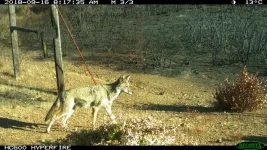
Berkeley — During the summer of 2018, the Mendocino Complex Fire ripped through UC’s Hopland Research and Extension Center (HREC), transforming the Northern California property’s grassy, oak-dotted hillsides into a smoldering, ash-covered wasteland. “It felt like something out of the Lord of the Rings — like Mordor. It was hard to imagine much surviving,” said Justin Brashares, a professor of environmental science, policy and management at the University of California, Berkeley. But mere months after the fire, animals like coyote, gray foxes and black-tailed jackrabbits were seen returning to the area, spotted by grid of motion-sensor camera traps that ...

Read the release
What motivates family forest landowners to manage invasive species?
Environment

What motivates family forest landowners to manage invasive species?

URBANA, Ill. — Over half of forests in the United States are privately owned, especially in the Eastern part of the country. This can make control of invasive species challenging, as efforts need to be coordinated among many different landowners. A new study from the University of Illinois Urbana-Champaign looks at how family forest landowners in Maine and New Hampshire approach invasive species management and what factors influence their decisions. “We have mostly public land on the West Coast and privately owned family forestland in the Midwest ...

Read the release
Environment

Luther studying forest fragmentation & climate change

David Luther, Assistant Professor, Biology, received funding from the National Science Foundation for: "Collaborative Research: LTREB: Forest fragmentation and climate change result in understory warming that adversely affects tropical avian biodiversity at the BDFFP." Luther and his collaborators posit that remnant bird communities in Amazonian forest fragments are a precursor of future bird assemblages in continuous forest due to understory forest drying from edge effects in fragments and climate change in continuous ...

Read the release
Environment

Can we use plastic waste to build roads, buildings, and more?

Stanford engineers Michael Lepech and Zhiye Li have a unique vision of the future: buildings and roads made from plastic waste. In a new white paper commissioned by the National Academies of Sciences, Engineering, and Medicine (NASEM), Lepech and Li study the current status, challenges, and needs of recycling plastics in a circular economy, and examine the long-term durability and environmental costs of doing so for use in infrastructure. Using a mix of computer modeling, scientific research, experimental and field data, as well as interviews with recycling industry stakeholders, Lepech and Li analyze case studies using plastic ...

Read the release
Freshwater management techniques benefit both inland and coastal wetlands stressed by climate change
Environment

Freshwater management techniques benefit both inland and coastal wetlands stressed by climate change

Climates are changing in wetland ecosystems around the world. A research collaboration between the U.S. Geological Survey and Clayton State University examined the impact of historical land use on these key environments and proposed employing freshwater delivery techniques developed for inland wetlands to help manage coastal systems. In a recently published paper, the research team emphasized the impact of human use of land over time, focusing specifically on water delivery to inland wetlands. The ...

Read the release
Unusual fossil shows rare evidence of a mammal attacking a dinosaur
Environment

Unusual fossil shows rare evidence of a mammal attacking a dinosaur

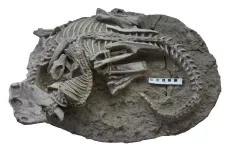
Ottawa, July 18, 2023 – Canadian and Chinese scientists have described an unusual fossil from around 125 million years ago that shows a dramatic moment in time when a carnivorous mammal attacked a larger plant-eating dinosaur. “The two animals are locked in mortal combat, intimately intertwined, and it’s among the first evidence to show actual predatory behaviour by a mammal on a dinosaur,” explains Dr. Jordan Mallon, palaeobiologist with the Canadian Museum of Nature and co-author on the study published today in the journal Scientific Reports. The ...

Read the release
Scientists unravel evolutionary history of the Arctic flora
Environment

Scientists unravel evolutionary history of the Arctic flora

A team led by Prof. WANG Wei from the Institute of Botany of the Chinese Academy of Sciences (IBCAS) has unraveled the evolutionary history of the Arctic flora. The study was published in Nature Communications. The Arctic tundra, to the north of the natural tree line, is a relatively young and new type of biome and is particularly sensitive to the effects of global warming. The composition, density, and distribution of Arctic vegetation have been changing as a result of climate warming. Therefore, there is an urgent need to better understand how the Arctic flora has been shaped over time. In this study, the researchers selected 32 angiosperm clades comprising ...

Read the release
Study highlights urgent need to protect world’s forests from non-native pests in the face of climate change
Environment

Study highlights urgent need to protect world’s forests from non-native pests in the face of climate change

CABI joined an international team of researchers from 57 institutions around the world to share its expertise in a ground-breaking study which highlights the urgent need to protect the world’s forests from non-native pests amid climate change. The study, led by Dr Iva Franić* – who at the time of the research was a PhD student co-supervised by CABI’s Dr René Eschen – stresses an urgent need to limit tree pests and enhance the resilience of forest ecosystems in the face of rising temperatures. Published ...

Read the release
A new way to browse interlinked biodiversity data: The Biodiversity Knowledge Hub is now online!
Environment

A new way to browse interlinked biodiversity data: The Biodiversity Knowledge Hub is now online!

The Horizon 2020 BiCIKL Project is proud to announce that the Biodiversity Knowledge Hub (BKH) is now online. BKH is a one-stop portal that allows users to access FAIR and interlinked biodiversity data and services in a few clicks. BKH was designed to support a new emerging community of users over time and across the entire biodiversity research cycle providing its services to anybody, anywhere and anytime. “The Knowledge Hub is the main product from our BiCIKL consortium, and we are delighted with the result! BKH can easily be seen as the beginning of the major shift in the way we search interlinked biodiversity information,” says Prof. Lyubomir ...

Read the release
Picky green sea turtle has travelled to the same place to eat for generations
Environment

Picky green sea turtle has travelled to the same place to eat for generations

For approximately 3,000 years, generations of green sea turtles have returned to the same seagrass meadows to eat. This was discovered by Willemien de Kock, a historical ecologist at the University of Groningen, by combining modern data with archaeological findings. Sea turtles migrate between specific breeding places and eating places throughout their lives–this much was known. But the fact that this stretches over many generations highlights the importance of protecting seagrass meadows along the coasts of North Africa. The results were published in PNAS on July 17. When young green ...

Read the release
Environment

Cap top 20% of energy users to reduce carbon emissions

Consumers in the richer, developed nations will have to accept restrictions on their energy use if international climate change targets are to be met, warn researchers. The big challenge is to identify the fairest and most equitable way that governments can curtail energy use, a process known as energy demand reduction. Writing in the journal Nature Energy, the research team - led by Milena Büchs, Professor of Sustainable Welfare at the University of Leeds - analysed several scenarios to identify a potential ...

Read the release
Environment

Addressing adaptation inequalities in climate research

A new study proposes ways to better incorporate adaptation in climate change research, addressing the uneven distribution of adaptation capacities and needs worldwide. Research on adaptation to the risks posed by climate change has witnessed significant growth in the past decade, with increasing recognition of its urgency in policy agendas at the international, national, and local levels. Adaptation needs and capacities are not evenly distributed worldwide, with countries in the Global South generally experiencing the highest challenges. ...

Read the release
Environment

Ambitious global $1 billion per year ‘mission science’ model needed to win on sustainable development in time, warns experts

Ambitious global $1 billion per year ‘mission science’ model needed to win on sustainable development in time, warns experts From the climate emergency and global health to the energy transition and water security, new report argues the global science and science funding efforts must be fundamentally redesigned and scaled up to meet complex needs of humanity and the planet. July 17, 2023, NEW YORK – The current sustainability science model requires a fundamental redesign to keep up with the pace and complexity of the challenges facing the planet, argues the high-level ...

Read the release
Ocean animals vacate areas both around and outside deep-sea mining operations
Environment

Ocean animals vacate areas both around and outside deep-sea mining operations

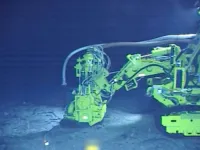
In 2020, Japan performed the first successful test extracting cobalt crusts from the top of deep-sea mountains to mine cobalt—a mineral used in electric vehicle batteries. Not only do directly mined areas become less habitable for ocean animals, but mining also creates a plume of sediment that can spread through the surrounding water. An investigation on the environmental impact of this first test, published July 14th in the journal Current Biology, reports a decrease in ocean animals both in and around the mining zone. The International ...

Read the release
New fossil flying reptile ‘Elvis’ takes flight
Environment

New fossil flying reptile ‘Elvis’ takes flight

A new 145-million-year-old pterosaur (extinct flying reptiles that lived alongside the dinosaurs) was named today by a team of British, American and German researchers. The animal was nicknamed ‘Elvis’ when the fossil was first unearthed in Bavaria, Germany because of the giant pompadour-like bony crest on its skull. Now the animal has been given a formal scientific name of Petrodactyle wellnhoferi. The name translates as ‘Wellnhofer’s stone-finger’ honouring legendary German palaeontologist ...

Read the release
Environment

Media Tip Sheet: Ecology of the Pacific Northwest and the Cascadia Bioregion

Dozens of sessions at the Ecological Society of America’s upcoming Annual Meeting in Portland, Oregon, Aug. 6-11, will feature research on the ecology of the geographic and environmental region surrounding the conference venue: the Pacific Northwest and Cascadia Bioregion, which encompass a vast area stretching from northern California to southern Alaska. The Pacific Northwest’s temperate rainforests are home to old-growth conifers and multiple threatened and endangered species. Its diverse marine and coastal environments host whales, puffins and vibrant kelp forests. The annual salmon runs in the region’s ...

Read the release
Environment

Genetic editing of wood for sustainability

Despite the importance of wood fibers to meet the growing demand for renewable tissue, paper, packaging, textile, and other fiber products, wood fiber production has been less efficient and productive than researchers have hoped. Now, CRISPR editing has enabled scientists to design wood in which lignin – which must be cleaved and dissolved so fiber production can take place – is more suitable for fiber production. “The edited wood alleviates a major fiber-production bottleneck … and could bring unprecedented operational efficiencies, bioeconomic ...

Read the release
Drexel’s titanium oxide material lets sunlight drive green hydrogen production
Environment

Drexel’s titanium oxide material lets sunlight drive green hydrogen production

Clean energy plans, including the U.S. Infrastructure Investment Act’s “Clean Hydrogen Road Map,” are counting on hydrogen as a fuel of the future. But current hydrogen separation technology is still falling short of efficiency and sustainability goals. As part of ongoing efforts to develop materials that could enable alternative energy sources, researchers in Drexel University’s College of Engineering have produced a titanium oxide nanofilament material that can harness sunlight to unlock the ubiquitous molecule’s potential as a fuel source. The discovery offers an alternative ...

Read the release
Environment

Timing of turkey nesting may not shift with changing climate

A new study suggests eastern wild turkeys in five southern U.S. states are unlikely to make meaningful changes in the timing of when they begin nesting, even under significant future climate change. The findings suggest eastern wild turkeys (Meleagris gallopavo silvestris) could be vulnerable to shifts in climate, which could threaten the availability of their food sources, the amount of vegetation cover available to protect them from predators, and other factors. “There are implications here for turkey populations ...

Read the release
Multiple ecosystems in hot water after marine heatwave surges across the Pacific
Environment

Multiple ecosystems in hot water after marine heatwave surges across the Pacific

(Santa Barbara, Calif.) – ​​Rising ocean temperatures are sweeping the seas, breaking records and creating problematic conditions for marine life. Unlike heatwaves on land, periods of abrupt ocean warming can surge for months or years. Around the world these ‘marine heatwaves’ have led to mass species mortality and displacement events, economic declines and habitat loss. New research reveals that even areas of the ocean protected from fishing are still vulnerable to these extreme events fueled by climate change. A study published today in Global Change Biology, led by researchers at UC Santa ...

Read the release
Small-winged and lighter colored butterflies likely to be at greatest threat from climate change
Environment

Small-winged and lighter colored butterflies likely to be at greatest threat from climate change

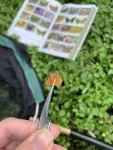
PRESS RELEASE FROM THE UNIVERSITY OF CAMBRIDGE EMBARGOED UNTIL 05:01 LONDON TIME (GMT) ON THURSDAY 13 JULY 2023 Images and paper available at: https://drive.google.com/drive/folders/18XRYP9dHcC1Z8lc3B86j3k6BzgIesqUS?usp=sharing Small-winged and lighter coloured butterflies likely to be at greatest threat from climate change The family, wing length and wing colour of tropical butterflies all influence their ability to withstand rising temperatures, say a team led by ecologists at the University of Cambridge. The researchers believe this could help identify species whose survival is under threat from climate change. Butterflies with smaller or lighter coloured wings are likely to ...

Read the release
Salinity changes threatening marine ecosystems, new UNF study shows
Environment

Salinity changes threatening marine ecosystems, new UNF study shows

A groundbreaking study published today reveals the critical yet severely understudied factor of salinity changes in ocean and coastlines caused by climate change. The study was co-authored by an international team of researchers, including Dr. Cliff Ross, University of North Florida biology chair/professor, and Dr. Stacey Trevathan-Tackett, UNF biology graduate program alum and research faculty member at Deakin University in Australia. Changes in salinity, or salt content, due to climate change and land use can have potentially devastating impacts on vital coastal and estuarine ecosystems, yet this has rarely been studied until now. This new research provides valuable ...

Read the release
Environment

Warmer ocean temperatures increase risk of salmon bycatch in Pacific hake fishery

NEWPORT, Ore. – Rates of Chinook salmon bycatch in the Pacific hake fishery rise during years when ocean temperatures are warmer, a signal that climate change and increased frequency of marine heatwaves could lead to higher bycatch rates, new research indicates. During years when sea surface temperatures were higher, including during a marine heatwave, Chinook salmon were more likely to overlap with the Pacific hake and raise the risk of bycatch as they sought refuge from higher temperatures. The findings, based on ...

Read the release
Study: The ocean’s color is changing as a consequence of climate change
Environment

Study: The ocean’s color is changing as a consequence of climate change

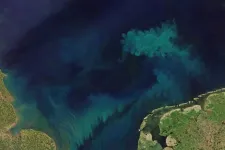
CAMBRIDGE, MA -- The ocean’s color has changed significantly over the last 20 years, and the global trend is likely a consequence of human-induced climate change, report scientists at MIT, the National Oceanography Center in the U.K., and elsewhere. In a study appearing today in Nature, the team writes that they have detected changes in ocean color over the past two decades that cannot be explained by natural, year-to-year variability alone. These color shifts, though subtle to the human eye, have occurred over 56 percent of the world’s oceans — an expanse that is larger than ...

Read the release
From the original Press-News collection. Issuers of news releases are responsible for the accuracy of their content.