THE ORIGINAL COLLECTION · SINCE 2010

Environment
press releases.

Research announcements from universities, hospitals and scientific institutions. Explore the stories, people and discoveries behind the headlines.

Original publication datesPage 153
FIND A STORY

Find a past release.

Dates and source material belong to the original release.

Read our research explainers

Browse the collection · original publication order

The Pacific slope of Peru is greening, and this is not good news
Environment

The Pacific slope of Peru is greening, and this is not good news

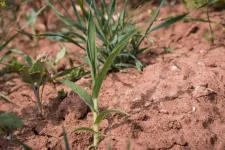
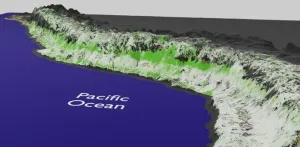
Analysing satellite data spanning the past 20 years, the research team based at the Cavendish Laboratory in Cambridge examined how vegetation has been changing along the Pacific coast of Peru and northern Chile. This area is known for its unique and delicate arid and semi-arid environments. The analysis revealed that certain areas experienced positive vegetation growth, known as greening, while others displayed negative trends, referred to as browning. Unsurprisingly, the changes in vegetation are influenced by things like farming and urban development or change in ...

Read the release

Contribution of cultural heritage values to steppe conservation on ancient burial mounds of Eurasia
Environment

Contribution of cultural heritage values to steppe conservation on ancient burial mounds of Eurasia

During our history, ancient civilisations have considerably shaped the global ecosystems through a coevolution of landscape and local populations. In some cases, the legacy of the disappeared civilizations is still visible in the form of buildings and other monuments such as the Stonehenge, the buildings of the Roman and Hellenic Empires, and ancient burial places and fortresses built by several cultures. These monuments are invaluable parts of our history and cultural heritage. Although it is often not in the spotlight, they can also hold a considerable biodiversity conservation potential. In the vast steppes of Eurasia (and probably ...

Read the release
Subseasonal transition of sea-ice anomalies in the Barents–Kara Sea in winter modulated by the “warm Arctic–cold Eurasia” pattern
Environment

Subseasonal transition of sea-ice anomalies in the Barents–Kara Sea in winter modulated by the “warm Arctic–cold Eurasia” pattern

The “warm Arctic–cold Eurasia” is one of the most significant patterns of winter climate system changes in the mid-high latitudes of the Northern Hemisphere. In winter 2020/21, this large-scale pattern underwent a significant and intense subseasonal reversal between the early and late winter. At the same time, the sea-ice anomalies in the Barents–Kara Sea changed from being significantly negative in early winter to positive in late winter. For the slow-varying process of winter sea ice, the rapid freezing ...

Read the release
Miocene period fossil forest of Wataria found in Japan
Environment

Miocene period fossil forest of Wataria found in Japan

An exquisitely preserved fossil forest from Japan provides missing links and helps reconstruct a whole Eurasia plant from the late Miocene epoch. Complete plant fossils are seldom found as a single piece, as wood, leaves, flowers, fruits, seeds, or pollen detach easily from plants. This results in leaves and trunks having separate scientific names. Putting together the different parts to reveal the complete plant is like putting together a jigsaw puzzle. Connecting these dots and reconstructing plants is important to establish their taxonomic identity—their ...

Read the release
Environment

Tourists help scientists reveal microplastic pollution on remote Arctic beaches

Tourists acting as citizen scientists have helped a research team detect microplastics on remote Arctic beaches. The global scale of plastic production means that these tiny fragments of plastic are now ubiquitous, and scientists fear that ocean currents will cause plastic to accumulate in the Arctic, damaging ecosystems. But our knowledge of the scale and type of plastic pollution in the Arctic is incomplete. Researchers recruited holidaymakers to carry out sample collection during cruises, hoping to fill in some of the gaps in their knowledge. “Plastic pollution is now ubiquitous. It is found on land and in ...

Read the release
'Super premium' industrial motor that benefits both business and the environment
Environment

'Super premium' industrial motor that benefits both business and the environment

After its successful development of industrial electric motors (three-phase induction motors) with super-premium class efficiency (IE4) for the first time in Korea, the Electric Machine and Drive Research Center of Korea Electrotechnology Research Institute (KERI) has established an "open platform" that enables SMEs to utilize related technologies. Industrial motors are the machines that consume the most considerable amount of electricity in the world. Industrial motors account for more than 50% of total electricity consumption in Korea. In 2018, KERI published a report1) finding that increasing the efficiency of electric motors ...

Read the release
Environment

Impacts of climate change on animals will be “multi-faceted,” study in CABI Reviews reveals

A new study published in CABI Reviews suggests that the impact of climate change on animals will be “multi-faceted” with “cascading effects” across five welfare domains including nutrition, environment, behaviour, physical and mental health. The research, highlights how researchers need to carefully consider which domains are immediate and future priority to safeguard the welfare and longevity of animals for food, as domestic pets and those for conservation in nature reserves and zoos. Animals at risk from the impacts of climate change highlighted ...

Read the release
Environment

Climate science is catching up to climate change with predictions that could improve proactive response

In Africa, climate change impacts are experienced as extreme events like drought and floods. Through the Famine Early Warning Systems Network (which leverages expertise from USG science agencies, universities, and the private sector) and the IGAD Climate Prediction and Applications Center, it has been possible to predict and monitor these climatic events, providing early warning of their impacts on agriculture to support humanitarian and resilience programming in the most food insecure countries of the world. Science is beginning to catch up with and even ...

Read the release
Environment

Northwestern Greenland was ice-free 400,000 years ago, according to Camp Century sediments

Sediments recovered from the base of the Camp Century ice core show that northwestern Greenland was ice-free during a period of history known to have exhibited some of the lowest global ice volumes -- the Marine Isotope Stage (MIS) 11 interglacial period. The absence of ice at that location means that the Greenland Ice Sheet must have contributed more 1.4 meters of sea-level equivalent to global sea level during the interglacial – a period in which average global air temperature was similar to what we’ll soon experience, given human-caused climate warming. The climate conditions of past interglacials – periods during Earth’s climatic history ...

Read the release
Greenland has greener history than previously thought, says USU Geoscientist
Environment

Greenland has greener history than previously thought, says USU Geoscientist

LOGAN, UTAH, USA -- New analysis of samples collected from underneath Greenland’s ice sheet reveal the Arctic island was much greener as recently as 416,000 years ago. The findings overturn previous views that Greenland’s continental glacier, which covers about 80 percent of the 836,3000-square-mile land mass, has persisted for the last two and a half million years. “We’re discovering the ice sheet is much more sensitive to climate change than we previously thought,” says Utah State University geoscientist ...

Read the release
USDA grant funds study of effectiveness of vegetation to curb water pollution
Environment

USDA grant funds study of effectiveness of vegetation to curb water pollution

UNIVERSITY PARK, Pa. — At a time when Pennsylvania is actively working to achieve water-quality improvements to meet the state’s obligations for cleaning up the Chesapeake Bay, a multidisciplinary Penn State research team is studying whether agricultural pollution-prevention devices called riparian buffers are working properly. Riparian buffers — areas adjacent to streams or wetlands that contain a combination of trees, shrubs and grasses — are managed differently from the surrounding landscape to provide conservation benefits. In agricultural areas, buffers intercept sediment, nutrients, pesticides and chemicals ...

Read the release
Environment

UBC Okanagan researchers investigate new use for plastic bottles

For years, unrecycled plastic bottles have been dumped in landfills. Now, thanks to new research from UBC Okanagan, those bottles may have a second life in that landfill—stabilizing its earth walls. Used plastic bottles and textiles pose an increasing problem for landfills worldwide. Researchers say nearly a hundred million metric tons of polyethylene terephthalate (PET), also known as microplastics, are produced globally each year—with a fraction of that number being recycled—making it one of the largest sources of plastic waste. “One ...

Read the release
New catalyst could dramatically cut methane pollution from millions of engines
Environment

New catalyst could dramatically cut methane pollution from millions of engines

Individual palladium atoms attached to the surface of a catalyst can remove 90% of unburned methane from natural-gas engine exhaust at low temperatures, scientists reported today in the journal Nature Catalysis. While more research needs to be done, they said, the advance in single atom catalysis has the potential to lower exhaust emissions of methane, one of the worst greenhouse gases, which traps heat at about 25 times the rate of carbon dioxide. Researchers from the Department of Energy’s SLAC National Accelerator Laboratory and Washington State University ...

Read the release
Engineering plants for a changing climate
Environment

Engineering plants for a changing climate

Climate change is affecting the types of plant varieties we can cultivate, as well as how and where we can do so. A new collection of articles in the open access journal PLOS Biology explores the twin challenges of engineering plants for resilience to climate change and enhancing their carbon-capture potential. PLOS Biology Editors Pamela Ronald & Joanna Clarke provide a summary editorial, and details regarding the other papers may be found below. To meet the agricultural challenges caused by climate change and a growing population, we need to improve crop production. This Perspective from industry leaders including Catherine Feuillet calls for more and better ...

Read the release
Billions of nanoplastics released when microwaving baby food containers
Environment

Billions of nanoplastics released when microwaving baby food containers

The fastest way to heat food and drink might also rank as the fastest route to ingesting massive quantities of minuscule plastic particles, says new research from the University of Nebraska–Lincoln. Experiments have shown that microwaving plastic baby food containers available on the shelves of U.S. stores can release huge numbers of plastic particles — in some cases, more than 2 billion nanoplastics and 4 million microplastics for every square centimeter of container. Though the health effects of consuming micro- and nanoplastics remain unclear, the Nebraska team further found that three-quarters of cultured embryonic ...

Read the release
Environment

Study finds European breeding birds respond only slowly to recent climate change

-With pictures- Over the last 30 years European breeding birds have shifted their range by, on average, 2.4km per year, according to new research. However, these changes were significantly different from expectations based on changing climate and landcover during that period. Based on climate alone, the researchers predicted that the average range shifts by species should have been around 50% faster. The study led by experts from Durham University, UK, used survey data collected as part of two Europe-wide ...

Read the release
Environment

Important groups of phytoplankton tolerate some strategies to remove CO2 from the ocean

Humanity has a long track record of making big changes with little forethought. From fossil fuels to AI, plastics to pesticides, we love innovating away our problems, only to find we’ve created different ones. So it can be refreshing to hear about cases where we’ve taken a step back to deliberate before committing to a drastic new idea, like carbon dioxide removal. With carbon emissions continuing to climb, many scientists, environmentalists and policy-makers have advocated taking action to directly ...

Read the release
Environment

Research could pave way to greener, more sustainable products made with renewable carbon

Carbon-based materials have several qualities that make them attractive as catalysts for speeding up chemical reactions. They are low-cost, lightweight and their high surface area provides a good scaffold on which to anchor catalysts, keeping them stable and dispersed far apart, while providing molecules a lot of surface area to work. This makes carbons useful for energy storage and sensors. Over the last 10 years, carbons have been used in electrochemistry to catalyze reactions to make chemicals and fuel cells. However, ...

Read the release
Environment

Unlocking the power of molecular crystals: a possible solution to nuclear waste

In a world increasingly concerned about the environmental and geopolitical implications of fossil fuel usage, nuclear energy has resurfaced as a subject of great interest. Its ability to generate electricity at scale without greenhouse gas emissions holds promise as a sustainable clean energy source that could bridge society’s transition away from fossil fuels to a net-zero future. However, nuclear power generation does produce radioactive waste. The safe management of nuclear waste remains a crucial challenge that must be addressed to gain public confidence in this transformative power solution. Now, a team of University of Houston researchers has come up with an innovative ...

Read the release
NASA funds 3 citizen science projects to study 2024 U.S. solar eclipse
Environment

NASA funds 3 citizen science projects to study 2024 U.S. solar eclipse

NASA has awarded funding for three science teams to conduct citizen science investigations as a total solar eclipse sweeps across North America on April 8, 2024. In these experiments, volunteers will help study the Sun and its ethereal outer atmosphere, called the corona, which is revealed when the Moon completely covers the Sun’s bright disk. “During next year’s total eclipse, hundreds of volunteers will capture images of the Sun and its corona to help answer real science question about our star and how it affects us,” said program scientist and eclipse lead at NASA Headquarters, ...

Read the release
Environment

Understanding the many different ways animals are evolving in response to fire could help conservation efforts

In our modern era of larger, more destructive, and longer-lasting fires—called the Pyrocene—plants and animals are evolving quickly to survive. By synthesizing the wide body of research about rapid animal evolution in response to fire in a review publishing in Trends in Ecology & Evolution on July 19, a multidisciplinary team of ecology experts hopes to leverage what we already know to help foster evolution-informed conservation plans. In this way, they suggest, we can try to harness the ways in which fire impacts animals to protect vulnerable species—working with evolution instead of against it. In response to climate change and changes in land use, ...

Read the release
New catalysts for solar hydrogen production
Environment

New catalysts for solar hydrogen production

Finding sustainable and clean fuels is crucial in today’s global energy and climate crisis. One promising candidate that is increasingly gaining relevance is hydrogen. However, today’s industrial hydrogen production still has a considerable CO2 footprint, especially considering processes like steam reforming or non-sustainable electrolysis. A team led by Prof. Dominik Eder from the Institute of Materials Chemistry (TU Wien) is therefore focusing on the development of environmentally friendly processes for obtaining hydrogen, for example by photocatalysis. This process enables the conversion of ...

Read the release
Acetalization: A feasible and sustainable strategy for biomass valorization
Environment

Acetalization: A feasible and sustainable strategy for biomass valorization

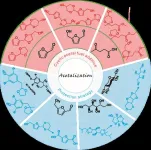
Biomass, mainly composed of lignocellulose and vegetable oil, has been acclaimed as one of the most promising sustainable sources of raw carbon material for the synthesis of transport fuels and value-added chemicals. The catalytic conversion of lignocellulose/vegetable oil and their related derivatives has attracted great attention in biomass valorization. Many elegant methods including hydrolysis, dehydration, hydrogenation, hydrogenolysis, oxidation, etherification, esterification, amination, aldol condensation, ...

Read the release
Environment

Monitoring often excludes crucial river ecosystems; Can citizen science fill the gap?

Intermittent rivers and ephemeral streams are the world's dominant river ecosystem, yet monitoring and management typically focus on rivers that flow year round. Writing in BioScience, Amélie Truchy of the French National Research Institute for Agriculture, Food, and the Environment (INRAE) and colleagues describe the problem, as well as a potential solution: citizen science. The authors discuss the results from a new app, DRYRivERS, which allows scientist and nonscientist users alike to record data on ephemeral streams and intermittent ...

Read the release
From nature, a solution to save coral from climate change
Environment

From nature, a solution to save coral from climate change

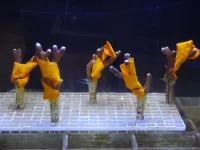
Genoa (Italy), 19 July 2023 – Researchers at Istituto Italiano di Tecnologia (Italian Institute of Technology - IIT) and Università degli Studi di Milano-Bicocca (University of Milan-Bicocca), in cooperation with Acquario di Genova (Genoa Aquarium) in Italy, have recently published a study in ACS Applied Materials and Interfaces, which demonstrates the efficacy of curcumin, a natural antioxidant substance extracted from turmeric, in reducing coral bleaching, a phenomenon caused primarily by climate change. The research group developed a biodegradable biomaterial to deliver the molecule without ...

Read the release
From the original Press-News collection. Issuers of news releases are responsible for the accuracy of their content.