THE ORIGINAL COLLECTION · SINCE 2010

Environment
press releases.

Research announcements from universities, hospitals and scientific institutions. Explore the stories, people and discoveries behind the headlines.

Original publication datesPage 152
FIND A STORY

Find a past release.

Dates and source material belong to the original release.

Read our research explainers

Browse the collection · original publication order

Tuning surface molecular design of porous carbon for blue energy harvesting
Environment

Tuning surface molecular design of porous carbon for blue energy harvesting

Did you know rivers carry about 40 trillion metric tons of river water into the ocean every year? This meeting point, known as the estuary, holds great potential for electricity generation. Mixing the two types of water -- seawater and river water containing different salt concentrations -- releases a substantial amount of Gibbs free energy, which can be converted to electricity using semipermeable membranes. However, the performance of membranes has limited the economic viability of membrane-based approaches, leaving the vast potential of this naturally abundant energy source largely untapped. To overcome the challenges associated with the membranes, researchers have developed membrane-free ...

Read the release
Environment

Sri Lanka floods easier to predict with India weather tool

Floods and landslides in Sri Lanka could be better predicted by applying weather forecasting techniques currently used in India, a study has found. The new research has the potential to help communities better prepare for extreme rainfall in Sri Lanka. The South Asian island is extremely vulnerable to floods and landslides caused by heavy rainfall. In May 2017, more than 150 people were killed after Sri Lanka experienced flooding triggered by monsoon rains. Led by Dr Akshay Deoras and published today (Thursday, 27 July) in Geophysical Research Letters, the study expands the ...

Read the release
Environment

Stockholm University leads Bio-LUSH for development of new sustainable bio-based fibers for a circular bioeconomy

Bio-LUSH, a Horizon Europe project led by Stockholm University, extracts high-quality fibers from diverse plants, maximizing resource utilization for sustainable bio-based innovation. Supported by the EU-call Circular Bio-based Europe Joint Undertaking (CBE JU), the research project establishes a value chain for sustainable products such as textiles, food packaging and reinforced composites ready for the consumer market, thus driving plant-based solutions for a circular bioeconomy. The four-year Bio-LUSH project, launched in May 2023, supports the establishment of a ...

Read the release
Petrified trees reveal Yellowstone geyser’s ongoing battle with drought
Environment

Petrified trees reveal Yellowstone geyser’s ongoing battle with drought

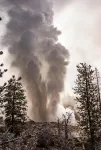
American Geophysical Union 25 July 2023 AGU Release No. 23-29 For Immediate Release This press release and accompanying multimedia are available online at: https://news.agu.org/press-release/petrified-trees-reveal-yellowstone-geysers-ongoing-battle-with-drought/ AGU press contact: Liza Lester, +1 (202) 777-7494, news@agu.org (UTC-4 hours) Contact information for the researchers: Shaul Hurwitz, U.S. Geological Survey, shaulh@usgs.gov (UTC-7 hours) WASHINGTON — Yellowstone’s Steamboat Geyser has had decades-long dry spells brought on by a history of droughts, a new study finds. With global temperatures on the rise, the American West is projected to become drier. ...

Read the release
Environment

Delaying methane mitigation increases risk of breaching Paris Agreement climate goal, study finds

A new study by Simon Fraser University researchers shows that efforts to reduce methane emissions are needed immediately if we are to meet global climate change goals. A key element of the 2015 Paris Agreement, a legally binding international treaty on climate change, is the commitment to limit average global temperatures increases to well below 2°C above pre-industrial levels, and pursue efforts to limit global warming to 1.5°C above pre-industrial levels. This requires reaching net-zero CO2 emissions by or around 2050—and deep reductions in methane and other ...

Read the release
Fungi which normally decay wood can effectively break down low density polyethylene (LDPE) plastic instead - and do so best in the absence of wood
Environment

Fungi which normally decay wood can effectively break down low density polyethylene (LDPE) plastic instead - and do so best in the absence of wood

Fungi which normally decay wood can effectively break down low density polyethylene (LDPE) plastic instead - and do so best in the absence of wood ### Article URL: https://journals.plos.org/plosone/article?id=10.1371/journal.pone.0288133 Article Title: Wood decay fungi show enhanced biodeterioration of low-density polyethylene in the absence of wood in culture media Author Countries: Sri Lanka Funding: 1. RNA: TWAS research grant 18-020 RG/BIO/AS_I The world academy of science https://twas.org/ 2. RNA, PW, HH: ICGEB research grant CRP/LKA18-03 https://www.icgeb.org/ International Center for genetic engineering and biotechnology 3. RNA, HH: t(NSF/RG/2019/BT/03). http://www.nsf.ac.lk/ ...

Read the release
Climate change threatens 771 endangered plant and lichen species
Environment

Climate change threatens 771 endangered plant and lichen species

All plants and lichens listed as endangered under the Endangered Species Act are sensitive to climate change but there are few plans in place to address this threat directly, according to a new study by Amy Casandra Wrobleski of Pennsylvania State University and colleagues, published July 26, 2023 in the open-access journal PLOS Climate. Climate change is expected to have a major impact on species around the world, especially endangered species, which are already rare. A majority of the organisms listed under the Endangered Species Act are ...

Read the release
Environment

Recent advances in research to identify sources of nano- and microplastics

Exposure to microplastics and nanoplastics — particles smaller than 5 millimeters and 1 micrometer across, respectively — have been linked to adverse health outcomes. Although some of their sources are well known, others haven’t been thoroughly vetted yet. Below are recent papers published in ACS journals that report new insights into the origins of some microscopic plastic pieces: laser-cut acrylic sheets, orthodontic rubber bands and children’s food containers. Reporters can request free access to these papers by emailing newsroom@acs.org. “Characterization ...

Read the release
Environment

Global wildlife trade risks altering evolutionary history and ecosystem function, study suggests

Some of the world’s most distinct and ancient animal species, which play crucial roles in our planet’s ecosystems, are exploited for the wildlife trade across large parts of the world, according to new research from the University of Sheffield. The study, led by researchers from the University’s School of Biosciences, has found that in large areas of the world, a wide range of functionally and evolutionarily distinct species are targeted for the wildlife trade, which has the potential to cause major losses of evolutionary history and alter key ecological processes. Published in Nature, the ...

Read the release
Earlier and earlier high-Arctic spring replaced by “extreme year-to-year variation”
Environment

Earlier and earlier high-Arctic spring replaced by “extreme year-to-year variation”

About 15 years ago, researchers reported that the timing of spring in high-Arctic Greenland had advanced at some of the fastest rates of change ever seen anywhere in the world. But, according to new evidence reported in the journal Current Biology on July 26, that earlier pattern has since been completely erased. Instead of coming earlier and earlier, it seems the timing of Arctic spring is now driven by tremendous climate variability with drastic differences from one year to the next. “As scientists we are obliged to revisit previous ...

Read the release
Environment

Arctic terns may navigate climate dangers

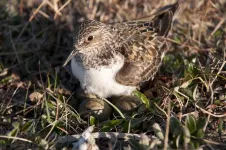
Arctic terns – which fly on the longest migrations of any animal on Earth – may be able to navigate the dangers posed by climate change, new research suggests. The birds live in near-perpetual daylight, breeding in the north of our planet and flying to Antarctica for the Southern Hemisphere summer, covering enough distance in their lifetime to travel to the moon three times. The new study, led by the University of Exeter and the Met Office, examined the likely impacts of climate change on arctic terns outside of ...

Read the release
Study: An inverse model for food webs and ecosystem stability
Environment

Study: An inverse model for food webs and ecosystem stability

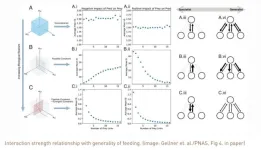
In a new study published in the Proceedings of the National Academy of Sciences, authors Gabriel Gellner and Kevin McCann from the University of Guelph and SFI External Professor Alan Hastings (UC Davis) invert a classical approach to modeling food webs. Instead of trying to replicate stable, complex ecosystems using simplistic representations of species interactions, the authors’ novel inverse method assumes the ecosystems exist and works backward to characterize food webs that support that assumption. Their work represents a significant step toward addressing a fundamental ecological question of how biodiversity ...

Read the release
Environment

Brazilian researchers identify gynecological concerns of caregivers of young girls and women with Down syndrome

Brazilian researchers conducted a cross-sectional study to explore the concerns of caregivers of Brazilian girls with Down syndrome (DS) regarding gynecological aspects of DS including menstruation, contraception and sexual practices. The study included 100 caregivers of females aged 9 years or older with DS who had reached menarche. Participating caregivers completed a questionnaire about their concerns around puberty, menstruation, sexuality and contraceptive methods. Caregivers commonly expressed concerns around menstrual bleeding. Most caregivers ...

Read the release
Improving recyclable waste classification with laser-induced breakdown spectroscopy
Environment

Improving recyclable waste classification with laser-induced breakdown spectroscopy

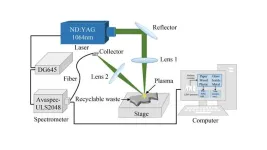
WASHINGTON, July 25, 2023 – Managing and classifying waste accurately for reuse is a growing challenge in environmental protection. Addressing this issue, researchers at Hefei University of Technology in China have embarked on a quest to innovate in the realm of waste management, seeking effective methods that can simplify and improve the identification and classification of recyclable waste. Delving into the intricacies of waste management, the researchers explored the application of laser-induced breakdown spectroscopy technology for the identification ...

Read the release
Environment

Gloomy climate calculation: Scientists predict a collapse of the Atlantic ocean current to happen mid-century

Gloomy climate calculation: Scientists predict a collapse of the Atlantic ocean current to happen mid-century. Important ocean currents that redistribute heat, cold and precipitation between the tropics and the northernmost parts of the Atlantic region will shut down around the year 2060 if current greenhouse gas emissions persist. This is the conclusion based on new calculations from the University of Copenhagen that contradict the latest report from the IPCC. Contrary to what we may imagine about the impact ...

Read the release
Road salt pollution in many US lakes could stabilize at or below thresholds set by the EPA
Environment

Road salt pollution in many US lakes could stabilize at or below thresholds set by the EPA

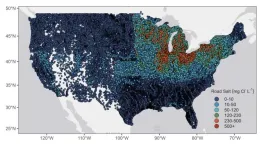
Since de-icing with road salt began in the 1930s, the salinity of lakes across much of the US has been steadily increasing, posing a potential threat to aquatic life and drinking water supplies. However, a cautiously optimistic new study in Limnology and Oceanography Letters concludes that if we can hold steady or decrease road salt use, levels in many lakes could stabilize below thresholds set by the US Environmental Protection Agency (EPA). “For the majority of US lakes, road salt pollution could be a solvable problem, if ...

Read the release
New study sheds light on awareness and preferences for bioplastics in Japan
Environment

New study sheds light on awareness and preferences for bioplastics in Japan

Non-biodegradable plastics are major contributors to land and marine pollution, destroying habitats and causing harm to both flora and fauna. Hence, the switch to bioplastics is imperative to ensure sustainability. The success of environmental initiatives aimed at increasing bioplastic adoption critically hinges on understanding consumer behavior. However, consumer preferences and perceptions around bioplastics, particularly in Japan and other Asian countries, are not well understood. A recent study published online on July 10, 2023 in the Journal of Cleaner Production attempted to find answers to questions surrounding Japanese consumers’ preferences ...

Read the release
Environment

UBC researchers recover vital resources from wastewater sludge

If you were ever to see sewage sludge up close, you might be hard-pressed to find any redeemable value; however, researchers at UBC’s Bioreactor Technology Group see it another way. Using a combination of heat, water and phase separation, UBC researchers have developed a cost-effective method to concentrate phosphorous—which can be efficiently recovered by extraction—from wastewater sludge. “Phosphorous is a non-renewable, but essential, element for life and has many industrial uses,” explains Huan Liu, a doctoral student with UBCO’s School of Engineering and lead author of a new study investigating ...

Read the release
Environment

UK and Europe join forces for construction of largest ever European Solar Telescope

**Images available** Nine European countries, including the UK, have today (25 July 2023) joined forces to commit to the construction of the European Solar Telescope (EST) The EST will be the biggest solar telescope ever constructed in Europe and aims to provide unparalleled new insights into the phenomena of space weather The University of Sheffield will lead a consortium of UK universities that will help to develop designs for the construction of the large-aperture solar telescope The first light of the EST is ...

Read the release
Environment

Chapman University climate scientist finds new way to measure the Earth’s ability to offset carbon emissions

A Chapman University scientist and his colleagues have determined how the Earth responds as it heats up due to climate change. The scientists say a warming world calls for a new approach in detecting how much carbon dioxide comes out of ecosystems when the temperature changes — which tells us how well plants and soil can alleviate damage by removing carbon pollution from the atmosphere. The study is the first to find the temperature-carbon dioxide release relationship at the landscape level. Their ...

Read the release
Scientists discover new isopod species in the Florida Keys
Environment

Scientists discover new isopod species in the Florida Keys

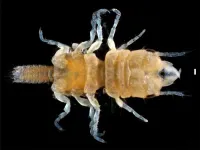
An international team of scientists from the University of Miami Rosenstiel School of Marine, Atmospheric, and Earth Science and the Water Research Group from the Unit for Environmental Sciences and Management at the North-West University in South Africa have discovered a new species of marine cryptofauna in the Florida Keys. Cryptofauna are the tiny, hidden, organisms that make up the majority of biodiversity in the ocean. The roughly three-millimeter-long isopod is one of only 15 species from the genus Gnathia currently known in the region. The newly discovered species, Gnathia jimmybuffetti, which is a member of a group of crustaceans called gnathiid isopods, were collected ...

Read the release
Colorado River Basin has lost water equal to Lake Mead due to climate change
Environment

Colorado River Basin has lost water equal to Lake Mead due to climate change

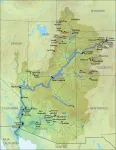
American Geophysical Union Release No. 23-28 24 July 2023 For Immediate Release This press release and accompanying multimedia are available online at: https://news.agu.org/press-release/colorado-river-basin-has-lost-water-equal-to-lake-mead-due-to-climate-change/ Colorado River Basin has lost water equal to Lake Mead due to climate change A rapid rate of reductions in runoff associated with the Colorado Basin’s snowpack region, quantified here for the first time, is largely responsible for the water loss. AGU press contact: Rebecca Dzombak, news@agu.org +1 (202) 777-7492 (UTC-4 hours) Contact ...

Read the release
Beyond protected areas: Novel method shows promise for monitoring biodiversity on working lands
Environment

Beyond protected areas: Novel method shows promise for monitoring biodiversity on working lands

New research led by Adam Dixon, a conservation scientist with the World Wildlife Fund, describes the successful pilot of a novel method to study how well grassland birds are faring on croplands. The study, published in Ecological Applications, looked at 44 pockets of non-crop vegetation in the gaps between crop rows and at the edges of fields on lands under intensive agricultural cultivation in Iowa. The study may serve as a model for monitoring wildlife on working lands more generally, which can include crop fields, cattle ranches, and logged forests. The researchers analyzed satellite imagery data to determine each pocket's area and “texture,” ...

Read the release
Environment

Renewable solar energy can help purify water, the environment

Using electrochemistry to separate different particles within a solution (also known as electrochemical separation) is an energy-efficient strategy for environmental and water remediation: the process of purifying contaminated water. But while electrochemistry uses less energy than other, similar methods, the electric energy is largely derived from nonrenewable sources like fossil fuels. Chemists at the University of Illinois Urbana-Champaign have demonstrated that water remediation can be powered in part — and ...

Read the release
Environment

Fiber optic sensing tracks seismicity from injected carbon dioxide at Australian site

Researchers at a field site in Victoria, Australia are among the first to use fiber optic distributed acoustic sensing (DAS) for high-precision tracking of induced seismicity from a small carbon dioxide (CO2) injection, according to a new study published in Seismological Research Letters. The CO2CRC Otway Project in Victoria is a research test site for the subsurface storage of carbon dioxide, as one possible way to reduce the impacts of climate-warming carbon emissions. However, there is a risk of induced earthquakes after gigatons of carbon dioxide will be injected within the same geologic ...

Read the release
From the original Press-News collection. Issuers of news releases are responsible for the accuracy of their content.