THE ORIGINAL COLLECTION · SINCE 2010

Science
press releases.

Research announcements from universities, hospitals and scientific institutions. Explore the stories, people and discoveries behind the headlines.

Original publication datesPage 219
FIND A STORY

Find a past release.

Dates and source material belong to the original release.

Read our research explainers

Browse the collection · original publication order

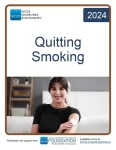
New evidence-based information from NCCN offers tangible and moral support for people trying to quit smoking
Science

New evidence-based information from NCCN offers tangible and moral support for people trying to quit smoking

PLYMOUTH MEETING, PA [November 13, 2024] — The National Comprehensive Cancer Network® (NCCN®)—an alliance of leading cancer centers—today announced the publication of a new patient guideline designed to provide critical support and guidance for individuals with cancer who are seeking to quit smoking. Continued smoking elevates the risk of developing additional cancers, reduces the effectiveness of treatment, exacerbates treatment side effects, and is associated with shorter survival. The new NCCN Guidelines for Patients®: Quitting Smoking explains how to best use the tools that exist to help anyone quit ...

Read the release
Science

Most parents don’t ask about firearms in the homes their kids visit

Over 60 percent of Illinois parents had never asked another parent about an unlocked firearm in their home before allowing their child to visit for a playdate, according to a survey from Ann & Robert H. Lurie Children’s Hospital of Chicago published in Pediatrics. Many parents reported they had not asked about firearms because it never occurred to them to do so, which highlights a critical need to raise awareness of this important safety concern. Among children 0-14 years old, almost 20 percent of unintentional firearm-related deaths occur at a friend’s home. ...

Read the release
How graph convolutions amplify popularity bias for recommendation?
Science

How graph convolutions amplify popularity bias for recommendation?

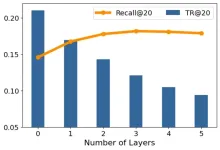
Graph convolutional networks (GCNs) have become prevalent in recommender system (RS) due to their superiority in modeling collaborative patterns. Although improving the overall accuracy, GCNs unfortunately amplify popularity bias --- tail items are less likely to be recommended. This effect prevents the GCN-based RS from making precise and fair recommendations, decreasing the effectiveness of recommender systems in the long run. Performance change of LightGCN with different graph convolution layers on Gowalla. Recall@20 and TR@20 ...

Read the release
Science

Unlocking the secrets of ketosis

The ketogenic “keto” diet and intermittent fasting have surged in popularity, embraced by everyone from weekend warriors to endurance athletes. These trends promise to harness the power of ketosis — a metabolic state where the body burns fat for energy instead of carbohydrates. Advocates tout its benefits, from weight loss to neuroprotection. A collaborative research team is now tackling the unanswered questions surrounding ketosis. Rather than adding to the growing, and often confusing, literature on the effects of ketogenic ...

Read the release
Science

Making an impact. Research studies a new side of helmet safety: faceguard failures

There is a large window-lined laboratory in the back of one of Clemson University’s most storied buildings, Newman Hall, filled with machines that look like they were extracted straight from Dr. Jekyll’s lab. On one wall a contraption made of pullies and wires attached to the ceiling waits to drop objects and measure the impact; in the middle of the room, a giant metal base shakes a pallet of boxes in perpetuity; on the other side of the room sits what looks like a gigantic nut cracker big enough to squish a small car – but the most Medieval-looking area is the bay on the east side of the room full of machines designed to smack heads. This is the Clemson Headgear ...

Read the release
Science

Specific long term condition combinations have major role in NHS ‘winter pressures’

Specific combinations of long term conditions have a major role in the additional pressures the NHS faces every winter, because they are associated with significantly higher risks of hospital admissions and death, finds research published in the open access journal BMJ Medicine. The risk of hospital admission was 11 times higher among those with the quartet of cancer, kidney disease, cardiovascular disease, and type 2 diabetes than it was among those without any of these long term conditions, the findings show. And ...

Read the release
Science

Men often struggle with transition to fatherhood amid lack of targeted information and support

Men often struggle with the transition to fatherhood amid a lack of information and emotional support targeted to their needs, suggests a review of the available qualitative evidence, published in the open access journal BMJ Open. Greater focus is needed in clinical practice, antenatal services, and research on men’s unique experiences of the perinatal period, which encompasses pregnancy and the first 12 months after the birth, say the researchers. Pregnancy and childbirth can be an anxious time for new parents, and the transition to fatherhood—defined ...

Read the release
Science

Could a genetic flaw be the key to stopping people craving sugary treats?

The work provides novel genetic insights into dietary preferences and opens the possibility of targeting SI to selectively reduce sucrose intake at the population level. The study was led by Dr. Peter Aldiss, now a group leader in the School of Medicine at the University of Nottingham, alongside Assistant Professor Mette K Andersen, at the Novo Nordisk Foundation Centre for Basic Metabolic Research in Copenhagen and Professor Mauro D’Amato at CIC bioGUNE in Spain and LUM University in Italy. It also involves scientists internationally from Copenhagen, Greenland, Italy and Spain as part of the ‘Sucrase-isomaltase working group’. Dr Aldiss said: “Excess ...

Read the release
Experts urge complex systems approach to assess A.I. risks
Science

Experts urge complex systems approach to assess A.I. risks

[Vienna, November 13, 2024] — With artificial intelligence increasingly permeating every aspect of our lives, experts are becoming more and more concerned about its dangers. In some cases, the risks are pressing, in others they won't emerge until many months or even years from now. Scientists point out in The Royal Society’s journal that a coherent approach to understanding these threats is still elusive. They call for a complex systems perspective to better assess and mitigate these risks, particularly in light of long-term uncertainties and complex interactions between A.I. and society. "Understanding the risks of A.I. requires recognizing the intricate interplay ...

Read the release
A toolkit for unraveling the links between intimate partner violence, trauma and substance misuse
Science

A toolkit for unraveling the links between intimate partner violence, trauma and substance misuse

The opioid crisis has left an estimated 2.5 million people 18 and older in the U.S. with opioid use disorder, or OUD. Despite increased attention to the heavy toll taken by OUD, key risk factors such as intimate partner violence (IPV) and post-traumatic stress disorder (PTSD) are often overlooked. Both increase the risk of OUD and complicate recovery efforts. A team of MUSC researchers led by clinical psychologists Amber Jarnecke, Ph.D., and Tanya Saraiya, Ph.D., both of the Department of Psychiatry and Behavioral ...

Read the release
Science

Updated guidance reaffirms CPR with breaths essential for cardiac arrest following drowning

Updated Guideline Highlights: The American Heart Association and the American Academy of Pediatrics update recommendations for untrained lay rescuers and trained rescuers resuscitating adults and children who have drowned. One important update is the recommendation to provide cardiopulmonary resuscitation (CPR) with rescue breaths and chest compressions to all persons in cardiac arrest following drowning after removal from the water. The updated recommendations for resuscitation following drowning are, for the first time, well codified, accompanied ...

Read the release
Science

Animated movie characters with strabismus are more likely to be villains, study finds

Strabismus, a misalignment of the eyes that occurs especially in children, has no bearing on intelligence or personality, but animated movies tend to use the condition to signify a villainous, dopey, or clumsy character, according to a new study from researchers at the University of Colorado School of Medicine. “When animators are figuring out what a character is going to look like, they have to decide on every little detail of that character's appearance, and so it's not by chance that an animated character happens to have strabismus,” says Michael ...

Read the release
Science

How retailers change ordering strategy when a supplier starts its own direct channel

Researchers from Erasmus University and KU Leuven published a new Journal of Marketing study that examines how retailers respond when suppliers establish direct channels to reach end-consumers and how suppliers can take steps to avoid a backlash. The study, forthcoming in the Journal of Marketing, is titled “How Retailers Change Ordering Strategies When Suppliers Go Direct” and is authored by Michiel Van Crombrugge, Els Breugelmans, Femke Gryseels, and Kathleen Cleeren. Recently, Sony began selling PlayStation products through its PlayStation Direct online store in the UK, ...

Read the release
Young coral use metabolic tricks to resist bleaching
Science

Young coral use metabolic tricks to resist bleaching

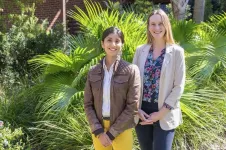
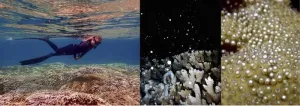
Coral larvae reduce their metabolism and increase nitrogen uptake to resist bleaching in high temperatures, according to a study published November 12th in the open-access journal PLOS Biology by Ariana S. Huffmyer of the University of Washington, US, and colleagues. High ocean temperatures cause coral bleaching, which results from the disruption of the relationship between corals and their symbiotic algae, an increasing concern as global temperatures rise. However, relatively little research has examined the effects of high temperatures ...

Read the release
Science

Protecting tax whistleblowers pays off

AUSTIN, Texas — The federal tax gap — money people and companies owe Uncle Sam but fail to pay on time — has climbed to historic highs: $696 billion in 2022, according to the IRS. It’s money that, if recouped, could fund infrastructure or education or pay down government debt. One way to collect that money is through lawsuits prompted by corporate whistleblowers — often present or former employees who know a company’s finances and expose its transgressions. Federal law includes ...

Read the release
LSU researchers excavate earliest ancient Maya salt works
Science

LSU researchers excavate earliest ancient Maya salt works

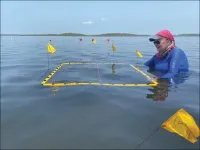
The team was led by LSU Alumni Professor Heather McKillop, who first discovered wooden buildings preserved there below the sea floor, along with associated artifacts, and the only ancient Maya wooden canoe paddle in 2004. Her key collaborator, Assistant Professor Elizabeth Sills at the University of Texas at Tyler, began working with McKillop as a master’s student and then as a doctoral student at LSU. Since their initial discovery of wood below the sea floor in Belize, the team has uncovered an extensive pattern of sites that include “salt kitchens” for boiling ...

Read the release
MBARI researchers discover remarkable new swimming sea slug in the deep sea
Science

MBARI researchers discover remarkable new swimming sea slug in the deep sea

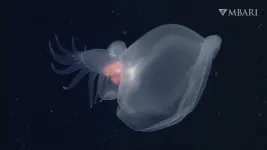
MBARI researchers have discovered a remarkable new species of sea slug that lives in the deep sea. Bathydevius caudactylus swims through the ocean’s midnight zone with a large gelatinous hood and paddle-like tail, and lights up with brilliant bioluminescence. The team published a description of the animal, nicknamed the “mystery mollusc,” in the journal Deep-Sea Research Part I. “Thanks to MBARI’s advanced underwater technology, we were able to prepare the most comprehensive description of a deep-sea animal ever made. We’ve ...

Read the release
Raise the roof: How to reduce badminton birdie drift
Science

Raise the roof: How to reduce badminton birdie drift

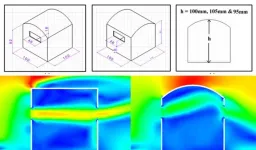
WASHINGTON, Nov. 12, 2024 – Indoor badminton courts are often used for high-stakes tournaments, but even an enclosed court can affect the path of a birdie. The airflow from a court’s heating, ventilation, and air conditioning (HVAC) system and cross ventilation plays a significant role in badminton. The lightweight feathered birdie passed between the players can be affected by low wind speed in the stadium. This is known as wind drift and has been at the center of multiple tournament controversies. While shutting ...

Read the release
Science

Scientists develop advanced catalyst for self-driven seawater splitting with enhanced chloride resistance

Seawater electrolysis has long been seen as a promising pathway for sustainable hydrogen production but has faced significant limitations due to chloride ion (Cl⁻) corrosion, which can degrade a catalyst's performance. Now scientists from the Qingdao Institute of Bioenergy and Bioprocess Technology (QIBEBT) of the Chinese Academy of Sciences, along with their collaborators, have developed an efficient electrocatalyst called Co-N/S-HCS that demonstrates remarkable activity and stability in ...

Read the release
INSEAD launches free Negotiation Course for the World
Science

INSEAD launches free Negotiation Course for the World

If knowledge is power, empowering the world with the art and science of negotiation offers even more far-reaching benefits – a more peaceful and prosperous world, according to the INSEAD Negotiation and Conflict Management Collaborative (NCMC). The Negotiation Course for the World (NCW) is a pioneering effort by the NCMC to make quality negotiation teaching materials and expertise accessible to all, and in so doing, democratise negotiation education. “It is an integral part of the NCMC’s mandate to bring scholars and practitioners together to collaborate on research and education on negotiation and conflict management,” said Roderick Swaab, Professor ...

Read the release
Science

The American Pediatric Society announces its new members for 2025

The American Pediatric Society (APS) is pleased to announce ninety-eight new members. Founded in 1888, the APS is North America's first and most prestigious academic pediatric organization. APS members are recognized child health leaders of extraordinary achievement who work together to shape the future of academic pediatrics. Current members nominate new members by recognizing individuals who have distinguished themselves as child health leaders, teachers, scholars, policymakers, and clinicians. “The Council of the APS is excited to welcome this large group of child health leaders ...

Read the release
Science

Reporting into the void: Research validates victims' doubts about response to phishing reports

The cybersecurity refrain when encountering phishing emails invariably advises: “don’t click on that link” and “report that email” — but new research from Drexel University and Arizona State University has revealed a problematic reality: Most major companies do little to support reporting and few take action to shut down phishing sites disguised as their own after they have been reported. Recently presented at the International Symposium on Research in Attacks, Intrusions and ...

Read the release
Grandparents help grandkids in many ways – but the reverse may be true too, poll suggests
Science

Grandparents help grandkids in many ways – but the reverse may be true too, poll suggests

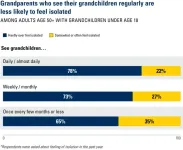
As many Americans prepare to gather with their families for the holidays, a new poll shows the importance of grandchildren in grandparents’ lives. The poll also suggests that having grandchildren and seeing them regularly may have a link to older adults’ mental health and risk of loneliness. Although the poll can’t show cause and effect, the findings suggest a need to study the role of grandparenting in older adults’ lives, as part of a broader effort to address social isolation. At ...

Read the release
Sleep is no light matter for bees
Science

Sleep is no light matter for bees

In an emerging red flag for the digital era, sleep experts have warned us to avoid screen time in bed, sounding the alarm that light emitted from phones and other electronic devices can disrupt our sleep patterns. That’s one way that science is waking up to the broad range of health and disease implications related to circadian biology and our daily sleep-wake cycles. Now, researchers at the University of California San Diego have found that light disruption is not only a health concern for humans. A new study led by PhD candidate Ashley Kim and Professor James Nieh in the School of Biological Sciences has found that artificial light disrupts the circadian rhythms of ...

Read the release
Guardian, kids, or companions? What do dogs mean to us today
Science

Guardian, kids, or companions? What do dogs mean to us today

What role do dogs play in today’s world? For many, they are more than just pets. New findings from the Department of Ethology at Eötvös Loránd University show that whether seen as friends, family members, children or guardians, these roles affect the way dogs are cared for, suggesting shifting dynamics in human-animal bonds shaped by societal trends and individual owner profiles. In Western cultures, more and more people see their dogs as their best friends, family members or even their furry children. In fact, ...

Read the release
From the original Press-News collection. Issuers of news releases are responsible for the accuracy of their content.