THE ORIGINAL COLLECTION · SINCE 2010

Science
press releases.

Research announcements from universities, hospitals and scientific institutions. Explore the stories, people and discoveries behind the headlines.

Original publication datesPage 278
FIND A STORY

Find a past release.

Dates and source material belong to the original release.

Read our research explainers

Browse the collection · original publication order

Designing safer opioids
Science

Designing safer opioids

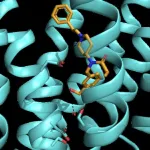
Opioid medications offer people relief from debilitating pain, but these drugs come with dangers: the risk for addiction, miserable withdrawal symptoms and the potential for fatal overdose. In a study in ACS Central Science, researchers have identified a strategy to design safer opioids. They showed that an experimental opioid, which binds to an unconventional spot in the receptor, suppresses pain in animal models with fewer side effects — most notably those linked to fatal overdoses. Opioid medications tap into the body’s natural system for mitigating pain by activating pain-suppressing ...

Read the release

Science

A hydrogel implant to treat endometriosis

Hydrogels have a variety of use cases, including contact lenses, delivering doses of medication within the body, moisturisers, water storage in soil, cleaning polluted water and as gelling and thickening agents. A hydrogel is a gel made of a type of plastic that can bind water. Researchers at ETH Zurich and Empa have now developed the first hydrogel implant designed for use in fallopian tubes. This innovation performs two functions: one is to act as a contraceptive, the other is to prevent the recipient from developing ...

Read the release
Science

Workplace bullying in developing countries is wearing women down

Workplace bullying against women in Pakistan is driving emotional exhaustion and job dissatisfaction among female workers, new research reveals. A University of South Australia study reveals that workplace bullying is significantly undermining job productivity and hindering economic development in Pakistan, where women are seen as subordinates. More than 300 female workers in Pakistan’s education and health sectors were surveyed on gendered workplace bullying. Findings from in-depth interviews revealed women had experienced various bullying behaviours against them including verbal, emotional, social, and physical/sexual ...

Read the release
Science

Ultra-processed food makes up almost two-thirds of calorie intake of UK adolescents

Adolescents consume around two-thirds of their daily calories from ultra-processed foods (UPFs) new research from the Universities of Cambridge and Bristol has found. The study found that UPF consumption was highest among adolescents from deprived backgrounds, those of white ethnicity, and younger adolescents. UPFs are food items that are manufactured from industrial substances and contain additives such as preservatives, sweeteners, colourings, flavourings, and emulsifiers. UPFs vary greatly, but tend to indicate poor dietary quality, with higher levels of added sugars, saturated fat, and sodium, as well as decreased fibre, protein, and micronutrient content. They have been suggested ...

Read the release
Science

New research reveals link between Spinal Muscular Atrophy (SMA) and liver damage

SINGAPORE – An international study has discovered that people living with the neurodegenerative condition Spinal Muscular Atrophy (SMA) are at higher risk of developing fatty liver disease, suggesting that SMA patients may face additional health problems over time. This finding raises significant concerns about long-term care and health outcomes for individuals with SMA. SMA is a rare genetic condition that prevents the body from producing Survival Motor Neuron (SMN), a protein essential for nerves that control ...

Read the release
Science

Large study confirms: Siblings of autistic children have 20% chance of autism

Siblings of autistic children have a 20% chance of being autistic themselves — about seven times higher than the rate in infants with no autistic siblings. That’s the key finding of a new paper by UC Davis MIND Institute researcher Sally Ozonoff and the Baby Siblings Research Consortium. The consortium is a collection of more than 20 research groups at universities worldwide. Ozonoff is a distinguished professor in the Department of Psychiatry and Behavioral Sciences. She has studied the recurrence of autism in families for decades. The new study ...

Read the release
Science

Resistance exercise ‘activity breaks’ at night may improve sleep length

Resistance exercise ‘activity breaks’ at night may improve sleep length, suggest the findings of a small comparative study published in the open access journal BMJ Open Sport & Exercise Medicine. Three-minute breaks every 30 minutes over a period of 4 hours may be all that’s needed, the findings indicate. Current recommendations discourage intense exercise before going to bed, on the grounds that it increases body temperature and heart rate, which can result in poorer sleep quality, say the researchers. While activity breaks can improve metabolism after a meal, it’s not clear if they have any impact on sleep. Poor sleep is associated with an increased ...

Read the release
Science

IBS following gastroenteritis may last 4+ years in around half of those affected

Irritable bowel syndrome (IBS)---characterised by abdominal pain, bloating, and altered bowel habit—may last 4 or more years following a bout of gastroenteritis in around half of those affected, finds a pooled data analysis of the available evidence, published online in the journal Gut. Aggressive and pro-inflammatory bacteria, such as Proteobacteria and Enterobacteriaceae, and the virus responsible for COVID-19 infection, SARS-CoV-2, are possible culprits, the findings suggest. IBS and recurrent indigestion of unknown cause (functional dyspepsia), are disorders of the gut-brain axis. ...

Read the release
Science

Evening activity for better sleep – Otago study

Rigorous exercise before bed has long been discouraged, but University of Otago researchers have found short bursts of light activity can lead to better sleep. In a world first study, published in BMJ Open Sport & Exercise Medicine and funded by the Health Research Council, participants completed two four-hour evening intervention sessions of prolonged sitting, and sitting interrupted with three-minute activity breaks every half hour. The researchers found that after the participants completed the activity breaks intervention they slept for 30 minutes longer. Lead ...

Read the release
Science

Even on Instagram, teens mostly feel bored

Concern that social media is driving the teen mental health crisis has risen to such a pitch that the majority of states in the country have filed lawsuits against Meta (which owns Instagram and Facebook) and the U.S. surgeon general called last month for warning labels on platforms, similar to those on tobacco. New research from the University of Washington finds, though, that while some teens do experience negative feelings when using Instagram, the dominant feeling they have around the platform is boredom. They open the app because they’re bored. Then they sift through largely irrelevant content, mostly feeling bored, while seeking interesting bits to ...

Read the release
Vanderbilt scientists develop new tool that could lead to noninvasive “liquid biopsies”
Science

Vanderbilt scientists develop new tool that could lead to noninvasive “liquid biopsies”

Biopsies are clinical tools commonly used to diagnose a variety of diseases or to monitor tissue for abnormal growth or even rejection of a transplant. During biopsies, tissue samples are removed from the body so they can be examined more closely, but depending on the type of tissue that’s needed, the procedure can be rather invasive. Researchers from the School of Medicine Basic Sciences recently developed an analytical tool that could lead to the use of “liquid biopsies” as a substitute ...

Read the release
Roles of PEDF in exercise-induced suppression of senescence and its impact on lung pathology in mice
Science

Roles of PEDF in exercise-induced suppression of senescence and its impact on lung pathology in mice

“[...] the present results strongly suggest the potential of PEDF as a myokine linking exercise training to the suppression of senescence.” BUFFALO, NY- July 16, 2024 – A new research paper was published on the cover of Aging (listed by MEDLINE/PubMed as "Aging (Albany NY)" and "Aging-US" by Web of Science) Volume 16, Issue 13, entitled, “Roles of pigment epithelium-derived factor in exercise-induced suppression of senescence and its impact on lung pathology in mice.” Senescent cells contribute ...

Read the release
Science

Transporting precious cargo using the body’s own delivery system

Each cell in the body has its own unique delivery system that scientists are working on harnessing to move revolutionary biological drugs — molecules like proteins, RNA and combinations of the two — to specific diseased parts of the body. A new study from Northwestern University hijacked the transit system and sent tiny, virus-sized containers to effectively deliver an engineered protein to its target cell and trigger a change in the cell’s gene expression. The success came from encouraging engineered proteins to move toward a specific cell membrane structure that the researchers found increased a protein’s likelihood of latching onto the container. Published ...

Read the release
Science

Decline in global adolescent fertility rates is counteracted by increasing teen births in Sub-Saharan Africa

July 16, 2024-- A new report from Columbia University Mailman School of Public Health and the Columbia Aging Center with colleagues from the Norwegian Institute of Public Health highlights a troubling trend: while global adolescent fertility rates have significantly declined, sub-Saharan Africa is experiencing an increase in teen births. This region's share of global adolescent births surged from 12 percent in 1950 to 47 percent in 2020 and is projected to reach a clear majority – a full 67 percent - by ...

Read the release
Etiologies of splenic venous hypertension
Science

Etiologies of splenic venous hypertension

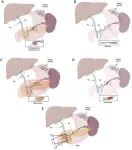
Splenic venous hypertension (SVH), also known as left-sided portal hypertension, is a rare condition characterized by upper gastrointestinal (GI) bleeding in the absence of liver disease. This condition arises due to increased pressure in the splenic vein (SV), causing blood to drain through the short gastric veins to the stomach, leading to the dilation of submucosal structures and the formation of gastric varices. Unlike traditional portal venous hypertension (PVH), SVH does not involve elevated pressures in the main portal vein and is primarily an extrahepatic condition. Diagnosing SVH requires ...

Read the release
Science

New analysis of Cassini data yields insights into Titan’s seas

UNDER EMBARGO UNTIL JULY 16, 2024, AT 11:00 AM ET ITHACA, N.Y. – A new study of radar experiment data from the Cassini-Huygens mission to Saturn has yielded fresh insights related to the makeup and activity of the liquid hydrocarbon seas near the north pole of Titan, the largest of Saturn’s 146 known moons. The key takeaway: Using data from several bistatic radar experiments, a Cornell University-led research team was able to separately analyze and estimate the composition and roughness of Titan’s sea surfaces, something previous analyses of monostatic radar data were unable to achieve. This will help pave the way for future combined ...

Read the release
Science

Palliative care is underutilized in nursing homes

INDIANAPOLIS – Palliative care, specialized medical care focusing on providing relief from the symptoms -- including pain -- and the stress of serious illness, is underutilized in nursing homes, despite the large number of nursing home residents living with a serious illness such as cancer, dementia, Parkinson’s disease, heart failure or chronic obstructive pulmonary disease. A qualitative study, published in the Journal of the American Geriatrics Society, analyzes lack of palliative ...

Read the release
Science

E. coli variant may cause antimicrobial resistance in dogs, humans

ITHACA, N.Y. – Researchers studying antimicrobial-resistant E. coli – the leading cause of human death due to antimicrobial resistance worldwide – have identified a mechanism in dogs that may render multiple antibiotic classes ineffective. The paper, which will publish July 16 in the journal Applied and Environmental Microbiology at 9:00am EST, opens up new avenues for therapies to treat both animals and humans – and establishes clinical infections in dogs as a surveillance approach for public health. The research team analyzed more than 1,000 genomes of the resistant ...

Read the release
Science

Weather experts discover new effect of storm - in a teacup

Britain, prepare for deep depression: storms ruin tea. A new study reveals that Storm Ciaran cut an invisible path of mayhem across southern Britain last autumn, destroying any possibility that 20 million people could have a proper cup of tea at breakfast. The storm's record-breaking low pressure meant the boiling point of water was below the crucial 100 degrees Celsius required for a decent cuppa, meteorologists at the University of Reading have discovered. In a study published today [Tuesday, 16 July] in the journal Weather, the scientists reported that water in Reading was boiling at just 98°C. During the storm on the morning of November 2, ...

Read the release
Science

Research spotlight: The impact of tobacco smoking and smoking cessation on the life expectancy of people with HIV in South Africa

Krishna Reddy, MD, MS, a physician-investigator at the Medical Practice Evaluation Center and the Tobacco Research and Treatment Center at Massachusetts General Hospital and an Associate Professor of Medicine at Harvard Medical School, is the senior author of a recently published paper in Journal of the International AIDS Society: Tobacco Smoking, Smoking Cessation and Life Expectancy Among People with HIV on Antiretroviral Therapy in South Africa: A Simulation Modelling Study. What Question Were You Investigating in this Study? Now that more people with HIV in South Africa are on antiretroviral therapy (medicines to treat ...

Read the release
Science

When to let Amazon sell for you

AUSTIN, Texas — On Prime Day, Amazon shoppers will be able to browse over 600 million products. They may not be aware that most of those listings are from non-Amazon sellers, who account for 60% of sales on the platform. Most are small- and medium-sized businesses: bookstores selling used hardbacks, toymakers selling original goods, and distributors unloading clothes. What shoppers also don’t see is the choice that the platform and the seller make about how to interact. Is it better ...

Read the release
Media Tip Sheet: Symposia at ESA2024
Science

Media Tip Sheet: Symposia at ESA2024

The latest ecological research will be on full display at the Ecological Society of America’s upcoming Annual Meeting in Long Beach, California, Aug. 4–9. A focal point of the conference, symposia consist of four 20-minute talks organized around a central theme of broad interest. These sessions consider topics from different angles, integrate multiple lines of evidence and offer new insights on ecological phenomena. This year, Annual Meeting symposia will address nonmaterial (“cultural”) ecosystem services, nature-based solutions to problems like stormwater runoff and urban heat, ...

Read the release
Science

Most Salmonella illnesses from chicken caused by few products with high levels of virulent strains

URBANA, Ill. – Raw poultry is one of the main causes of Salmonella poisoning, which affects thousands of people in the U.S. every year. A new study from the University of Illinois Urbana-Champaign shows that few products with high levels of very virulent Salmonella strains are responsible for most of the illnesses from raw chicken parts. The researchers suggest regulation efforts should focus on detecting and preventing those types of high-risk contamination. “Over the last 20 years, the poultry industry has done a really good job of lowering the frequency of Salmonella in poultry. However, the number of people ...

Read the release
Science

Study shows how narcissistic CEOs influence the board of directors to take more risk

Narcissistic CEOs that also serve as chair of the board are adept at controlling how their boards of directors focus their attention, giving the CEO the ability to get their way. A new study published in the Strategic Management Journal found that by driving board discussions about risk-taking to hold a positive tone, narcissistic CEOs can allocate more resources toward risk-taking strategies. The findings deepen our understanding of how CEO behavior and personality types can drive risk management strategies. The research team — Christopher S. Tuggle of the University of Central Arkansas, Cameron J. Borgholthaus of the University of Wyoming, Peter D. Harms of the University of Alabama, ...

Read the release
Science

SfN establishes James L. Roberts Endowed Fund

Washington, D.C. – The Society for Neuroscience (SfN) has received $128,000 from the estate of James L. Roberts, PhD. With the funds, SfN Council voted to create a new long-term endowed fund, The James L. Roberts Fund, and will use the income from its investments to create and perpetually fund James L. Roberts Trainee Professional Development Awards (TPDAs) beginning at Neuroscience 2024. “I knew Jimmy Roberts very well. We basically launched neurobiology at Sinai when we co-directed the Fishberg Research Center for Neurobiology at Mount Sinai from 1989–2002,” said incoming SfN President John Morrison. “Jimmy was an outstanding ...

Read the release
From the original Press-News collection. Issuers of news releases are responsible for the accuracy of their content.