Breakthrough approach enables bidirectional BCI functionality
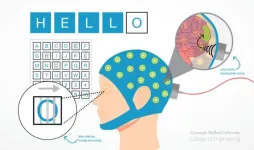
Brain-computer interfaces or BCIs hold immense potential for individuals with a wide range of neurological conditions, but the road to implementation is long and nuanced for both the invasive and noninvasive versions of the technology. Bin He of Carnegie Mellon University is highly driven to improve noninvasive BCIs, and his lab uses an innovative electroencephalogram (EEG) wearable to push the boundaries of what’s possible. For the first time on record, the group successfully integrated a novel focused ultrasound stimulation to realize bidirectional BCI that both encodes and decodes brain waves using machine learning in a study with 25 human subjects. This work opens ...
Read the release