THE ORIGINAL COLLECTION · SINCE 2010

Technology
press releases.

Research announcements from universities, hospitals and scientific institutions. Explore the stories, people and discoveries behind the headlines.

Original publication datesPage 113
FIND A STORY

Find a past release.

Dates and source material belong to the original release.

Read our research explainers

Browse the collection · original publication order

TRAILS AI Institute announces first round of Seed Funding
Technology

TRAILS AI Institute announces first round of Seed Funding

The Institute for Trustworthy AI in Law & Society (TRAILS) has unveiled an inaugural round of seed grants designed to integrate a greater diversity of stakeholders into the artificial intelligence (AI) development and governance lifecycle, ultimately creating positive feedback loops to improve trustworthiness, accessibility and efficacy in AI-infused systems. The eight grants announced on January 24, 2024—ranging from $100K to $150K apiece and totaling just over $1.5 million—were awarded to interdisciplinary ...

Read the release

Predicting and controlling bad-actor AI activity in a year of global elections
Technology

Predicting and controlling bad-actor AI activity in a year of global elections

MEDIA CONTACT: Cate Douglass; cdouglass@gwu.edu More than 50 countries are set to hold national elections this year and analysts have long sounded the alarm on the threat of bad actors using artificial intelligence (AI) to disseminate and amplify disinformation during the election season across the globe. Now, a new study led by researchers at the George Washington University predicts that daily, bad-actor AI activity is going to escalate by mid-2024, increasing the threat that it could affect election results. The research, published today in the journal PNAS Nexus, is the first quantitative scientific ...

Read the release
Technology

When lab-trained AI meets the real world, ‘mistakes can happen’

First study to examine the impact of tissue contamination on AI models ‘If it’s paying attention to the tissue contaminants, it’s paying less attention to the patient’s tissue that is being examined’ ‘Pathologists fear — and AI companies hope — that the computers are coming for our jobs. Not yet.’ Human pathologists are extensively trained to detect when tissue samples from one patient mistakenly end up on another patient’s microscope slides ...

Read the release
Researchers find new multiphoton effect within quantum interference of light
Technology

Researchers find new multiphoton effect within quantum interference of light

An international team of researchers from Leibniz University Hannover (Germany) and the University of Strathclyde in Glasgow (United Kingdom) has disproved a previously held assumption about the impact of multiphoton components in interference effects of thermal fields (e.g. sunlight) and parametric single photons (generated in non-linear crystals). "We experimentally proved that the interference effect between thermal light and parametric single photons also leads to quantum interference with the background field. For this reason, the background cannot simply be neglected and subtracted from calculations, as ...

Read the release
Major climate benefits with electric aircraft
Technology

Major climate benefits with electric aircraft

Aviation has grown considerably in recent decades and accounts for approximately 2 percent of global carbon dioxide emissions and some 4 percent of all climate change impacts annually. While aviation is an important contributor to climate change and other environmental problems, electrification is one option for reducing these environmental impacts. The first electric aircraft are already in operation today and are mainly small planes used for pilot training and short flights in the immediate area. This is the type of plane that was studied in the life cycle assessment. “In the short-term future, battery-powered electric aircraft will probably mostly be used for shorter ...

Read the release
Quickly and easily predict emerging contaminant concentrations in wastewater with artificial intelligence
Technology

Quickly and easily predict emerging contaminant concentrations in wastewater with artificial intelligence

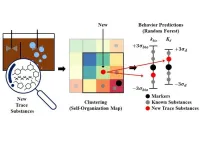
The global consumption of pharmaceuticals is growing rapidly every year, reaching 4 billion doses in 2020. As more and more pharmaceuticals are metabolized by the human body and enter sewage and wastewater treatment plants, the amount and types of trace substances found in them are also increasing. When these trace substances enter rivers and oceans and are used as water sources, they can have harmful effects on the environment and human health, including carcinogenesis and endocrine disruption. Therefore, technologies are needed to quickly ...

Read the release
Technology

Computing with the power of light

The exponential demand for high computing power is far exceeding the capabilities of current electronic systems; however, engineers at the University of Pittsburgh are shining a light on new solutions. Nathan Youngblood, principal investigator and assistant professor of electrical and computer engineering at Pitt’s Swanson School of Engineering, received a $552,166 Faculty Early Career Development Award from the National Science Foundation (NSF) and a $449,240 award from the Air Force Office of Scientific Research (AFOSR) through its Young Investigator Program (YIP) to continue his pioneering work in phase-change materials and optical computing. “Dr. ...

Read the release
Technology

New research examines how assumptions affect motion capture technology

Motion capture technology has applications in a wide range of fields, including entertainment, medicine, and sports, to name a few. But what if the measurements these systems were based on were rooted in social practices and biased assumptions, leading to errors that become ingrained over time? This question is at the heart of new research co-authored by Mona Sloane, an assistant professor of data science and media studies at the University of Virginia. Sloane and her co-authors — Abigal Jacobs, an assistant ...

Read the release
Optical computing boost with diffractive network advance
Technology

Optical computing boost with diffractive network advance

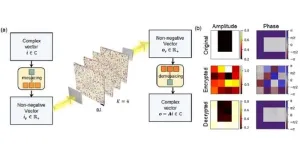
State-of-the-art neural networks heavily rely on linear operations, such as matrix-vector multiplications and convolutions. While dedicated processors like GPUs and TPUs exist for these operations, they have limitations in terms of power consumption and bandwidth. Optics is better suited for such operations because of its inherent parallelism, large bandwidth, and computation speed. Diffractive deep neural networks (D2NN), also known as diffractive networks, constitute an emerging optical computing architecture. ...

Read the release
Technology

Arafin conducting research aimed at securing chiplet-based semiconductor manufacturing from untrusted supply chains

Md Tanvir Arafin, Assistant Professor, Cybersecurity Engineering, received funding for the project: "Securing Chiplet-based Semiconductor Manufacturing from Untrusted Supply Chains." Monolithic integrated circuit (IC) design is reaching the physical limit to accommodate the ever-increasing demand of cramming more transistors in a chip. To address this, novel design primitives that move from monolithic design practices to heterogeneous integration of IC primitives in a 2.5 or 3D structure have emerged. ...

Read the release
Scientists advance affordable, sustainable solution for flat-panel displays and wearable tech
Technology

Scientists advance affordable, sustainable solution for flat-panel displays and wearable tech

Key takeaways: A new 3D-printable material called “supramolecular ink” replaces costly scarce metals with inexpensive, Earth-abundant materials. The organic material requires far less energy to manufacture than conventional methods. It could also enhance the sustainability of 3D-printable wearable devices, lighting technologies, and luminescent art and sculpture. A research team led by Lawrence Berkeley National Laboratory (Berkeley Lab) has developed “supramolecular ink,” a new technology for use in OLED (organic light-emitting ...

Read the release
Hybrid machine learning method boosts resolution of electrical impedance tomography for structural imaging
Technology

Hybrid machine learning method boosts resolution of electrical impedance tomography for structural imaging

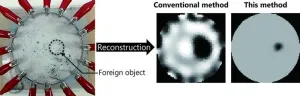
Electrical impedance tomography (EIT) is a non-destructive imaging technique used to visualize the interior of materials. In this method, an electric current is injected between two electrodes, creating an electric field, and other electrodes measure distortions caused by the presence of foreign objects inside the material. Compared to other imaging methods, such as X-ray imaging, computed tomography, and magnetic resonance imaging, EIT has the advantages of being low cost and less cumbersome as it does not require large magnets or radiation. Therefore, it holds great potential as a non-destructive structural health monitoring ...

Read the release
New sustainable method for creating organic semiconductors
Technology

New sustainable method for creating organic semiconductors

Researchers at Linköping University, Sweden, have developed a new, more environmentally friendly way to create conductive inks for use in organic electronics such as solar cells, artificial neurons, and soft sensors. The findings, published in the journal Nature Communications, pave the way for future sustainable technology. Organic electronics are on the rise as a complement and, in some cases, a replacement to traditional silicon-based electronics. Thanks to simple manufacturing, high flexibility, and low weight combined with the electrical properties typically associated with traditional semiconductors, it can be useful for applications such as digital displays, energy storage, ...

Read the release
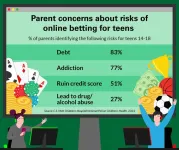
Digital dice and youth: 1 in 6 parents say they probably wouldn’t know if teens were betting online
Technology

Digital dice and youth: 1 in 6 parents say they probably wouldn’t know if teens were betting online

As young people increasingly have access and exposure to online gambling, only one in four parents say they have talked to their teen about some aspect of virtual betting, a national poll suggests. But over half of parents aren’t aware of their state’s legal age for online gambling and one in six admit they probably wouldn’t know if their child was betting online, according to the University of Michigan Health C.S. Mott Children’s Hospital National Poll on Children’s Health. “Teens and young adults may have a difficult time going ...

Read the release
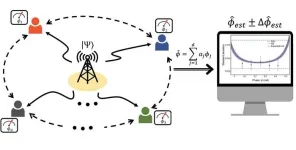
Enable distributed quantum sensors for simultaneous measurements in distant places
Technology

Enable distributed quantum sensors for simultaneous measurements in distant places

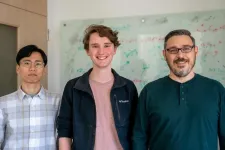
We've all had the experience of trying to get the exact time of a highly competitive concert ticket or class beforehand. If the time in Seoul and Busan is off by even a fraction of an hour, one will be less successful than the other. Sharing the exact time between distant locations is becoming increasingly important in all areas of our lives, including finance, telecommunications, security, and other fields that require improved accuracy and precision in sending and receiving data. The Korea Institute of Science and Technology (KIST) announced that Dr. Hyang-Tag Lim and his team at the Center ...

Read the release
Vanderbilt chemist Ben Brown awarded $2.375M to develop nonaddictive painkillers with AI
Technology

Vanderbilt chemist Ben Brown awarded $2.375M to develop nonaddictive painkillers with AI

When Ben Brown, research assistant professor of chemistry, thinks about the opioid epidemic, he views the problem on a molecular level. Painkillers used legitimately in medicine, such as oxycodone, are highly addictive, but better understanding of how their molecules interact with proteins in the body could lead to the formulation of nonaddictive alternatives, he said. In May, the National Institute on Drug Abuse awarded Brown $1.5 million over five years to further his work in this area. Brown, faculty affiliate of the Vanderbilt Center for Addiction Research and the Center for Applied Artificial Intelligence in Protein Dynamics, is developing artificial intelligence that ...

Read the release
Endless biotechnological innovation requires a creative approach
Technology

Endless biotechnological innovation requires a creative approach

Scientists working on biological design should focus on the idiosyncrasies of biological systems over optimisation, according to new research. In a study, published today in Science Advances, researchers from the Universities of Bristol and Ghent have shown how exploring the unknown may be the crucial step needed to realise the continual innovation needed for the biotechnologies of the future. Recognising the role of open-endedness in achieving this goal and its growing importance in fields like computer science and evolutionary biology, the team mapped out how open-endedness is linked to bioengineering practice today and what would be required to achieve it in ...

Read the release
Technology

Generative AI helps to explain human memory and imagination

Recent advances in generative AI help to explain how memories enable us to learn about the world, re-live old experiences and construct totally new experiences for imagination and planning, according to a new study by UCL researchers. The study, published in Nature Human Behaviour and funded by Wellcome, uses an AI computational model – known as a generative neural network - to simulate how neural networks in the brain learn from and remember a series of events (each one represented by a simple scene). The ...

Read the release
KIST's 'Moonwalk', a robot that makes climbing Bukhansan Mountain easier
Technology

KIST's 'Moonwalk', a robot that makes climbing Bukhansan Mountain easier

As people age, they gradually lose muscle strength in their arms and legs, making it difficult for them to participate in leisure activities such as hiking and traveling, and they often need to rely on assistive devices such as canes and wheelchairs for mobility. However, these assistive devices do not improve muscle strength, so wearable robots that can compensate for the lack of muscle strength with the help of robots are attracting attention as an innovative technology to improve the health and quality of life of the elderly. Dr. Lee Jongwon of the Intelligent Robotics Research Center at the Korea Institute of Science and Technology(KIST) ...

Read the release
Rice research opens new arena to study quantum interactions
Technology

Rice research opens new arena to study quantum interactions

HOUSTON – (Jan. 18, 2024) – Quantum technologies bring the promise of faster computing, enhanced drug development and new sensing applications. However, quantum behaviors are difficult to study experimentally since most systems can only sustain quantum effects for a short time. “The reason why quantum physics’ mysterious features tend to vanish so quickly is a process called decoherence,” said Kaden Hazzard, associate professor of physics and astronomy at Rice University and a corresponding author on a study published in Nature Physics. “It occurs when a quantum system ...

Read the release
Technology

UChicago, Caltech study suggests that physical processes can have hidden neural network-like abilities

We tend to separate the brain and the muscle—the brain does the thinking; the muscle does the doing. The brain takes in complex information about the world and makes decisions, and the muscle merely executes. This has also shaped how we think about a single cell; some molecules within cells are seen as ‘thinkers’ that take in information about the chemical environment and decide what the cell needs to do for survival; separately, other molecules are seen as the ‘muscle,’ building structures needed for survival. But a new study shows how the molecules that build structures, i.e, the muscle, can themselves do both the thinking and the doing. The ...

Read the release
Technology

AI can boost service for vulnerable customers

AUSTIN, Texas –– Artificial intelligence has become the Swiss Army knife of the business world, a universal tool for increasing sales, optimizing efficiency, and interacting with customers. But new research from Texas McCombs explores another purpose for AI in business: to contribute to the social good. It can do so by helping businesses better serve vulnerable consumers: anyone in the marketplace who experiences limited access to and control of resources. “AI is widely recognized for its operational and ...

Read the release
Towards the quantum of sound
Technology

Towards the quantum of sound

The quantum ground state of an acoustic wave of a certain frequency can be reached by completely cooling the system. In this way, the number of quantum particles, the so-called acoustic phonons, which cause disturbance to quantum measurements, can be reduced to almost zero and the gap between classical and quantum mechanics bridged. Over the past decade, major technological advances have been made, making it possible to put a wide variety of systems into this state. Mechanical vibrations oscillating between ...

Read the release
Better wireless communication made possible through machine learning
Technology

Better wireless communication made possible through machine learning

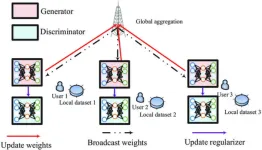
In today's increasingly interconnected world, high-quality communication has become more vital than ever. Accurately estimating the dynamic status of communication channels is a key factor in achieving this. Recently, a joint research team designed a new algorithm that offers high-level estimation accuracy and privacy protection with low computational and communication costs. This research was published Jan. 5 in Intelligent Computing, a Science Partner Journal. This new algorithm uses a specially designed deep learning model for precise estimation and a federated learning framework ...

Read the release
FAU Engineering receives $2.6 million NSF grant for CyberCorps student scholarship program
Technology

FAU Engineering receives $2.6 million NSF grant for CyberCorps student scholarship program

The College of Engineering and Computer Science of Florida Atlantic University received a $2.6 million grant from the National Science Foundation (NSF) to establish a scholarship program in the burgeoning and critical field of cybersecurity. The NSF’s CyberCorps® Scholarship for Service program seeks to increase the number of qualified cybersecurity professionals working for federal, state, local, territorial and tribal governments. The program is managed by the NSF in collaboration with the United States Office of Personnel Management and the U.S. Department of Homeland Security. FAU is one of only six universities ...

Read the release
From the original Press-News collection. Issuers of news releases are responsible for the accuracy of their content.