THE ORIGINAL COLLECTION · SINCE 2010

Technology
press releases.

Research announcements from universities, hospitals and scientific institutions. Explore the stories, people and discoveries behind the headlines.

Original publication datesPage 112
FIND A STORY

Find a past release.

Dates and source material belong to the original release.

Read our research explainers

Browse the collection · original publication order

Technology

Prenatal air pollution exposure linked to severe newborn respiratory distress

HERSHEY, Pa. — Prenatal exposure to air pollution increases the risk of severe respiratory distress in newborn babies, according to new research conducted at the Penn State College of Medicine in collaboration with the Maternal-Infant Research on Environmental Chemicals (MIREC) Study led by Health Canada. The risk increases with exposure specifically to fine particulate matter (PM2.5) and nitrogen dioxide (NO2), which occur in wildfire and cigarette smoke and vehicle emissions, among other sources. The findings, which published on Jan. 25 in the journal Environmental Health Perspectives, reveal a better understanding of ...

Read the release
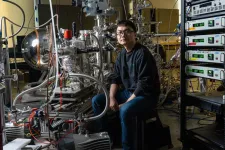

Rice scientists pull off quantum coup
Technology

Rice scientists pull off quantum coup

HOUSTON – (Jan. 29, 2023) – Rice University scientists have discovered a first-of-its-kind material, a 3D crystalline metal in which quantum correlations and the geometry of the crystal structure combine to frustrate the movement of electrons and lock them in place. The find is detailed in a study published in Nature Physics. The paper also describes the theoretical design principle and experimental methodology that guided the research team to the material. One part copper, two parts vanadium and four parts sulfur, the alloy features a 3D pyrochlore lattice consisting ...

Read the release
From simulation to reality: Making social media a safer space for kids through AI
Technology

From simulation to reality: Making social media a safer space for kids through AI

Like it or not, social media has become the new mall for kids. It’s where they want to be, and it’s a place they can easily go—often with no guidance, no oversight, and no guardrails. And when the content gets ugly or confusing or weird, it can be tough for them to know what to do. Dominic DiFranzo, an assistant professor of computer science and engineering in Lehigh University’s P.C. Rossin College of Engineering and Applied Science, has devoted his research to helping kids better navigate the perils of social media. He and his team have recently received two grants from the National Science Foundation to develop artificial intelligence tools ...

Read the release
Technology

Shah studying fingerprinting technology for enhancing 5G/NextG O-RAN supply chain risk management

Vijay Shah, Assistant Professor, Cybersecurity Engineering, received funding for the project: "Fingerprinting Technology for Enhancing 5G/NextG O-RAN Supply Chain Risk Management." In this project, Shah is focusing on distinctive power signatures and electromagnetic emanations to fortify supply chain risk management of 5G/Next G networks. This technology has the potential to create a robust framework for comprehensive validation and testing across the entire lifespan of deployed Open Radio Access Network (O-RAN) systems. This, in turn, could ...

Read the release
Technology

Efficacy of electronic cigarettes vs varenicline and nicotine chewing gum as an aid to stop smoking

About The Study: In this randomized clinical trial including 1,068 smokers, electronic cigarettes were as effective as varenicline and more effective than nicotine chewing gum as a stop-smoking aid when all three treatments were provided with minimal behavioral support. Authors: Zhao Liu, Ph.D., of the China-Japan Friendship Hospital in Beijing, is the corresponding author. To access the embargoed study: Visit our For The Media website at this link https://media.jamanetwork.com/ (doi:10.1001/jamainternmed.2023.7846) Editor’s Note: Please see the article for additional information, ...

Read the release
Speaking in a local accent might make social robots seem more trustworthy and competent
Technology

Speaking in a local accent might make social robots seem more trustworthy and competent

Social robots can help us with many things: teaching, learning, caring. Because they’re designed to interact with humans, they’re designed to make us comfortable — and that includes the way they talk. But how should they talk? Some research suggests that people like robots to use a familiar accent or dialect, while other research suggests the opposite. “Surprisingly, people have mixed feelings about robots speaking in a dialect — some like it, while others prefer standard language,” said Katharina Kühne of the University of Potsdam, lead author ...

Read the release
Robot trained to read braille at twice the speed of humans
Technology

Robot trained to read braille at twice the speed of humans

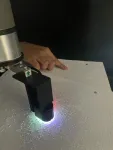
Researchers have developed a robotic sensor that incorporates artificial intelligence techniques to read braille at speeds roughly double that of most human readers. The research team, from the University of Cambridge, used machine learning algorithms to teach a robotic sensor to quickly slide over lines of braille text. The robot was able to read the braille at 315 words per minute at close to 90% accuracy. Although the robot braille reader was not developed as an assistive technology, the researchers say the high sensitivity required to read braille makes it an ideal test in the development of robot ...

Read the release
EPB, ORNL announce plans for research collaborative focused on energy resilience, quantum technology
Technology

EPB, ORNL announce plans for research collaborative focused on energy resilience, quantum technology

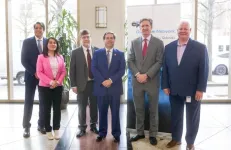
Building on $180 million in joint energy-related research, EPB and Oak Ridge National Laboratory (ORNL) marked 10 years of collaboration Friday with the announcement of the new Collaborative for Energy Resilience and Quantum Science (CERQS). The new joint research effort will focus on utilizing Chattanooga’s highly advanced and integrated energy and communications infrastructure to develop technologies and best practices for enhancing the resilience and security of the national power grid while accelerating the commercialization of quantum technologies. U.S. Representative Chuck Fleischmann (TN-03), ...

Read the release
Scientists design a two-legged robot powered by muscle tissue
Technology

Scientists design a two-legged robot powered by muscle tissue

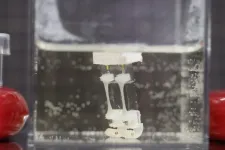
Compared to robots, human bodies are flexible, capable of fine movements, and can convert energy efficiently into movement. Drawing inspiration from human gait, researchers from Japan crafted a two-legged biohybrid robot by combining muscle tissues and artificial materials. Publishing on January 26 in the journal Matter, this method allows the robot to walk and pivot. “Research on biohybrid robots, which are a fusion of biology and mechanics, is recently attracting attention as a new field of robotics featuring biological function,” says corresponding author Shoji Takeuchi of the University of Tokyo, Japan. “Using muscle ...

Read the release
Technology

Neural network enables objective assessment of breast symmetry

Waltham — January 25, 2024 — A newly developed neural network is highly accurate in identifying key landmarks important in breast surgery – opening the potential for objective assessment of breast symmetry, suggests a study in the February issue of Plastic and Reconstructive Surgery®, the official medical journal of the American Society of Plastic Surgeons (ASPS). The journal is published in the Lippincott portfolio by Wolters Kluwer. "Neural networks and machine learning have the potential to improve evaluation of breast symmetry in reconstructive ...

Read the release
Computers are quick and reliable in counting seals
Technology

Computers are quick and reliable in counting seals

Computers can count seals from aerial photographs with lightning speed and reliability. Based on their spatial patterns, the tiny dots on the aerial images can even be assigned to one of the two major species of seals in the Wadden Sea. That is shown in the thesis that marine biologist Jeroen Hoekendijk will defend on January 26 in Wageningen. "To better understand if and how marine mammals like seals are affected by climate change and the disappearance of sea ice, this help from artificial intelligence (AI) in observations is crucial," Hoekendijk said. Hoekendijk carried out his research at the Royal Netherlands Institute ...

Read the release
First demonstration of predictive control of fusion plasma by digital twin
Technology

First demonstration of predictive control of fusion plasma by digital twin

Fusion energy is being developed as a solution to global energy problems. In particular, the magnetic confinement method, in which ultra-high temperature plasma is confined by a magnetic field, is the most advanced and is considered to be the most promising method for fusion reactors. By this method, the plasma is confined in the reactor in a high-temperature, high-density state by a magnetic field, and the energy released by the fusion reaction in the plasma is converted into electricity. To realize this power generation method, it is essential to predict and control the complex behavior of fusion plasma. One possible control method is digital twin control, in which the fusion plasma ...

Read the release
Technology

Chats with AI shift attitudes on climate change, Black Lives Matter

MADISON — People who were more skeptical of human-caused climate change or the Black Lives Matter movement who took part in conversation with a popular AI chatbot were disappointed with the experience but left the conversation more supportive of the scientific consensus on climate change or BLM. This is according to researchers studying how these chatbots handle interactions from people with different cultural backgrounds. Savvy humans can adjust to their conversation partners’ political leanings and cultural expectations to make sure they’re understood, but more and more often, humans find themselves in ...

Read the release
PNNL Software Technology wins FLC Award
Technology

PNNL Software Technology wins FLC Award

RICHLAND, Wash.—Visual Sample Plan (VSP), a free software tool developed at the Department of Energy's Pacific Northwest National Laboratory (PNNL) that boosts statistics-based planning, has been recognized with a 2024 Federal Laboratory Consortium (FLC) Award. The FLC represents over 300 federal laboratories, agencies, and research centers. The annual FLC awards program recognizes agencies for their contributions to technology transfer, which turns innovative research into impactful products and services. Judges bestowed ...

Read the release
Programming light propagation creates highly efficient neural networks
Technology

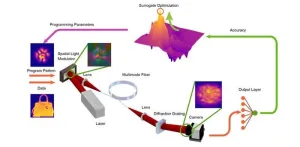
Programming light propagation creates highly efficient neural networks

Current artificial intelligence models utilize billions of trainable parameters to achieve challenging tasks. However, this large number of parameters comes with a hefty cost. Training and deploying these huge models require immense memory space and computing capability that can only be provided by hangar-sized data centers in processes that consume energy equivalent to the electricity needs of midsized cities. The research community is presently making efforts to rethink both the related computing hardware and the machine learning algorithms to sustainably keep the development of artificial intelligence at its current pace. Optical implementation ...

Read the release
Advincula earns prestigious NAI fellow honor
Technology

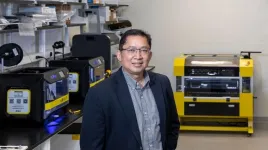
Advincula earns prestigious NAI fellow honor

Rigoberto “Gobet” Advincula has been awarded one of the highest honors of his profession. Advincula, the University of Tennessee-Oak Ridge National Laboratory Governor’s Chair of Advanced and Nanostructured Materials, has been elected National Academy of Inventors (NAI) Fellow. Advincula is a leader in the polymer field with inventions and many publications in polymer nanocomposites, graphene nanomaterials, polymer layered films, and coatings. He has been granted 14 US patents and has 21 published filings related to graphene nanomaterials, solid-state device fabrication, smart coatings and films, ...

Read the release
Technology

Machine learning model identifies waters protected under different interpretations of the U.S. Clean Water Act

The U.S. Clean Water Act is a critically important part of federal water quality regulation, but the act does not define the exact waters that fall under its jurisdiction. Now, Simon Greenhill and colleagues have developed a machine learning model that helps to clarify which waters are protected from pollution under the United States’ Clean Water Act, and how recent rule changes affect protection. The model demonstrates that the waters protected under the act differ substantially depending on whether the act’s regulations follow a 2006 U.S. Supreme Court ruling or a 2020 White House rule. Under the 2006 Rapanos Supreme Court ruling, the model suggests that the Clean ...

Read the release
Purdue Innovates licenses novel short-stature corn technology to Ag Alumni Seed
Technology

Purdue Innovates licenses novel short-stature corn technology to Ag Alumni Seed

WEST LAFAYETTE, Ind. – The Purdue Innovates Office of Technology Commercialization has issued a worldwide, exclusive license for a short-stature corn inbred called D16 to Romney-based Ag Alumni Seed. The license is limited to popcorn and doesn’t apply to dent corn, field corn or sweet corn. Traditional breeding techniques Ag Alumni Seed has supported multiple research projects at Purdue University with both financial and in-kind contributions—such as the use of land, equipment and facilities. Jay Hulbert, the company’s president and CEO, said development of D16 began with research that Guri Johal conducted at the company’s ...

Read the release
Technology

American College of Radiology releases joint statement on the use of AI tools in radiology

Philadelphia, January 25, 2024 – The American College of Radiology® (ACR®), working in close collaboration with four other radiology societies from around the world, have issued a joint statement on the development and use of artificial intelligence (AI) tools in radiology. This groundbreaking joint statement is openly available in ACR’s Journal of the American College of Radiology, published by Elsevier. It explores the potential challenges and ethical and safety concerns related to integrating this new technology into radiology practice. “Developing, Purchasing, Implementing and Monitoring AI Tools ...

Read the release
UTSA to establish new college in AI, cyber, computing and data science
Technology

UTSA to establish new college in AI, cyber, computing and data science

UTSA announced a pioneering initiative to reshape its academic landscape with the creation of a new college dedicated to artificial intelligence (AI), cybersecurity, computing, data science and related disciplines. This initiative aligns with the university's commitment to innovation and academic excellence while also positioning UTSA to lead in the rapidly evolving landscape of advanced technologies. Nearly 6,000 students are enrolled in AI, cyber, computing and data science-related degree programs at UTSA, reflecting ...

Read the release
Deep learning reveals molecular secrets of explosive perchlorate salts
Technology

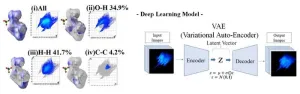
Deep learning reveals molecular secrets of explosive perchlorate salts

Perchlorates are a class of compounds that are notorious for their explosive nature. This raises safety concerns during experiments involving complex compounds that contain perchlorate ions, since explosions can be triggered even by the slightest shock or heat. It is, therefore, important to study their molecular structure and understand the reason behind their explosive nature. In this context, a method called the Hirschfield surface analysis has been extensively used for visualizing and quantifying the crystal structure and molecular interactions of crystal compounds. Moreover, a two-dimensional fingerprint plot derived from the Hirschfield ...

Read the release
Advanced Full-color image sensor technology enabling simultaneous energy harvesting and imaging
Technology

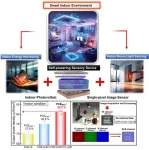
Advanced Full-color image sensor technology enabling simultaneous energy harvesting and imaging

Organic-based optoelectronic technology is increasingly recognized as an energy-efficient solution for low-power indoor electronics and wireless IoT sensors. This is largely due to its superior flexibility and light weight compared to conventional silicon-based devices. Notably, organic photovoltaic cells (OPVs) and organic photodetectors (OPDs) are leading examples in this field. OPVs have the remarkable ability to absorb energy and generate electricity even under very low light condition, while OPDs are capable of capturing images. However, despite their potential, the development ...

Read the release
Technology

JMIR Bioinformatics and Biotechnology invites submissions for research papers on machine learning-driven genomic predictive models

JMIR Publications is pleased to announce a new theme issue titled “Machine Learning-Based Predictive Models Using Genomic Data” in JMIR Bioinformatics and Biotechnology. The peer-reviewed journal is indexed in SCOPUS and focused on research in bioinformatics, computational biology, and biotechnology. This new theme issue aims to explore cutting-edge research at the intersection of machine learning and genomics, fostering advancements in predictive modeling for biological insights. JMIR Bioinformatics and Biotechnology welcomes contributions from global researchers, educators, and practitioners. We encourage submissions exploring diverse aspects of bioinformatics ...

Read the release
Moving humanoid robots outside research labs: the evolution of the iCub3 avatar system
Technology

Moving humanoid robots outside research labs: the evolution of the iCub3 avatar system

Genova (Italy), 24 January 2024 - Over the past four years, the research team at the Artificial and Mechanical Intelligence (AMI) lab at the Istituto Italiano di Tecnologia (IIT-Italian Institute of Technology) in Genova (Italy) has developed advanced avatar technologies, known as the iCub3 system, in continuous testing with real-world scenarios. The system was utilized to enable a human operator to remotely visit locations 300 km away, to entertain the public at events and television appearances, and ...

Read the release
Technology

Chemists use the blockchain to simulate over 4 billion chemical reactions essential to the origins of life

Cryptocurrency is usually “mined” through the blockchain by asking a computer to perform a complicated mathematical problem in exchange for tokens of cryptocurrency. But in research appearing in the journal Chem on January 24, a team of chemists have repurposed this process, asking computers to instead generate the largest network ever created of chemical reactions which may have given rise to prebiotic molecules on early Earth. This work indicates that at least some primitive forms of metabolism might have emerged without the involvement of ...

Read the release
From the original Press-News collection. Issuers of news releases are responsible for the accuracy of their content.