THE ORIGINAL COLLECTION · SINCE 2010

Technology
press releases.

Research announcements from universities, hospitals and scientific institutions. Explore the stories, people and discoveries behind the headlines.

Original publication datesPage 145
FIND A STORY

Find a past release.

Dates and source material belong to the original release.

Read our research explainers

Browse the collection · original publication order

Masai giraffes more endangered than previously thought
Technology

Masai giraffes more endangered than previously thought

UNIVERSITY PARK, Pa. — Giraffes in eastern Africa may be even more endangered than previously thought. A new study led by researchers at Penn State reveals that populations of Masai giraffes separated geographically by the Great Rift Valley have not interbred — or exchanged genetic material — in more than a thousand years, and in some cases hundreds of thousands of years. The researchers recommend that the two populations be considered separately for conservation purposes, with separate but coordinated conservation efforts to manage each population. Populations of giraffes have declined rapidly in the last thirty years, with ...

Read the release

Technology

Baldimtsi conducting collaborative research focused on cryptographic accumulators and revocation of credentials

Foteini Baldimtsi, Assistant Professor, Computer Science, received funding from the National Science Foundation for the project: "Collaborative Research: SaTC: CORE: Medium: Cryptographic accumulators and revocation of credentials." The goal of the project is to design efficient revocation mechanisms for the Web PKI and beyond. Baldimtsi and her collaborators will tailor cryptographic accumulators to the problem of credential revocation making certificate revocation mechanisms ...

Read the release
Technology

Mason researchers receive funding for collaborative mobile immersive computing research infrastructure for multi-user XR

Four Mason researchers received funding from the National Science Foundation for the project: "Collaborative Research: CCRI: New: CoMIC: A Collaborative Mobile Immersive Computing Research Infrastructure for Multi-user XR." Bo Han, Associate Professor, Computer Science; Parth Pathak, Assistant Professor, Computer Science; Lap-Fai (Craig) Yu, Associate Professor, Computer Science; and Songqing Chen, Professor, Computer Science, are designing and developing the infrastructure for Collaborative ...

Read the release
New material transforms light, creating new possibilities for sensors
Technology

New material transforms light, creating new possibilities for sensors

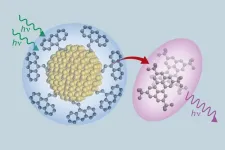
A group of scientists and engineers that includes researchers from The University of Texas at Austin have created a new class of materials that can absorb low energy light and transform it into higher energy light. The new material is composed of ultra-small silicon nanoparticles and organic molecules closely related to ones utilized in OLED TVs. This new composite efficiently moves electrons between its organic and inorganic components, with applications for more efficient solar panels, more accurate medical imaging and better night vision goggles. The material is described in a new paper in Nature Chemistry. “This process gives us a whole new way of designing ...

Read the release
Unveiling quantum gravity: New results from IceCube and Fermi data
Technology

Unveiling quantum gravity: New results from IceCube and Fermi data

In a study published in Nature Astronomy today, a team of researchers from the University of Naples “Federico II”, the University of Wroclaw, and the University of Bergen examined a quantum-gravity model of particle propagation in which the speed of ultrarelativistic particles decreases with rising energy. This effect is expected to be extremely small, proportional to the ratio between particle energy and the Planck scale, but when observing very distant astrophysical sources, it can accumulate to observable levels. The ...

Read the release
Call for papers: JMIR Bioinformatics and Biotechnology
Technology

Call for papers: JMIR Bioinformatics and Biotechnology

JMIR Bioinformatics and Biotechnology (JBB) is a leading, international, peer-reviewed journal that aims to publish high-quality original research articles, reviews, and perspectives on all aspects of bioinformatics, computational biology, and biotechnology. We invite researchers, educators, and practitioners to submit their original research articles, reviews, and perspectives to JBB. Our scope includes but is not limited to: Bioinformatics, including genomic variation detection algorithms, tools, and databases Artificial ...

Read the release
Technology

Loneliness, insomnia linked to work with AI systems

Employees who frequently interact with artificial intelligence systems are more likely to experience loneliness that can lead to insomnia and increased after-work drinking, according to research published by the American Psychological Association. Researchers conducted four experiments in the U.S., Taiwan, Indonesia and Malaysia. Findings were consistent across cultures. The research was published online in the Journal of Applied Psychology. In a prior career, lead researcher Pok Man Tang, PhD, worked in an ...

Read the release
Technology

Should robots be given a human conscience?

Modern-day society relies intrinsically on automated systems and artificial intelligence. It is embedded into our daily routines and shows no signs of slowing, in fact use of robotic and automated assistance is ever-increasing. Such pervasive use of AI presents technologists and developers with two ethical dilemmas – how do we build robots that behave in line with our values and how to we stop them going rogue? One author suggests that one option which is not explored enough is to code more humanity into robots, gifting robots with traits such as empathy and compassion. Is ...

Read the release
Quantum materials: Electron spin measured for the first time
Technology

Quantum materials: Electron spin measured for the first time

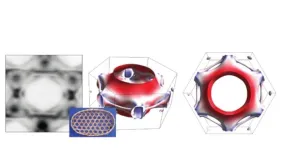
An international research team has succeeded for the first time in measuring the electron spin in matter - i.e., the curvature of space in which electrons live and move - within "kagome materials", a new class of quantum materials. The results obtained - published in Nature Physics - could revolutionise the way quantum materials are studied in the future, opening the door to new developments in quantum technologies, with possible applications in a variety of technological fields, from renewable energy to biomedicine, from electronics to quantum computers. Success was ...

Read the release
Technology

USTC enhances fluorescence brightness of single silicon carbide spin color centers

In a study published online in Nano Letters, the team led by Prof. LI Chuanfeng and Dr. XU Jinshi from the University of Science and Technology of China of the Chinese Academy of Sciences made progress in enhancing the fluorescence of single silicon carbide spin defects. The researchers leveraged surface plasmons to markedly boost the fluorescence brightness of single silicon carbide double vacancy PL6 color centers, leading to an improvement in the efficiency of spin control using the properties of co-planar waveguides. This low-cost method neither calls for complex micro-nano processing ...

Read the release
Technology

Single quantum bit achieves complex systems modeling

A team led by Academician GUO Guangcan from the University of Science and Technology of China (USTC) of the Chinese Academy of Sciences (CAS), with collaborative efforts from the University of Manchester, and Nanyang Technological University, has achieved new progress in applying quantum technologies in complex systems modeling. The results were published in Nature Communications on May 6. Stochastic modeling can help us to predict the future behavior of complex processes, which are non-Markovian. In order to simulate a non-Markovian process, a memory is of necessity to store a large amount of observed information about the past of the system. However, ...

Read the release
Zinc transporter has built-in self-regulating sensor
Technology

Zinc transporter has built-in self-regulating sensor

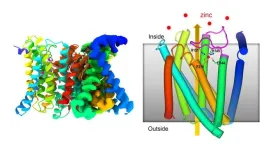
UPTON, NY — Scientists at the U.S. Department of Energy’s (DOE) Brookhaven National Laboratory have determined the atomic-level structure of a zinc-transporter protein, a molecular machine that regulates levels of this crucial trace metal micronutrient inside cells. As described in a paper just published in Nature Communications, the structure reveals how the cellular membrane protein shifts its shape to move zinc from the environment into a cell, and temporarily blocks this action automatically when zinc levels inside the cell get too high. “Zinc is important for many biological ...

Read the release
New method takes the uncertainty out of oxide semiconductor layering
Technology

New method takes the uncertainty out of oxide semiconductor layering

Tokyo, Japan – 3D integrated circuits are a key part of improving the efficiency of electronics to meet the considerable demands of consumers. They are constantly being developed, but translating theoretical findings into actual devices is not easy. Now, a new design by a research team from Japan can turn these theories into reality. In a study recently published for the VLSI Symposium 2023, researchers from Institute of Industrial Science, The University of Tokyo have reported a deposition process for nanosheet oxide semiconductor. The oxide semiconductor resulting from this process has high carrier mobility and reliability in transistors. 3D ...

Read the release
Preparing the stage for 6G: A fast and compact transceiver for Sub-THz frequencies
Technology

Preparing the stage for 6G: A fast and compact transceiver for Sub-THz frequencies

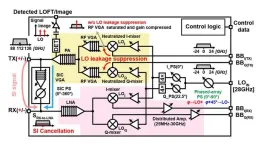
New transceiver design capable of both transmission and reception at frequencies over 100 GHz and at 112 Gb/s data rate could pave the way to 6G technologies, as reported by scientists at Tokyo Tech. By effectively suppressing the self-interference caused by the transmission signal leaking into the receiver, the proposed architecture reaches unprecedented data rates while maintaining a surprisingly compact size. Scientists and engineers in the field of telecommunications are already working on the technologies that will be used for sixth generation (6G) networks. Ideally, 6G should deliver data rates of ...

Read the release
University of Arizona launching computer science and engineering B.S.
Technology

University of Arizona launching computer science and engineering B.S.

Right now, United States employers are unable to fill around 1 million computer science-related jobs because of a lack of qualified candidates, as estimated by the Bureau of Labor Statistics. And the demand isn’t going away – the bureau projects employment in the field to grow much faster than average through 2031, while the number of graduates will continue to lag behind job openings. This workforce need is the primary reason the College of Engineering will soon offer a bachelor's degree in computer science and engineering, said Michael Wu, head of the Department of Electrical and Computer Engineering, which houses the ...

Read the release
Technology

Pritzker Molecular Engineering researchers “split” phonons – or sound – in step toward new type of quantum computer

When we listen to our favorite song, what sounds like a continuous wave of music is actually transmitted as tiny packets of quantum particles called phonons. The laws of quantum mechanics hold that quantum particles are fundamentally indivisible and therefore cannot be split, but researchers at the Pritzker School of Molecular Engineering (PME) at the University of Chicago are exploring what happens when you try to split a phonon. In two experiments – the first of their kinds – a team led by Prof. Andrew Cleland used a device called an acoustic beamsplitter ...

Read the release
Robotic vehicles fight dengue-carrying mosquitos in Taiwan sewers
Technology

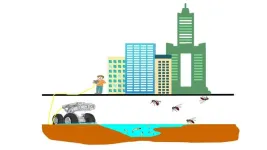
Robotic vehicles fight dengue-carrying mosquitos in Taiwan sewers

Unmanned ground vehicles can be used to identify and eliminate the breeding sources of mosquitos that carry dengue fever in urban areas, according to a new study published this week in PLOS Neglected Tropical Diseases by Wei-Liang Liu of the Taiwan National Mosquito-Borne Diseases Control Research Center, and colleagues. Dengue fever is an infectious disease caused by the dengue virus and spread by several mosquito species in the genus Aedes, which also spread chikungunya, yellow fever and zika. Through the process of urbanization, ...

Read the release
Technology

Breakthrough: Scientists develop artificial molecules that behave like real ones

Scientists from the Radboud University have developed synthetic molecules that resemble real organic molecules. A collaboration of researchers, led by Alex Khajetoorians and Daniel Wegner, can now simulate the behaviour of real molecules by using artificial molecules. In this way, they can tweak properties of molecules in ways that are normally difficult or unrealistic, and they can understand much better how molecules change. Emil Sierda, who was in charge of conducting the experiments at Radboud University: ‘A few years ago we had this crazy idea to build a quantum simulator. We wanted to create artificial ...

Read the release
Mechanical engineers lend fresh insight into battery-based desalination technology
Technology

Mechanical engineers lend fresh insight into battery-based desalination technology

CHAMPAIGN, Ill. — To achieve more effective saltwater desalination, mechanical engineers focused on fluid movement rather than new materials in a new study. By adding microchannels to the inside of battery-like electrodes made of Prussian blue – an intense blue pigment often used in art that also has special chemical properties – researchers increased the extent of seawater desalination five times over their non-channeled counterparts to reach salinity levels below the freshwater threshold. The study, led by University of Illinois Urbana-Champaign ...

Read the release
Pioneer of multicore processor design receives the ACM-IEEE CS Eckert-Mauchly Award
Technology

Pioneer of multicore processor design receives the ACM-IEEE CS Eckert-Mauchly Award

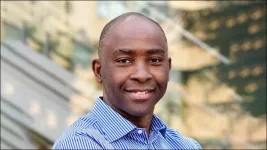
ACM, the Association for Computing Machinery, today announced that Kunle Olukotun, a Professor at Stanford University, is the recipient of the ACM-IEEE CS Eckert-Mauchly Award for contributions and leadership in the development of parallel systems, especially multicore and multithreaded processors. In the early 1990s, Olukotun became a leading designer of a new kind of microprocessor known as a “chip multiprocessor”—today called a “multicore processor.” His work demonstrated the performance advantages of multicore processors ...

Read the release
ChatGPT designs its first robot with TU Delft researchers
Technology

ChatGPT designs its first robot with TU Delft researchers

Poems, essays and even books – is there anything the open AI platform ChatGPT can’t handle? These new AI developments have inspired researchers at TU Delft and the Swiss technical university EPFL to dig a little deeper: For instance, can ChatGPT also design a robot? And is this a good thing for the design process, or are there risks? The researchers published their findings in Nature Machine Intelligence. What are the greatest future challenges for humanity? This was the first question that Cosimo Della Santina, assistant professor, and PhD student Francesco Stella, both from TU Delft, and Josie Hughes from EPFL, asked ...

Read the release
Technology

Autonomous products like robot vacuums make our lives easier. But do they deprive us of meaningful experiences?

Researchers from University of St. Gallen and Columbia Business School published a new Journal of Marketing article that examines how the perceived meaning of manual labor can help predict the adoption of autonomous products. The study, forthcoming in the Journal of Marketing, is titled “Meaning of Manual Labor Impedes Consumer Adoption of Autonomous Products” and is authored by Emanuel de Bellis, Gita Venkataramani Johar, and Nicola Poletti. Whether it is cleaning homes or mowing lawns, consumers increasingly delegate manual tasks to autonomous products. These gadgets operate without human oversight and free consumers from ...

Read the release
New superconducting diode could improve performance of quantum computers and artificial intelligence
Technology

New superconducting diode could improve performance of quantum computers and artificial intelligence

A University of Minnesota Twin Cities-led team has developed a new superconducting diode, a key component in electronic devices, that could help scale up quantum computers for industry use and improve the performance of artificial intelligence systems. Compared to other superconducting diodes, the researchers’ device is more energy efficient; can process multiple electrical signals at a time; and contains a series of gates to control the flow of energy, a feature that has never before been integrated into a superconducting diode. The paper is published in Nature Communications, a peer-reviewed scientific journal ...

Read the release
Technology

New digital tool enables farmer’s decisions for sustainable agriculture

A new ‘digital decision support tool’ enabling the transition towards more diversified and sustainable agricultural systems has been developed by an international team of researchers from Germany, France, and Czech Republic. The research led by Dr Ioanna Mouratiadou from the Leibniz Centre for Agricultural Landscape Research, and published in Environmental Science and Ecotechnology, presents the ‘Digital Agricultural Knowledge and Information System (DAKIS)’ as a data integration ...

Read the release
Direct air capture technology licensed to Knoxville-based Holocene
Technology

Direct air capture technology licensed to Knoxville-based Holocene

An innovative and sustainable chemistry developed at the Department of Energy’s Oak Ridge National Laboratory for capturing carbon dioxide from air has been licensed to Holocene, a Knoxville-based startup focused on designing and building plants that remove carbon dioxide from atmospheric air. “ORNL is tackling climate change by developing numerous technologies that reduce or eliminate emissions,” said Susan Hubbard, ORNL deputy for science and technology. “But with billions ...

Read the release
From the original Press-News collection. Issuers of news releases are responsible for the accuracy of their content.