THE ORIGINAL COLLECTION · SINCE 2010

Technology
press releases.

Research announcements from universities, hospitals and scientific institutions. Explore the stories, people and discoveries behind the headlines.

Original publication datesPage 150
FIND A STORY

Find a past release.

Dates and source material belong to the original release.

Read our research explainers

Browse the collection · original publication order

Technology

Model aims to help first responders reach accident sites faster

Researchers at North Carolina State University have developed a complex model to improve how quickly first responders – such as police and EMTs – reach the scene of vehicle accidents. In computational testing, the model outperformed the existing techniques for getting first responders to accident sites quickly. “The goal was to figure out the most efficient way to get first responders to an accident,” says Leila Hajibabai, corresponding author of a paper on the work and an assistant professor in NC State’s Edward P. Fitts Department of Industrial and Systems Engineering. “Where should first responders be based ...

Read the release
University of Minnesota to lead new $20M AI Institute focusing on climate-smart agriculture and forestry
Technology

University of Minnesota to lead new $20M AI Institute focusing on climate-smart agriculture and forestry

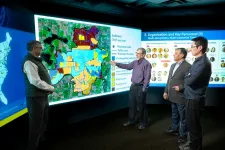
The University of Minnesota Twin Cities announced that it will receive a $20 million grant over five years from the National Science Foundation (NSF) and the U.S. Department of Agriculture’s (USDA) National Institute of Food and Agriculture (NIFA) to lead a new National Artificial Intelligence Research Institute. Researchers at the AI Institute for Climate-Land Interactions, Mitigation, Adaptation, Tradeoffs and Economy (AI-CLIMATE) aim to leverage artificial intelligence (AI) to create more climate-smart practices that will absorb and store carbon while simultaneously boosting the economy in the agriculture and forestry industries. The new ...

Read the release
Technology

New decision aid to help with screening to prevent fragility fractures

Should healthy people be screened to help reduce their risk of fragility fractures? A new interactive online Fragility Fracture Decision Aid for shared decision-making can help clinicians and patients visualize their individual risk of fracture and the potential benefits and harms of preventive treatment. The decision aid is part of a new guideline https://www.cmaj.ca/lookup/doi/10.1503/cmaj.221219 from the Canadian Task Force on Preventive Health Care on screening to prevent fragility fractures. The guideline, ...

Read the release
Smart artificial skin in application check stage: Graz University of Technology researcher wins ERC Proof of Concept grant
Technology

Smart artificial skin in application check stage: Graz University of Technology researcher wins ERC Proof of Concept grant

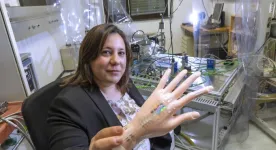
Just a few months ago, Anna Maria Coclite and her team from the Institute of Solid State Physics at Graz University of Technology (TU Graz) presented the results of their research as part of Coclite’s ERC Starting Grant project “SmartCore”. They had succeeded in developing the three-in-one “smart skin” hybrid material, which closely resembles human skin by simultaneously sensing pressure, moisture and temperature and converting them into electronic signals. With 2,000 individual ...

Read the release
Technology

AI training: A backward cat pic is still a cat pic

Genes make up only a small fraction of the human genome. Between them are wide sequences of DNA that direct cells when, where, and how much each gene should be used. These biological instruction manuals are known as regulatory motifs. If that sounds complex, well, it is. The instructions for gene regulation are written in a complicated code, and scientists have turned to artificial intelligence to crack it. To learn the rules of DNA regulation, they’re using deep neural networks (DNNs), which excel at finding patterns in large datasets. DNNs are at the core of popular ...

Read the release
University of Southern California launches $1B-plus initiative for computing including AI, advanced computation and quantum computing
Technology

University of Southern California launches $1B-plus initiative for computing including AI, advanced computation and quantum computing

USC President Carol L. Folt on Thursday announced a $1 billion-plus initiative for computing research and education across disciplines, with a focus on AI, machine learning and data science, augmented and virtual reality, robotics, gaming and block chain. “I want every student who comes through our programs, whether they are in science, business, the humanities or the arts, to have a solid grounding in technology and the ethics of the work that they do,” Folt said. “We will integrate digital literacy across disciplines to create responsible leaders for the workforce of the future.” Seeded with a $260 million gift from the ...

Read the release
Teletrix licenses methods for ionizing radiation training using augmented reality
Technology

Teletrix licenses methods for ionizing radiation training using augmented reality

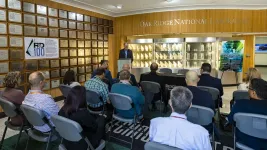
A method using augmented reality to create accurate visual representations of ionizing radiation, developed at the Department of Energy’s Oak Ridge National Laboratory, has been licensed by Teletrix, a firm that creates advanced simulation tools to train the nation’s radiation control workforce. Ionizing radiation — which is linked to cancer and other health problems — has enough energy to knock electrons off of atoms or molecules, creating ions. Occupational exposure is a common occurrence for many radiological workers, so any method of decreasing exposure helps ...

Read the release
Quantum lidar prototype acquires real-time 3D images while fully submerged underwater
Technology

Quantum lidar prototype acquires real-time 3D images while fully submerged underwater

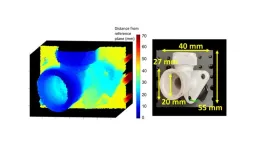
WASHINGTON — For the first time, researchers have demonstrated a prototype lidar system that uses quantum detection technology to acquire 3D images while submerged underwater. The high sensitivity of this system could allow it to capture detailed information even in extremely low-light conditions found underwater. “This technology could be useful for a wide range of applications,” said research team member Aurora Maccarone, a Royal Academy of Engineering research fellow from Heriot-Watt University in the United Kingdom. “For example, it could be used to inspect underwater installations, such as underwater wind farm cables and the submerged ...

Read the release
Technology

Machine learning can support urban planning for energy use

As Philadelphia strives to meet greenhouse gas emissions goals established in its 2050 Plan, a better understanding of how zoning can play a role in managing building energy use could set the city up for success. Researchers in Drexel University’s College of Engineering are hoping a machine learning model they’ve developed can support these efforts by helping to predict how energy consumption will change as neighborhoods evolve. In 2017, the city set a goal of becoming carbon neutral by 2050, led in large part by a reduction in greenhouse gas emissions from building energy use – which ...

Read the release
Technology

Association of biomarker-based AI with risk of racial bias in retinal images

About The Study: Results of this diagnostic study including 4,095 retinal fundus images collected from 245 neonates suggest that it can be very challenging to remove information relevant to self-reported race from fundus photographs. As a result, AI algorithms trained on fundus photographs have the potential for biased performance in practice, even if based on biomarkers rather than raw images. Regardless of the methodology used for training AI, evaluating performance in relevant subpopulations is critical. Authors: J. ...

Read the release
Engineering molecular interactions with machine learning
Technology

Engineering molecular interactions with machine learning

In 2019, scientists in the joint School of Engineering and School of Life Sciences Laboratory of Protein Design and Immunoengineering (LPDI) led by Bruno Correia developed MaSIF: a machine learning-driven method for scanning millions of protein surfaces within minutes to analyze their structure and functional properties. The researchers’ ultimate goal was to computationally design protein interactions by finding optimal matches between molecules based on their surface chemical and geometric ‘fingerprints’. Four years later, they have achieved ...

Read the release
Purdue startup Aerovy Mobility develops cloud software to support infrastructure for electric aircraft
Technology

Purdue startup Aerovy Mobility develops cloud software to support infrastructure for electric aircraft

WEST LAFAYETTE, Ind. – The advanced air mobility sector, which includes electric-powered urban and regional aircraft, may become a $1.5 trillion market by 2040. A new Purdue University-connected startup could benefit airport and vertiport operators and real estate developers looking to establish advanced air mobility technology at existing and potential sites. Purdue University postgraduate students have launched Aerovy Mobility, a startup company that commercializes cloud-based software solutions to plan and operate infrastructure ...

Read the release
Technology

UBC Okanagan researchers aim to energize fruit waste

When Doc Brown fed his DeLorean food scraps in Back to the Future as fuel, it seemed like crazy science fiction. Now science is taking over that fiction as UBC Okanagan researchers are looking at the potential of using fruit waste—both solid and leachate—to power fuel cells. While the energy extracted from food scraps still pales in comparison to solar or wind power, researchers are working towards purifying and improving the energy output of discarded food, particularly fruit waste—an item that is in abundance in the agricultural belt of the Okanagan Valley. According ...

Read the release
Gwangju Institute of Science and Technology researchers enhance thermoelectricity with guided impurity position control
Technology

Gwangju Institute of Science and Technology researchers enhance thermoelectricity with guided impurity position control

Thermoelectric materials, substances that convert temperature difference into electricity, find a multitude of applications involving the conversion of waste heat into useful electrical energy. However, they often need to rely on heavy rare earth elements for efficient thermoelectric conversion. This, unfortunately, makes them expensive and environmentally hazardous. In recent years, conjugated polymer-based material has received attention as an environmentally benign alternative to the conventional rare earth metal-based thermoelectric materials. Owing to their high ...

Read the release
Technology

Steep 66% drop in party registration with Automatic Voter Registration

In 2016, Oregon became the first state to adopt and implement an Automatic Voter Registration (AVR) system. Now, twenty-two states, plus Washington D.C., have such systems in place. Early research on the impacts of this innovation has shown an increase in the number of people registered, and greater diversity among the registrants. Now, a researcher using Oregon voter data has identified an unintended consequence of Automatic Voter Registration: a steep drop in party registration. These results have been published in the journal Electoral Studies ...

Read the release
Technology

Openseize: A novel open-source software to analyze large-scale digital signals

Electroencephalography (EEG) is an indispensable tool used by clinicians to diagnose neurological diseases and by researchers to study and discover brain circuit mechanisms that support sensory, mnemonic, and cognitive processing. A new software - Openseize - created by Dr. Matthew Caudill, an investigator at the Jan and Dan Duncan Neurological Research Institute at Texas Children’s Hospital and assistant professor at Baylor College of Medicine, can now analyze massive amounts of one-dimensional digital ...

Read the release
Cybersickness more likely to affect women, ongoing research to understand why
Technology

Cybersickness more likely to affect women, ongoing research to understand why

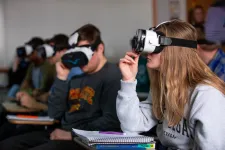
AMES, IA — Iowa State researchers in psychology and engineering found women experience cybersickness with virtual reality headsets more often than men. Their ongoing work, supported by a new $600,000 grant from the National Science Foundation, explores why this difference exists and options to help individuals adapt. Psychology professor Jonathan Kelly studies human computer interaction, spatial cognition and virtual reality. He says gender discrepancies in cybersickness may not seem that important when it’s related to video games and other forms of entertainment. "But it’s still a problem, and when VR gets to the point ...

Read the release
Quantum entanglement of photons doubles microscope resolution
Technology

Quantum entanglement of photons doubles microscope resolution

Using a “spooky” phenomenon of quantum physics, Caltech researchers have discovered a way to double the resolution of light microscopes. In a paper appearing in the journal Nature Communications, a team led by Lihong Wang, Bren Professor of Medical Engineering and Electrical Engineering, shows the achievement of a leap forward in microscopy through what is known as quantum entanglement. Quantum entanglement is a phenomenon in which two particles are linked such that the state of one particle is tied ...

Read the release
A touch-responsive fabric armband – for flexible keyboards, wearable sketchpads
Technology

A touch-responsive fabric armband – for flexible keyboards, wearable sketchpads

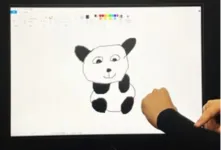
It's time to roll up your sleeves for the next advance in wearable technology – a fabric armband that’s actually a touch pad. In ACS Nano, researchers say they have devised a way to make playing video games, sketching cartoons and signing documents easier. Their proof-of-concept silk armband turns a person’s forearm into a keyboard or sketchpad. The three-layer, touch-responsive material interprets what a user draws or types and converts it into images on a computer. Computer trackpads and electronic signature-capture ...

Read the release
Technology

Joyful music could be a game changer for virtual reality headaches

Joyful music could be a game changer for virtual reality headaches Listening to music could reduce the dizziness, nausea and headaches virtual reality users might experience after using digital devices, research suggests. Cybersickness – a type of motion sickness from virtual reality experiences such as computer games – significantly reduces when joyful music is part of the immersive experience, the study found. The intensity of the nausea-related symptoms of cybersickness was also found to substantially decrease with both joyful and calming music. Researchers from the University of Edinburgh assessed the effects of music ...

Read the release
AI helpful in triaging breast masses in low-resource areas
Technology

AI helpful in triaging breast masses in low-resource areas

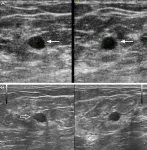
OAK BROOK, Ill. – Artificial intelligence (AI) can analyze breast mass images from low-cost portable ultrasound machines and accurately identify cancer, according to a study published in Radiology, a journal of the Radiological Society of North America (RSNA). This could prove useful for triage in low-resource settings. Breast lumps are often found accidentally, during breast self-exam or during a breast exam by a medical professional. Breast cancer screening can find cancers in the breast before the lump can be felt. While cancer screening has been the focus in Western countries, low- and middle-income ...

Read the release
AI bias may impair radiologist accuracy on mammogram
Technology

AI bias may impair radiologist accuracy on mammogram

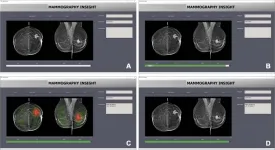
OAK BROOK, Ill. – Incorrect advice by an AI-based decision support system could seriously impair the performance of radiologists at every level of expertise when reading mammograms, according to a new study published in Radiology, a journal of the Radiological Society of North America (RSNA). Often touted as a “second set of eyes” for radiologists, AI-based mammographic support systems are one of the most promising applications for AI in radiology. As the technology expands, there are concerns that it may make radiologists susceptible to automation bias—the tendency of humans ...

Read the release
Could wearables capture well-being?
Technology

Could wearables capture well-being?

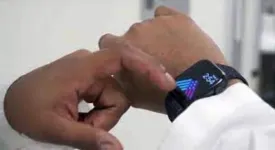
New York, NY (May 2, 2023)—Applying machine learning models, a type of artificial intelligence (AI), to data collected passively from wearable devices can identify a patient’s degree of resilience and well-being, according to investigators at the Icahn School of Medicine at Mount Sinai in New York. The findings, reported in the May 2nd issue of JAMIA Open, support wearable devices, such as the Apple Watch®, as a way to monitor and assess psychological states remotely without requiring the completion of mental health questionnaires. The ...

Read the release
OSU-Cascades researcher explores AI solution for tracking and reducing household food waste
Technology

OSU-Cascades researcher explores AI solution for tracking and reducing household food waste

BEND, Ore. – A researcher at Oregon State University-Cascades has received funding to develop a smart compost bin that tracks household food waste. The project led by Patrick Donnelly, assistant professor of computer science in the OSU College of Engineering, seeks to make a dent in a multi-billion-dollar annual problem in the United States: More than one-third of all food produced in the U.S. goes uneaten. “At every other step of the agricultural supply chain, food waste is tracked, measured and quantified,” Donnelly ...

Read the release
Technology

Sensor enables high-fidelity input from everyday objects, human body

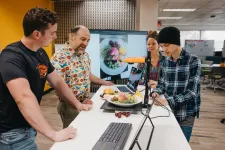
Images // Video Couches, tables, sleeves and more can turn into a high-fidelity input device for computers using a new sensing system developed at the University of Michigan. The system repurposes technology from new bone-conduction microphones, known as Voice Pickup Units (VPUs), which detect only those acoustic waves that travel along the surface of objects. It works in noisy environments, along odd geometries such as toys and arms, and on soft fabrics such as clothing and furniture. Called SAWSense, for the surface acoustic waves it relies ...

Read the release
From the original Press-News collection. Issuers of news releases are responsible for the accuracy of their content.