THE ORIGINAL COLLECTION · SINCE 2010

Technology
press releases.

Research announcements from universities, hospitals and scientific institutions. Explore the stories, people and discoveries behind the headlines.

Original publication datesPage 151
FIND A STORY

Find a past release.

Dates and source material belong to the original release.

Read our research explainers

Browse the collection · original publication order

Technology

Exposure to airplane noise increases risk of sleeping fewer than 7 hours per night

A new study has found that people who were exposed to even moderate levels of aircraft noise were less likely to receive the minimum recommended amount of sleep each night, and this risk increased among people living in the Western U.S., near a major cargo airport, or near a large water body, and among people with no hearing loss. As major airline officials predict another record summer air travel season, a new analysis by Boston University School of Public Health (BUSPH) and Oregon State University has found that exposure to even moderate levels of airplane noise may disrupt sleep, building upon a growing body of research ...

Read the release


Coal trains increase air pollution in San Francisco bay area
Technology

Coal trains increase air pollution in San Francisco bay area

Coal trains and terminal operations add a significant amount of fine particulate matter (PM2.5) pollution to urban areas, more so than other freight or passenger trains, according to a study conducted in Richmond, California, by the University of California, Davis. The paper, published in the journal Air Quality, Atmosphere & Health, is the first study of coal train particulate pollution in a U.S. urban area. It’s also the first to use artificial intelligence technologies to verify that the source of air pollution detected comes from coal. It found that passing trains carrying ...

Read the release
Researchers develop clever algorithm to improve our understanding of particle beams in accelerators
Technology

Researchers develop clever algorithm to improve our understanding of particle beams in accelerators

Whenever SLAC National Accelerator Laboratory’s linear accelerator is on, packs of around a billion electrons each travel together at nearly the speed of light through metal piping. These electron bunches form the accelerator’s particle beam, which is used to study the atomic behavior of molecules, novel materials and many other subjects. But trying to estimate what a particle beam actually looks like as it travels through an accelerator is difficult, leaving scientists often with only a rough approximation of how a beam will behave during an experiment. Now, researchers at the Department of Energy’s SLAC, the DOE’s Argonne National ...

Read the release
Towards a sustainable superconductor technology with magnesium diboride super magnets
Technology

Towards a sustainable superconductor technology with magnesium diboride super magnets

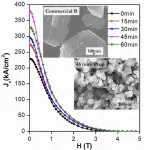
Magnesium diboride (MgB2), a binary compound, behaves as a superconductor – a substance that offers no resistance to electric current flowing through it – at a moderate temperature of around 39 K (-234°C). This temperature can be achieved using relatively inexpensive liquid hydrogen or neon coolants. In addition, MgB2 is inexpensive, lightweight, and non-toxic, and its precursors – magnesium (Mg) and boron (B) – are abundantly available. As a result, it can replace conventional low-temperature ...

Read the release
Lithography-free photonic chip offers speed and accuracy for artificial intelligence
Technology

Lithography-free photonic chip offers speed and accuracy for artificial intelligence

Photonic chips have revolutionized data-heavy technologies. On their own or in concert with traditional electronic circuits, these laser-powered devices send and process information at the speed of light, making them a promising solution for artificial intelligence’s data-hungry applications. In addition to their incomparable speed, photonic circuits use significantly less energy than electronic ones. Electrons move relatively slowly through hardware, colliding with other particles and generating heat, while photons flow without losing energy, ...

Read the release
MIT engineers “grow” atomically thin transistors on top of computer chips
Technology

MIT engineers “grow” atomically thin transistors on top of computer chips

CAMBRIDGE, MA — Emerging AI applications, like chatbots that generate natural human language, demand denser, more powerful computer chips. But semiconductor chips are traditionally made with bulk materials, which are boxy 3D structures, so stacking multiple layers of transistors to create denser integrations is very difficult. However, semiconductor transistors made from ultrathin 2D materials, each only about three atoms in thickness, could be stacked up to create more powerful chips. To this end, MIT researchers have now demonstrated a novel technology that can effectively ...

Read the release
How solid air can spur sustainable development
Technology

How solid air can spur sustainable development

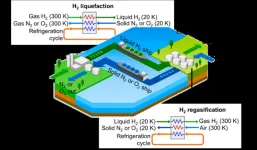
The green hydrogen economy is a sustainable alternative to fossil fuels. However, one of the challenges of constructing a global hydrogen economy is hydrogen transportation by sea. A new paper proposes solid air as a medium for recycling cold energy across the hydrogen liquefaction supply chain. The world is undergoing an energy transition to reduce CO2 emissions and mitigate climate change. The COVID-19 pandemic and the Russia-Ukraine war have further increased the interest of Europe and Western countries to invest in the hydrogen economy as an alternative to fossil fuels. Hydrogen can significantly reduce geopolitical risks ...

Read the release
Solving computationally complex problems with probabilistic computing
Technology

Solving computationally complex problems with probabilistic computing

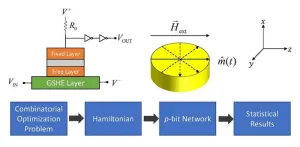
According to computational complexity theory, mathematical problems have different levels of difficulty in the context of their solvability. While a classical computer can solve some problems (P) in polynomial time — i.e., the time required for solving P is a polynomial function of the input size — it often fails to solve NP problems that scale exponentially with the problem size and thus cannot be solved in polynomial time. Classical computers based on semiconductor devices are, therefore, inadequate ...

Read the release
Technology

York University leads $318.4M first-of-kind inclusive next-gen technology research initiative

TORONTO, April 28, 2023 — Is an equitable world that includes humans and machines possible? York University researchers believe it must be and have set out to make it so through a first of its kind interdisciplinary research initiative called Connected Minds: Neural and Machine Systems for a Healthy, Just Society. From universities to industries, hospitals and policymakers, artists and Indigenous communities, York’s Connected Minds will engage 50+ community partners and research collaborators over seven years supported by a historic $318.4 million in funding. Connected Minds has received a combined $105.7 million from the Canada First Research ...

Read the release

An artificial intelligence method for rapid plant phenotyping under complex conditions
Technology

An artificial intelligence method for rapid plant phenotyping under complex conditions

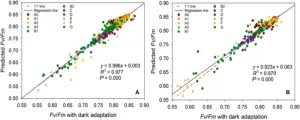
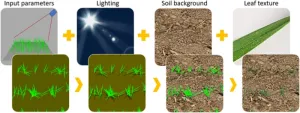
During photosynthesis, the green pigment chlorophyll in algae and plants absorbs most of the energy from incoming light. Chlorophyll gets excited and transfers this energy to the energy-harvesting protein complexes photosystem I (PSI) and II (PSII). However, some of this energy dissipates as heat or chlorophyll a fluorescence (ChlF). Changes in the environment or plant physiology that affect PSII also alter ChlF, which can therefore be used as a fast, sensitive, and non-destructive indicator of PSII status. Indeed, ChlF is a powerful tool for assessing multiple aspects of photosynthesis. Though ChlF measurements ...

Read the release
Highly dexterous robot hand can operate in the dark -- just like us
Technology

Highly dexterous robot hand can operate in the dark -- just like us

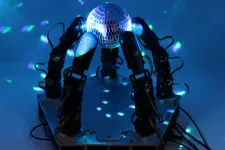
New York, NY—April 27, 2023—Think about what you do with your hands when you’re home at night pushing buttons on your TV’s remote control, or at a restaurant using all kinds of cutlery and glassware. These skills are all based on touch, while you’re watching a TV program or choosing something from the menu. Our hands and fingers are incredibly skilled mechanisms, and highly sensitive to boot. Robotics researchers have long been trying to create “true” dexterity in robot ...

Read the release
Technology

Backpropagation training achieved in photonic neural network

Neural networks made from photonic chips can be trained using on-chip backpropagation – the most widely used approach to training neural networks, according to a new study. The findings pave the way toward developing optically driven and energy-efficient machine learning technologies that reduce both the carbon footprint and costs of AI computation. Neural networks (NNs) are an approach to machine learning conceptually inspired by the biology of the brain and have become a mainstay in various modern scientific and commercial AI technologies, including the widely discussed ChatGPT architectures. ...

Read the release
Technology

Performance of an artificial intelligence chatbot in ophthalmic knowledge assessment

About The Study: In this study that included 125 text-based multiple-choice questions provided by the OphthoQuestions free trial for ophthalmic board certification examination preparation, ChatGPT answered approximately half of the questions correctly. Medical professionals and trainees should appreciate the advances of AI in medicine while acknowledging that ChatGPT as used in this investigation did not answer sufficient multiple-choice questions correctly for it to provide substantial assistance in preparing for board certification at this time. Authors: Rajeev H. Muni, M.D., M.Sc., of St. Michael’s Hospital/Unity Health Toronto in Toronto, is the corresponding ...

Read the release
Light-based computing scheme reduces power needed to mine cryptocurrencies
Technology

Light-based computing scheme reduces power needed to mine cryptocurrencies

WASHINGTON — Researchers have developed a new light-based computing scheme that uses a photonic integrated circuit to reduce the energy necessary for cryptocurrency and blockchain applications. Mining cryptocurrencies like Bitcoin—a process of verifying transactions and adding new cryptocurrency to the blockchain—consumes up to 1% of the world’s energy. This energy expenditure is expected to grow as cryptocurrency and blockchain applications become increasingly mainstream. Cryptocurrencies are digital currencies created using encryption algorithms. These alternative currencies require ...

Read the release
AI breakthrough in detecting leading cause of childhood blindness
Technology

AI breakthrough in detecting leading cause of childhood blindness

The team developed a deep learning AI model that can identify which at-risk infants have ROP that may lead to blindness if left untreated, and they hope their technique could improve access to screening in the many areas with limited neonatal services and few trained ophthalmologists. The study, by an international team of scientists and clinicians in the UK, Brazil, Egypt and the US, supported by the National Institute for Health and Care Research (NIHR) Biomedical Research Centre at Moorfields Eye Hospital NHS Foundation Trust and UCL Institute of Ophthalmology, is published in The Lancet Digital Health. Lead author Dr Konstantinos Balaskas ...

Read the release
Technology

Researchers call for national governments to mandate real-time indoor air quality monitoring

In a response to the COVID-19 pandemic, a team of researchers has published an editorial calling for national governments to consider mandating real-time indoor air quality monitoring in at least all public buildings. Their editorial is published in the journal Building Simulation on 25 April 2023. The three-year-long COVID-19 pandemic, caused by the severe acute respiratory syndrome coronavirus 2 (SARS-CoV-2), has revealed that there is a global indoor-air crisis. Vaccination alone has not completely controlled the COVID-19 pandemic and the virus continues to threaten human health and life. Scientists now know most if not nearly all ...

Read the release
Technology

AI in the ICU

Clinicians in an intensive care unit need to make complex decisions quickly and precisely, monitoring critically ill or unstable patients around the clock. Researchers from Carnegie Mellon University's Human-Computer Interaction Institute (HCII) collaborated with physicians and researchers from the University of Pittsburgh and UPMC to determine if artificial intelligence could help in this decision-making process and if clinicians would even trust such assistance. The team gave 24 ICU physicians access to an AI-based ...

Read the release
Technology

Claus Daniel to lead Argonne’s Advanced Energy Technologies organization

The U.S. Department of Energy’s (DOE) Argonne National Laboratory has named Claus Daniel as Associate Laboratory Director for Advanced Energy Technologies (AET). He will begin his new role on Monday, May 1. Daniel will join Argonne from Carrier Corporation, where he leads engineering partnerships and sustainability as part of Carrier’s strategy and innovation team. He manages the effort to decarbonize the product portfolio, with activities spanning 16 time zones in the U.S., Europe and Asia. Prior to joining Carrier, Daniel spent 16 years with DOE’s Oak Ridge National Laboratory (ORNL) in a number of roles. “It is an exciting ...

Read the release
Technology

Methanol biotransformation to efficiently produce fatty alcohols

Methanol is a potential feedstock for biomanufacturing since it's easily obtained in an environment-friendly manner. But it is still challenging to construct a microbial cell factory for methanol-based bioproduction due to the toxicity of methanol and complex cellular metabolism. Recently, a research group led by Prof. ZHOU Yongjin from the Dalian Institute of Chemical Physics (DICP) of the Chinese Academy of Sciences (CAS) has engineered yeast Ogataea polymorpha for efficient ...

Read the release
The conservation laws of a dynamical system are no mystery to artificial intelligence
Technology

The conservation laws of a dynamical system are no mystery to artificial intelligence

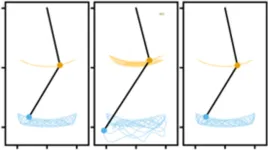
Osaka, Japan – Many real-world systems, from climate systems to the physical mechanisms of robots, are governed by the invariant quantities that arise from their underlying geometric structures. Modelling these systems using computer simulations is a key tool for understanding them (for weather forecasting, for instance, or developing robot locomotion). It’s often possible to collect data for these systems, but making sense of those data to build a model is a more challenging task. Artificial intelligence ...

Read the release
Carnegie Mellon research aims to revive office chatter
Technology

Carnegie Mellon research aims to revive office chatter

About one-third of our lives are spent at work, and the relationships we build there can have personal and professional benefits. But a majority of workers indicate difficulty connecting with co-workers socially, especially in the new landscape of remote and hybrid work arrangements. To ease the friction caused by reduced in-person interaction, a team of researchers from Carnegie Mellon University's Human-Computer Interaction Institute created a Slack application that helps to initiate casual conversations and create affinity groups in an online workspace. "We were freshly out of the pandemic, and we realized that everyone around us was complaining ...

Read the release
A high-throughput AI method for leaf counting
Technology

A high-throughput AI method for leaf counting

In cereal crops, the number of new leaves each plant produces is used to study the periodic events that constitute the biological life cycle of the crop. The conventional method of determining leaf numbers involves manual counting, which is slow, labor-intensive, and usually associated with large uncertainties because of the small sample sizes involved. It is thus difficult to get accurate estimates of some traits by manually counting leaves. Conventional methods have, however, been improved upon with technology. Deep learning has enabled the use of object detection and segmentation algorithms to estimate the number of plants (and ...

Read the release
Paradoxical quantum phenomenon measured for the first time
Technology

Paradoxical quantum phenomenon measured for the first time

Some things are related, others are not. Suppose you randomly select a person from a crowd who is significantly taller than the average. In that case, there is a good chance that they will also weigh more than the average. Statistically, one quantity also contains some information about the other. Quantum physics allows for even stronger links between different quantities: different particles or parts of an extensive quantum system can "share" a certain amount of information. There are curious theoretical predictions about this: surprisingly, ...

Read the release
Automated soybean seed counting: Ppgrading existing methods for improved accuracy
Technology

Automated soybean seed counting: Ppgrading existing methods for improved accuracy

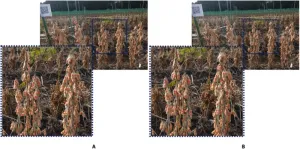
Farming is one of the oldest activities in the world and has always been at the forefront of technological innovation. With mechanized equipment, modified seeds, and digital devices, every aspect of farming, from planting to harvesting is gradually getting optimized. These benefits have also translated to better crop yield estimation for crops such as soybean. Deep learning-based yield estimation models use approaches like regression, traditional bounding boxes, or density maps to make counting of seeds easier. Compared ...

Read the release
Technology

Transparent labeling of training data may boost trust in artificial intelligence

UNIVERSITY PARK, Pa. — Showing users that visual data fed into artificial intelligence (AI) systems was labeled correctly might make people trust AI more, according to researchers. The findings also may pave the way to help scientists better measure the connection between labeling credibility, AI performance, and trust, the team added. In a study, the researchers found that high-quality labeling of images led people to perceive that the training data was credible and they trusted the AI system more. ...

Read the release
From the original Press-News collection. Issuers of news releases are responsible for the accuracy of their content.