THE ORIGINAL COLLECTION · SINCE 2010

The press release
archive.

Research announcements from universities, hospitals and scientific institutions. Explore the stories, people and discoveries behind the headlines.

Original publication datesPage 1472
FIND A STORY

Find a past release.

Dates and source material belong to the original release.

Read our research explainers

Browse the collection · original publication order

Medicine

Using magnetized neurons to treat Parkinson’s disease symptoms

Electrical deep brain stimulation (DBS) is a well-established method for treating disordered movement in Parkinson’s disease. However, implanting electrodes in a person’s brain is an invasive and imprecise way to stimulate nerve cells. Researchers report in ACS’ Nano Letters a new application for the technique, called magnetogenetics, that uses very small magnets to wirelessly trigger specific, gene-edited nerve cells in the brain. The treatment effectively relieved motor symptoms in mice without damaging surrounding ...

Read the release

Environment

How does one species become many?

Evolutionary biologists have long suspected that the diversification of a single species into multiple descendent species – that is, an “adaptive radiation” – is the result of each species adapting to a different environment. Yet formal tests of this hypothesis have been elusive owing to the difficulty of firmly establishing the relationship between species traits and evolutionary “fitness” for a group of related species that recently diverged from a common ancestral species. A global team of biologists led by McGill University have compiled nearly two decades of field data – representing the study ...

Read the release
St. Jude Children’s Research Hospital adds $13 million project to Research Collaboratives Program
Medicine

St. Jude Children’s Research Hospital adds $13 million project to Research Collaboratives Program

(MEMPHIS, Tenn., January 18, 2024) St. Jude Children’s Research Hospital today announced a nearly $13 million investment toward a new research collaboration with scientists at Columbia University, Duke University and Stanford University to expand the understanding of G-protein coupled receptors (GPCR), which are vital proteins that impact human health and disease. The collaborative research project is led by two St. Jude researchers, Scott Blanchard, Ph.D., and M. Madan Babu, Ph.D., who are working with Nobel laureate and Howard Hughes Medical Institute investigator Robert Lefkowitz, M.D., of Duke University; Jonathan Javitch, M.D., Ph.D., of ...

Read the release
Efficiently moving urea out of polluted water is coming to reality
Environment

Efficiently moving urea out of polluted water is coming to reality

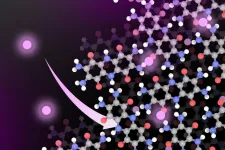
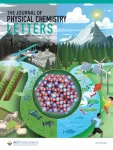
WPI Researchers have developed a material to remove urea from water and potentially convert it into hydrogen gas. By building these materials of nickel and cobalt atoms with carefully tailored electronic structures, the group has unlocked the potential to enable these transition metal oxides and hydroxides to selectively oxidize urea in an electrochemical reaction. The study, led by Xiaowei Teng, the James H. Manning professor of Chemical Engineering at WPI, was recently published in the Journal of Physical Chemistry Letters and highlighted in the publication’s supplementary front cover. The ...

Read the release
Researchers awarded $2.7 million grant to develop the faba bean as a sustainable mid-Atlantic crop
Environment

Researchers awarded $2.7 million grant to develop the faba bean as a sustainable mid-Atlantic crop

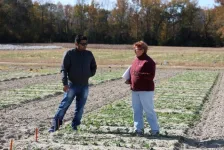
Consider the faba bean, also known as the fava bean or broad bean. The bright-green legume has been enjoyed as a diet staple for thousands of years in Africa, Asia, and the Mediterranean. Just one cup of faba beans has 13 grams of protein — making it a better protein source than most other legumes — along with plenty of fiber, potassium, and iron. Plus, it’s a good cover crop that helps improve soil health, slow erosion, and control pests, disease, and weeds. But you don’t often see it in the fields or on the menus in Virginia. That’s why College of Agriculture and Life ...

Read the release
Cobalt-free batteries could power cars of the future
Science

Cobalt-free batteries could power cars of the future

CAMBRIDGE, MA – Many electric vehicles are powered by batteries that contain cobalt — a metal that carries high financial, environmental, and social costs. MIT researchers have now designed a battery material that could offer a more sustainable way to power electric cars. The new lithium-ion battery includes a cathode based on organic materials, instead of cobalt or nickel (another metal often used in lithium-ion batteries). In a new study, the researchers showed that this material, which could be produced at much lower cost than cobalt-containing batteries, can conduct electricity at similar rates as cobalt batteries. The new battery also has comparable storage ...

Read the release
New study reveals the impact of skin microorganisms on earthworm toxicity in polluted environments
Environment

New study reveals the impact of skin microorganisms on earthworm toxicity in polluted environments

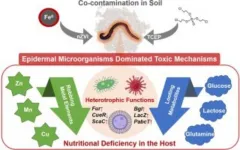
Epidermal microorganisms, vital in nutrient exchange between hosts and environments, have now been shown to play a key role in host toxicity through community changes. This research highlights how changes in the community of skin-based microbes correlate more significantly with earthworm toxicity than those in intestinal microorganisms, especially under combined soil contaminations. A new study (https://doi.org/10.1016/j.eehl.2023.11.001) published in the journal Eco-Environment & Health, researchers from Zhejiang University revealed the crucial role of epidermal microorganisms in influencing earthworm toxicity under environmental stress, notably in conditions ...

Read the release
Scientists, farmers and managers work together to avoid the decline of the little bustard, an endangered steppe bird
Environment

Scientists, farmers and managers work together to avoid the decline of the little bustard, an endangered steppe bird

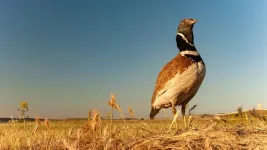
The collaboration between scientists, farmers and managers is crucial to improve the protection of the little bustard, an endangered steppe-land bird in Spain due to human activity. The reduction of natural habitats, the increase in irrigation and the urbanization of the land have led to having less surface areas that guarantee the survival of this vulnerable species. An article published in the journal Biological Conservation reveals how cooperation between different actors is key to finding answers and avoiding the decline of the most threatened populations of the little bustard. The study, a pioneer example of adaptative conservation, ...

Read the release
Better wireless communication made possible through machine learning
Technology

Better wireless communication made possible through machine learning

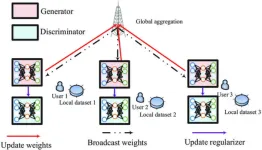
In today's increasingly interconnected world, high-quality communication has become more vital than ever. Accurately estimating the dynamic status of communication channels is a key factor in achieving this. Recently, a joint research team designed a new algorithm that offers high-level estimation accuracy and privacy protection with low computational and communication costs. This research was published Jan. 5 in Intelligent Computing, a Science Partner Journal. This new algorithm uses a specially designed deep learning model for precise estimation and a federated learning framework ...

Read the release
Study with over 11,000 individuals of African descent finds genetic variants linked to glaucoma
Science

Study with over 11,000 individuals of African descent finds genetic variants linked to glaucoma

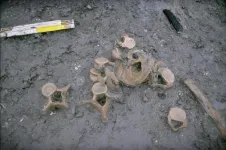
Glaucoma is the leading cause of irreversible blindness around the globe, affecting up to 44 million people. Although people of African ancestry are most frequently and severely affected by this hereditary disease, its genetic underpinnings in this population have rarely been studied. Now, a team of investigators has published findings revealing previously unknown inherited genetic variants that contribute to primary open-angle glaucoma (POAG), the most common form of the disease. The study was based on the analysis of 11,275 individuals of African descent and is being published January 18, 2024, in Cell. “Individuals with African ancestry are five times more likely to be affected ...

Read the release
Social Science

Economics: Sea level rises could cost EU and UK economies up to 872 billion Euros by 2100

Damage caused by sea level rises could cost the EU and UK economies up to 872 billion Euros in total by the end of the century, according to a modelling study published in Scientific Reports. Ignasi Cortés Arbués, Theodoros Chatzivasileiadis, Tatiana Filatova and colleagues modelled the potential economic impacts of sea level rises for 271 European regions by 2100 under a high emissions scenario (SSP5-RCP8.5) with no new coastal protection measures implemented after 2015. They combined ...

Read the release
Medicine

Genetics: Chewing over poor Mesolithic oral health

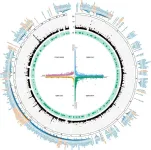
Members of a hunter-gatherer group that lived in south-western Scandinavia during the Mesolithic era — approximately 10,000 years ago — may have been affected by tooth decay and gum disease, according to a study published in Scientific Reports. Emrah Kırdök, Anders Götherström and colleagues sequenced the DNA found on three pieces of birch tar — a substance made from heated birch bark — that were excavated in the 1990s from Huseby Klev, Sweden and have been dated to between 9,890 ...

Read the release
Science

Mega-analysis identifies gene variants associated with glaucoma in people of African ancestry

PHILADELPHIA— A new analysis focusing specifically on people of African ancestry identified three gene variants that may be contributing to this population’s susceptibility to developing and being blinded by glaucoma. People of African ancestry are five times as likely as others to develop glaucoma and up to 15 times as likely to be blinded by the condition, but the vast majority of research has used data from people of European ancestry. Led by researchers at the Perelman School of Medicine at the University ...

Read the release
Social Science

Third major study finds evidence that daily multivitamin supplements improve memory and slow cognitive aging in older adults

By 2060, according to the Alzheimer’s Association, nearly one in four Americans will be in an age bracket at elevated risk of cognitive decline and Alzheimer’s disease unless interventions can help preserve cognitive function before deficits begin. The COcoa Supplement and Multivitamin Outcomes Study (COSMOS) is a large-scale, nationwide, randomized trial rigorously testing cocoa extract and multivitamin supplements directed by researchers at Mass General Brigham. Two previously published studies of cognition in COSMOS suggested a positive effect for a daily multivitamin. ...

Read the release
Science

Nurse home visits have a lasting impact for disadvantaged mothers and daughters

Nurse home visits to disadvantaged mothers can significantly reduce their rates of hypertension and their daughters’ likelihood of obesity, finds a new reanalysis of health data by a team led by a UCL researcher. The study, published in the journal JAMA Network Open, reanalysed data taken as part of a Nurse-Family Partnership trial started more than 30 years ago – The Memphis New Mothers Study (1990-1994). The researchers found that prenatal and infancy nurse home visits decreased the likelihood of daughters being obese by 55% and being severely obese by 81% in adolescence. Similarly, mothers of girls showed a decrease ...

Read the release
Science

Cannabis and driving in older adults

About The Study: The findings of this study that included 31 participants ages 65 to 79 suggest that older drivers, even if they regularly use cannabis, show evidence of impaired driving performance after smoking cannabis. Weaving was increased and speed was decreased at 30 minutes after smoking, which was not correlated with blood tetrahydrocannabinol (THC) concentrations; subjective experience and self-reports of impaired driving persisted for three hours. Authors: Patricia Di Ciano, Ph.D., of the Centre for Addiction ...

Read the release
Medicine

Neurostimulation for advanced Parkinson disease and quality of life at 5 years

About The Study: This nonrandomized controlled trial of 108 patients with advanced Parkinson disease found that at 5-year follow-up quality of life remained stable in the deep brain stimulation of the subthalamic nucleus (STN-DBS) group and worsened in the standard-of-care medication group, mainly driven by the favorable effect of STN-DBS on mobility. These findings may provide helpful information when counseling patients on the efficacy of STN-DBS for Parkinson disease and monitoring patients postoperatively in long-term follow-up. Authors: Stefanie T. Jost, Ph.D., and Haidar S. Dafsari, M.D., of the University of Cologne, Germany, are the corresponding ...

Read the release
Monell Center study: New gut-brain circuits found for sugar and fat cravings
Medicine

Monell Center study: New gut-brain circuits found for sugar and fat cravings

Philadelphia, PA (January 18, 2024) – Understanding why we overeat unhealthy foods has been a long-standing mystery. While we know food's strong power influences our choices, the precise circuitry in our brains behind this is unclear. The vagus nerve sends internal sensory information from the gut to the brain about the nutritional value of food. But, the molecular basis of the reward in the brain associated with what we eat has been incompletely understood. Now, a new study published in Cell Metabolism by a team from the ...

Read the release
Ancient chewing gum reveals stone age diet
Medicine

Ancient chewing gum reveals stone age diet

What did people eat on the west coast of Scandinavia 10 000 years ago? A new study of the DNA in a chewing gum shows that deer, trout and hazelnuts were on the diet. It also shows that one of the individuals had severe problems with her teeth. Some 9 700 years ago, a group of people were camping on the west coast of Scandinavia, north of what is today Göteborg. They had been fishing, hunting and collecting resources for food. And some teenagers, both boys and girls, were chewing resin to produce glue, just after ...

Read the release
Hidden cause of lithium-rich cathode materials’ low energy efficiency revealed
Energy

Hidden cause of lithium-rich cathode materials’ low energy efficiency revealed

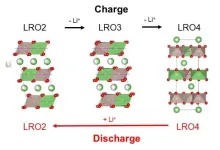
1. A research team consisting of the National Institute for Materials Science (NIMS) and Softbank Corp. has found that voltage hysteresis in Li2RuO3—a high-energy-density rechargeable battery cathode material—is caused by differences in the intermediate crystalline phases formed during charge and discharge processes. Voltage hysteresis is a phenomenon detrimental to lithium (Li)-ion batteries in which discharge voltage becomes significantly lower than charge voltage. These results revealed a voltage-hysteresis-causing mechanism inconsistent with conventional theory. 2. ...

Read the release
Science

Next-generation batteries could go organic, cobalt-free for long-lasting power

In the switch to “greener” energy sources, the demand for rechargeable lithium-ion batteries is surging. However, their cathodes typically contain cobalt — a metal whose extraction has high environmental and societal costs. Now, researchers in ACS Central Science report evaluating an earth-abundant, carbon-based cathode material that could replace cobalt and other scarce and toxic metals without sacrificing lithium-ion battery performance. Today, lithium-ion batteries power everything from cell phones to laptops to electric vehicles. One of the limiting factors for realizing a global shift to energy produced by renewable sources — particularly for the transition ...

Read the release
FAU Engineering receives $2.6 million NSF grant for CyberCorps student scholarship program
Technology

FAU Engineering receives $2.6 million NSF grant for CyberCorps student scholarship program

The College of Engineering and Computer Science of Florida Atlantic University received a $2.6 million grant from the National Science Foundation (NSF) to establish a scholarship program in the burgeoning and critical field of cybersecurity. The NSF’s CyberCorps® Scholarship for Service program seeks to increase the number of qualified cybersecurity professionals working for federal, state, local, territorial and tribal governments. The program is managed by the NSF in collaboration with the United States Office of Personnel Management and the U.S. Department of Homeland Security. FAU is one of only six universities ...

Read the release
AI harnesses tumor genetics to predict treatment response
Medicine

AI harnesses tumor genetics to predict treatment response

In a groundbreaking study published on January 18, 2024, in Cancer Discovery, scientists at University of California San Diego School of Medicine leveraged a machine learning algorithm to tackle one of the biggest challenges facing cancer researchers: predicting when cancer will resist chemotherapy. All cells, including cancer cells, rely on complex molecular machinery to replicate DNA as part of normal cell division. Most chemotherapies work by disrupting this DNA replication machinery in rapidly dividing tumor ...

Read the release
Environment

AMS 2024 Annual Meeting highlights climate challenges and solutions

[Boston, MA—January 18, 2023] The American Meteorological Society’s (AMS) 104th Annual Meeting will gather thousands of people at the Baltimore Convention Center 28 January–1 February to attend the world’s largest annual meeting focused on weather, water, and climate. The AMS is the professional society for everyone in the atmospheric and hydrologic sciences and services, including meteorologists, research scientists, emergency managers, academics, weather broadcasters, and more. “The theme of our 104th Annual Meeting is ‘Living in a Changing Environment,’” says AMS President Brad Colman. “It’s ...

Read the release
Medicine

Tackling antibiotic resistance when treating pneumonia

New research has been published that identifies positive steps towards a better understanding of antimicrobial resistance (AMR), specifically in hospital-acquired pneumonia (HAP). Antimicrobial, or antibiotic resistance, is a growing global issue, yet little is known about how to dose antibiotics to minimise bacteria developing resistance in patients. However, the University of Liverpool is playing a key role in contributing to international efforts to better understand AMR. In a paper published today (Thursday 18 January), ...

Read the release
From the original Press-News collection. Issuers of news releases are responsible for the accuracy of their content.