Striking gold with molecular mystery solution for potential clean energy
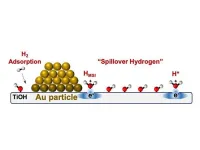
UNIVERSITY PARK, Pa. — Hydrogen spillover is exactly what it sounds like. Small metal nanoparticles anchored on a thermally stable oxide, like silica, comprise a major class of catalysts, which are substances used to accelerate chemical reactions without being consumed themselves. The catalytic reaction usually occurs on the reactive — and expensive — metal, but on some catalysts, hydrogen atom-like equivalents literally spill from the metal to the oxide. These hydrogen-on-oxide species are called "hydrogen ...
Read the release