Medicine Technology 🌱 Environment Space Energy Physics Engineering Social Science Earth Science Science
Science 2015-03-12

Post-fire logging can reduce fuels for up to 40 years in regenerating forests, new study finds

Harvesting fire-killed trees is an effective way to reduce woody fuels for up to four decades following wildfire in dry coniferous forests, a U.S. Forest Service study has found. The retrospective analysis, among the first to measure the long-term effects of post-fire logging on forest fuels, is published in the journal Forest Ecology and Management. "Large wildfires can leave behind thousands of acres of fire-killed trees that eventually become fuel for future fires. In the past, post-fire logging has been conducted primarily to recover economic value from those fire-killed ...
Read more →
Science 2015-03-12

Understanding loneliness through science

Loneliness may be a fundamental part of the human condition, but scientists have only recently begun exploring its causes, consequences, and potential interventions. A special section in Perspectives on Psychological Science, a journal of the Association for Psychological Science, aims to bring these strands of inquiry together, presenting a series of articles that review the current state of scientific research on loneliness. The section, edited by psychological scientist David Sbarra of the University of Arizona, investigates loneliness across multiple levels, from ...
Read more →
Medicine 2015-03-12

A 'warhead' molecule to hunt down deadly bacteria

CHESTNUT HILL, MA (March 12, 2015) Targeting deadly, drug-resistant bacteria poses a serious challenge to researchers looking for antibiotics that can kill pathogens without causing collateral damage in human cells. A team of Boston College chemists details a new approach using a "warhead" molecule to attack bacteria -- and spare healthy human cells -- by targeting a pair of lipids found on the surface of deadly germs, according to a report today in the journal Nature Communications. The new strategy required the researchers to develop a novel type of "warhead molecule" ...
Read more →
Science 2015-03-12

Teen cannabis users have poor long-term memory in adulthood

Study links oddly shaped hippocampus to poor long-term memory in former marijuana users The longer teens used cannabis, the more abnormal the hippocampus as adults Former users perform 18 percent worse on long-term memory test Cannabis affects short and long-term memory CHICAGO --- Teens who were heavy marijuana users - smoking it daily for about three years -- had an abnormally shaped hippocampus and performed poorly on long-term memory tasks, reports a new Northwestern Medicine study. The hippocampus is important to long-term memory (also known as ...
Read more →
Scientists transfer pathogen-sensing 'antenna' gene to wheat
Science 2015-03-12

Scientists transfer pathogen-sensing 'antenna' gene to wheat

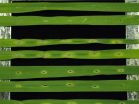
A team of scientists from the John Innes Centre (JIC), the National Institute of Agricultural Botany (NIAB) and The Sainsbury Laboratory (TSL) have successfully transferred a receptor that recognises bacteria from the model plant Arabidopsis thaliana - a dicot, to wheat - a monocot. They showed that the receptor can trigger a defensive response and confers increased resistance to bacterial disease. The research findings demonstrate that the signalling pathways or circuitry downstream of the receptor are conserved between evolutionary distant monocots and dicots. Drs Henk-jan ...
Read more →
Environment 2015-03-12

Farming a threat to endangered Chinese giant salamander

Researchers from ZSL and the Shaanxi Normal University, Xi'an, surveyed 43 farms in China and worked with the Shaanxi Province Fisheries Office to investigate the Chinese giant salamander farming industry. They found that, although only a decade old, the industry houses millions of animals and is a major contributor to the Chinese rural economy. The farming industry however, poses a number of threats to the Chinese giant salamander, but also has potential to benefit the species. Wild salamanders are illegally poached to supplement farmed populations which often do not ...
Read more →
Medicine 2015-03-12

Air quality in nursing homes affecting lung health of residents

The indoor air quality in nursing homes has a serious effect on the lung health of elderly residents, according to the findings of a new study. The study, which is published online today (12 March 2015) in the European Respiratory Journal, is the first to detail the negative effects of poor air quality in nursing homes across several countries. Researchers from the EU-funded GERIE research project collected data on five indoor air pollutants: PM10, PM0.1, formaldehyde, NO2 and O3. These pollutants come from a range of sources including heaters, building materials, ...
Read more →
Medicine 2015-03-12

The Lancet: Healthy eating, exercise, and brain-training

A comprehensive programme providing older people at risk of dementia with healthy eating guidance, exercise, brain training, and management of metabolic and vascular risk factors appears to slow down cognitive decline, according to the first ever randomised controlled trial of its kind, published in The Lancet. In the Finnish Geriatric Intervention Study to Prevent Cognitive Impairment and Disability (FINGER) study, researchers led by Professor Miia Kivipelto from the Karolinska Institutet in Stockholm, Sweden, National Institute for Health and Welfare in Helsinki, and ...
Read more →
Medicine 2015-03-11

Clinical trial sponsors fail to report results to participants, public

DURHAM, N.C. - Despite legal and ethical mandates for disclosure, results from most clinical trials of medical products are not reported promptly on a registry specifically created to make results of human studies publically available, according to Duke Medicine researchers. Among all clinical trials of medical products, those funded by industry were the most likely to be publicly disclosed in a timely fashion, but even then, compliance was poor. Research funded by the National Institutes of Health and academic institutions lagged further, according to findings published ...
Read more →
Medicine 2015-03-11

When should blood transfusions be given after cardiac surgery?

New research has shown that patients having heart surgery do not benefit if doctors wait until a patient has become substantially anaemic before giving a transfusion. In the UK, about half of all patients having cardiac surgery are given a red blood cell transfusion after the operation, using up to ten per cent of the nation's blood supply. The proportion of patients having a transfusion is high because blood loss and severe anaemia are common after cardiac surgery and transfusion is the preferred treatment. Blood loss causes anaemia which doctors detect by measuring ...
Read more →
Medicine 2015-03-11

Exercise may help keep seniors moving longer despite old age brain decline

MINNEAPOLIS - Older people who are physically active may be protecting themselves from the effects of small areas of brain damage that can affect their movement abilities, according to a new study published in the March 11, 2015, online issue of Neurology®, the medical journal of the American Academy of Neurology. Many older people have small areas of damage in their brains seen on magnetic resonance imaging (MRI) as white matter hyperintensities. Higher levels of this damage have been linked to more problems with movement, such as difficulty walking. But this new ...
Read more →
Science 2015-03-11

Discovery demystifies origin of life phenomenon

The origin of life is still a mystery with many unsolved puzzles. How were molecules created? How did they assemble into large structures? Among the conundrums, the "homochirality" phenomenon upon which amino acids and sugars form is particularly fascinating. University of Akron A. Schulman Professor of Polymer Science Tianbo Liu has discovered that Mother Nature's clear bias toward certain amino acids and sugars and against others isn't accidental. Liu explains that all life molecules are paired as left-handed and right-handed structures. In scientific terms, the phenomenon ...
Read more →
Medicine 2015-03-11

Molecules in prostate tumors might predict whether RT can help prevent recurrence

COLUMBUS, Ohio - A new study has identified a group of molecules in prostate-cancer cells that doctors might one day use to distinguish which patients should be treated with radiation therapy if rising PSA levels indicate their cancer has recurred after surgical removal of the prostate. Led by researchers at the Ohio State University Comprehensive Cancer Center - Arthur G. James Cancer Hospital and Richard J. Solove Research Institute (OSUCCC - James), the retrospective study suggested that a pattern of molecules called microRNA (miRNA) in tumor cells might predict patients' ...
Read more →
Engineering 2015-03-11

Scientists reconstruct evolutionary history of whale hearing with rare museum collection

A team of scientists from the Smithsonian's National Museum of Natural History gained new understanding about the evolutionary history of whale hearing thanks to a rare collection of whales at the museum. The researchers used noninvasive biomedical imaging techniques to trace the development of fetal ear bones in 56 specimens from 10 different families of toothed and baleen whales. They observed how ears develop in unborn whales of modern species, and compared these changes with those reflected in the fossilized ears of extinct whales over the course of millions of years. ...
Read more →
Medicine 2015-03-11

Media portray unrealistic timelines for stem cell therapies

A new study by University of Alberta law researchers reveals sometimes overly optimistic news coverage of clinical translation of stem cell therapies--and as spokespeople, scientists need to be mindful of harnessing public expectations. "As the dominant voice in respect to timelines for stem cell therapies, the scientists quoted in these stories need to be more aware of the importance of communicating realistic timelines to the press," said researcher Kalina Kamenova, who co-authored the study with professor Timothy Caulfield in the University of Alberta's Health Law ...
Read more →
Medicine 2015-03-11

Tetanus shot improves patient survival with brain tumor immunotherapy

DURHAM, N.C. - An innovative approach using a tetanus booster to prime the immune system enhances the effect of a vaccine therapy for lethal brain tumors, dramatically improving patient survival, according to a study led by Duke Cancer Institute researchers. Appearing online March 11, 2015, in the journal Nature, the researchers not only present survival data for a small, randomized and blinded patient trial, they also detail how the tetanus pre-conditioning technique works, providing a roadmap for enhancing dendritic cell immunotherapies that have shown promise ...
Read more →
Science 2015-03-11

Stanford researchers solve the mystery of the dancing droplets

A puzzling observation, pursued through hundreds of experiments, has led Stanford researchers to a simple yet profound discovery: under certain circumstances, droplets of fluid will move like performers in a dance choreographed by molecular physics. "These droplets sense one another, they move and interact, almost like living cells," said Manu Prakash, an assistant professor of bioengineering and senior author of an article published (today) in Nature. The unexpected findings may prove useful in semiconductor manufacturing and self-cleaning solar panels, but what truly ...
Read more →
Medicine 2015-03-11

'Quantum jitters' could form basis of evolution, cancer

DURHAM, N.C. -- The molecular machines that copy DNA in a living cell are amazingly fast and accurate at pairing up the correct bases -- G with C and A with T -- into each new double helix. They work by recognizing the shape of the right base pair combinations, and discarding those -- such as a G and a T -- that don't fit together correctly. Yet for approximately every 10,000 to 100,000 bases copied, these machines make a mistake that if uncorrected will be immortalized in the genome as a mutation. For decades, researchers have wondered how these seemingly random ...
Read more →
Iron-oxidizing bacteria found along Mid-Atlantic Ridge
Medicine 2015-03-11

Iron-oxidizing bacteria found along Mid-Atlantic Ridge

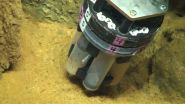
Bacteria that live on iron were found for the first time at three well-known vent sites along the Mid-Atlantic Ridge, one of the longest undersea mountain ranges in the world. Scientists report that these bacteria likely play an important role in deep-ocean iron cycling, and are dominant members of communities near and adjacent to sulfur-rich, black-smoker hydrothermal vents prevalent along the Mid-Atlantic Ridge. These unique chemosynthetic communities live off the chemical components in the vent fluid, rather than sunlight used by their photosynthetic counterparts. This ...
Read more →
Space 2015-03-11

Epoch-defining study pinpoints when humans came to dominate planet Earth

The human-dominated geological epoch known as the Anthropocene probably began around the year 1610, with an unusual drop in atmospheric carbon dioxide and the irreversible exchange of species between the New and Old Worlds, according to new research published today in Nature. Previous epochs began and ended due to factors including meteorite strikes, sustained volcanic eruptions and the shifting of the continents. Human actions are now changing the planet, but are we really a geological force of nature driving Earth into a new epoch that will last millions of years? Scientists ...
Read more →
Environment 2015-03-11

Fossil skull sheds new light on transition from water to land

The first 3D reconstruction of the skull of a 360 million-year-old near-ancestor of land vertebrates has been created by scientists from the Universities of Bristol and Cambridge, UK. The 3D skull, which differs from earlier 2D reconstructions, suggests such creatures, which lived their lives primarily in shallow water environments, were more like modern crocodiles than previously thought. The researchers applied high-resolution X-ray computed tomography (CT) scanning to several specimens of Acanthostega gunnari, one of the 'four-footed' vertebrates known as tetrapods ...
Read more →
Science 2015-03-11

Length matters

Mutations in the methyl CpG binding protein 2 gene (MECP2) are the cause of the devastating childhood neurological disorder Rett Syndrome. Despite intense efforts spanning several decades the precise function of MECP2 has been difficult to pin down. Research primarily funded by the Rett Syndrome Research Trust (RSRT) and the National Institutes of Neurological Disease and Stroke (NINDS), and published today in the journal Nature reveals important information that could lead to new treatment approaches. The study, led by Michael Greenberg, Ph.D., Chairman of the Department ...
Read more →
Medicine 2015-03-11

Therapeutic exercise lessens lung injury and muscle wasting in critically ill patients

WINSTON-SALEM, N.C. - March 11, 2015 - Acute respiratory distress syndrome (ARDS) is a life-threatening lung condition that affects approximately 200,000 people a year in the United States and has a higher mortality rate than breast and prostate cancer combined. The condition most often occurs in people who are critically ill or who have significant injuries; those who do survive it often experience profound skeletal muscle weakness. Over the past 30 years, efforts to fight ARDS with various drug therapies aimed at the lungs have failed. However, doctors at Wake Forest ...
Read more →
Social Science 2015-03-11

Is US immigration policy 'STEMming' innovation?

(Santa Barbara, Calif.) - Foreign born graduate students in STEM (science, technology, engineering and math) disciplines who wish to pursue a career in industry or NGOs are much more likely to stay in the U.S. than those who wish to pursue a career in academia or government concludes a study by researchers at UC Santa Barbara's Center for Nanotechnology in Society. Published on March 11, 2015 in the open access journal PLOS ONE, the study provides new insight into why foreign-born graduate students in STEM fields choose to remain in the United States or return to their ...
Read more →
Science 2015-03-11

Prescription for living longer: Spend less time alone

Ask people what it takes to live a long life, and they'll say things like exercise, take Omega-3s, and see your doctor regularly. Now research from Brigham Young University shows that loneliness and social isolation are just as much a threat to longevity as obesity. "The effect of this is comparable to obesity, something that public health takes very seriously," said Julianne Holt-Lunstad, the lead study author. "We need to start taking our social relationships more seriously." Loneliness and social isolation can look very different. For example, someone may be surrounded ...
Read more →