Medicine Technology 🌱 Environment Space Energy Physics Engineering Social Science Earth Science Science
Medicine 2015-03-09

Fifteen new breast cancer genetic risk 'hot-spots' revealed

Scientists have discovered another 15 genetic 'hot-spots' that can increase a woman's risk of developing breast cancer, according to research published today (Monday) in Nature Genetics. In a study funded by Cancer Research UK*, scientists compared tiny variations in the genetic make-up of more than 120,000 women of European ancestry, with and without breast cancer, and identified 15 new variations - called single nucleotide polymorphisms (SNPs) - that are linked to a higher risk of the disease. This new discovery means that a total of more than 90 SNPs associated with ...
Read more →
New technique can locate genes' on-off switches
Science 2015-03-09

New technique can locate genes' on-off switches

Kansas City, MO. -- All the cells in an organism carry the same instruction manual, the DNA, but different cells read and express different portions of it in order fulfill specific functions in the body. For example, nerve cells express genes that help them send messages to other nerve cells, whereas immune cells express genes that help them make antibodies. In large part, this highly regulated process of gene expression is what makes us fully functioning, complex beings, rather than a blob of like-minded cells. Despite its importance, researchers still do not completely ...
Read more →
Medicine 2015-03-09

Radiation plus immunotherapy combo revs up immune system to better attack melanoma, Penn study suggests

PHILADELPHIA--Treating metastatic melanoma with a triple threat--including radiation therapy and two immunotherapies that target the CTLA4 and PD-1 pathways--could elicit an optimal response in more patients, one that will boost the immune system's attack on the disease, suggests a new study from a multidisciplinary team of researchers from Penn's Abramson Cancer Center published today in Nature. The study, led by senior authors Andy J. Minn, MD, PhD, assistant professor of Radiation Oncology, Robert Vonderheide, MD, DPhil, the Hanna Wise Professor in Cancer Research, ...
Read more →
Science 2015-03-09

Novel tool visualizes whole body SIV replication

A collaborative effort between investigators at the Yerkes National Primate Research Center, Emory University School of Medicine and Georgia Institute of Technology has led to the development of a non-invasive method to image simian immunodeficiency virus (SIV) replication in real-time, in vivo. This approach, which is reported today in Nature Methods' Advance Online Publication, is based on immune positron-emission tomography/computed tomography (PET/CT) and allows for the capture of viral dynamics of SIV, the animal model of human HIV infection. This novel approach ...
Read more →
Medicine 2015-03-09

Childhood leukemia study reveals disease subtypes, new treatment option

A new study of acute lymphoblastic leukemia (ALL), a blood cancer that primarily affects young children, has revealed that the disease has two distinct subtypes, and provides preliminary evidence that about 13 percent of ALL cases may be successfully treated with targeted drugs that have proved highly effective in the treatment of lymphomas in adults. Usually emerging in children between 2 and 5 years of age, ALL occurs when the proliferation of white blood cells known as lymphocytes spirals out of control. The current standard of care for ALL employs high doses of chemotherapy ...
Read more →
Physics 2015-03-09

Electrons in slow motion

A process that is too fast to be measured and analysed. Yet a group of international scientists did not lose heart and conceived a sort of highly sophisticated moviola film-editing system, which allowed them to observe - for the first time in a direct manner - an effect underlying high-temperature conductivity. The results of their work have been published in Nature Physics on Monday 9 March 2015. Superconductors have properties that make them potentially very interesting for technology (examples of application include magnetic levitation trains). The road to a true application ...
Read more →
Medicine 2015-03-09

A real eye-opener: Narcolepsy bears classic autoimmune hallmarks

Narcoleptics suffer from bouts of sleepiness and sleep attacks, which impair their ability to function in daily life. But the precise cause of narcolepsy has long eluded scientists, and the cure for the devastating neurological disorder afflicting an estimated three million people worldwide -- and one in 3,000 Americans -- remains at bay. A new study published in Pharmacological Research by the world's leading autoimmune disease expert, Tel Aviv University's Prof. Yehuda Shoenfeld, finds that narcolepsy bears the trademarks of a classic autoimmune disorder and should ...
Read more →
Medicine 2015-03-09

JAMA Viewpoint: Young African American men deserve better from health care

BOSTON, MA - Healthcare spending is at an all-time high in the U.S., yet young African-American men see little benefit, according to Boston Medical Center (BMC) researchers' Viewpoint commentary published in the current issue of the Journal of the American Medical Association (JAMA). The researchers note that black men have a life expectancy nearly five years less than white men. While heart disease and cancer contribute to this decreased life expectancy, homicide also plays a large role. From ages 1 to 14, homicide is either the second or third leading cause of death ...
Read more →
Technology 2015-03-09

Quantum sensor's advantages survive entanglement breakdown

The extraordinary promise of quantum information processing -- solving problems that classical computers can't, perfectly secure communication -- depends on a phenomenon called "entanglement," in which the physical states of different quantum particles become interrelated. But entanglement is very fragile, and the difficulty of preserving it is a major obstacle to developing practical quantum information systems. In a series of papers since 2008, members of the Optical and Quantum Communications Group at MIT's Research Laboratory of Electronics have argued that optical ...
Read more →
Science 2015-03-09

Seeding mixtures recommended for midwest lawns

LINCOLN, NE - Turfgrass professionals have created seed mixes specifically blended to ensure disease and insect resistance, water use efficiency, and tolerance to traffic. For example, a commonly used mixture of kentucky bluegrass (KBG) and perennial ryegrass (PRG) seed offers advantages such as rapid germination and establishment and provides turf cover that can compete with weeds. A new study shows how initial composition of KBG:PRG in the seed mixture affects species composition over multiple years in the Midwest, and offers recommendations about seeding ratios for optimal ...
Read more →
Science 2015-03-09

Preterm babies continue to receive inhaled nitric oxide

ROCHESTER, Minn. -- Inhaled Nitric Oxide (iNO) is a drug approved by the Food and Drug Administration that is commonly used in term and near-term neonates who have severe respiratory failure caused by pulmonary hypertension. Over the last decade there have been multiple large studies trying to determine a clinical use for iNO in preterm neonates, but despite evidence of short-term benefit, this drug has not been shown to improve long-term outcomes in preemies. Still, the drug is commonly being used in this population, Mayo Clinic Children's Center and co-authors say in ...
Read more →
Amid chaos of Libya, newly unearthed fossils give clues to our own evolution
Environment 2015-03-09

Amid chaos of Libya, newly unearthed fossils give clues to our own evolution

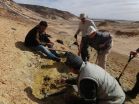
LAWRENCE -- Libya hasn't been terribly hospitable for scientific research lately. Since the 2011 toppling of Muammar Gaddafi, fighters tied to various tribes, regions and religious factions have sewn chaos across that nation. Most recently, ISIS militants in Libya committed mass beheadings that triggered retaliatory bombings by neighboring Egypt. "Currently, it is obviously very dangerous to be a Western scientist in Libya," said Christopher Beard, Distinguished Foundation Professor of Ecology and Evolutionary Biology at the University of Kansas. "Even Libyan citizens ...
Read more →
Medicine 2015-03-09

Most information in drug development is lost

Lots of potentially useful medical information is getting lost. McGill researchers discovered this when they looked into the lack of reporting of information from "stalled drug" trials in cancer, cardiovascular and neurological diseases. "Stalled drugs" are drugs that fail to make it to the market either because they prove to be ineffective or unsafe or both. Because only one in ten of the drugs that goes into human testing actually gets licensed, most of the information collected in developing new drugs is currently being lost. This is despite the fact that this information ...
Read more →
Medicine 2015-03-09

Blood-based genetic biomarkers identify young boys with autism

In a study published in the current online issue of JAMA Psychiatry, an international team of scientists, led by researchers at the University of California, San Diego School of Medicine, report finding a highly accurate blood-based measure that could lead to development of a clinical test for autism spectrum disorder (ASD) risk in males as young as one to two years old. The test could be done in community pediatric settings. The degree of accuracy, they said, out performs other behavioral and genetic screens for infants and toddlers with ASD described in literature. The ...
Read more →
Medicine 2015-03-09

Vegetarian diet linked to lower risk of colorectal cancers

Eating a vegetarian diet was associated with a lower risk of colorectal cancers compared with nonvegetarians in a study of Seventh-Day Adventist men and women, according to an article published online by JAMA Internal Medicine. Colorectal cancer is the second leading cause of cancer death in the United States. Although great attention has been paid to screening, primary prevention through lowering risk factors remains an important objective. Dietary factors have been identified as a modifiable risk factor for colorectal cancer, including red meat which is linked to increased ...
Read more →
Social Science 2015-03-09

Widening rural-urban disparities in youth suicides

Rural suicide rates were nearly double those of urban areas for both males and females in a study of suicide deaths in young people ages 10 to 24, according to an article published online by JAMA Pediatrics. Suicide is a public health problem and in 2010 suicide was the third leading cause of death in young people behind only unintentional injuries and homicides, according to the study background. Cynthia A. Fontanella, Ph.D., of Ohio State University Wexner Medical Center, Columbus, and coauthors provide an updated comparison of rural and urban youth suicides by analyzing ...
Read more →
Social Science 2015-03-09

Youth suicide rate in rural areas is nearly double the rate in cities

COLUMBUS, Ohio - The adolescent and young-adult suicide rate in the United States was almost twice as high in rural settings than in urban areas between 1996 and 2010, and new research suggests that the gap appears to be widening. Of the nearly 67,000 suicides analyzed, the rate of suicide for both males and females living in rural areas was about double the rate in cities. The research, published in JAMA Pediatrics, also showed that gun use has decreased and that hanging has become a more common method of youth suicide for both males and females. Suicide rates by ...
Read more →
Science 2015-03-09

Societally-engaged adults see their lives as redemption stories

Middle-aged Americans who show high levels of societal involvement and mental health are especially likely to construe their lives as stories of personal redemption, according to new research published in Psychological Science, a journal of the Association for Psychological Science. Previous research has shown that adults who are inclined toward generativity - the concern for and commitment to promoting the growth and well-being of future generations - are more likely to engage in a wide range of prosocial behaviors, including positive parenting styles, political participation, ...
Read more →
Science 2015-03-09

Boosting older adults' vision through training

Just a weeks' worth of training can improve vision in older adults, according to new research in Psychological Science, a journal of the Association for Psychological Science. The findings show that training boosted older adults' sensitivity to contrast and also their ability to see things clearly at close distances. "Our research indicates that the visual system of older adults maintains a high degree of plasticity and demonstrates that training methods can be used to improve visual function," explains psychological scientist G. John Andersen of the University of California, ...
Read more →
Medicine 2015-03-09

African-American cancer patients' depression symptoms under-recognized, CWRU study finds

Case Western Reserve University nurse scientist Amy Zhang, who has long examined quality-of-life issues in cancer patients, wondered whether depression in African-American cancer patients has been under-recognized for treatment. Accurately assessing depression in cancer patients is difficult in general because the physical symptoms of cancer and depression--low energy, lack of sleep and loss of appetite--are so similar. "African-American cancer patients are often sicker and have more severe physical symptoms," said Zhang, PhD, an associate professor at Case Western ...
Read more →
Science 2015-03-09

Vaccinate against measles

Future outbreaks of measles can only be prevented by vaccination. An article published in Australian and New Zealand Journal of Public Health examined reasons people are hesitant to vaccinate. In 2012, an imported case from Thailand led to a large measles outbreak in New South Wales, with 168 identified cases. Ninety-five of the cases had not been vaccinated appropriately and 32 of these cases reported vaccine refusal as the reason for not being vaccinated. "Active vaccine refusal is a significant issue and leaves a large group of children at unnecessary risk of measles ...
Read more →
Medicine 2015-03-09

Online health information -- keep it simple!

Australian health websites are too difficult for many people to read. This is the finding from a study published in Australian and New Zealand Journal of Public Health. Matthew Dunn and Christina Cheng from Deakin University evaluated Australian online health information to see if it matched the reading level of Australians. "Limited availability of 'easy-to-read' health materials suggests that many Australians may not be benefiting from the convenience of the internet," Dr Dunn said. "For example, more than 12 million Australians were overweight or obese in 2007, yet ...
Read more →
Science 2015-03-09

Sexism -- it's in his smile

If you want to know what a man's true attitude towards the female sex is, carefully watch how he smiles and chats to her. This advice is gleaned from a study by Jin Goh and Judith Hall of Northeastern University in the US, published in Springer's journal Sex Roles. It sheds light on how sexism subtly influences social interaction between men and woman. Even though discrimination against women is thought to have decreased over the past six decades in the United States, instances of sexism are not difficult to find. Experts believe that such gender discrimination can be ...
Read more →
Medicine 2015-03-09

Understanding of cell enzyme flipped on its head

Researchers from Manchester, working with scientists in California, have found that certain molecules long thought to promote cancer growth, in fact suppress tumours, suggesting that therapeutic approaches should aim to restore, rather than block, their activity. The protein kinase C (PKC) family of molecules are enzymes that facilitate a range of cellular processes, including cell survival, proliferation, migration and death. In the 1980s it was found that PKCs were activated by cancer-causing phorbol esters, and led to the conclusion that PKCs themselves induced the ...
Read more →
Medicine 2015-03-09

PET/MR can effectively diagnose cause of unclear foot pain

Reston, Va. (March 9, 2015) - A single scan could diagnose the cause of foot pain better and with less radiation exposure to the patient than other methods, according to a study in the March 2015 issue of The Journal of Nuclear Medicine. Imaging with 18F-fluoride positron emission tomography/magnetic resonance imaging (PET/MR), compared to 18F-fluoride positron emission tomography/computed topography (PET/CT), provides more diagnostic information with higher diagnostic certainty. Foot pain is a common problem in the daily routine of any orthopedic surgeon. It can be ...
Read more →