Medicine Technology 🌱 Environment Space Energy Physics Engineering Social Science Earth Science Science
Medicine 2014-10-16

Health & Safety Executive, HSE, advice on pneumonia jabs for welders 'flawed,' say experts

Over the past 20 years, a growing body of evidence has linked exposure to metal fumes with a heightened risk of developing, and dying from, bacterial lobar pneumonia. It is not clear exactly why this happens, but there are indications that the tiny particles in welding fumes boost the stickiness of pneumococcal bacteria to the cells lining the airways of the lungs. The scientific evidence was sufficient to prompt the government's independent advisory body, the Joint Committee on Vaccination and Immunisation (JCVI), to recommend in 2011 that employers offer welders a ...
Read more →
Medicine 2014-10-16

The Lancet Diabetes & Endocrinology: Gradual weight loss no better than rapid weight loss for long-term weight control

Contrary to current dietary recommendations, slow and steady weight loss does not reduce the amount or rate of weight regain compared with losing weight quickly, new research published in The Lancet Diabetes & Endocrinology has found. The study, led by Joseph Proietto, Sir Edward Dunlop Professor of Medicine at the University of Melbourne and Head of the Weight Control Clinic at Austin Health in Australia, set out to examine whether losing weight at a slow initial rate, as recommended by current guidelines worldwide, results in larger long-term weight reduction and less ...
Read more →
Medicine 2014-10-16

The Lancet: Universal health coverage in Latin America series

The Lancet is pleased to announce the publication of a new Series on Universal Health Coverage in Latin America. Health system reform and universal health coverage in Latin America Overcoming social segregation in health care in Latin America Social determinants of health, universal health coverage, and sustainable development: case studies from Latin American countries Leading the way towards universal health coverage: a call to action Series comments The Series will be launched on Thursday 16 October, at the Pan American Health Organization (PAHO) headquarters ...
Read more →
Science 2014-10-16

NEJM Perspective: 'The FDA, e-cigarettes, and the demise of combusted tobacco'

WASHINGTON – The popularity of E-cigarettes could lead to the "demise" of cigarette smoking and save thousands of lives, but not until they are proven safe and are regulated by the U.S. Food and Drug Administration (FDA). That's the message from two Georgetown University Medical Center researchers in a perspective piece published Oct. 16 in the New England Journal of Medicine. In "The FDA, E-Cigarettes, and the Demise of Combusted Tobacco," Nathan K. Cobb, MD, and David B. Abrams, PhD, call on the FDA "to accelerate their regulations to eliminate uncertainty regarding ...
Read more →
Medicine 2014-10-16

Giving physicians immunity from malpractice claims does not reduce 'defensive medicine'

Changing laws to make it more difficult to sue physicians for medical malpractice may not reduce the amount of "defensive medicine" practiced by physicians, according to a new RAND Corporation study. Studying the behavior of emergency physicians in three states that raised the standard for malpractice in the emergency room to gross negligence, researchers found that strong new legal protections did not translate into less-expensive care. The findings are published in the Oct. 16 edition of the New England Journal of Medicine. "Our findings suggest that malpractice ...
Read more →
Medicine 2014-10-16

Personalized cellular therapy achieves complete remission in 90 percent of acute lymphoblastic leukemia patients studied

PHILADELPHIA – Ninety percent of children and adults with acute lymphoblastic leukemia (ALL) who had relapsed multiple times or failed to respond to standard therapies went into remission after receiving an investigational personalized cellular therapy, CTL019, developed at the Perelman School of Medicine at the University of Pennsylvania. The results are published this week in The New England Journal of Medicine. The new data, which builds on preliminary findings presented at the American Society of Hematology's annual meeting in December 2013, include results ...
Read more →
Medicine 2014-10-16

Diversity in medical education: It's not so black and white anymore

PHILADELPHIA—A perspective piece in this week's issue of the New England Journal of Medicine from a student at the University of Pennsylvania's Perelman School of Medicine addresses the evolution of diversity in medical education. "It's not a numbers game anymore," says author Mark A. Attiah, a medical student pursuing both a Master's in translational research and bioethics. "Diversity is a mindset that extends into the classroom and the hospital." Achieving diversity in today's medical schools goes beyond bringing underrepresented students into the fold, he says. ...
Read more →
Medicine 2014-10-15

Weight gain study suggests polyunsaturated oil healthier option

Short-term modest weight gains in healthy, normal weight young adults was associated with more bad cholesterol levels in those who ate muffins cooked using saturated oil. However, individuals in the same study who ate muffins made with polyunsaturated oils had improved blood cholesterol profiles, according to a new study published in the Journal of the American Heart Association. Swedish researchers conducted a seven-week study in 39 adults (average age 27) who added three muffins each day made with either unsaturated sunflower or saturated palm oil. The study was designed ...
Read more →
Physics 2014-10-15

Leisure time physical activity linked to lower depression risk

Being physically active three times a week reduces the odds of being depressed by approximately 16%, according to new UCL (University College London) research undertaken as part of the Public Health Research Consortium. The study, published in JAMA Psychiatry, found a two-way relationship between depression and physical activity. People who increased their weekly activity reported fewer depressive symptoms but those with more depressive symptoms were less active, particularly at younger ages. Researchers followed 11,135 people born in 1958 up until the age of 50, recording ...
Read more →
Medicine 2014-10-15

Penn Medicine researchers zero in on psoriasis-hypertension link

PHILADELPHIA – Patients with more severe psoriasis are also more likely to have uncontrolled hypertension, according to new research by a team at the Perelman School of Medicine at the University of Pennsylvania. Through a cross-sectional study using information collected from a medical records database, the results provide further evidence of a strong link between psoriasis and hypertension. Full results are now available in JAMA Dermatology. "Over the last several years, studies have shown that psoriasis, specifically severe psoriasis, is an independent risk factor ...
Read more →
Medicine 2014-10-15

Fewer depressive symptoms associated with more frequent activity in adults at most ages

Bottom Line: On average, more frequent physical activity was associated with fewer depressive symptoms for adults between the ages of 23 and 50 years, while a higher level of depressive symptoms was linked to less frequent physical activity. Authors: Snehal M. Pinto Pereira, Ph.D., of the University College London, England, and colleagues. Background: Physical activity can reduce the risk of death, stroke and some cancers, and some studies suggest activity can also lower the risk for depressive symptoms. But the evidence on activity and depression has limitations. ...
Read more →
Medicine 2014-10-15

Uncontrolled hypertension highest among patients with moderate-to-severe psoriasis

Bottom Line: Patients with moderate and severe psoriasis have the greatest likelihood of uncontrolled hypertension compared to patients without psoriasis. Author: Junko Takeshita, M.D., Ph.D., of the University of Pennsylvania Perelman School of Medicine, Philadelphia, and colleagues. Background: Psoriasis is a chronic inflammatory disease of the skin and cardiovascular risk factors, including hypertension, are more prevalent among patients with psoriasis compared to those patients without. Previous studies suggest that psoriasis, especially when it is more severe, ...
Read more →
Medicine 2014-10-15

MD Anderson study first to compare treatments, survival benefits for early-stage lung cancer

Removal of the entire lobe of lung may offer patients with early-stage lung cancer better overall survival when compared with a partial resection, and stereotactic ablative radiotherapy (SABR) may offer the same survival benefit as a lobectomy for some patients, according to a study from The University of Texas MD Anderson Cancer Center. The research is the largest population-based study to review modern treatment modalities for early-stage lung cancer and is published in JAMA Surgery. According to the American Cancer Society, in 2014, 224,210 people in the U.S. are ...
Read more →
Science 2014-10-15

Reminding people of their religious belief system reduces hostility: York U research

TORONTO, Oct 15, 2014 – Few topics can prove more divisive than religion, with some insisting it promotes compassion, selflessness and generosity, and others arguing that it leads to intolerance, isolation and even violence. New research conducted at York University, published in the Journal of Personality and Social Psychology, may shed some light on religion's actual influence on believers – and the news is positive. "Based on our premise that most people's religious beliefs are non-hostile and magnanimous, we hypothesized that being reminded of religious ...
Read more →
Science 2014-10-15

How closely do urologists adhere to AUA guidelines?

New York, NY, October 16, 2014 – Evidence-based guidelines play an increasing role in setting standards for medical practice and quality but are seldom systematically evaluated in the practice setting. Investigators evaluated the rate of physician adherence to the American Urological Association's (AUA) guidelines on the management of benign prostatic hyperplasia/lower urinary tract symptoms (BPH/LUTS) to establish a benchmark for future research. Their findings are published in The Journal of Urology®. Medical certification bodies, for example, the American ...
Read more →
NASA's Aqua satellite watches Tropical Storm Ana intensifying
Space 2014-10-15

NASA's Aqua satellite watches Tropical Storm Ana intensifying

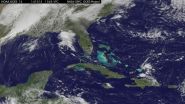
NASA's Aqua satellite passed over intensifying Tropical Storm Ana as it was moving through the Central Pacific Ocean and toward the Hawaiian Islands. On Oct. 14 at 22:50 UTC (6:50 p.m. EDT) the MODIS instrument aboard NASA's Aqua satellite captured a visible image of Tropical Storm Ana in the Central Pacific Ocean. The MODIS image showed a tight concentration of thunderstorms surrounding the center of Ana's circulation. At 1500 UTC (11 a.m. EDT/5 a.m. HST) on Wed. Oct. 15, Tropical Storm Ana's maximum sustained winds were near 70 mph (110 kph). Ana is forecast to gradually ...
Read more →
Satellite eyes first major Atlantic Hurricane in 3 years: Gonzalo
Environment 2014-10-15

Satellite eyes first major Atlantic Hurricane in 3 years: Gonzalo

VIDEO: This animation of visible and infrared images from NOAA's GOES-East satellite shows the movement and strengthening of Gonzalo from a tropical storm on Oct. 13 to a hurricane on Oct.... Click here for more information. Hurricane Gonzalo has made the jump to major hurricane status and on Oct. 15 was a Category 4 storm on the Saffir-Simpson Hurricane Scale. NOAA's GOES-East satellite provided imagery of the storm. According to the National Hurricane Center, Gonzalo is the ...
Read more →
Study reveals optimal particle size for anticancer nanomedicines
Medicine 2014-10-15

Study reveals optimal particle size for anticancer nanomedicines

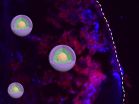
Nanomedicines consisting of nanoparticles for targeted drug delivery to specific tissues and cells offer new solutions for cancer diagnosis and therapy. Understanding the interdependency of physiochemical properties of nanomedicines, in correlation to their biological responses and functions, is crucial for their further development of as cancer-fighters. "To develop next generation nanomedicines with superior anti-cancer attributes, we must understand the correlation between their physicochemical properties—specifically, particle size—and their interactions ...
Read more →
Microfossils reveal warm oceans had less oxygen, Syracuse geologists say
Environment 2014-10-15

Microfossils reveal warm oceans had less oxygen, Syracuse geologists say

Researchers in Syracuse University's College of Arts and Sciences are pairing chemical analyses with micropaleontology—the study of tiny fossilized organisms—to better understand how global marine life was affected by a rapid warming event more than 55 million years ago. Their findings are the subject of an article in the journal Paleoceanography (John Wiley & Sons, 2014). "Global warming impacts marine life in complex ways, of which the loss of dissolved oxygen [a condition known as hypoxia] is a growing concern" says Zunli Lu, assistant professor of ...
Read more →
Environment 2014-10-15

NASA study finds 1934 had worst drought of last thousand years

A new study using a reconstruction of North American drought history over the last 1,000 years found that the drought of 1934 was the driest and most widespread of the last millennium. Using a tree-ring-based drought record from the years 1000 to 2005 and modern records, scientists from NASA and Lamont-Doherty Earth Observatory found the 1934 drought was 30 percent more severe than the runner-up drought (in 1580) and extended across 71.6 percent of western North America. For comparison, the average extent of the 2012 drought was 59.7 percent. "It was the worst by a ...
Read more →
New study shows the importance of jellyfish falls to deep-sea ecosystem
Environment 2014-10-15

New study shows the importance of jellyfish falls to deep-sea ecosystem

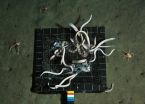
This week, researchers from University of Hawai'i, Norway, and the UK have shown with innovative experiments that a rise in jellyfish blooms near the ocean's surface may lead to jellyfish falls that are rapidly consumed by voracious deep-sea scavengers. Previous anecdotal studies suggested that deep-sea animals might avoid dead jellyfish, causing dead jellyfish from blooms to accumulate and undergo slow degradation by microbes, depleting oxygen at the seafloor and depriving fish and invertebrate scavengers, including commercially exploited species, of food. Globally ...
Read more →
These roos were 'made' for walking, study suggests of extinct enigmas
Science 2014-10-15

These roos were 'made' for walking, study suggests of extinct enigmas

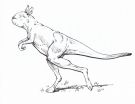
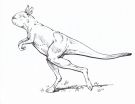
PROVIDENCE, R.I. [Brown University] — Imagine that a time machine has transported you to the Australian outback 100,000 years ago. As you emerge, you see a huge kangaroo with a round rabbit-like face foraging in a tall bush nearby. The animal's surprising size makes you gasp aloud but when it hears you, becoming equally unnerved, it doesn't hop or lumber away on all fours and tail like every kangaroo you've seen in the present. It walks on its feet. One at a time. Like you. In a new paper in the journal PLoS ONE, a team of researchers led by Christine Janis, professor ...
Read more →
Extinct giant kangaroos may have been hop-less
Science 2014-10-15

Extinct giant kangaroos may have been hop-less

Now extinct giant kangaroos most likely could not hop and used a more rigid body posture to move their hindlimbs one at a time, according to a study published October 15, 2014 in the open-access journal PLOS ONE by Christine Janis from Brown University and colleagues. The "short-faced," large-bodied sthenurine kangaroos–a now extinct relative to modern-day kangaroos–first appeared in the middle Miocene and became extinct in the late Pleistocene. The largest of these kangaroos had an estimated body mass of 240 kg, almost three times the size of the largest ...
Read more →
Environment 2014-10-15

Light pollution contributing to fledgling 'fallout'

Turning the street lights off decreased the number of grounded fledglings, according to a study published October 15, 2014 in the open-access journal PLOS ONE by Airam Rodríguez and colleagues from Phillip Island Nature Parks, in Victoria, Australia, and Estación Biológica de Doñana, in Spain. Thousands of birds are attracted to lights–sometimes referred to as light-pollution–every year worldwide during their first flights from their nests to the open ocean, a phenomenon called 'fallout.' Short-tailed shearwater breeding on the coast of ...
Read more →
Science 2014-10-15

Risking your life without a second thought

People who risk their lives to save strangers may do so without deliberation, according to an analysis of statements from more than 50 recognized civilian heroes, conducted by David Rand from Yale University and colleagues published October 15, 2014 in the open access journal PLOS ONE. Scientists studying human cooperation recruited hundreds of participants to rate 51 statements made during published interviews by recipients of the Carnegie Hero Medal, given to civilians who risk their lives to save strangers. Study participants as well as a computer text analysis algorithm ...
Read more →