Medicine Technology 🌱 Environment Space Energy Physics Engineering Social Science Earth Science Science
Why species matter
Environment 2014-06-17

Why species matter

UC Santa Barbara doctoral candidate Caitlin Fong travels to French Polynesia often but not for vacation. She goes there to study a coral reef ecosystem influenced by human impacts such as overfishing and nutrient pollution. Her work focuses not only on biological changes but also methods scientists use to determine within-group group responses to ecological processes. The findings are published in ESA Ecology, a journal of the Ecological Society of America. Fong and Peggy Fong, a professor in UCLA's Department of Ecology and Evolutionary Biology, conducted a study assessing ...
Read more →
Science 2014-06-17

Not so fast -- our fishy friends can also feel pain

Do you still believe that fish are dumb and cannot feel pain? That we do not have to worry much about how they are cared for or caught? Think again, says Culum Brown of Macquarie University in Australia, in a review article in Springer's journal Animal Cognition. The research notes that fish cognition and their sensory perception are generally on par with that of other animals. Brown therefore argues that more consideration should be given to fish welfare and anti-cruelty issues. The Australian researcher says that most people rarely think about fish other than as food, ...
Read more →
$2.4 million NIH center grant to develop a cleaner, healthier environment in Detroit
Medicine 2014-06-17

$2.4 million NIH center grant to develop a cleaner, healthier environment in Detroit

DETROIT — With over $2.4 million in new federal funding, Wayne State University researchers, regional collaborators at Henry Ford Health System, the University of Michigan and Michigan State University, and community partners will study how exposures to stressors that are prevalent in the urban industrialized environment — both chemical and non-chemical — impact human health in Detroit and beyond. The grant, Center for Urban Responses to Environmental Stressors (CURES), is one of approximately 20 select P30 Core Centers funded by the National Institute of Environmental ...
Read more →
Medicine 2014-06-17

Do 'walkable' neighborhoods reduce obesity, diabetes?

June 17, 2014 (San Francisco) – People who live in neighborhoods that are conducive to walking experienced a substantially lower rate of obesity, overweight and diabetes than those who lived in more auto-dependent neighborhoods, according to a pair of studies presented at the American Diabetes Association's 74th Scientific Sessions®. Researchers in Canada compared adults living in the most and least "walkable" metropolitan areas in southern Ontario and found a lower risk of developing diabetes over a 10-year period for those who lived in neighborhoods with less sprawl, ...
Read more →
Medicine 2014-06-17

Heparin derivative suppresses neuroblastoma tumor growth

DURHAM, N.C. -- Researchers at Duke Medicine have identified a new strategy for treating neuroblastoma using a modified version of heparin, a century-old injectable drug that thins the blood to prevent clots from forming. The study, conducted in mice and published June 17, 2014, in the Journal of Clinical Investigation, found that when heparin is altered to remove its blood-thinning properties, it can suppress and shrink neuroblastoma tumors without causing severe bleeding. "Our research translates mechanistic insights about heparin into a potential new therapy for ...
Read more →
Urban Water Management Workshop stresses more collaboration and innovation
Social Science 2014-06-17

Urban Water Management Workshop stresses more collaboration and innovation

RIVERSIDE, Calif. — Where sustainability of water management is concerned, we must pay more attention to long-term solutions. Efficient water management and policy ought to be promoted at the local level. And a "portfolio approach" to water management is encouraged, one that includes information campaigns, different types of pricing, supply and reuse options, and technology-based rebate programs. These are some of the key messages that emerged from the first Urban Water Management Workshop that took place earlier this month at the University of California, Riverside. Sponsored ...
Read more →
Swell new sensors
Technology 2014-06-17

Swell new sensors

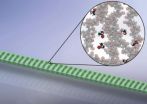
WASHINGTON D.C., June 17, 2014 – Using microscopic polymer light resonators that expand in the presence of specific gases, researchers at MIT's Quantum Photonics Laboratory have developed new optical sensors with predicted detection levels in the parts-per-billion range. Optical sensors are ideal for detecting trace gas concentrations due to their high signal-to-noise ratio, compact, lightweight nature, and immunity to electromagnetic interference. Although other optical gas sensors had been developed before, the MIT team conceived an extremely sensitive, compact way ...
Read more →
Ultra-thin wires for quantum computing
Technology 2014-06-17

Ultra-thin wires for quantum computing

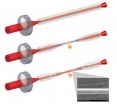
WASHINGTON D.C., June 17, 2014 - Take a fine strand of silica fiber, attach it at each end to a slow-turning motor, gently torture it over an unflickering flame until it just about reaches its melting point and then pull it apart. The middle will thin out like a piece of taffy until it is less than half a micron across -- about 200 times thinner than a human hair. That, according to researchers at the Joint Quantum Institute at the University of Maryland, is how you fabricate ultrahigh transmission optical nanofibers, a potential component for future quantum information ...
Read more →
Science 2014-06-17

Study reveals conditions linked to deadly bird flu and maps areas at risks

BEIJING, CHINA (17 June 2014)—A dangerous strain of avian influenza, H7N9, that's causing severe illness and deaths in China may be inhabiting a small fraction of its potential range and appears at risk of spreading to other suitable areas of India, Bangladesh, Vietnam, Indonesia and the Philippines, according to a new study published today in the journal Nature Communications. Researchers from the Université Libre de Bruxelles (ULB), the International Livestock Research Institute (ILRI), Oxford University, and the Chinese Center of Disease Control and Prevention analyzed ...
Read more →
Potential cholesterol lowering drug has breast cancer fighting capabilities
Medicine 2014-06-17

Potential cholesterol lowering drug has breast cancer fighting capabilities

COLUMBIA, Mo. – Researchers at the University of Missouri have proven that a compound initially developed as a cholesterol-fighting molecule not only halts the progression of breast cancer, but also can kill the cancerous cells. "Cholesterol is a molecule found in all animal cells and serves as a structural component of cell membranes," said Salman Hyder, the Zalk Endowed Professor in Tumor Angiogenesis and professor of biomedical sciences in the College of Veterinary Medicine and the Dalton Cardiovascular Research Center at MU. "Because tumor cells grow rapidly they ...
Read more →
Social Science 2014-06-17

Bats make social alliances that affect roosting behavior

Depending on habitat availability, the endangered Indiana bat may be able to use its social connections to survive a certain amount of roost destruction, according to research by scientists at Virginia Tech and The Ohio State University. Alexander Silvis of Lynchburg, Ohio, and Andrew Kniowski of Boones Mill, Virginia, both doctoral students in Virginia Tech's College of Natural Resources and Environment, made findings from Ohio State field studies highly visual by applying graphic and spatial approaches to the data. "Social dynamics are important to bat roosting behavior," ...
Read more →
Science 2014-06-17

Researchers map genomic differences in yellow fever, malaria mosquitoes

Virginia Tech entomologists have developed a chromosome map for about half of the genome of the mosquito Aedes agypti, the major carrier of dengue fever and yellow fever. With the map, researchers can compare the chromosome organization and evolution between this mosquito and the major carrier of malaria, the Anopheles gambiae mosquito, to find ways to prevent diseases. "Despite looking somewhat similar, these mosquitoes diverged from each other about 150 million years ago. So, they are genetically further apart than humans and elephants," said Maria Sharakhova, a ...
Read more →
Study reveals livestock gut microbes contributing to greenhouse gas emissions
Environment 2014-06-17

Study reveals livestock gut microbes contributing to greenhouse gas emissions

"Increased to levels unprecedented" is how the Intergovernmental Panel on Climate Change (IPCC) described the rise of carbon dioxide, methane and nitrous oxide emissions in their report on the physical science basis of climate change in 2013. According to the US Environmental Protection Agency (EPA), the atmospheric concentration of methane, a greenhouse gas some 28 times more potent than carbon dioxide has been steadily growing since the 18th century and has now increased by 50 percent compared to pre-industrial levels, exceeding 1,800 parts per billion. The EPA attributes ...
Read more →
Social Science 2014-06-17

'Vital signs' of teaching captured by quick, reliable in-class evaluation

A 20-minute classroom assessment that is less subjective than traditional in-class evaluations by principals can reliably measure classroom instruction and predict student standardized test scores, a team of researchers researchers reported. The assessment also provides immediate and meaningful feedback making it an important new tool for understanding and improving instructional quality, according to psychologists from the University of Rochester and the University of North Carolina at Chapel Hill. "Education researchers broadly agree that teachers matter," explained ...
Read more →
Medicine 2014-06-17

EHRA White Book 2014 highlights growing use of complex therapies for heart rhythm abnormalities

Nice, France, 17 June 2014. The EHRA (European Heart Rhythm Association) White Book 2014 will be officially launched at the CARDIOSTIM EHRA EUROPACE 2014 congress which starts today in Nice, France. The White Book reports on the current status of arrhythmia treatment in 49 of the 56 European Society of Cardiology (ESC) member countries for the year 2013. The new White Book is published in electronic format only and will be distributed on a USB stick as well as being available on the EHRA website. As a new feature, the USB stick contains complete data also from the six ...
Read more →
Distracted minds still see blurred lines
Science 2014-06-17

Distracted minds still see blurred lines

VIDEO: Participants were asked to look at an image with moving sections blurred, while performing a cognitive 'n-back' task. Click here for more information. Montreal, June 17, 2014 — From animated ads on Main Street to downtown intersections packed with pedestrians, the eyes of urban drivers have much to see. But while city streets have become increasingly crowded with distractions, our ability to process visual information has remained unchanged for millions of years. ...
Read more →
Pain pilot explores hand shiatsu treatment as sleep aid
Medicine 2014-06-17

Pain pilot explores hand shiatsu treatment as sleep aid

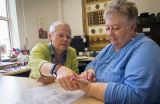
(Edmonton) There was a time, back in Nancy Cheyne's youth, when she combined the poise and grace of a ballerina with the daring and grit of a barrel racer. When she wasn't pursuing either of those pastimes, she bred sheepdogs, often spending hours on her feet grooming her furry friends at dog shows. All that seems like a lifetime ago. After 15 years of living with chronic lower-back pain, Cheyne, 64, can't walk from the disabled parking stall to the elevator at work without stopping for a rest. She eats mostly junk food because it hurts too much to stand over the stove ...
Read more →
Single dose reverses autism-like symptoms in mice
Medicine 2014-06-17

Single dose reverses autism-like symptoms in mice

In a further test of a novel theory that suggests autism is the consequence of abnormal cell communication, researchers at the University of California, San Diego School of Medicine report that an almost century-old drug approved for treating sleeping sickness also restores normal cellular signaling in a mouse model of autism, reversing symptoms of the neurological disorder in animals that were the human biological age equivalent of 30 years old. The findings, published in the June 17, 2014 online issue of Translational Psychiatry, follow up on similar research published ...
Read more →
Medicine 2014-06-17

Breast cancer diagnosis, mammography improved by considering patient risk: INFORMS paper

A new approach to examining mammograms that takes into account a woman's health risk profile would reduce the number of cancer instances missed and also cut the number of false positives, according to a paper being presented at a conference of the Institute for Operations Research and the Management Sciences (INFORMS). Mehmet U.S. Ayvaci of the University of Texas Dallas will present his research group's findings about the role of risk profiling in the interpretation of mammograms at Advances in Decision Analysis, a conference sponsored by the INFORMS Decision Analysis ...
Read more →
Medicine 2014-06-17

Boost for dopamine packaging protects brain in Parkinson's model

Researchers from Emory's Rollins School of Public Health discovered that an increase in the protein that helps store dopamine, a critical brain chemical, led to enhanced dopamine neurotransmission and protection from a Parkinson's disease-related neurotoxin in mice. Dopamine and related neurotransmitters are stored in small storage packages called vesicles by the vesicular monoamine transporter (VMAT2). When released from these packages dopamine can help regulate movement, pleasure, and emotional response. Low dopamine levels are associated with neurodegenerative diseases ...
Read more →
Medicine 2014-06-17

Gut bacteria predict survival after stem cell transplant, study shows

(WASHINGTON, June 17, 2014) – New research, published online today in Blood, the Journal of the American Society of Hematology, suggests that the diversity of bacteria in the gastrointestinal tract of patients receiving stem cell transplants may be an important predictor of their post-transplant survival. A healthy gastrointestinal tract contains a balanced community of microorganisms (known as microbiota), largely comprised of "friendly" bacteria that aid digestion and are important to immune system function. When this community of microbes is compromised, the microbiota ...
Read more →
Ice cream chemistry: The inside scoop on a classic summer treat (video)
Science 2014-06-17

Ice cream chemistry: The inside scoop on a classic summer treat (video)

WASHINGTON, June 17, 2014 — The summer weather is here, and if you've been out in the sun, you're probably craving some ice cream to cool off. In the American Chemical Society's latest Reactions video, American University Assistant Professor Matt Hartings, Ph.D., breaks down the chemistry of this favorite frozen treat, including what makes ice cream creamy or crunchy, and why it is so sweet. The video is available at http://youtu.be/-rlapUkWCSM INFORMATION: Subscribe to the series at Reactions YouTube, and follow us on Twitter @ACSreactions to be the first to see our ...
Read more →
Environment 2014-06-17

Climate change deflecting attention from biodiversity loss

New research from the University of Kent suggests that recent high levels of media coverage for climate change may have deflected attention and funding from biodiversity loss. In a paper published by the journal Bioscience, Kent conservationists also recommend that, to prevent biodiversity from becoming a declining priority, conservationists need to leverage the importance of climate change to obtain more funds and draw attention to other research areas such as biodiversity conservation. For the study, the team conducted a content analysis of newspaper coverage in ...
Read more →
Crowdsourcing the phase problem
Science 2014-06-17

Crowdsourcing the phase problem

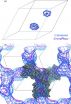
Compared with humans, computers have the capacity to solve problems at much greater speed. There are many problems, however, where computational speed alone is insufficient to find a correct or optimal solution, for example because the parameter "space" cannot be fully searched in a practical time. In contrast, the human mind can formulate expert knowledge specific for particular problems, providing a capacity to guide more efficient searches, although with more limited processing speed. The power of the human contribution can be multiplied through the efforts of a greater ...
Read more →
Medicine 2014-06-17

Genetic pathway can slow spread of ovarian cancer

University of Adelaide research into the origins of ovarian cancer has led to the discovery of a genetic pathway that could slow the spread of the cancer. The discovery is in part due to research into the genetics of humans' most distant mammalian relative, the platypus. In a paper published today in the journal PLOS ONE, researchers characterize a genetic pathway – involving piRNA genes – that is turned on in ovarian cancer. "This pathway is important for the development of the ovaries in drosophila flies but little is known about its role in the mammalian ovary," ...
Read more →