Medicine Technology 🌱 Environment Space Energy Physics Engineering Social Science Earth Science Science
Quest for education creating graying ghost towns at top of the world
Social Science 2014-06-18

Quest for education creating graying ghost towns at top of the world

Ethnic Tibetan communities in Nepal's highlands are rapidly shrinking as more parents send their children away for a better education and modern careers, a trend that threatens to create a region of graying ghost towns at the top of the world, according to a study that includes Dartmouth College. The findings, which have major social and demographic implications for the Himalayan region, appear in the journal Mountain Research and Development. A PDF of the study is available on request. Taken together, the outmigration of young people, a low birth rate and population ...
Read more →
Medicine 2014-06-18

Counterterrorism, ethics, and global health

The surge in murders of polio vaccination workers in Pakistan has made headlines this year, but little attention has been devoted to the ethical issues surrounding the global health impact of current counterterrorism policy and practice. An essay in the Hastings Center Report reviews the range of harms to population health traceable to counterterrorism operations. It also identifies concerns involving moral agency and responsibility – specifically of humanitarian health workers, military medical personnel, and national security officials and operatives – and it highlights ...
Read more →
Science 2014-06-18

Proposed children's study needs refinement, report finds

PRINCETON, N.J.—A study that would track the health of 100,000 babies to age 21 has been put on hold following the release of an assessment report issued June 16 by the National Research Council and Institute of Medicine (IOM). While the congressionally mandated report endorses several aspects of the proposed study design of the National Children's Study (NCS), the authors – including Sara McLanahan, the William S. Tod Professor of Sociology and Public Affairs at Princeton University's Woodrow Wilson School of International and Public Affairs – are critical of the sampling ...
Read more →
Medicine 2014-06-18

False negative results found in prognostic testing for breast cancer

A recent study evaluating HER2 testing in a large cohort of women with breast cancer found important limitations in the conventional way HER2 testing is performed in the US and internationally. Dartmouth-Hitchcock Norris Cotton Cancer Center physicians and researchers retested tumor samples from a large group of women and found that 22 out of 530 women had their tumor type incorrectly classified. They reported their findings in a publication titled "Assessing the Discordance Rate between Local and Central HER2 Testing in Women with Locally Determined HER2-Negative Breast ...
Read more →
Medicine 2014-06-18

New Stanford blood test identifies heart-transplant rejection earlier than biopsy can

Stanford University researchers have devised a noninvasive way to detect heart-transplant rejection weeks or months earlier than previously possible. The test, which relies on the detection of increasing amounts of the donor's DNA in the blood of the recipient, does not require the removal of any heart tissue. "This test appears to be safer, cheaper and more accurate than a heart biopsy, which is the current gold standard to detect and monitor heart-transplant rejection," said Stephen Quake, PhD, professor of bioengineering and of applied physics. "We believe it's likely ...
Read more →
Medicine 2014-06-18

How a new approach to funding Alzheimer's research could pay off

More than 5 million Americans suffer from Alzheimer's disease, the affliction that erodes memory and other mental capacities, but no drugs targeting the disease have been approved by the U.S. Food and Drug Administration since 2003. Now a paper by an MIT professor suggests that a revamped way of financing Alzheimer's research could spur the development of useful new drugs for the illness. "We are spending tremendous amounts of resources dealing with this disease, but we don't have any effective therapies for it," says Andrew Lo, the Charles E. and Susan T. Harris Professor ...
Read more →
Science 2014-06-18

Maybe birds can have it all: Dazzling colors and pretty songs

ITHACA, N.Y. – A study of one of the world's largest and most colorful bird families has dispelled a long-held notion, first proposed by Charles Darwin, that animals are limited in their options to evolve showiness. The study – the largest of its kind – was published today in the Proceedings of the Royal Society B. The natural world is full of showstoppers – birds with brilliant colors, exaggerated crests and tails, intricate dance routines, or virtuosic singing. But it's long been thought that these abilities are the result of trade-offs. For a species to excel in one ...
Read more →
Medicine 2014-06-18

Demand for diabetes, thyroid care outpaces supply of endocrinologists

Washington, DC—As more people are diagnosed with diabetes and other hormone conditions, a growing shortage of endocrinologists could force patients to wait longer to see a doctor, according to a new Endocrine Society workforce analysis published in the Journal of Clinical Endocrinology & Metabolism (JCEM). Endocrinologists are specially trained physicians who diagnose diseases related to the glands. They specialize in treating diabetes, obesity, osteoporosis, thyroid disorders, adrenal diseases, and a variety of other conditions related to hormones. The analysis found ...
Read more →
Scientists take first dip into water's mysterious 'no-man's land'
Science 2014-06-18

Scientists take first dip into water's mysterious 'no-man's land'

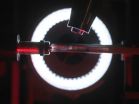
Scientists at the Department of Energy's SLAC National Accelerator Laboratory have made the first structural observations of liquid water at temperatures down to minus 51 degrees Fahrenheit, within an elusive "no-man's land" where water's strange properties are super-amplified. The research, made possible by SLAC's Linac Coherent Light Source (LCLS) X-ray laser and reported June 18 in Nature, opens a new window for exploring liquid water in these exotic conditions, and promises to improve our understanding of its unique properties at the more natural temperatures and ...
Read more →
UEA researchers discover Achilles' heel in antibiotic-resistant bacteria
Medicine 2014-06-18

UEA researchers discover Achilles' heel in antibiotic-resistant bacteria

Scientists at the University of East Anglia have made a breakthrough in the race to solve antibiotic resistance. New research published today in the journal Nature reveals an Achilles' heel in the defensive barrier which surrounds drug-resistant bacterial cells. The findings pave the way for a new wave of drugs that kill superbugs by bringing down their defensive walls rather than attacking the bacteria itself. It means that in future, bacteria may not develop drug-resistance at all. The discovery doesn't come a moment too soon. The World Health Organization has warned ...
Read more →
Environment 2014-06-18

Identifying opposite patterns of climate change between the middle latitude areas

Korean research team revealed conflicting climate change patterns between the middle latitude areas of the Northern and Southern Hemispheres in relation to glacial and interglacial cycles which have been puzzled for the past 60 years. Doctor Kyoung-nam Jo from the Quaternary Geology Department of the Korea Institute of Geoscience and Mineral Resources(KIGAM) revealed a clue for solving the riddle of past global climate change in his paper titled 'Mid-latitudinal interhemispheric hydrologic seesaw over the past 550,000 years' which was featured in the journal Nature. This ...
Read more →
Science 2014-06-18

Evolutionary biology: Why cattle only have 2 toes

During evolutionary diversification of vertebrate limbs, the number of toes in even-toed ungulates such as cattle and pigs was reduced and transformed into paired hooves. Scientists at the University of Basel have identified a gene regulatory switch that was key to evolutionary adaption of limbs in ungulates. The study provides fascinating insights into the molecular history of evolution and is published by Nature today. The fossil record shows that the first primitive even-toed ungulates had legs with five toes (=digits), just like modern mice and humans. During their ...
Read more →
Scientists break the genetic code for diabetes in Greenland
Medicine 2014-06-18

Scientists break the genetic code for diabetes in Greenland

VIDEO: New Danish genetics research explains the high incidence of type 2 diabetes in the Greenlandic population. The ground-breaking findings have just been published in the prestigious scientific journal Nature.... Click here for more information. A spectacular piece of detective work has mapped a special gene variant among Greenlanders which plays a particularly important role in the development of type 2 diabetes. The results have been published in Nature and can be ...
Read more →
Familiar yet strange: Water's 'split personality' revealed by computer model
Technology 2014-06-18

Familiar yet strange: Water's 'split personality' revealed by computer model

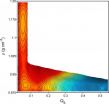
Seemingly ordinary, water has quite puzzling behavior. Why, for example, does ice float when most liquids crystallize into dense solids that sink? Using a computer model to explore water as it freezes, a team at Princeton University has found that water's weird behaviors may arise from a sort of split personality: at very cold temperatures and above a certain pressure, water may spontaneously split into two liquid forms. The team's findings were reported in the journal Nature. "Our results suggest that at low enough temperatures water can coexist as two different ...
Read more →
Collecting light with artificial moth eyes
Technology 2014-06-18

Collecting light with artificial moth eyes

Rust – iron oxide – could revolutionise solar cell technology. This usually unwanted substance can be used to make photoelectrodes which split water and generate hydrogen. Sunlight is thereby directly converted into valuable fuel rather than first being used to generate electricity. Unfortunately, as a raw material iron oxide has its limitations. Although it is unbelievably cheap and absorbs light in exactly the wavelength region where the sun emits the most energy, it conducts electricity very poorly and must therefore be used in the form of an extremely thin film in ...
Read more →
Medicine 2014-06-18

Breathalyzer test may detect deadliest cancer

Lung cancer causes more deaths in the U.S. than the next three most common cancers combined (colon, breast, and pancreatic). The reason for the striking mortality rate is simple: poor detection. Lung cancer attacks without leaving any fingerprints, quietly afflicting its victims and metastasizing uncontrollably – to the point of no return. Now a new device developed by a team of Israeli, American, and British cancer researchers may turn the tide by both accurately detecting lung cancer and identifying its stage of progression. The breathalyzer test, embedded with a "NaNose" ...
Read more →
Scripps Research Institute scientists reveal molecular 'yin-yang' of blood vessel growth
Medicine 2014-06-18

Scripps Research Institute scientists reveal molecular 'yin-yang' of blood vessel growth

LA JOLLA, CA—June 18, 2014 —Biologists at The Scripps Research Institute (TSRI) have discovered a crucial process that regulates the development of blood vessels. The finding could lead to new treatments for disorders involving abnormal blood vessel growth, including common disorders such as diabetic retinopathy and cancer. "Essentially we've shown how the protein SerRS acts as a brake on new blood vessel growth and pairs with the growth-promoting transcription factor c-Myc to bring about proper vascular development," said TSRI Professor Xiang-Lei Yang. "They act as the ...
Read more →
Inflammation in fat tissue helps prevent metabolic disease
Medicine 2014-06-18

Inflammation in fat tissue helps prevent metabolic disease

DALLAS – June 18, 2014 – Chronic tissue inflammation is typically associated with obesity and metabolic disease, but new research from UT Southwestern Medical Center now finds that a level of "healthy" inflammation is necessary to prevent metabolic diseases, such as fatty liver. "There is such a thing as 'healthy' inflammation, meaning inflammation that allows the tissue to grow and has overall benefits to the tissue itself and the whole body," said Dr. Philipp Scherer, Director of the Touchstone Center for Diabetes Research and Professor of Internal Medicine and Cell ...
Read more →
Unlocking the therapeutic potential of SLC13 transporters
Science 2014-06-18

Unlocking the therapeutic potential of SLC13 transporters

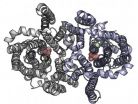
Researchers have provided the first functional analysis of a member of a family of transporter proteins implicated in diabetes, obesity, and lifespan. The study appears in the June issue of The Journal of General Physiology. Members of the SLC13 transporter family play a key role in the regulation of fat storage, insulin resistance, and other processes. Some SLC13 transporters mediate the transport of Krebs cycle intermediates—compounds essential for the body's metabolic activity—across the cell membrane. Previous studies have shown that loss of one member of this family ...
Read more →
Penn team links placental marker of prenatal stress to brain mitochondrial dysfunction
Medicine 2014-06-18

Penn team links placental marker of prenatal stress to brain mitochondrial dysfunction

When a woman experiences a stressful event early in pregnancy, the risk of her child developing autism spectrum disorders or schizophrenia increases. Yet how maternal stress is transmitted to the brain of the developing fetus, leading to these problems in neurodevelopment, is poorly understood. New findings by University of Pennsylvania School of Veterinary Medicine scientists suggest that an enzyme found in the placenta is likely playing an important role. This enzyme, O-linked-N-acetylglucosamine transferase, or OGT, translates maternal stress into a reprogramming ...
Read more →
Study examines how brain 'reboots' itself to consciousness after anesthesia
Medicine 2014-06-18

Study examines how brain 'reboots' itself to consciousness after anesthesia

One of the great mysteries of anesthesia is how patients can be temporarily rendered completely unresponsive during surgery and then wake up again, with their memories and skills intact. A new study by Dr. Andrew Hudson, an assistant professor in anesthesiology at the David Geffen School of Medicine at UCLA, and colleagues provides important clues about the processes used by structurally normal brains to navigate from unconsciousness back to consciousness. Their findings are currently available in the early online edition of the Proceedings of the National Academy of ...
Read more →
Scripps Florida scientists pinpoint how genetic mutation causes early brain damage
Medicine 2014-06-18

Scripps Florida scientists pinpoint how genetic mutation causes early brain damage

JUPITER, FL, June 18, 2014 – Scientists from the Florida campus of The Scripps Research Institute (TSRI) have shed light on how a specific kind of genetic mutation can cause damage during early brain development that results in lifelong learning and behavioral disabilities. The work suggests new possibilities for therapeutic intervention. The study, which focuses on the role of a gene known as Syngap1, was published June 18, 2014, online ahead of print by the journal Neuron. In humans, mutations in Syngap1 are known to cause devastating forms of intellectual disability ...
Read more →
Medicine 2014-06-18

Blocking brain's 'internal marijuana' may trigger early Alzheimer's deficits, study shows

A new study led by investigators at the Stanford University School of Medicine has implicated the blocking of endocannabinoids — signaling substances that are the brain's internal versions of the psychoactive chemicals in marijuana and hashish — in the early pathology of Alzheimer's disease. A substance called A-beta — strongly suspected to play a key role in Alzheimer's because it's the chief constituent of the hallmark clumps dotting the brains of people with Alzheimer's — may, in the disease's earliest stages, impair learning and memory by blocking the natural, beneficial ...
Read more →
Medicine 2014-06-18

Groundbreaking model explains how the brain learns to ignore familiar stimuli

Dublin, June 18th, 2014 – A neuroscientist from Trinity College Dublin has proposed a new, ground-breaking explanation for the fundamental process of 'habituation', which has never been completely understood by neuroscientists. Typically, our response to a stimulus is reduced over time if we are repeatedly exposed to it. This process of habituation enables organisms to identify and selectively ignore irrelevant, familiar objects and events that they encounter again and again. Habituation therefore allows the brain to selectively engage with new stimuli, or those that ...
Read more →
Fight-or-flight chemical prepares cells to shift brain from subdued to alert
Medicine 2014-06-18

Fight-or-flight chemical prepares cells to shift brain from subdued to alert

A new study from The Johns Hopkins University shows that the brain cells surrounding a mouse's neurons do much more than fill space. According to the researchers, the cells, called astrocytes because of their star-shaped appearance, can monitor and respond to nearby neural activity, but only after being activated by the fight-or-flight chemical norepinephrine. Because astrocytes can alter the activity of neurons, the findings suggest that astrocytes may help control the brain's ability to focus. The study involved observing the cells in the brains of living, active mice ...
Read more →