Medicine Technology 🌱 Environment Space Energy Physics Engineering Social Science Earth Science Science
Science 2012-09-28

Study: Exposure to herbicide may increase risk of rare disorder

HOUSTON – (Sept. 28, 2012) – A common herbicide used in the United States may be linked to an increased risk of a congenital abnormality of the nasal cavity known as choanal atresia, say researchers at Baylor College of Medicine and other Texas institutions. The study by Dr. Philip Lupo, assistant professor of pediatrics – hematology/oncology at BCM and Texas Children's Cancer Center, is scheduled for publication in The Journal of Pediatrics. Choanal atresia is a disorder where the back of the nasal passage is blocked by tissue formed during fetal development. It is ...
Read more →
Science 2012-09-28

Eating cherries lowers risk of gout attacks by 35 percent

A new study found that patients with gout who consumed cherries over a two-day period showed a 35% lower risk of gout attacks compared to those who did not eat the fruit. Findings from this case-crossover study published in Arthritis & Rheumatism, a journal of the American College of Rheumatology (ACR), also suggest that risk of gout flares was 75% lower when cherry intake was combined with the uric-acid reducing drug, allopurinol, than in periods without exposure to cherries or treatment. Previous research reports that 8.3 million adults in the U.S. suffer with gout, ...
Read more →
Science 2012-09-28

Local funding leads to big things in parrot genomics

September 28, 2012, Hong Kong, China – The international open-access journal GigaScience (a BGI and BioMed Central journal) announces the publication of a unique study providing the genome sequence of the critically endangered Puerto Rican Parrot (Amazona vittata) by Taras Oleksyk and colleagues at the University of Puerto Rico-Mayaguez. The sequencing and analysis of the genome of the only surviving native parrot in US territory provides numerous benefits for avian genetics, conservation studies, and evolutionary analyses. What is remarkable here, and highlighted in an ...
Read more →
Big science: Local funding supports open-access sequencing of the Puerto Rican Parrot genome
Medicine 2012-09-28

Big science: Local funding supports open-access sequencing of the Puerto Rican Parrot genome

The critically endangered Puerto Rican Parrot (Amazona vittata) is the only surviving parrot species native to the United States. A genomic sequencing project, funded by community donations, has published today, in BioMed Central and BGI's open access journal GigaScience, the first sequence of A. vittata, the first of the large Neotropical Amazona birds to be studied at the genomic level. The Puerto Rican Parrot was once abundant throughout Puerto Rico but destruction of old forest habitats to make way for farming in the 19th Century resulted in a drastic decline in their ...
Read more →
Ancient stinging nettles reveal Bronze Age trade connections
Science 2012-09-28

Ancient stinging nettles reveal Bronze Age trade connections

A piece of nettle cloth retrieved from Denmark's richest known Bronze Age burial mound Lusehøj may actually derive from Austria, new findings suggest. The cloth thus tells a surprising story about long-distance Bronze Age trade connections around 800 BC. The findings have just been published in Nature's online journal Scientific Reports. 2,800 years ago, one of Denmark's richest and most powerful men died. His body was burned. And the bereaved wrapped his bones in a cloth made from stinging nettle and put them in a stately bronze container, which also functioned as urn. Now ...
Read more →
Medicine 2012-09-28

The true costs of cancer in Europe revealed

Vienna, Austria, 28 September 2012 – New studies that reveal for the first time the real economic and human costs of caring for cancer patients in Europe will be presented during the ESMO 2012 Congress of the European Society for Medical Oncology in Vienna. "Here we have two studies of enormous importance," noted Prof Peter Boyle, President of the International Prevention Research Institute in Lyon, France, Member of the ESMO Faculty group on Cancer Prevention, who was not involved in the studies. "It is essential to have knowledge of the total costs of cancer and Dr ...
Read more →
Technology 2012-09-28

'Carmaheaven': Closure of 405 in 2011 improved air quality up to 83 percent

Take the time to enjoy a deep breath next weekend when the 405 freeway closes for Carmageddon II. If it's anything like last year, the air quality is about to get amazing. In study findings announced Sept. 28, UCLA researchers report that they measured air pollutants during last year's Carmageddon (July 15) and found that when 10 miles of the 405 closed, air quality near the shuttered portion improved within minutes, reaching levels 83 percent better than on comparable weekends. Because traffic dipped all over Southern California that weekend, air quality also improved ...
Read more →
Electrons confined inside nano-pyramids
Physics 2012-09-28

Electrons confined inside nano-pyramids

Quantum dots are nanostructures of semiconducting materials that behave a lot like single atoms and are very easy to produce. Given their special properties, researchers see huge potential for quantum dots in technological applications. Before this can happen, however, we need a better understanding of how the electrons "trapped" inside them behave. Dresden physicists have recently observed how electrons in individual quantum dots absorb energy and emit it again as light. Their results were recently published in the journal "Nano Letters". Quantum dots look like miniscule ...
Read more →
Loop the loop, DNA style
Medicine 2012-09-28

Loop the loop, DNA style

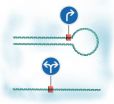
In certain toy racecar tracks, sneaky players can flip a switch, trapping their opponents' vehicles in a loop of track. Cells employ a less subtle approach: they change the track's layout. In a study published online today in Science, scientists at the European Molecular Biology Laboratory (EMBL) and Oxford University discovered that, by forming or undoing gene loops, cells manipulate the path of the transcription machinery – which reads out instructions from DNA – controlling whether it moves along the genetic material in one direction or two. "We found that gene loops ...
Read more →
Science 2012-09-28

Nanosciences: All systems go at the biofactory

In order to assemble novel biomolecular machines, individual protein molecules must be installed at their site of operation with nanometer precision. LMU researchers have now found a way to do just that. Green light on protein assembly! The finely honed tip of the atomic force microscope (AFM) allows one to pick up single biomolecules and deposit them elsewhere with nanometer accuracy. The technique is referred to as Single-Molecule Cut & Paste (SMC&P), and was developed by the research group led by LMU physicist Professor Hermann Gaub. In its initial form, it was only ...
Read more →
Science 2012-09-28

What makes surgeons happy?

TORONTO, Sept. 28, 2012—Lack of control over operating rooms and other resources as well as a lack of work-life balance are among the main reasons general surgeons may be dissatisfied with their jobs, a new study has found. The study was led by Dr. Najma Ahmed, a trauma surgeon at St. Michael's Hospital, at a time when both the Association of American Medical Colleges and the Canadian Medical Association have reported a decline in the number of general surgeons due to low recruitment, poor retention and early retirement. Dr. Ahmed said that since the general surgery ...
Read more →
Medicine 2012-09-28

Study ties early menopause to heart attack, stroke

Women who experience early menopause are more likely to have a heart attack or stroke than women whose menopause occurs at a later age, according to a new study by Melissa Wellons, M.D., assistant professor of Medicine in the Vanderbilt Division of Diabetes, Endocrinology and Metabolism. Wellons conducted the research while working at the University of Alabama-Birmingham and it is published in the current issue of Menopause: The Journal of The North American Menopause Society. She said the study is especially important because cardiovascular disease is the leading cause ...
Read more →
Science 2012-09-28

When your eyes tell your hands what to think

EVANSTON, Ill. --- You've probably never given much thought to the fact that picking up your cup of morning coffee presents your brain with a set of complex decisions. You need to decide how to aim your hand, grasp the handle and raise the cup to your mouth, all without spilling the contents on your lap. A new Northwestern University study shows that, not only does your brain handle such complex decisions for you, it also hides information from you about how those decisions are made. "Our study gives a salient example," said Yangqing 'Lucie' Xu, lead author of the ...
Read more →
Medicine 2012-09-28

Study reveals wide discrepancy in multidrug surveillance among intensive care units

Washington, DC, September 28, 2012 – Screening practices for multidrug-resistant organisms (MDROs) in intensive care units (ICUs) vary widely from hospital to hospital, according to a new study published in the October issue of the American Journal of Infection Control, the official publication of the Association for Professionals in Infection Control and Epidemiology (APIC). The P-NICE interdisciplinary research team from the Columbia University School of Nursing collected and analyzed survey responses from the infection preventionists (IPs) of 250 hospitals that participated ...
Read more →
Medicine 2012-09-28

Language and perception – Insights from Psychological Science

New research published in Psychological Science, a journal of the Association for Psychological Science, examines the nuanced relationship between language and different types of perception. Bilingual Infants Can Tell Unfamiliar Languages Apart Speaking more than one language can improve our ability to control our behavior and focus our attention, recent research has shown. But are there any advantages for bilingual children before they can speak in full sentences? We know that bilingual children can tell if a person is speaking one of their native languages or the ...
Read more →
Medicine 2012-09-28

Hospital observation units could save the health care system $3.1 billion

Boston, MA – Previous research has shown that observation units in a hospital can be an efficient way to care for certain patients, but only about one-third of hospitals in the United States have such units. Now, researchers at Brigham and Women's Hospital (BWH) estimate that maximizing the potential of an observation unit in a hospital could result in $4.6 million in savings annually for the hospital and $3.1 billion in overall savings for the health care system in the United States. These findings are published online by Health Affairs and will also appear in the journal's ...
Read more →
Science 2012-09-28

Penn immunologists find a molecule that puts the brakes on inflammation

PHILADELPHIA — We couldn't live without our immune systems, always tuned to detect and eradicate invading pathogens and particles. But sometimes the immune response goes overboard, triggering autoimmune diseases like lupus, asthma or inflammatory bowel disease. A new study led by University of Pennsylvania researchers has now identified a crucial signaling molecule involved in counterbalancing the immune system attack. "The immune response is like driving a car," said Christopher Hunter, professor and chair in the Department of Pathobiology in Penn's School of Veterinary ...
Read more →
Venice Lagoon research indicates rapid climate change in coastal regions
Environment 2012-09-28

Venice Lagoon research indicates rapid climate change in coastal regions

Research undertaken by the University of Southampton and its associates in Venice has revealed that the sea surface temperature (SST) in coastal regions is rising as much as ten times faster than the global average of 0.13 degrees per decade. Researchers believe that this is partly as a result of a process known as the 'urban heat island effect'; where regions experiencing rapid industrial and urban expansion produce vast amounts of heat, making the area warmer than its surroundings. Professor Carl Amos of Ocean and Earth Sciences at the University of Southampton, ...
Read more →
Science 2012-09-28

Songs in the key of sea

Soft horns and a tinkling piano form the backbone of "Fifty Degrees North, Four Degrees West," a jazz number with two interesting twists: it has no composer and no actual musicians. Unless you count bacteria and other tiny microbes, that is. The song is the brainchild of Peter Larsen, a biologist at the U.S. Department of Energy's Argonne National Laboratory. Larsen, it turns out, has no musical training at all; his interests run less towards the blues and more towards blue-green algae. When faced with an avalanche of microbial data collected from samples taken from ...
Read more →
Nanoparticles glow through thick layer of tissue
Physics 2012-09-28

Nanoparticles glow through thick layer of tissue

BUFFALO, N.Y. -- An international research team has created unique photoluminescent nanoparticles that shine clearly through more than 3 centimeters of biological tissue -- a depth that makes them a promising tool for deep-tissue optical bioimaging. Though optical imaging is a robust and inexpensive technique commonly used in biomedical applications, current technologies lack the ability to look deep into tissue, the researchers said. This creates a demand for the development of new approaches that provide high-resolution, high-contrast optical bioimaging that doctors ...
Read more →
Science 2012-09-28

Probing the mysteries of cracks and stresses

CAMBRIDGE, Mass. -- Diving into a pool from a few feet up allows you to enter the water smoothly and painlessly, but jumping from a bridge can lead to a fatal impact. The water is the same in each case, so why is the effect of hitting its surface so different? This seemingly basic question is at the heart of complex research by a team in MIT's Department of Nuclear Science and Engineering (NSE) that studied how materials react to stresses, including impacts. The findings could ultimately help explain phenomena as varied as the breakdown of concrete under sudden stress ...
Read more →
Medicine 2012-09-28

Study points to potential for improvement in the care, quality of life of epilepsy patients

Orange, Calif., Sept. 28, 2012 — Routine screening for psychiatric, cognitive and social problems could enhance the quality of care and quality of life for children and adults with epilepsy, according to a study by UC Irvine neurologist Dr. Jack Lin and colleagues at the University of Wisconsin-Madison and Amedeo Avogadro University in Italy. Physicians who treat those with epilepsy often focus on seizures, Lin said. However, patients show an increased prevalence of psychiatric issues (mood, anxiety or attention-deficit/hyperactivity disorders), cognitive disorders (in ...
Read more →
Medicine 2012-09-28

Work-family conflict translates to greater risk of musculoskeletal pain for hospital workers

WASHINGTON, D.C. —Nurses and other hospital workers, especially those who work long hours or the night shift, often report trying to juggle the demands of the job and family obligations. A study out today by The George Washington University School of Public Health and Health Services (SPHHS) suggests that the higher the work-family conflict the greater the risk that health care workers will suffer from neck and other types of musculoskeletal pain. "Work-family conflict can be distracting and stressful for hospital employees," says lead author of the study Seung-Sup Kim, ...
Read more →
Science 2012-09-28

Now in Science: It's not too late for troubled fisheries

Santa Barbara – A study published in Science magazine and co-authored by Bren School Sustainable Fisheries Group (SFG) researchers and their colleagues confirms suspicions that thousands of "data-poor" fisheries, representing some 80 percent of the world's fisheries, are in decline but could recover with proper management. The authors of "Status and Solutions for the World's Unassessed Fisheries" also found that taking quick action to allow depleted stocks to recover to sustainable levels could result in future catches that are 8 to 40 percent larger than are predicted ...
Read more →
Science 2012-09-28

The GOP has a feminine face, UCLA study finds

At least when it comes to female politicians, perhaps you can judge a book by its cover, suggest two UCLA researchers who looked at facial features and political stances in the U.S. House of Representatives. "Female politicians with stereotypically feminine facial features are more likely to be Republican than Democrat, and the correlation increases the more conservative the lawmaker's voting record," said lead author Colleen M. Carpinella, a UCLA graduate student in psychology. The researchers also found the opposite to be true: Female politicians with less stereotypically ...
Read more →