Medicine Technology 🌱 Environment Space Energy Physics Engineering Social Science Earth Science Science
Medicine 2010-10-26

Newer, more intense chemotherapy with less radiation not more effective against Hodgkin's lymphoma

A lower dose of radiation used to reduce side effects is not as effective as the regular dose when given with the standard chemotherapy in the treatment of Hodgkin's lymphoma patients with early, intermediate-stage disease, according to a first-of-its-kind randomized study presented at the plenary session, November 1, 2010, at the 52nd Annual Meeting of the American Society for Radiation Oncology (ASTRO). In addition, the trial showed that a more intensive chemotherapy (BEACOPP) is not more effective than the standard chemotherapy treatment (ABVD) for these patients. "This ...
Read more →
Science 2010-10-26

What can country of birth tell us about childhood asthma?

BOSTON (October 25, 2010) — Researchers from Tufts University pooled data from five previous epidemiological studies to investigate the prevalence of asthma in children in the Boston neighborhoods of Chinatown and Dorchester. Among children born in the United States, low socioeconomic status (SES) and exposure to pests (mice and cockroaches) were both associated with having asthma. Neither association was present in children born outside of the United States. The study was published online in advance of print in the Journal of Immigrant and Minority Health. "In earlier ...
Read more →
Medicine 2010-10-26

Chemotherapy plus radiation prevents bladder cancer recurrences

Adding chemotherapy to radiation therapy for muscle invasive bladder cancer allows 67 percent of people to be free of disease in their bladders two years after treatment. This compares to 54 percent of people who receive radiation alone, according to the largest randomized study of its kind presented at the plenary session, November 1, 2010, at the 52nd Annual Meeting of the American Society for Radiation Oncology (ASTRO). "The trial shows that this treatment offers improved control of cancer within the bladder with acceptable long-term side effects and is therefore a ...
Read more →
Medicine 2010-10-26

Radiation therapy improves painful condition associated with multiple sclerosis

Stereotactic radiation is an effective, long-term treatment for trigeminal neuralgia: a painful condition that occurs with increased frequency in patients with multiple sclerosis (MS). Radiation is noninvasive and has less negative side effects than other treatments, according to the longest follow-up in a study of its kind presented October 31, 2010, at the 52nd Annual Meeting of the American Society for Radiation Oncology (ASTRO). Multiple sclerosis is a progressive neurological disease affecting about 300,000 Americans where the body's immune system attacks its own ...
Read more →
Environment 2010-10-26

Changes in energy R&D needed to combat climate change

Laxenburg, Austria – 26th October 2010 -- A new assessment of future scenarios that limit the extent of global warming cautions that unless current imbalances in R&D portfolios for the development of new, efficient, and clean energy technologies are redressed, greenhouse gas (GHG) emission reduction targets are unlikely to be met, or met only at considerable costs. The study identifies energy efficiency as the single most important option for achieving significant and long-term reductions in GHG emissions, accounting for up to 50 percent of the reduction potential across ...
Read more →
Technology 2010-10-26

Robotic gripper runs on coffee ... and balloons

ITHACA, N.Y. – The human hand is an amazing machine that can pick up, move and place objects easily, but for a robot, this "gripping" mechanism is a vexing challenge. Opting for simple elegance, researchers from Cornell University, University of Chicago and iRobot have bypassed traditional designs based around the human hand and fingers, and created a versatile gripper using everyday ground coffee and a latex party balloon. They call it a universal gripper, as it conforms to the object it's grabbing rather than being designed for particular objects, said Hod Lipson, ...
Read more →
Medicine 2010-10-26

Plagiarism sleuths tackle full-text biomedical articles

In scientific publishing, how much reuse of text is too much? Researchers at the Virginia Bioinformatics Institute at Virginia Tech and collaborators have shown that a computer-based text-searching tool is capable of unearthing questionable publication practices from thousands of full-text papers in the biomedical literature. The first step in the process is to find out what is restated before zeroing in on who may have crossed an ethically unacceptable threshold. The findings, published in PLoS ONE, offer hope for curbing unethical scientific publication practice, ...
Read more →
Researchers find pathway that drives spread of pediatric bone cancer in preclinical studies
Medicine 2010-10-26

Researchers find pathway that drives spread of pediatric bone cancer in preclinical studies

VIDEO: This video contains more on the pediatric bone cancer preclinical study. Click here for more information. BOSTON - Researchers have identified an important signaling pathway that, when blocked, significantly decreases the spread of pediatric bone cancer. In their study, researchers at The University of Texas MD Anderson Children's Cancer Hospital in Houston found that blocking the Notch pathway in mice decreased metastases in the lungs 15-fold. The results of ...
Read more →
Mouse brain seen in sharpest detail ever
Medicine 2010-10-26

Mouse brain seen in sharpest detail ever

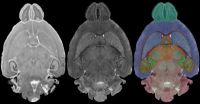
DURHAM, N.C. – The most detailed magnetic resonance images ever obtained of a mammalian brain are now available to researchers in a free, online atlas of an ultra-high-resolution mouse brain, thanks to work at the Duke Center for In Vivo Microscopy. In a typical clinical MRI scan, each pixel in the image represents a cube of tissue, called a voxel, which is typically 1x1x3 millimeters. "The atlas images, however, are more than 300,000 times higher resolution than an MRI scan, with voxels that are 20 micrometers on a side," said G. Allan Johnson, Ph.D., who heads the ...
Read more →
Penn study identifies molecular guardian of cell's RNA
Medicine 2010-10-26

Penn study identifies molecular guardian of cell's RNA

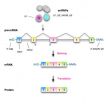
PHILADELPHIA - When most genes are transcribed, the nascent RNAs they produce are not quite ready to be translated into proteins - they have to be processed first. One of those processes is called splicing, a mechanism by which non-coding gene sequences are removed and the remaining protein-coding sequences are joined together to form a final, mature messenger RNA (mRNA), which contains the recipe for making a protein. For years, researchers have understood the roles played by the molecular machines that carry out the splicing process. But, as it turns out, one of those ...
Read more →
Science 2010-10-26

UI study investigates variability in men's recall of sexual cues

Even if a woman is perfectly clear in expressing sexual interest or rejection, young men vary in their ability to remember the cues, a new University of Iowa study shows. Overall, college-age men were quite good at recalling whether their female peers – in this case, represented through photos – showed interest. Their memories were especially sharp if the model happened to be good looking, dressed more provocatively, and conveyed interest through an inviting expression or posture. But as researchers examined variations in sexual-cue recall, they found two noteworthy ...
Read more →
Science 2010-10-26

Genetic markers offer new clues about how malaria mosquitoes evade eradication

VIDEO: Boston College DeLuca Professor of Biology Marc A.T. Muskavitch discusses his latest malaria research, published in the journal Science. Muskavitch and an international team of researchers developed the first high-resolution... Click here for more information. CHESTNUT HILL, Mass. (10/25/2010) – The development and first use of a high-density SNP array for the malaria vector mosquito have established 400,000 genetic markers capable of revealing new insights into how ...
Read more →
Engineering 2010-10-26

Microwave oven key to self-assembly process meeting semi-conductor industry need

Thanks to a microwave oven, the fundamental nanotechnology process of self assembly may soon replace the lithographic processing use to make the ubiquitous semi-conductor chips. By using microwaves, researchers at Canada's National Institute for Nanotechnology (NINT) and the University of Alberta have dramatically decreased the cooking time for a specific molecular self-assembly process used to assemble block copolymers, and have now made it a viable alternative to the conventional lithography process for use in patterning semi-conductors. When the team of chemists and ...
Read more →
Science 2010-10-26

Heat acclimation benefits athletic performance

Turning up the heat might be the best thing for athletes competing in cool weather, according to a new study by human physiology researchers at the University of Oregon. Published in the October issue of the Journal of Applied Physiology, the paper examined the impact of heat acclimation to improve athletic performance in hot and cool environments. Researchers conducted exercise tests on 12 highly trained cyclists -- 10 males and two females -- before and after a 10-day heat acclimation program. Participants underwent physiological and performance tests under both ...
Read more →
Unexpected findings of lead exposure may lead to treating blindness
Science 2010-10-26

Unexpected findings of lead exposure may lead to treating blindness

HOUSTON, Oct. 25, 2010 – Some unexpected effects of lead exposure that may one day help prevent and reverse blindness have been uncovered by a University of Houston (UH) professor and his team. Donald A. Fox, a professor of vision sciences in UH's College of Optometry (UHCO), described his team's findings in a paper titled "Low-Level Gestational Lead Exposure Increases Retinal Progenitor Cell Proliferation and Rod Photoreceptor and Bipolar Cell Neurogenesis in Mice," published recently online in Environmental Health Perspectives and soon to be published in the print ...
Read more →
Rice hulls a sustainable drainage option for greenhouse growers
Environment 2010-10-26

Rice hulls a sustainable drainage option for greenhouse growers

WEST LAFAYETTE, Ind. - Greenhouse plant growers can substitute rice hulls for perlite in their media without the need for an increase in growth regulators, according to a Purdue University study. Growing media for ornamental plants often consists of a soilless mix of peat and perlite, a processed mineral used to increase drainage. Growers also regularly use plant-growth regulators to ensure consistent and desired plant characteristics such as height to meet market demands. Organic substitutes for perlite like tree bark have proven difficult because they absorb the plant-growth ...
Read more →
As Arctic warms, increased shipping likely to accelerate climate change
Environment 2010-10-26

As Arctic warms, increased shipping likely to accelerate climate change

As the ice-capped Arctic Ocean warms, ship traffic will increase at the top of the world. And if the sea ice continues to decline, a new route connecting international trading partners may emerge -- but not without significant repercussions to climate, according to a U.S. and Canadian research team that includes a University of Delaware scientist. Growing Arctic ship traffic will bring with it air pollution that has the potential to accelerate climate change in the world's northern reaches. And it's more than a greenhouse gas problem -- engine exhaust particles could ...
Read more →
Environment 2010-10-26

UF research gives clues about carbon dioxide patterns at end of Ice Age

GAINESVILLE, Fla. — New University of Florida research puts to rest the mystery of where old carbon was stored during the last glacial period. It turns out it ended up in the icy waters of the Southern Ocean near Antarctica. The findings have implications for modern-day global warming, said Ellen Martin, a UF geological sciences professor and an author of the paper, which is published in this week's journal Nature Geoscience. "It helps us understand how the carbon cycle works, which is important for understanding future global warming scenarios," she said. "Ultimately, ...
Read more →
Purdue-led research team finds Haiti quake caused by unknown fault
Science 2010-10-26

Purdue-led research team finds Haiti quake caused by unknown fault

WEST LAFAYETTE, Ind. - Researchers found a previously unmapped fault was responsible for the devastating Jan. 12 earthquake in Haiti and that the originally blamed fault remains ready to produce a large earthquake. Eric Calais, a Purdue University professor of earth and atmospheric sciences, led the team that was the first on the ground in Haiti after the magnitude 7.0 earthquake, which killed more than 200,000 people and left 1.5 million homeless. The team determined the earthquake's origin is a previously unmapped fault, which they named the LÄogëne fault. The newly ...
Read more →
Science 2010-10-26

Substantial consumption of fluoride increases chance of mild fluorosis

CHICAGO, Oct. 25, 2010 – Young children who consume substantial amounts of fluoride through infant formula and other beverages mixed with fluoridated water or by swallowing fluoride toothpaste have an increased chance of developing mild enamel fluorosis, according to research published in the October issue of The Journal of the American Dental Association and supported by the National Institute of Dental and Craniofacial Research. Children can continue using fluoridated water and fluoride toothpaste because fluoride has been proven to prevent tooth decay, and mild fluorosis ...
Read more →
Medicine 2010-10-26

MicroRNAs dictate the Epstein-Barr virus' elaborate waiting game, cancer formation

While most commonly associated with mononucleosis, Epstein-Barr virus (EBV) has been linked to many diseases that affect people long after the initial infection takes place, including some forms of cancer. In the current issue of the Journal of Biological Chemistry, scientists at The Wistar Institute describe how viral microRNA – small segments of RNA that suppress the effects of gene activity – allows EBV to hide within cells and evade the immune system. The scientists believe their findings may one day enable physicians to flush EBV out of hiding, allowing a healthy immune ...
Read more →
Science 2010-10-26

Researchers find a stable way to store the sun's heat

CAMBRIDGE, Mass. -- Researchers at MIT have revealed exactly how a molecule called fulvalene diruthenium, which was discovered in 1996, works to store and release heat on demand. This understanding, reported in a paper published on Oct. 20 in the journal Angewandte Chemie, should make it possible to find similar chemicals based on more abundant, less expensive materials than ruthenium, and this could form the basis of a rechargeable battery to store heat rather than electricity. The molecule undergoes a structural transformation when it absorbs sunlight, putting it into ...
Read more →
Listeria clever at finding its way into bloodstream, causing sickness
Medicine 2010-10-26

Listeria clever at finding its way into bloodstream, causing sickness

WEST LAFAYETTE, Ind. - Pathogenic listeria tricks intestinal cells into helping it pass through those cells to make people ill, and, if that doesn't work, the bacteria simply goes around the cells, according to a Purdue University study. Arun Bhunia, a professor of food science, and Kristin Burkholder, a former Purdue graduate student who is now a postdoctoral researcher in microbiology and immunology at the University of Michigan Medical School, found that listeria, even in low doses, somehow triggers intestinal cells to express a new protein, heat shock protein 60, ...
Read more →
Science 2010-10-26

Modern humans emerged far earlier than previously thought

An international team of researchers based at the Institute of Vertebrate Paleontology and Paleoanthropology in Beijing, including a physical anthropology professor at Washington University in St. Louis, has discovered well-dated human fossils in southern China that markedly change anthropologists perceptions of the emergence of modern humans in the eastern Old World. The research was published Oct. 25 in the online early edition of the Proceedings of the National Academy of Sciences. The discovery of early modern human fossil remains in the Zhirendong (Zhiren Cave) ...
Read more →
'Fracking' mobilizes uranium in marcellus shale
Medicine 2010-10-26

'Fracking' mobilizes uranium in marcellus shale

BUFFALO, N.Y. -- Scientific and political disputes over drilling Marcellus shale for natural gas have focused primarily on the environmental effects of pumping millions of gallons of water and chemicals deep underground to blast through rocks to release the natural gas. But University at Buffalo researchers have now found that that process -- called hydraulic fracturing or "fracking"-- also causes uranium that is naturally trapped inside Marcellus shale to be released, raising additional environmental concerns. The research will be presented at the annual meeting of ...
Read more →