Medicine Technology 🌱 Environment Space Energy Physics Engineering Social Science Earth Science Science
Medicine 2010-10-21

Hormone therapy increases invasive breast cancer and mortality, WHI 11-year follow up finds

BUFFALO, N.Y. -- Results of a new Women's Health Initiative (WHI) report show that hormone therapy is associated with an increased the risk of death from breast cancer, as well as an increased risk of developing invasive breast cancer in postmenopausal women. Jean Wactawski-Wende, PhD, professor of social and preventive medicine at the University at Buffalo and one of the primary authors on the paper, published today in JAMA, says the breast cancers found in these women also tended to have more lymph node involvement, indicating a poorer prognosis. "This report, which ...
Read more →
Medicine 2010-10-21

The real 'mommy brain': New mothers grew

WASHINGTON — Motherhood may actually cause the brain to grow, not turn it into mush, as some have claimed. Exploratory research published by the American Psychological Association found that the brains of new mothers bulked up in areas linked to motivation and behavior, and that mothers who gushed the most about their babies showed the greatest growth in key parts of the mid-brain. Led by neuroscientist Pilyoung Kim, PhD, now with the National Institute of Mental Health, the authors speculated that hormonal changes right after birth, including increases in estrogen, ...
Read more →
Science 2010-10-21

New regulator of circadian clock identified

Montreal, October 20, 2010 – Daily sleeping and eating patterns are critical to human well-being and health. Now, a new study from Concordia University has demonstrated how the brain chemical dopamine regulates these cycles by altering the activity of the "clock-protein" PER2. Published in the Journal of Neuroscience, these findings may have implications for individuals with Parkinson's Disease with disrupted 24-hour rhythms of activity and sleep. "PER2 is a protein well-known for its role in the regulation of daily or circadian rhythms, this is why it is referred to ...
Read more →
Energy 2010-10-21

Measuring the electrical properties of nano-crystals

The UK's National Physical Laboratory (NPL) is working to provide more reliable measurement of the electrical properties of materials used in nanotechnology – which could lead to much more accurate devices in the future. Scanning probe microscopy (SPM) won the Nobel Prize in 1986. It uses a nano-sized probe to feel the surface of a material – akin to a finger reading Braille on an extremely small scale. The technique can also measure the electrical properties of materials used in nanotechnology – and "feel" how the materials react when electricity is passed through it. ...
Read more →
Environment 2010-10-21

Microbes may consume far more oil-spill waste than earlier thought

CAMBRIDGE, Mass., Oct. 20, 2010 -- Microbes living at the bottom of the Gulf of Mexico may consume far more of the gaseous waste from the Deepwater Horizon oil spill than previously thought, according to research carried out within 100 miles of the spill site. A paper on that research, conducted before the Deepwater Horizon rig exploded six months ago today, will appear in a forthcoming issue of the journal Deep-Sea Research II. It describes the anaerobic oxidation of methane, a key component of the Gulf oil spill, by microbes living in seafloor brine pools. "Because ...
Read more →
Researchers analyze student grief online after campus shootings
Social Science 2010-10-21

Researchers analyze student grief online after campus shootings

CHAMPAIGN, lll. — After the campus shootings at Virginia Tech in 2007 and Northern Illinois University in 2008, hundreds of affected students turned to social media websites to share their grief and search for solace. A new study of these students found that their online activities neither helped nor harmed their long-term psychological health. The study, which appears in Personality and Social Psychology Bulletin, gives a first-of-its-kind portrait of student reactions to shootings on their campuses. It also documents the (online and off-line) activities they engaged ...
Read more →
Medicine 2010-10-21

Link between 2 forms of ALS suggests drug target

For the first time, researchers have discovered a disease mechanism that links hereditary amyotrophic lateral sclerosis to the more common "sporadic" form of ALS -- and points to a possible therapeutic target. The findings are reported online in advance of publication in the journal Nature Neuroscience. ALS is an adult-onset disease that causes progressive degeneration of motor neurons and death within three to five years of diagnosis. Scott Brady, professor and head of anatomy and cell biology at the University of Illinois at Chicago College of Medicine, studies ...
Read more →
Medicine 2010-10-21

Study identifies barriers to successful treatment of children with sarcoma in low-income countries

BOSTON––Raising the survival rate of children with sarcoma in low-income countries will require steps to diagnose the disease sooner, train cancer pathologists, expand radiation therapy services, create multi-specialty teams to review each case, and other actions, according to an international study led by Dana-Farber/Children's Hospital Cancer Center researchers. The findings will be presented at the 42nd Congress of the International Society of Paediatric Oncology (SIOP) in Boston on Friday, Oct. 22. The study explored why, despite advances in the treatment of pediatric ...
Read more →
Medicine 2010-10-21

Progress toward treating infections by silencing microbes' 'smart phones'

So disease-causing bacteria in the body finally have multiplied to the point where their numbers are large enough to cause illness. What's next? They get out their "smart phones" and whisper "Let's roll!" That's how an article in ACS' monthly Chemical Reviews describes the substances — "smart phones of the microbial world" — that bacteria use to transmit chemical signals that launch infections and monitor their environment. The authors describe progress toward understanding and blocking this biochemical chitchat, a development that could lead to new treatments for the growing ...
Read more →
Medicine 2010-10-21

Girls with ovarian germ-cell tumors can safely skip chemotherapy unless disease recurs

BOSTON – Researchers from Dana-Farber/Children's Hospital Cancer Center (DF/CHCC) have found that as many as 50 percent of young girls treated for germ-cell ovarian tumors might safely be spared chemotherapy using a "watch and wait" strategy to determine if the follow-up treatment is needed. In contrast to the current practice of administering chemotherapy to all patients following removal of these rare tumors, researchers said the study demonstrated that treatment could safely be delayed and given only if the cancer recurred. Data from the trial involving 25 young ...
Read more →
Medicine 2010-10-21

Biodegradable foam plastic substitute made from milk protein and clay

Amid ongoing concern about plastic waste accumulating in municipal landfills, and reliance on imported oil to make plastics, scientists are reporting development of a new ultra-light biodegradable foam plastic material made from two unlikely ingredients: The protein in milk and ordinary clay. The new substance could be used in furniture cushions, insulation, packaging, and other products, they report in the ACS' Biomacromolecules, a monthly journal. David Schiraldi and colleagues explain that 80 percent of the protein in cow milk is a substance called casein, which already ...
Read more →
Medicine 2010-10-21

Black rice bran may help fight disease-related inflammation

Scientists are reporting evidence that black rice — a little-known variety of the grain that is the staple food for one-third of the world population — may help soothe the inflammation involved in allergies, asthma, and other diseases. Their study appears in ACS' bi-weekly Journal of Agricultural and Food Chemistry. Mendel Friedman and colleagues point out that their previous research showed several potential health benefits of eating black rice bran. Bran is the outer husk of the grain, which is removed during the processing of brown rice to produce the familiar white ...
Read more →
Science 2010-10-21

Traveling by car increases global temperatures more than by plane, but only in long term

Driving a car increases global temperatures in the long run more than making the same long-distance journey by air according to a new study. However, in the short run travelling by air has a larger adverse climate impact because airplanes strongly affect short-lived warming processes at high altitudes. The study appears in ACS' Environmental Science & Technology, a semi-weekly journal. In the study, Jens Borken-Kleefeld and colleagues compare the impacts on global warming of different means of transport. The researchers use, for the first time, a suite of climate chemistry ...
Read more →
Women fight the effects of chemotherapy long after treatment ends
Medicine 2010-10-21

Women fight the effects of chemotherapy long after treatment ends

COLUMBIA, Mo. -- For some women, the effects of breast cancer, the most common cancer affecting women, do not end when they leave the hospital. Now, researchers in the University of Missouri School of Health Professions have studied the lives of breast cancer patients following chemotherapy and found that their environments and available support systems help determine the quality of their lives. "A lot of times people get mentally and emotionally ready to deal with chemotherapy and they receive a lot of support during that time," said Stephanie Reid-Arndt, an assistant ...
Read more →
Environment 2010-10-21

Behind-the-scenes advances underpin new super-strong plastics

Long-awaited advances in reducing the cost of certain catalysts — substances that kick-start chemical reactions — have quietly led to production of super-strong forms of the world's most widely used plastics, according to the cover story of the current issue of Chemical & Engineering News (C&EN), ACS' weekly newsmagazine. These upgraded forms of polyethylene have led to availability of stronger, more durable consumer products ranging from garbage bags to camping cookware. C&EN Senior Editor Alexander Tullo notes that the catalysts, called "metallocenes," engendered excitement ...
Read more →
Medicine 2010-10-21

'Reaper' protein strikes at mitochondria to kill cells

Our cells live ever on the verge of suicide, requiring the close attention of a team of molecules to prevent the cells from pulling the trigger. This self-destructive tendency can be a very good thing, as when dangerous precancerous cells are permitted to kill themselves, but it can also go horribly wrong, destroying brain cells that store memories, for instance. Rockefeller University scientists are parsing this perilous arrangement in ever finer detail in hopes that understanding the basic mechanisms of programmed cell death, or apoptosis, will enable them eventually ...
Read more →
Science 2010-10-21

Obsessing over strep throat in kids

A common infection in children, strep throat can lead to problems with a child's heart, joints or brain if left untreated. And when the brain is involved, motor and mental functioning may be compromised, leading to syndromes such as attention deficit disorder and obsessive-compulsive disorder (OCD). While scientists have speculated on a link between OCD and childhood infections like strep for more than two decades, Prof. Daphna Joel and her team of researchers at Tel Aviv University's Department of Psychology have now scientifically demonstrated that strep can lead to ...
Read more →
Frontal lobe of the brain is key to automatic responses to various stimuli, say scientists
Medicine 2010-10-21

Frontal lobe of the brain is key to automatic responses to various stimuli, say scientists

(Santa Barbara, Calif.) –– Some people may excel at riding a bike, tying a tie, or playing the piano, but those same people may find it difficult to explain or teach those skills to someone else. These motor skills are learned in one part of the brain, whereas classroom instruction and information read in a book are acquired in another area of the brain, explained F. Gregory Ashby, professor and chair of UC Santa Barbara's Department of Psychology. This second area of learning is the frontal cortex –– the area immediately behind the forehead –– where executive function ...
Read more →
Harm reduction cigarettes can be more harmful than conventional brands, researchers report
Science 2010-10-21

Harm reduction cigarettes can be more harmful than conventional brands, researchers report

RIVERSIDE, Calif. – To reduce the toxicity of cigarette smoke, tobacco companies have introduced "harm reduction cigarettes," often marketed as safer than conventional brands. But stem cell scientists at the University of California, Riverside have found that even sidestream smoke (which burns off the tip of a cigarette) from harm reduction cigarettes impairs growth of human embryonic stem cells more than sidestream smoke from a conventional brand. "Harm reduction products are not necessarily safer than their conventional counterparts," said Prue Talbot, the director ...
Read more →
Medicine 2010-10-21

A redeeming role for a common virus

Washington, DC – A common virus that can cause coughing and mild diarrhea appears to have a major redemptive quality: the ability to kill cancer. Harnessing that power, researchers at Georgetown Lombardi Comprehensive Cancer Center, part of Georgetown University Medical Center, are conducting a clinical trial to see if the virus can target and kill certain tumor types. By the age of five, most people have been exposed to the virus, called reovirus. For some, it can trigger brief episodes of coughing or diarrhea while many other don't develop any symptoms. The body ...
Read more →
Medicine 2010-10-21

Estrogen replacement therapy speeds ovarian cancer growth, new study reports

Aurora, Colo. (Oct. 19, 2010)— Estrogen therapy used by menopausal women causes a type of ovarian cancer to grow five times faster, according to a new study by researchers at the University of Colorado Cancer Center. Menopausal estrogen replacement therapy (ERT) also significantly increases the likelihood of the cancer metastasizing to the lymph nodes, according to the study, which will be published in the Nov. 1 issue of Cancer Research. The study was released online Oct. 19, 2010. Cancer Research, published by the American Association for Cancer Research, is the world's ...
Read more →
Climate change may create tipping points for populations, not just species
Environment 2010-10-21

Climate change may create tipping points for populations, not just species

As Earth's climate warms, species are expected to shift their geographical ranges away from the equator or to higher elevations. While scientists have documented such shifts for many plants and animals, the ranges of others seem stable. When species respond in different ways to the same amount of warming, it becomes more difficult for ecologists to predict future biological effects of climate change--and to plan for these effects. In a study published this week in the journal Nature, University of Wyoming ecologist Daniel Doak and Duke University ecologist William ...
Read more →
Medicine 2010-10-21

Discovery of a mechanism that controls the expression of a protein involved in numerous cancers

Researchers at the Institute for Research in Immunology and Cancer (IRIC) of the Université de Montréal have identified a new mechanism controlling the transmission of an abnormal signal at the origin of several cancers. In an article published in the journal Cell, Marc Therrien's team explains the recent discovery of a protein complex that controls the RAS/MAPK signalling pathway, responsible for some of the deadliest cancers, including pancreatic, colon and lung cancers, and melanomas. This regulating mechanism could prove to be a promising therapeutic target for the ...
Read more →
3 NASA satellites capture Typhoon Megi strengthening again
Space 2010-10-21

3 NASA satellites capture Typhoon Megi strengthening again

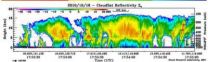
Three NASA satellites are keeping tabs on Typhoon Megi and noticed that it was strengthening in the South China Sea today, but increasing wind shear may again weaken the system over the next couple of days. NASA's TRMM, CloudSat and Aqua satellite captured images of Megi's clouds, rainfall and eye as they passed over the storm and saw clouds higher than 9 miles filled with ice, creating heavy rainfall. The Tropical Rainfall Measuring Mission (TRMM) satellite passed over Typhoon Megi from its vantage point in space on October 18 at 2321 UTC (7:31 p.m. EDT) and saw that ...
Read more →
GOES-13 sees system 99L organizing tropically
Science 2010-10-21

GOES-13 sees system 99L organizing tropically

The GOES-13 satellite keeps a continuous eye over the eastern U.S., the Caribbean Sea, Gulf of Mexico and Atlantic Ocean, and noticed that System 99L is much better organized today, October 20, hinting that it could become a tropical depression later today. At 8 a.m. EDT on Wednesday, October 20, System 99L, a low pressure system about 150 miles southwest of Grand Cayman appears to be getting organized as it drifts eastward in the Caribbean Sea. System 99L is showing more organization than it did yesterday, despite strong upper-level winds that are currently inhibiting ...
Read more →