Measuring the Moon's nano dust is no small matter
Published 2021-04-28 · Original archive entry · Explore research explainers
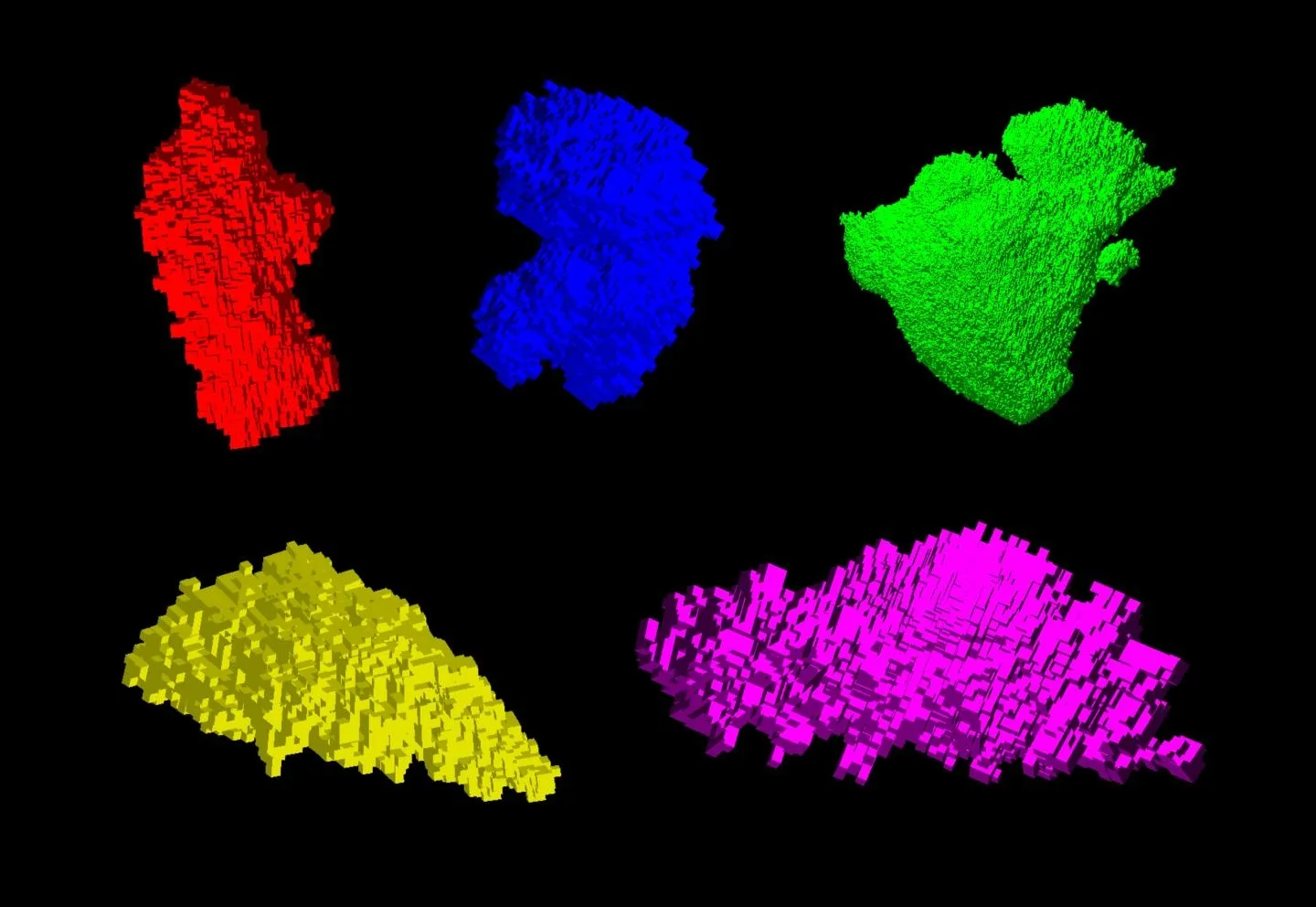
Like a chameleon of the night sky, the Moon often changes its appearance. It might look larger, brighter or redder, for example, due to its phases, its position in the solar system or smoke in Earth's atmosphere. (It is not made of green cheese, however.)
Another factor in its appearance is the size and shape of moon dust particles, the small rock grains that cover the moon's surface. Researchers at the National Institute of Standards and Technology (NIST) are now measuring tinier moon dust particles than ever before, a step toward more precisely explaining the Moon's apparent color and brightness. This in turn might help improve tracking of weather patterns and other phenomena by satellite cameras that use the Moon as a calibration source.
NIST researchers and collaborators have developed a complex method of measuring the exact three-dimensional shape of 25 particles of moon dust collected during the Apollo 11 mission in 1969. The team includes researchers from the Air Force Research Laboratory, the Space Science Institute and the University of Missouri-Kansas City.
These researchers have been studying moon dust for several years. But as described in a END
Another factor in its appearance is the size and shape of moon dust particles, the small rock grains that cover the moon's surface. Researchers at the National Institute of Standards and Technology (NIST) are now measuring tinier moon dust particles than ever before, a step toward more precisely explaining the Moon's apparent color and brightness. This in turn might help improve tracking of weather patterns and other phenomena by satellite cameras that use the Moon as a calibration source.
NIST researchers and collaborators have developed a complex method of measuring the exact three-dimensional shape of 25 particles of moon dust collected during the Apollo 11 mission in 1969. The team includes researchers from the Air Force Research Laboratory, the Space Science Institute and the University of Missouri-Kansas City.
These researchers have been studying moon dust for several years. But as described in a END