From viper venom to patent holder: Lawrence Toll's 30-year quest against pain and addiction
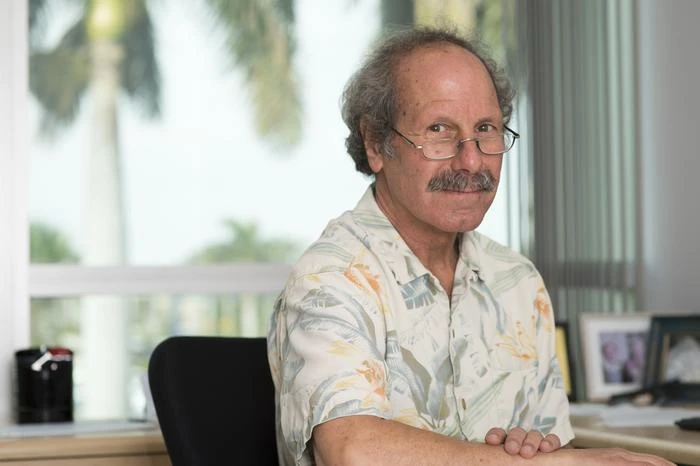
Florida Atlantic University / National Academy of Inventors
In 1995, Lawrence Toll helped identify a molecule that would reshape how scientists think about pain. The molecule, nociceptin, turned out to be the natural chemical partner for a mysterious receptor — the fourth member of the opioid receptor family — that researchers had spotted but couldn't explain. That single discovery opened new avenues for chronic pain treatment, addiction research, and the development of drugs that target the brain's reward systems without the devastating side effects of traditional opioids.
Three decades later, Toll has been named a senior member of the National Academy of Inventors (NAI), a recognition reserved for researchers whose patented work has produced tangible societal impact. He holds nine issued or pending patents and has maintained continuous funding from the National Institute on Drug Abuse for more than 30 years — a feat of sustained relevance in a field where research priorities shift constantly.
The nociceptin discovery and its long tail
When Toll co-discovered nociceptin as the endogenous ligand (the body's own chemical messenger) for the NOP receptor, the finding solved a puzzle that had nagged the field. Scientists knew the receptor existed. They could see it in brain tissue. But they didn't know what natural substance activated it, or what role it played in human physiology.
The answer turned out to be far-reaching. Nociceptin is involved in pain perception, stress responses, and the brain's reward circuitry — the same systems hijacked by addictive drugs. Understanding this pathway has given researchers new targets for treating chronic pain without relying on molecules that bind to the same receptors as morphine and fentanyl.
Toll's subsequent work has extended into nicotinic acetylcholine receptors, the molecular docking sites for nicotine. By developing selective compounds that target specific receptor subtypes, his lab has pursued therapies for nicotine addiction and other substance use disorders. The approach combines molecular biology, receptor pharmacology, behavioral studies, and medicinal chemistry — an unusually broad toolkit for a single research group.
A career that zigzagged through three countries
Toll's path to FAU was anything but direct. After earning his Ph.D. in biological chemistry from UCLA in 1978, he completed postdoctoral work at both UCLA and Johns Hopkins University, where he trained under Solomon Snyder — the neuroscientist widely credited with identifying opiate receptors in the brain. From 1981 to 2011, Toll conducted research at SRI International in Menlo Park, California, with extended appointments in France at the Centre National de la Recherche Scientifique in Toulouse and the University of Louis Pasteur in Strasbourg.
He moved to the Torrey Pines Institute for Molecular Studies as director of neuropharmacology before joining Florida Atlantic University in 2018. Over the course of his career, he has authored more than 130 publications.
The 2026 NAI class in numbers
Toll joins the largest class of NAI senior members to date: 230 inventors from 82 institutions worldwide, collectively holding more than 2,000 U.S. patents. The senior member program, launched in 2018, now includes 945 members with over 11,000 patents between them. The designation recognizes researchers who have not just filed patents but demonstrated that their technologies have moved from laboratory concept to real-world application.
The formal recognition will take place at the Senior Member Induction Ceremony during NAI's 15th annual conference, scheduled for June 1-4 in Los Angeles.
What the recognition reflects — and what it doesn't
Awards of this kind acknowledge a body of work, not a finished story. Chronic pain and addiction remain among the most stubborn challenges in medicine. The opioid crisis has killed hundreds of thousands of Americans, and the search for effective, non-addictive pain treatments continues to fall short of what patients need. Toll's research has contributed tools and insights to this effort, but the gap between promising receptor targets and approved therapies remains wide.
Still, the trajectory from basic discovery — identifying a single molecule in 1995 — to a portfolio of patents aimed at clinical application illustrates how fundamental science can compound over decades. Whether any of Toll's current patent-stage compounds reach patients will depend on clinical trials, regulatory approval, and the unpredictable economics of drug development.