Want to change a group's mind? Math says: make opponents neutral first
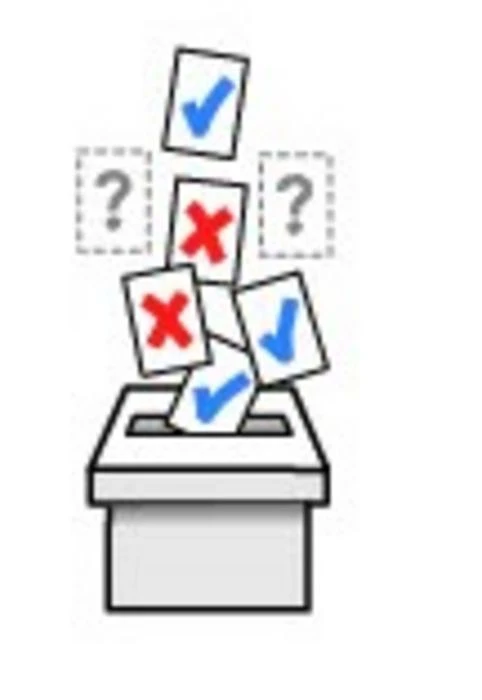
Every committee chair, political strategist, and parent knows the feeling: the harder you push someone to change their mind, the deeper they dig in. A new study from the University of Bath suggests that the most effective path to shifting a group's opinion is not persuasion at all. It is getting opponents to stop having an opinion, at least temporarily.
The mathematics of stepping back
The research, published March 23 in Advanced Science, comes from an unusual collaboration between mathematicians and psychologists. Led by Professor Kit Yates from Bath's Department of Mathematics, the team built a mathematical model exploring how groups reach consensus. The model describes individuals who hold one of three positions: for, against, or neutral.
Two routes to consensus emerged from the mathematics. The first is familiar - persuade uncommitted people to join your side until you have a majority. The second is less intuitive and has received far less attention from researchers. In this de-escalation route, disagreement between opposing camps pushes some individuals into neutrality. They step back from the argument. They abstain. And that withdrawal, rather than stalling progress, accelerates it.
The mechanism is surprisingly straightforward. When a large portion of a group becomes neutral, the pool of active decision-makers shrinks. With fewer people actively pushing in either direction, random fluctuations carry more weight. A small shift in opinion among the remaining active members can tip the entire group toward a new consensus. The smaller the active pool, the faster this tipping happens.
Locusts that stop marching
The researchers tested their model against real data from locust swarms - a system where collective decision-making plays out on a visible, measurable scale. Marching locusts periodically reverse direction as a group. The team analyzed these reversals and found a consistent pattern: before a swarm switches direction, many locusts briefly stop moving. They become effectively neutral.
During that pause, only a small minority keeps marching. Those few movers exert outsized influence on what happens next. Their direction of travel, even if somewhat random, sets the new course for the entire swarm. The neutral pause acts as a reset, clearing out the old consensus and creating space for a new one to form quickly.
Human voters who can abstain
The team then moved from insects to people. They ran voting games with human participants under two conditions. In one version, participants could only vote for option A or option B. In the other, they could also abstain - choosing neither side.
When abstention was available, groups shifted their collective decision more quickly and more cleanly than when every participant was forced to pick a side. The neutral option did not paralyze the group. It lubricated the transition from one consensus to another.
Co-author Professor Tim Rogers offered a practical translation of the finding. Rather than targeting stereotypical swing voters - people who are already uncommitted - it can be more effective to cool down strong opponents, moving them from active opposition to temporary neutrality. Once they are on the fence, the remaining active supporters of a position gain disproportionate influence, and the group tips.
From locusts and labs to boardrooms
The researchers see applications beyond animal swarms and laboratory voting games. Boardrooms, online communities, political campaigns, and organizational change efforts all involve groups trying to reach or shift consensus. The standard playbook - identify the undecided, persuade them to your side - may be less effective than a de-escalation strategy that encourages strong opponents to step back from the fight.
This does not mean neutrality is always desirable. The model describes a mechanism, not a moral prescription. In situations where rapid adaptation matters - a company needing to pivot strategy, a community responding to new information - encouraging temporary neutrality among holdouts could speed up the transition. In situations where careful deliberation and minority protection matter, accelerating consensus may not be the goal.
A simple model with real constraints
The model deliberately keeps things simple: individuals interact in pairs, one person influences another, and there are only three possible states. Real human decision-making involves social networks, power dynamics, information asymmetries, and emotional attachments that a three-state mathematical model cannot capture.
The locust data provide a compelling biological parallel, but locusts are not people. The human voting experiments involved structured games with artificial choices, not high-stakes political decisions or workplace conflicts where identities and careers are on the line. Whether the de-escalation effect holds in messier real-world settings remains to be demonstrated.
The sample size for the human experiments was also relatively modest. Scaling these findings to large populations - social media platforms with millions of users, national electorates - would require both larger studies and more complex models that account for network structure and influence hierarchies.
Still, the core insight is elegant: you do not need elaborate multi-party dynamics or sophisticated social structures to produce flexible collective behavior. Allow neutrality as an option, and simple pairwise interactions are enough to generate both stable consensus and responsive change.