Agent Orange linked to aggressive bone marrow cancer in Vietnam veterans
Study identifies genetic mutations tied to earlier diagnosis and faster progression of myelodysplastic syndromes
Published 2026-03-24 · Original archive entry · Explore research explainers
MIAMI (March 23, 2026) – More than 50 years after Agent Orange was used in Vietnam, a new national study published online ahead of print in Blood Advances highlights the genetic changes that link exposure to Agent Orange to myelodysplastic syndromes (MDS), a group of bone marrow cancers that can progress to acute leukemia. The findings shed light on why some veterans develop more severe bone marrow cancers and will hopefully help these individuals obtain access to needed, service-connected care.
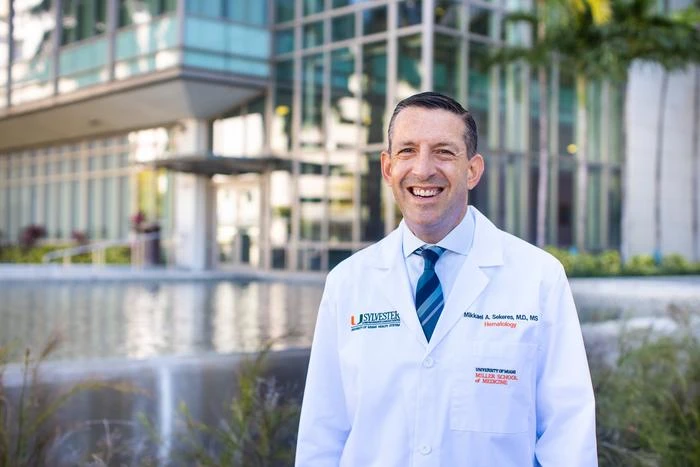
The research, led by Mikkael A. Sekeres, M.D., chief of hematology at Sylvester Comprehensive Cancer Center at the University of Miami Miller School of Medicine, expands on findings he presented at the 2025 American Society of Hematology (ASH) Annual Meeting.
“In the initial work presented at ASH, we had seen an association between Agent Orange exposure and developing MDS,” Sekeres said. “Now we are describing how the disease biology looks different in this exposed group.”
Agent Orange is an herbicide that was used by the U.S. military during the Vietnam War to remove forest cover and destroy crops. It often contained a highly toxic form of dioxin, a chemical that disrupts cellular processes. Approximately 2.6 million U.S. service members were potentially exposed.
Agent Orange has already been linked to several cancers, including certain lymphomas and multiple myeloma. Until the ASH presentation, evidence connecting it to MDS has been limited.
MDS develops slowly and typically occurs later in life. Most people receive a diagnosis in their 70s. That long arc between exposure and diagnosis makes environmental risk factors particularly difficult to study.
This research draws on data from the National Heart, Lung, and Blood Institute’s MDS Natural History Study, a prospective national registry. Among 2,115 enrolled patients, 130 (6.1%) reported Agent Orange exposure, and 96% of those exposed were men. Ultimately, 54% of exposed patients received a diagnosis of MDS or a related precursor condition, compared with 37% of unexposed patients.
The preliminary ASH findings showed that exposed veterans were diagnosed at a younger age, roughly several years earlier on average, than those without exposure. During the first two years after diagnosis, exposed patients were also about 80% more likely to see their disease worsen, including progression to more severe MDS or acute leukemia. Overall survival, however, was similar between the two groups throughout the study.
The Blood Advances paper details the specific genetic changes behind that pattern. The researchers saw that among patients diagnosed with MDS, those who had been exposed to Agent Orange were more than twice as likely to show high-risk chromosome abnormalities. These changes suggest the disease will behave aggressively.
Specific mutations — including TET2, SRSF2, U2AF1, ZRSR2 and KRAS — appeared more frequently among exposed patients. Many of these changes affect how cells process genetic instructions and build proteins, a critical step in keeping bone marrow cells healthy. When that process is disrupted, cells can grow abnormally and become cancerous.
“It’s not a single event that leads to this cancer. You acquire one mutation, then another. Over years or decades, those changes build,” Sekeres said. “What we’re seeing is that Agent Orange added a mutation — and that mutation sets patients on the road to cancer 50 years later.”
For veterans living with MDS, knowing their cancer may have a unique genetic profile offers more than scientific insight. It can influence follow-up care and treatment decisions. The higher rate of early disease progression raises questions about long-term leukemia risk.
“If exposed veterans live long enough, it’s possible we could see an association between Agent Orange and leukemia, too,” Sekeres said.
The study revealed another notable pattern: patients reporting Agent Orange exposure in the registry were disproportionately Black men, compared with Vietnam service demographics.
In the registry, about one in five exposed male patients was Black — a rate more than double that seen among unexposed men. Even after adjusting for other factors, Black veterans were nearly three times more likely to report Agent Orange exposure.
“The numbers were out of proportion to the percentage of Blacks who served in Vietnam,” Sekeres said. “Blacks were possibly placed in vulnerable positions while serving and, therefore, more exposed to toxins like Agent Orange.”
While the study was not designed to determine why, the finding highlights the need for further investigation into exposure patterns and long-term risk in certain groups.
After presenting the findings at the ASH meeting, Sekeres said his inbox filled quickly. Veterans from across the country reached out. Some had just been diagnosed. Others had been living with MDS for years. Many wanted to know whether their illness could finally be connected to their military service.
“We have aging veterans developing MDS who are being told by the Veterans Association that they can’t get their health care covered to the extent they need because there hasn’t been an official association made,” Sekeres said.
This new analysis changes that dynamic. While it does not prove cause and effect, it provides the strongest data to date linking Agent Orange exposure with distinct genetic changes and more aggressive disease. The data now exist for national review bodies to consider.
“We’re hoping that the Institute of Medicine will recognize that Agent Orange exposure is a risk factor for MDS,” Sekeres said. “We hope this publication helps to finally get these veterans the service-connected care they deserve.”
about Sylvester research on the InventUM blog and follow @SylvesterCancer on X for the latest news on its research and care.
# # #
END
The research, led by Mikkael A. Sekeres, M.D., chief of hematology at Sylvester Comprehensive Cancer Center at the University of Miami Miller School of Medicine, expands on findings he presented at the 2025 American Society of Hematology (ASH) Annual Meeting.
“In the initial work presented at ASH, we had seen an association between Agent Orange exposure and developing MDS,” Sekeres said. “Now we are describing how the disease biology looks different in this exposed group.”
Agent Orange is an herbicide that was used by the U.S. military during the Vietnam War to remove forest cover and destroy crops. It often contained a highly toxic form of dioxin, a chemical that disrupts cellular processes. Approximately 2.6 million U.S. service members were potentially exposed.
Agent Orange has already been linked to several cancers, including certain lymphomas and multiple myeloma. Until the ASH presentation, evidence connecting it to MDS has been limited.
MDS develops slowly and typically occurs later in life. Most people receive a diagnosis in their 70s. That long arc between exposure and diagnosis makes environmental risk factors particularly difficult to study.
This research draws on data from the National Heart, Lung, and Blood Institute’s MDS Natural History Study, a prospective national registry. Among 2,115 enrolled patients, 130 (6.1%) reported Agent Orange exposure, and 96% of those exposed were men. Ultimately, 54% of exposed patients received a diagnosis of MDS or a related precursor condition, compared with 37% of unexposed patients.
The preliminary ASH findings showed that exposed veterans were diagnosed at a younger age, roughly several years earlier on average, than those without exposure. During the first two years after diagnosis, exposed patients were also about 80% more likely to see their disease worsen, including progression to more severe MDS or acute leukemia. Overall survival, however, was similar between the two groups throughout the study.
The Blood Advances paper details the specific genetic changes behind that pattern. The researchers saw that among patients diagnosed with MDS, those who had been exposed to Agent Orange were more than twice as likely to show high-risk chromosome abnormalities. These changes suggest the disease will behave aggressively.
Specific mutations — including TET2, SRSF2, U2AF1, ZRSR2 and KRAS — appeared more frequently among exposed patients. Many of these changes affect how cells process genetic instructions and build proteins, a critical step in keeping bone marrow cells healthy. When that process is disrupted, cells can grow abnormally and become cancerous.
“It’s not a single event that leads to this cancer. You acquire one mutation, then another. Over years or decades, those changes build,” Sekeres said. “What we’re seeing is that Agent Orange added a mutation — and that mutation sets patients on the road to cancer 50 years later.”
For veterans living with MDS, knowing their cancer may have a unique genetic profile offers more than scientific insight. It can influence follow-up care and treatment decisions. The higher rate of early disease progression raises questions about long-term leukemia risk.
“If exposed veterans live long enough, it’s possible we could see an association between Agent Orange and leukemia, too,” Sekeres said.
The study revealed another notable pattern: patients reporting Agent Orange exposure in the registry were disproportionately Black men, compared with Vietnam service demographics.
In the registry, about one in five exposed male patients was Black — a rate more than double that seen among unexposed men. Even after adjusting for other factors, Black veterans were nearly three times more likely to report Agent Orange exposure.
“The numbers were out of proportion to the percentage of Blacks who served in Vietnam,” Sekeres said. “Blacks were possibly placed in vulnerable positions while serving and, therefore, more exposed to toxins like Agent Orange.”
While the study was not designed to determine why, the finding highlights the need for further investigation into exposure patterns and long-term risk in certain groups.
After presenting the findings at the ASH meeting, Sekeres said his inbox filled quickly. Veterans from across the country reached out. Some had just been diagnosed. Others had been living with MDS for years. Many wanted to know whether their illness could finally be connected to their military service.
“We have aging veterans developing MDS who are being told by the Veterans Association that they can’t get their health care covered to the extent they need because there hasn’t been an official association made,” Sekeres said.
This new analysis changes that dynamic. While it does not prove cause and effect, it provides the strongest data to date linking Agent Orange exposure with distinct genetic changes and more aggressive disease. The data now exist for national review bodies to consider.
“We’re hoping that the Institute of Medicine will recognize that Agent Orange exposure is a risk factor for MDS,” Sekeres said. “We hope this publication helps to finally get these veterans the service-connected care they deserve.”
about Sylvester research on the InventUM blog and follow @SylvesterCancer on X for the latest news on its research and care.
# # #
END