New algorithm can better manage type 2 diabetes, study finds
Helps users better adjust insulin doses to meet blood-sugar targets
Published 2026-03-24 · Original archive entry · Explore research explainers
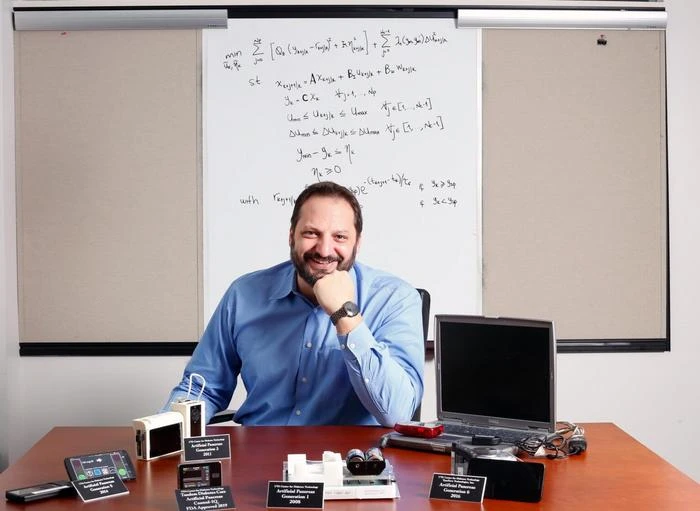
A University of Virginia Center for Diabetes Technology-developed algorithm – paired with a continuous glucose monitor – can help users better manage their type 2 diabetes by recommending insulin-dose adjustments, a new study found.
In a clinical trial, 30 participants were randomly assigned to make insulin adjustments for 16 weeks based either on weekly recommendations from the algorithm and glucose monitor or by self-monitoring their blood-sugar levels. Participants who used the algorithm saw their average time spent in a safe blood-sugar range increase from 54.1% to 75.3%. Participants who self-monitored their blood sugar saw their average time spent in a safe blood-sugar range increase only from 50.2% to 55.3%.
“These results clearly show that diabetes technology and advanced algorithms can be leveraged to great effects, well beyond the classical paradigm of automated insulin delivery,” said Marc D. Breton, PhD, the study’s lead author and associate director of research at the UVA Center for Diabetes Technology. “As continuous glucose monitoring and connected medical devices become ubiquitous, we have the opportunity to provide highly personalized advice and monitoring to people with diabetes and guide their use of insulin and medications. Showing the impact of these technologies in early insulin therapy (only one dose a day) opens the door to helping the vast majority of people using insulin, well beyond what we were able to achieve with automated insulin delivery.”
An Ideal Insulin Dose
Many patients begin their treatment for type 2 diabetes with medications designed to lower their blood sugar, but the effectiveness of those drugs tends to decrease over time, leading to the need for insulin. The process of adjusting insulin doses by self-monitoring blood-sugar levels, known as insulin titration, can be time-consuming and challenging for both patients and healthcare providers, and there is no standard titration process.
This led Anas El Fathi, PhD, a UVA Health researcher, to develop the algorithm with the goal of streamlining and improving the titration process. The algorithm analyzes the previous two weeks of data from the continuous glucose monitor to generate a weekly recommendation on how users should adjust their insulin dose.
"From a medical point of view, it was fascinating to see that the algorithm was not only better than the standardized insulin titration recommendations, but also how well the technology was accepted by the participants with type 2 diabetes,” said Ralf Nass, MD, a UVA Health researcher and study co-author. “This type of technology has the potential to help physicians enable their patients to achieve better glycemic control faster by using a personalized approach."
While longer clinical trials with more participants will be needed to confirm the effectiveness of the algorithm, the researchers are encouraged by the initial findings.
“It is only the very beginning of these efforts,” Breton said. “With early demonstration behind us, we can focus on robust approaches that will be effective with more varied populations. Integrating recently developed data-driven methodologies, especially digital twins, to further improve our capacity to tailor diabetes managements to individuals is likely to once more revolutionize diabetes care.”
Findings Published
The researchers have published their findings in the scientific journal Diabetes Technology & Therapeutics. The article is open access, meaning it is free to read. The research team consisted of El Fathi, Nass, Carol J. Levy, Camilla Levister, Grenye O’Malley, Nirali A. Shah, Shaziah Hassan, Cheryl Quainoo, Chaitanya L.K. Koravi, Taylor N. Nguyen, Giulio Matteo Santini, Emma Emory, Carlene Alix, Dillon K. Flanagan, David Fulkerson, Mary Clancy Oliveri, Christian Laugesen, Jonas K. Lineolov, Peter W. Hansen and Breton. A full list of the researchers’ disclosures can be found in the paper.
The clinical trial was supported by a grant from Novo Nordisk.
To keep up with the latest medical discoveries from the School of Medicine and the Manning Institute, bookmark the Making of Medicine blog at https://makingofmedicine.virginia.edu.
END
In a clinical trial, 30 participants were randomly assigned to make insulin adjustments for 16 weeks based either on weekly recommendations from the algorithm and glucose monitor or by self-monitoring their blood-sugar levels. Participants who used the algorithm saw their average time spent in a safe blood-sugar range increase from 54.1% to 75.3%. Participants who self-monitored their blood sugar saw their average time spent in a safe blood-sugar range increase only from 50.2% to 55.3%.
“These results clearly show that diabetes technology and advanced algorithms can be leveraged to great effects, well beyond the classical paradigm of automated insulin delivery,” said Marc D. Breton, PhD, the study’s lead author and associate director of research at the UVA Center for Diabetes Technology. “As continuous glucose monitoring and connected medical devices become ubiquitous, we have the opportunity to provide highly personalized advice and monitoring to people with diabetes and guide their use of insulin and medications. Showing the impact of these technologies in early insulin therapy (only one dose a day) opens the door to helping the vast majority of people using insulin, well beyond what we were able to achieve with automated insulin delivery.”
An Ideal Insulin Dose
Many patients begin their treatment for type 2 diabetes with medications designed to lower their blood sugar, but the effectiveness of those drugs tends to decrease over time, leading to the need for insulin. The process of adjusting insulin doses by self-monitoring blood-sugar levels, known as insulin titration, can be time-consuming and challenging for both patients and healthcare providers, and there is no standard titration process.
This led Anas El Fathi, PhD, a UVA Health researcher, to develop the algorithm with the goal of streamlining and improving the titration process. The algorithm analyzes the previous two weeks of data from the continuous glucose monitor to generate a weekly recommendation on how users should adjust their insulin dose.
"From a medical point of view, it was fascinating to see that the algorithm was not only better than the standardized insulin titration recommendations, but also how well the technology was accepted by the participants with type 2 diabetes,” said Ralf Nass, MD, a UVA Health researcher and study co-author. “This type of technology has the potential to help physicians enable their patients to achieve better glycemic control faster by using a personalized approach."
While longer clinical trials with more participants will be needed to confirm the effectiveness of the algorithm, the researchers are encouraged by the initial findings.
“It is only the very beginning of these efforts,” Breton said. “With early demonstration behind us, we can focus on robust approaches that will be effective with more varied populations. Integrating recently developed data-driven methodologies, especially digital twins, to further improve our capacity to tailor diabetes managements to individuals is likely to once more revolutionize diabetes care.”
Findings Published
The researchers have published their findings in the scientific journal Diabetes Technology & Therapeutics. The article is open access, meaning it is free to read. The research team consisted of El Fathi, Nass, Carol J. Levy, Camilla Levister, Grenye O’Malley, Nirali A. Shah, Shaziah Hassan, Cheryl Quainoo, Chaitanya L.K. Koravi, Taylor N. Nguyen, Giulio Matteo Santini, Emma Emory, Carlene Alix, Dillon K. Flanagan, David Fulkerson, Mary Clancy Oliveri, Christian Laugesen, Jonas K. Lineolov, Peter W. Hansen and Breton. A full list of the researchers’ disclosures can be found in the paper.
The clinical trial was supported by a grant from Novo Nordisk.
To keep up with the latest medical discoveries from the School of Medicine and the Manning Institute, bookmark the Making of Medicine blog at https://makingofmedicine.virginia.edu.
END