THE ORIGINAL COLLECTION · SINCE 2010

Environment
press releases.

Research announcements from universities, hospitals and scientific institutions. Explore the stories, people and discoveries behind the headlines.

Original publication datesPage 101
FIND A STORY

Find a past release.

Dates and source material belong to the original release.

Read our research explainers

Browse the collection · original publication order

Environment

Primary care can improve hygienic practices while reducing waste

Background & Goal: Exam table paper is perceived as necessary for hygienic care; however, there is limited evidence for its efficacy. It may not stop disease transmission, and it may create a false sense of cleanliness. The Ontario Guidelines for Prevention & Control of Infection in Healthcare Settings do not endorse exam table paper, but rather recommend cleaning with specific low-level disinfectants (for example, 0.5% accelerated hydrogen peroxide). Additionally, there are negative economic and climate change impacts of using exam table paper. The average clinic seeing ...

Read the release
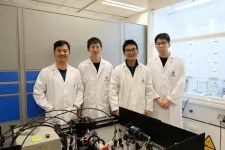
HKUST researchers enhance performance of eco-friendly cooling applications by developing sustainable strategy to manipulate interfacial heat transfer
Environment

HKUST researchers enhance performance of eco-friendly cooling applications by developing sustainable strategy to manipulate interfacial heat transfer

Researchers at the School of Engineering of the Hong Kong University of Science and Technology (HKUST) have developed a sustainable and controllable strategy to manipulate interfacial heat transfer, paving the way for improving the performance of eco-friendly cooling in various applications such as electronics, buildings and solar panels. As demand for effective cooling solutions continues to grow due to the rising global temperature, scientists worldwide have been actively exploring energy-saving cooling technologies that are more effective. Compared to active cooling, which entirely depends on energy consumption ...

Read the release
Texas A&M-led team creates first global map of seafloor biodiversity activity
Environment

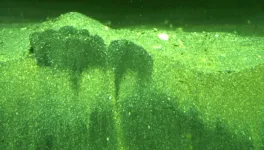
Texas A&M-led team creates first global map of seafloor biodiversity activity

A pioneering study has used extensive global datasets and machine learning to map the activities of seafloor invertebrate animals, including worms, clams and shrimps, across the entire ocean, revealing for the first time critical factors that support and maintain the health of marine ecosystems. The international team, led by Texas A&M University and including investigators from Yale University and the University of Southampton, specifically focused on the unsung yet vital role burrowing animals play as "ecosystem engineers" in shaping nutrient ...

Read the release
Environment

Improved refrigeration could save nearly half of the 1.3 billion tons of food wasted each year globally

May 28, 2024 Contact: Jim Erickson, 734-647-1842, ericksn@umich.edu Graphic Improved refrigeration could save nearly half of the 1.3 billion tons of food wasted each year globally ANN ARBOR—About a third of the food produced globally each year goes to waste, while approximately 800 million people suffer from hunger, according to the U.N.'s Food and Agriculture Organization. A new University of Michigan study concludes that nearly half of the food waste, about 620 million metric tons, could be eliminated by fully refrigerated food supply chains worldwide. At the same time, ...

Read the release
How killifish embryos use suspended animation to survive over 8 months of drought
Environment

How killifish embryos use suspended animation to survive over 8 months of drought

The African turquoise killifish lives in ephemeral ponds in Zimbabwe and Mozambique. To survive the annual dry season, the fish’s embryos enter a state of extreme suspended animation or “diapause” for approximately 8 months. Now, researchers have uncovered the mechanisms that enabled the killifish to evolve this extreme survival state. They report May 30 in the journal Cell that although killifish evolved diapause less than 18 million years ago, they did so by co-opting ancient genes ...

Read the release
Harnessing green energy from plants depends on their circadian rhythms
Environment

Harnessing green energy from plants depends on their circadian rhythms

WASHINGTON, May 28, 2024 —When plants draw water from their roots to nourish their stems and leaves, they produce an electric potential that could be harnessed as a renewable energy source. However, like all living things, plants are subject to a circadian rhythm — the biological clock that runs through day and night cycles and influences biological processes. In plants, this daily cycle includes capturing light energy for photosynthesis and absorbing water and nutrients from the soil during the day and slowing its growth processes at night. In a study published this week in ...

Read the release
Environment

New research shows soil microorganisms could produce additional greenhouse gas emissions from thawing permafrost

As the planet has warmed, scientists have long been concerned about the potential for harmful greenhouse gasses to seep out of thawing Arctic permafrost. Recent estimates suggest that by 2100 the amount of carbon dioxide and methane released from these perpetually frozen lands could be on par with emissions from large industrial countries. However, new research led by a team of Colorado State University microbiome scientists suggests those estimates might be too low. Microorganisms are responsible for the process that will generate greenhouse gasses from thawing northern peatlands, which contain about ...

Read the release
Mystery of ‘slow’ solar wind unveiled by Solar Orbiter mission
Environment

Mystery of ‘slow’ solar wind unveiled by Solar Orbiter mission

Scientists have come a step closer to identifying the mysterious origins of the ‘slow’ solar wind, using data collected during the Solar Orbiter spacecraft’s first close journey to the Sun. Solar wind, which can travel at hundreds of kilometres per second, has fascinated scientists for years, and new research published in Nature Astronomy, is finally shedding light on how it forms. Solar wind describes the continuous outflow of charged plasma particles from the Sun into space – with wind travelling at over 500km ...

Read the release
Environment

Study suggests ‘biodegradable’ teabags don’t readily deteriorate in the environment and can adversely affect terrestrial species

Some teabags manufactured using plastic alternatives do not degrade in soil and have the potential to harm terrestrial species, a new study has shown. The research looked at commonly available teabags made using three different compositions of polylactic acid (PLA), which is derived from sources such as corn starch or sugar cane. The teabags were buried in soil for seven months, and a range of techniques were then used to assess whether – and to what extent – they had deteriorated. The results showed that teabags made solely from PLA remained completely intact. However, the ...

Read the release
Biodiversity in the margins: Merging farmlands affects natural pest control
Environment

Biodiversity in the margins: Merging farmlands affects natural pest control

A new study published in the Journal of Applied Ecology demonstrates how the diversity and abundance of arthropods decrease when hedgerows and field margins covered by wild grass and flowers are removed. Researchers from the UK, Netherlands and China studied 20 rice fields in China for six years to see how the changing agricultural landscape affects the diversity and abundance of rice pests and their natural enemies, as well as the effect on rice yield. Traditional Chinese smallholder fields are irregularly shaped and separated by areas of hedgerows, wild grass, and flowers. Using large-scale machinery in these farmlands is difficult, so there is low agricultural ...

Read the release
Climate change is moving tree populations away from the soil fungi that sustain them
Environment

Climate change is moving tree populations away from the soil fungi that sustain them

As our planet warms, many species are shifting to different locations as their historical habitats become inhospitable. Trees are no exception – many species’ normal ranges are no longer conducive to their health, but their shift to new areas that could better sustain them has been lagging behind those of other plants and animals. Now, scientists show that the reason for this lag might be found belowground. A study published in PNAS on May X, shows that trees, especially those in the far ...

Read the release
Environment

Warmer wetter climate predicted to bring societal and ecological impact to the Tibetan Plateau

While recent reports have stated that more than half the world’s largest lakes, including lakes in the Tibetan plateau, are drying up, a paper in Nature Geoscience today (27/5/24 DOI 10.1038/s41561-024-01446-w ) suggests that, by the end of this century, land-locked lakes on the Tibetan Plateau are set to increase exponentially, resulting in major land loss and related economic, environmental and climatic impacts. Climate and weather predictions suggest that increased rainfall due to climate change will enlarge these lakes, and see water levels rise by up to 10 metres. The volume of water caught in these land-locked lakes is estimated to ...

Read the release
Combating carbon footprint: novel reactor system converts carbon dioxide into usable fuel
Environment

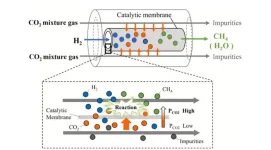
Combating carbon footprint: novel reactor system converts carbon dioxide into usable fuel

Reducing carbon emissions from small-scale combustion systems, such as boilers and other industrial equipment, is a key step towards building a more sustainable, carbon-neutral future. Boilers are widely used across various industries for essential processes like heating, steam generation, and power production, making them significant contributors to greenhouse gas emissions. Boilers are generally quite efficient. As a result, it is difficult to reduce CO2 emissions simply by improving the combustion efficiency. Therefore, researchers are exploring alternative approaches to mitigating the environmental ...

Read the release
Environment

Scientists discover CO2 and CO ices in outskirts of solar system

ORLANDO, May 24, 2024 – For the first time, carbon dioxide and carbon monoxide ices have been observed in the far reaches of our solar system on trans-Neptunian objects (TNOs). A research team, led by planetary scientists Mário Nascimento De Prá and Noemí Pinilla-Alonso from the University of Central Florida’s Florida Space Institute (FSI), made the findings by using the infrared spectral capabilities of the James Webb Space Telescope (JWST) to analyze the chemical composition of 59 trans-Neptunian objects and Centaurs. The pioneering study, published ...

Read the release
Controlling water, transforming greenhouse gases
Environment

Controlling water, transforming greenhouse gases

Carbon dioxide is the greenhouse gas, singlehandedly responsible for 78% of the change in energy balance in Earth's atmosphere between 1990 and 2022. A byproduct of burning fossil fuels, carbon dioxide enters the atmosphere from car exhaust and coal-fired power plants. Even some renewable energy resources produce a small amount of carbon dioxide, although at a tiny fraction of the amount coal and natural gas create. At its core, this molecule is just an arrangement of one carbon and two oxygen atoms that can be reorganized through a ...

Read the release
Novel organic photoredox catalysts with enhanced stability and recyclability
Environment

Novel organic photoredox catalysts with enhanced stability and recyclability

In recent years, global environmental concerns have prompted a shift toward eco-friendly manufacturing in the field of organic synthetic chemistry. In this regard, research into photoredox catalytic reactions, which use light to initiate redox or reduction-oxidation reactions via a photoredox catalyst, has gained significant attention. This approach reduces the reliance on harsh and toxic reagents and uses visible light, a clean energy source. A key research area has been the development of recycling methods for photocatalysts, which offer both economic and environmental benefits. Photocatalysts use light to accelerate a chemical reaction without getting consumed in the process, and photoredox ...

Read the release
Environment

Ambitious targets are needed to end ocean plastic pollution by 2100

The study, a collaboration between researchers at Imperial College London and GNS Science, suggests that reducing plastic pollution by 5% per year would stabilize the level of microplastics – plastics less than 5 mm in length – in the surface oceans. However, the modelling shows that even reducing pollution by 20% per year would not significantly reduce existing microplastics levels, meaning they will persist in our oceans beyond 2100. Microplastics have been found to be circulating in all of the Earth’s oceans and some of the greatest concentrations of them are thousands of miles from land. These tiny particles ...

Read the release
Environment

Renewable grid: Recovering electricity from heat storage hits 44% efficiency

Images Closing in on the theoretical maximum efficiency, devices for turning heat into electricity are edging closer to being practical for use on the grid, according to University of Michigan research. Heat batteries could store intermittent renewable energy during peak production hours, relying on a thermal version of solar cells to convert it into electricity later. "As we include higher fractions of renewables on the grid to reach decarbonization goals, we need lower costs and longer durations of ...

Read the release
Iron could be key to less expensive, greener lithium-ion batteries, research finds
Environment

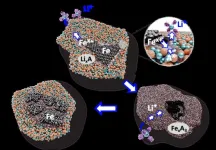
Iron could be key to less expensive, greener lithium-ion batteries, research finds

CORVALLIS, Ore. – What if a common element rather than scarce, expensive ones was a key component in electric car batteries? A collaboration co-led by an Oregon State University chemistry researcher is hoping to spark a green battery revolution by showing that iron instead of cobalt and nickel can be used as a cathode material in lithium-ion batteries. The findings, published today in Science Advances, are important for multiple reasons, Oregon State’s Xiulei “David” Ji notes. “We’ve transformed the reactivity of iron metal, the cheapest metal commodity,” he said. “Our electrode can offer a higher energy density ...

Read the release
Environment

Solar physicists unlock the key to how sunspots form—and much more

A team of solar scientists have uncovered the possible originals of the engine that drives much of the sun’s volatile nature—generating the sunspots that move like storm clouds over the surface and causing the sun’s activity levels to rise and fall over 11-year cycles. The secret behind this engine, also known as the “solar dynamo,” may be among the oldest “unsolved problems of physics,” said Benjamin Brown, a solar physicist at CU Boulder. In new research, he and his colleagues used mathematical equations ...

Read the release
Ancient Mycenaean armor tested by Marines and pronounced suitable for extended combat
Environment

Ancient Mycenaean armor tested by Marines and pronounced suitable for extended combat

A famous Mycenaean suit of armor was not just ceremonial, but suitable for extended combat, according to a study published May 22, 2024 in the open-access journal PLOS ONE by Andreas Flouris of the University of Thessaly, Greece and colleagues. One of the oldest known suits of European armor is a 3500-year-old suit found near the village of Dendra, a few kilometers away from ancient Mycenae. Since its discovery in 1960, it has been unclear if this was a ceremonial suit or if it was suitable for battle. This question has important implications for understanding ...

Read the release
Environment

Enhanced plasticity of spontaneous coagulation cast oxide ceramic green bodies

Spontaneous coagulation casting (SCC), a new type of colloidal forming process, has garnered significant attention since 2011 due to various advantages of a high bulk density and non-toxicity, as well as the ability to achieve dispersion and coagulation with very low additions (< 1 wt%) of copolymers of isobutylene and maleic anhydride (PIBM). Further research has revealed that the green bodies formed by this method are brittle, and the smaller the powder particle size used the more brittle the green bodies are. This paper reports ...

Read the release
Smoke covered 70% of California during biggest wildfire years
Environment

Smoke covered 70% of California during biggest wildfire years

As much as 70% of California was covered by wildfire smoke during parts of 2020 and 2021, according to a study from the University of California, Davis. The study, published today in the journal Communications: Earth & Environment, combined lake-based sensors with satellite imagery to find that maximum smoke cover has increased by about 116,000 square miles since 2006. The study measured lake responses to wildfire smoke in 2018, 2020 and 2021 — the three largest fire seasons on record in California. It found the lakes were exposed ...

Read the release
Environment

New report highlights many unknowns in green hydrogen plans across California

OAKLAND, CA – Officials throughout the state of California have developed plans to start deploying green hydrogen at scale in the coming decade in order to reach California’s 2045 climate neutrality targets. A new analysis, published by scientists at PSE Healthy Energy, finds that while certain applications of green hydrogen may present opportunities to lower greenhouse gas emissions, many challenges remain and misalignments between current proposals could ​​undermine progress toward state climate goals. “Many state and local agencies are counting on massive build outs of green hydrogen infrastructure in the coming decades to achieve their climate targets,” ...

Read the release
Recycling carbon dioxide into household chemicals
Environment

Recycling carbon dioxide into household chemicals

A low-cost, tin-based catalyst can selectively convert carbon dioxide to three widely produced chemicals — ethanol, acetic acid and formic acid. Lurking within the emissions from many industrial operations is an untapped resource — carbon dioxide (CO2). A contributor of greenhouse gas and global warming, it could instead be captured and converted to value-added chemicals. In a collaborative project involving the U.S. Department of Energy’s (DOE) Argonne National Laboratory, Northern Illinois University and Valparaiso University, ...

Read the release
From the original Press-News collection. Issuers of news releases are responsible for the accuracy of their content.