THE ORIGINAL COLLECTION · SINCE 2010

Environment
press releases.

Research announcements from universities, hospitals and scientific institutions. Explore the stories, people and discoveries behind the headlines.

Original publication datesPage 108
FIND A STORY

Find a past release.

Dates and source material belong to the original release.

Read our research explainers

Browse the collection · original publication order

Floating solar’s potential to support sustainable development by addressing climate, water, and energy goals holistically
Environment

Floating solar’s potential to support sustainable development by addressing climate, water, and energy goals holistically

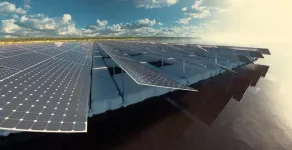
Milan, April 17 2024 – The study, published in Nature Energy, is among the first to explore the FPV at the continental scale, finding that FPV installed at existing major reservoirs could produce 20-100% of the electricity expected from Africa’s planned hydropower dams. Using a state-of-the-art energy planning model covering the continent’s entire energy system, the researchers found that FPV is cost-competitive with other renewables and thus a key part of Africa’s future energy mix. "Floating solar is fast becoming cost-competitive with land-based solar, and ...

Read the release
Data-driven music: Converting climate measurements into music
Environment

Data-driven music: Converting climate measurements into music

A geo-environmental scientist from Japan has composed a string quartet using sonified climate data. The 6-minute-long composition—entitled “String Quartet No. 1 “Polar Energy Budget”—is based on over 30 years of satellite-collected climate data from the Arctic and Antarctic and aims to garner attention on how climate is driven by the input and output of energy at the poles. The backstory about how the composition was put together publishes April 18 in the journal iScience as part of a collection “Exploring the Art-Science Connection.” “I strongly hope that this manuscript marks a significant turning point, transitioning ...

Read the release
Recycling CFRP waste is a challenge, but we've found a way to make it work
Environment

Recycling CFRP waste is a challenge, but we've found a way to make it work

Carbon fiber reinforced plastics (CFRP) are lighter and stronger than metal and are used in a variety of industries, including aviation, aerospace, automotive, marine, and sporting goods. In recent years, it has also been applied to new industries such as air mobility, which has led to an increase in its use and a waste disposal problem. However, CFRP is not naturally degradable, and high-temperature incineration methods emit toxic substances and cause environmental pollution, so it is urgent to develop ...

Read the release
Warming and exogenous organic matter input affected temperature sensitivity and microbial carbon use efficiency of agricultural soil respiration on the Qinghai-Tibet Plateau
Environment

Warming and exogenous organic matter input affected temperature sensitivity and microbial carbon use efficiency of agricultural soil respiration on the Qinghai-Tibet Plateau

The Qinghai-Tibet Plateau is one of the most dramatically affected regions by global warming. For a long time, the region has been exposed by low temperature and soil moisture, which led to the severe inhibition of the soil biological activities and decomposition enzyme systems. As a result, the soil organic matter in this region decomposes slowly and accumulates in large quantities, underscoring its substantial potential for carbon release. In the face of climate warming, the low-temperature limiting ...

Read the release
UW–Madison biochemist wins prestigious forestry prize for discoveries that support sustainable energy and product innovations
Environment

UW–Madison biochemist wins prestigious forestry prize for discoveries that support sustainable energy and product innovations

The world’s top prize in forestry research has been awarded to University of Wisconsin–Madison biochemistry professor John Ralph for work that has led to new uses for one of the world’s most abundant natural resources. The Marcus Wallenberg Foundation on Wednesday awarded the 2024 Marcus Wallenberg Prize to Ralph and collaborator Wout Boerjan, a professor at Ghent University in Belgium, for their groundbreaking research on the molecular structure of lignin, one of the main components of plant cell walls. Dubbed ...

Read the release
Ice age climate analysis reduces worst-case warming expected from rising CO2
Environment

Ice age climate analysis reduces worst-case warming expected from rising CO2

As carbon dioxide accumulates in the atmosphere, the Earth will get hotter. But exactly how much warming will result from a certain increase in CO2 is under study. The relationship between CO2 and warming, known as climate sensitivity, determines what future we should expect as CO2 levels continue to climb. New research led by the University of Washington analyzes the most recent ice age, when a large swath of North America was covered in ice, to better understand the relationship between CO2 and global temperature. It finds that while most future warming ...

Read the release
Paleontologists unearth what may be the largest known marine reptile
Environment

Paleontologists unearth what may be the largest known marine reptile

The fossilised remains of a second gigantic jawbone measuring more than two metres long has been found on a beach in Somerset, UK. Experts have identified the bones as belonging to the jaws of a new species of enormous ichthyosaur, a type of prehistoric marine reptile. Estimates suggest the oceanic titan would have been more than 25 metres long. Father and daughter, Justin and Ruby Reynolds from Braunton, Devon, found the first pieces of the second jawbone to be found in May 2020, while searching for fossils on the ...

Read the release
New butterfly species created 200,000 years ago by two species interbreeding
Environment

New butterfly species created 200,000 years ago by two species interbreeding

Researchers have shown that an Amazonian butterfly is a hybrid species, formed by two other species breeding together almost 200,000 years ago. The discovery, by an international team led by scientists at the University of York and Harvard University, demonstrates how the formation of new species can be more complex than previously imagined. Species are often thought of as the tips, or leaves in a ‘tree of life’. In this model, new species are produced by the tips splitting over thousands to millions of years. Scientists now understand, however, that the branches in the tree of life are ...

Read the release
Substantial global cost of climate inaction
Environment

Substantial global cost of climate inaction

Traditionally, estimates of how climate change will affect global economies have focused on the effects of annual temperature changes. However, the additional impacts of variability and extremes in rainfall and temperature have remained largely unexplored, until now. Using projections from 33 global climate models, an international research team, led by Paul Waidelich at ETH Zurich, conducted a pioneering study, published in the journal, Nature Climate Change, to quantify such impacts on gross domestic product (GDP) across the globe. Revealing the additional ...

Read the release
Understanding climate warming impacts on carbon release from the tundra
Environment

Understanding climate warming impacts on carbon release from the tundra

The warming climate shifts the dynamics of tundra environments and makes them release trapped carbon, according to a new study published in Nature. These changes could transform tundras from carbon sinks into a carbon source, exacerbating the effects of climate change. A team of over 70 scientists from different countries used so called open-top chambers (OTCs) to experimentally simulate the effects of warming on 28 tundra sites around the world. OTCs basically serve as mini-greenhouses, blocking wind and trapping heat to create local warming. The warming experiments led to a 1.4 degrees Celsius increase in air temperature and a 0.4 degrees increase ...

Read the release
Environment

More progress needed on ocean protection, Oregon State scientists tell global conference

CORVALLIS, Ore. – World governments and other leadership bodies are taking vital steps to protect the ocean but more progress is urgently needed, Oregon State University scientists reported today at the eighth Our Ocean Conference in Athens. “Highly protected areas can safeguard against destructive activities such as high-impact fishing, mining and drilling, allowing marine life to recover and in many cases support nearby human communities,” OSU’s Kirsten Grorud-Colvert said. “We’re honored to ...

Read the release
Amazon butterflies show how new species can evolve from hybridization
Environment

Amazon butterflies show how new species can evolve from hybridization

If evolution was originally depicted as a tree, with different species branching off as new blooms, then new research shows how the branches may actually be more entangled. In "Hybrid speciation driven by multilocus introgression of ecological traits," published in Nature, Harvard researchers show that hybrids between species of butterflies can produce new species that are genetically distinct from both parent species and their earlier forebears. Writing to Charles Darwin in 1861, naturalist Henry Walter Bates described brightly colored Heliconius butterflies of the Amazon as “a glimpse into the laboratory where Nature manufactures ...

Read the release
Astronomers uncover methane emission on a cold brown dwarf
Environment

Astronomers uncover methane emission on a cold brown dwarf

Using new observations from the James Webb Space Telescope (JWST), astronomers have discovered methane emission on a brown dwarf, an unexpected finding for such a cold and isolated world. Published in the journal Nature, the findings suggest that this brown dwarf might generate aurorae similar to those seen on our own planet as well as on Jupiter and Saturn. More massive than planets but lighter than stars, brown dwarfs are ubiquitous in our solar neighborhood, with thousands identified. Last year, ...

Read the release
Marine plankton behaviour could predict future marine extinctions, study finds
Environment

Marine plankton behaviour could predict future marine extinctions, study finds

Marine communities migrated to Antarctica during the Earth’s warmest period in 66 million years long before a mass-extinction event. All but the most specialist sea plankton moved to higher latitudes during the Early Eocene Climatic Optimum, an interval of sustained high global temperatures equivalent to worst case global warming scenarios. When the team, comprised of researchers from the University of Bristol, Harvard University, University of Texas Institute for Geophysics and the University of Victoria, compared biodiversity and global community structure, they found ...

Read the release

Environment

38 trillion dollars in damages each year: World economy already committed to income reduction of 19 % due to climate change

“Strong income reductions are projected for the majority of regions, including North America and Europe, with South Asia and Africa being most strongly affected. These are caused by the impact of climate change on various aspects that are relevant for economic growth such as agricultural yields, labour productivity or infrastructure,” says PIK scientist and first author of the study Maximilian Kotz. Overall, global annual damages are estimated to be at 38 trillion dollars, with a likely range of 19-59 trillion dollars in 2050. These damages mainly result from rising temperatures but also from changes ...

Read the release
Environment

Challenges in Greenland marine research and insights and priorities for development of East Greenland marine and coastal environments

This report presents gained knowledge identified at two events during the Greenland Science Week on the 7th of November 2023 in Nuuk, Greenland: The 1st Biennial Greenland Marine Research Seminar and The workshop on Status and Development for East Greenland Waters Both events had a forward-looking focus, to gain insight and knowledge from stakeholders and other parties, to be implemented in future research. The marine research seminar also served as a follow-up on earlier ECOTIP and Face-It stakeholder involvement in Greenland and was an opportunity to share project results and recommendations ...

Read the release
Interspecies competition led to even more forms of ancient human – defying evolutionary trends in vertebrates
Environment

Interspecies competition led to even more forms of ancient human – defying evolutionary trends in vertebrates

Competition between species played a major role in the rise and fall of hominins – and produced a “bizarre” evolutionary pattern for the Homo lineage – according to a new University of Cambridge study that revises the start and end dates for many of our early ancestors. Conventionally, climate is held responsible for the emergence and extinction of hominin species. In most vertebrates, however, interspecies competition is known to play an important role. Now, research shows for the first time that competition was fundamental to “speciation” – the rate at which new species emerge ...

Read the release
How soil microbes survive in harsh desert environments
Environment

How soil microbes survive in harsh desert environments

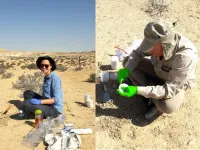
Prolonged droughts followed by sudden bursts of rainfall – how do desert soil bacteria manage to survive such harsh conditions? This long-debated question has now been answered by an ERC project led by microbiologist Dagmar Woebken from the Centre for Microbiology and Environmental Systems Science (CeMESS) at the University of Vienna. The study reveals that desert soil bacteria are highly adapted to survive the rapid environmental changes experienced with each rainfall event. These findings were recently published in the prestigious ...

Read the release
Seychelles beach cleans demonstrate potential for citizen science to tackle marine litter
Environment

Seychelles beach cleans demonstrate potential for citizen science to tackle marine litter

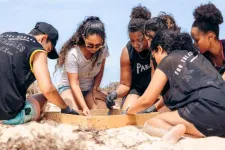
Volunteer clean-ups have resulted in almost nine tonnes of marine litter being cleared from beaches across the Seychelles, in what researchers have described as a powerful demonstration of the potential of citizen science. More than 1,220 volunteers were recruited to clear 52 beaches on ten islands at various points between June 2019 and the end of July 2023. In that time, they surveyed around 930,000m2 of beaches, with volunteers picking up items ranging from foam and rubber to metals and plastics. In total, the ...

Read the release
CO2 worsens wildfires by helping plants grow
Environment

CO2 worsens wildfires by helping plants grow

By fueling the growth of plants that become kindling, carbon dioxide is driving an increase in the severity and frequency of wildfires, according to a UC Riverside study. The worldwide surge in wildfires over the past decade is often attributed to the hotter, drier conditions of climate change. However, the study found that the effect of increasing levels of carbon dioxide (CO2) on plants may be a bigger factor. “It’s not because it’s hotter that things are burning, it’s because there’s ...

Read the release
Environment

UC Irvine researchers shine light on rapid changes in Arctic and boreal ecosystems

Irvine, Calif., April 16, 2024 — Arctic and boreal latitudes are warming faster than any other region on Earth. In three new studies, Earth system scientists at the University of California, Irvine report how the ecosystems in these regions are changing. In a study published in Global Change Biology, a team led by Earth system science Ph.D. candidate Jinhyuk Kim from the lab of James Randerson, professor of Earth system science, reveals how wildfires are increasing rates of photosynthesis in Canada and Alaska. They find that increasing wildfires are wiping out black spruce forests that grow relatively slowly and contribute to the organic layer of the underlying ...

Read the release
Trash to treasure – researchers turn metal waste into catalyst for hydrogen
Environment

Trash to treasure – researchers turn metal waste into catalyst for hydrogen

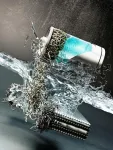
Scientists have found a way to transform metal waste into a highly efficient catalyst to make hydrogen from water, a discovery that could make hydrogen production more sustainable. A team of researchers from the University of Nottingham's School of Chemistry and Faculty of Engineering have found that the surface of swarf, a byproduct of the metal machining industry, is textured with tiny steps and grooves on a nanoscale level. These textures can anchor atoms of platinum or cobalt, leading to an efficient electrocatalyst ...

Read the release
Researchers can help shipowners achieve ambitious climate targets
Environment

Researchers can help shipowners achieve ambitious climate targets

Shipowners around the world are in a very difficult position, because they are having to order new ships now that will run on fuel and technologies that are not yet fully developed. A new study suggests that ammonia could be a smart and energy-efficient fuel in the race to achieve net zero in shipping. Researchers at the Department of Industrial Economics and Technology Management (IØT) and the Department of Marine Technology (IMT) at the Norwegian University of Science and Technology (NTNU) ...

Read the release
Florida Wildlife Corridor eases worst impacts of climate change
Environment

Florida Wildlife Corridor eases worst impacts of climate change

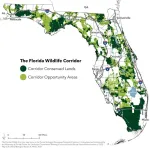
From rising temperatures and altered precipitation patterns to intense weather events such as hurricanes, Florida is experiencing significant climate-related challenges in tandem with skyrocketing insurance rates. As the state’s population continues to surge by 1,000 new residents a day, it is projected to lose 3.5 million acres of land to development by 2070, threatening Florida’s future ability to maintain biodiversity and ecosystem services. A first-of-its-kind study highlights how Florida can buffer itself against both climate change ...

Read the release
Environment

Most countries struggle to meet climate pledges from 2009

Nineteen out of 34 countries surveyed failed to fully meet their 2020 climate commitments set 15 years ago in Copenhagen, according to a new study led by UCL researchers. The study, published in Nature Climate Change, compared the actual net carbon emissions of more than 30 nations to their 2009 pledged emission reduction targets set during the Copenhagen Climate Summit. The paper led by researchers at UCL and Tsinghua University is the first effort to comprehensively gauge how well countries were able to meet their Nationally Determined Contribution reduction pledges from COP15. Of the 34 nations analysed in the study, ...

Read the release
From the original Press-News collection. Issuers of news releases are responsible for the accuracy of their content.