THE ORIGINAL COLLECTION · SINCE 2010

Environment
press releases.

Research announcements from universities, hospitals and scientific institutions. Explore the stories, people and discoveries behind the headlines.

Original publication datesPage 140
FIND A STORY

Find a past release.

Dates and source material belong to the original release.

Read our research explainers

Browse the collection · original publication order

Researchers identify largest ever solar storm in ancient 14,300-year-old tree rings
Environment

Researchers identify largest ever solar storm in ancient 14,300-year-old tree rings

An international team of scientists have discovered a huge spike in radiocarbon levels 14,300 years ago by analysing ancient tree-rings found in the French Alps. The radiocarbon spike was caused by a massive solar storm, the biggest ever identified. A similar solar storm today would be catastrophic for modern technological society – potentially wiping out telecommunications and satellite systems, causing massive electricity grid blackouts, and costing us billions of pounds. The academics are warning of the importance ...

Read the release
Scientists upcycle polyesters through new waste-free, scalable process
Environment

Scientists upcycle polyesters through new waste-free, scalable process

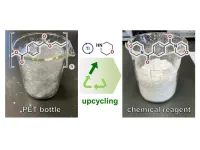
Tokyo, Japan – Researchers from Tokyo Metropolitan University have developed a new chemical process which upcycles polyesters, including PET in plastic bottles, to morpholine amide, a versatile and valuable building block for synthesizing a vast range of compounds. The reaction is high yield, waste-free, does not require harmful chemicals, and is easily scalable. The team successfully break the often costly closed-loop recycling loop of plastic waste, allowing upcycling to more valuable products. Recycling plays an indispensable part of our fight against plastic waste. But at what ...

Read the release
The currency of conservation
Environment

The currency of conservation

Governments, nonprofit organizations, and other groups spend roughly $100 billion a year to support conservation. Restrictions on where conservation funds can be spent, however, prevent organizations from focusing on the most promising opportunities to help species. A new study led by researchers at the University of Tennessee, Knoxville, suggests a way to improve the situation. “There are plenty of conservation bargains still available in the United States,” said Paul Armsworth, professor in the UT Department of Ecology and Evolutionary Biology and lead author of the study. “Some ...

Read the release
UH energy competition focuses on innovation, commercialization and sustainability
Environment

UH energy competition focuses on innovation, commercialization and sustainability

The world is full of good ideas, but only some of them become viable and real. “You don’t see the full impact of a good idea until someone figures out a way to convert it to a usable product or service that has value, brings it to market and makes money off of it – this is what makes it a sustainable business,” said S. Radhakrishnan, a retired University of Houston business professor and coordinator of UH Energy’s Innovation Commercialization Competition. “To have a successful energy transition, we need many innovative ideas to be commercialized.” Keeping this in mind, Radhakrishnan worked hard to grow the second annual Energy Innovation Commercialization ...

Read the release
Scientists investigate Grand Canyon's ancient past to predict future climate impacts
Environment

Scientists investigate Grand Canyon's ancient past to predict future climate impacts

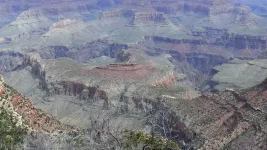
The Grand Canyon’s valleys and millions of years of rock layers spanning Earth’s history have earned it a designation as one of the Seven Natural Wonders of the World. But, according to a new UNLV and University of New Mexico study, its marvels extend to vast cave systems that lie beneath the surface, which just might hold clues to better understand the future of climate change — by studying nature’s past. A research team led by UNLV paleoclimatologist and Professor Matthew Lachniet that included the University of New Mexico Department of Earth & Planetary Sciences Distinguished Professor Yemane Asmerom and Research Scientist Victor Polyak and other ...

Read the release
Deciphering the intensity of past ocean currents
Environment

Deciphering the intensity of past ocean currents

Details of past climate conditions are revealed to researchers not only by sediment samples from the ocean floor, but also by the surface of the seafloor, which is exposed to currents that are constantly altering it. Deposits shaped by near-bottom currents are called contourites. These sediment deposits contain information about past ocean conditions as well as clues to climate. Contourites are often found on continental slopes or around deep-sea mountains. But they can be found in any environment where strong currents occur near the seafloor. The mechanisms that control them are not yet well understood. ...

Read the release
Ginger pigment molecules found in fossil frogs
Environment

Ginger pigment molecules found in fossil frogs

UCC palaeontologists discover molecular evidence of phaeomelanin, the pigment that produces ginger colouration. “This will paint a more accurate picture of ancient animal colour.” Phaeomelanin is now toxic to animals – discovery may be first step in understand its evolution. Palaeontologists at University College Cork (UCC) have found the first molecular evidence of phaeomelanin, the pigment that produces ginger colouration, in the fossil record. The new study reports ...

Read the release
Climate change brings earlier arrival of intense hurricanes
Environment

Climate change brings earlier arrival of intense hurricanes

Intense tropical cyclones are one of the most devastating natural disasters in the world due to torrential rains, flooding, destructive winds, and coastal storm surges. New research co-authored by a University of Hawai‘i at Mānoa atmospheric scientist revealed that since the 1980s, Category 4 and 5 hurricanes (maximum wind speed greater than 131 miles per hour) have been arriving three to four days earlier with each passing decade of climate change. Their findings were published recently in Nature. “When intense tropical cyclones occur earlier than usual, they cause unexpected problems for communities,” said Pao-Shin Chu, atmospheric ...

Read the release
Study confirms age of oldest fossil human footprints in North America
Environment

Study confirms age of oldest fossil human footprints in North America

The 2021 results began a global conversation that sparked public imagination and incited dissenting commentary throughout the scientific community as to the accuracy of the ages. “The immediate reaction in some circles of the archeological community was that the accuracy of our dating was insufficient to make the extraordinary claim that humans were present in North America during the Last Glacial Maximum. But our targeted methodology in this current research really paid off,” said Jeff Pigati, USGS research geologist ...

Read the release
Environment

What are the risks of radioactive wastewater release – the next of which is October 5th – from Fukushima Daiichi nuclear plant?

Wastewater release from the Fukushima Daiichi nuclear plant in Japan is expected to have negligible effects on people and the ocean, Jim Smith and colleagues report in a Perspective. The planned releases of radioactive wastewater, 350 million gallons of which has been stored at the site since the 2011 earthquake and tsunami that triggered the Fukushima plant’s meltdown, began in August 2023 and are expected to continue for perhaps the next 30 years. The second release is scheduled to start on October 5th. While the scheduled releases have sparked international concern, Smith et al. discuss the science behind the risks and ...

Read the release
Shining a light on tiny, solar-powered animals
Environment

Shining a light on tiny, solar-powered animals

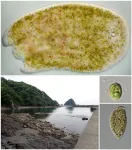
Acoels have been found to host a wide diversity of symbiotic, photosynthetic microalgae. Animals and plants need energy. Some animals get energy by eating other animals, and many plants harvest the energy in sunlight through photosynthesis. However, in the ocean, there exists a remarkable group of small, worm-like animals called acoels that do both—some acoels form relationships (symbiosis) with single-celled, photosynthetic microalgae. A study by Assistant Professor Kevin Wakeman and his undergraduate student, Siratee Riewluang, at Hokkaido University, Japan, has shed some light on the biodiversity underpinning symbiotic relationships between acoels and microalgae. ...

Read the release
Detecting microplastics(MPs) with light!!
Environment

Detecting microplastics(MPs) with light!!

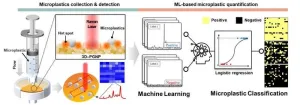
A research team led by Dr. Ho Sang Jung of the Department of Nano-Bio Convergence at the Korea Institute of Materials Science (KIMS), a government-funded research institute under the Ministry of Science and ICT, in collaboration with the KOTITI Testing & Research Institute, has developed the world's first technology to rapidly and highly sensitively detect microplastics(MPs) in the field, which are well known to cause human and genetic toxicity through environmental pollution and the food chain. The on-site applicable MPs detection technology developed ...

Read the release
Comfort with a smaller carbon footprint
Environment

Comfort with a smaller carbon footprint

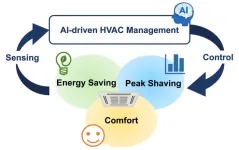
Osaka, Japan – As organizations work to reduce their energy consumption and associated carbon emissions, one area that remains to be optimized is indoor heating and cooling. In fact, HVAC – which stands for Heating, Ventilation, and Air Conditioning – represents, on average, about 40% of a building’s total energy use. Methods that conserve electricity while still providing a comfortable indoor environment for workers could make a significant difference in the fight against climate change. Now, researchers from Osaka University have demonstrated significant energy savings through the application of a new, AI-driven algorithm ...

Read the release
Environment

Wastewater surveillance research provides a 12-day lead time for RSV season: new study

In a first-of-its-kind study, researchers using wastewater surveillance over conventional indicators have predicted the start of the annual respiratory syncytial virus (RSV) season 12 days early, providing more lead time for hospital preparedness and the timely initiation of RSV prevention therapy provided by the province for at risk-infants and young children. Published in Frontiers in Public Health, the study is the first to describe the relationship between wastewater measurements and clinical data for RSV and to use near real-time wastewater measurements to accurately identify the start of the RSV season. Working in close collaboration with CHEO Research Institute (RI) ...

Read the release
Environment

Simultaneous large wildfires will increase in Western U.S.

Contacts: David Hosansky, UCAR/NCAR Manager of Media Relations hosansky@ucar.edu 720-470-2073 Audrey Merket, UCAR/NCAR Science Writer and Public Information Officer amerket@ucar.edu 303-497-8293 Simultaneous outbreaks of large wildfires will become more frequent in the Western United States this century as the climate warms, putting major strains on efforts to fight fires, new research shows. The new study, led by scientists at the National Center for Atmospheric Research (NCAR), focused on wildfires of 1,000 acres or larger. It found that wildfire seasons in which ...

Read the release
Environment

Invertebrate biodiversity is improving in England’s rivers, long-term trends show

Rivers across England have seen a significant improvement in river invertebrate biodiversity since 1989, shows a study led by UK Centre for Ecology & Hydrology (UKCEH) researchers. The study, which involved one of the largest and most wide-ranging analyses of long-term monitoring data in the world – spanning over 30 years, found improvements in invertebrate biodiversity across all regions and river types in England. This improvement is all the more surprising given English rivers are amongst the most highly exposed to wastewater and other pressures in Europe. The recent State of Nature report shows that the overall abundance of species in Great ...

Read the release
New research finds that ancient carbon in rocks releases as much carbon dioxide as the world's volcanoes
Environment

New research finds that ancient carbon in rocks releases as much carbon dioxide as the world's volcanoes

Main points: New research has overturned the traditional view that natural rock weathering acts as a CO2 sink that removes CO2 from the atmosphere. Instead, this can also act as a large CO2 source, rivalling that of volcanoes. The results have important implications for modelling climate change scenarios but at the moment, CO2 release from rock weathering is not captured in climate modelling. Future work will focus on whether human activities may be increasing CO2 release from rock weathering, and how this could be managed. A new study led by the University of Oxford has overturned the view ...

Read the release
Environment

Wastewater detects signs of antimicrobial resistance in aged care

A new study published today, analysing wastewater samples from several aged care and retirement homes in Adelaide, has uncovered worrying signs of antimicrobial resistance (AMR) in at least one facility. High levels of bacterial resistance against three common antibiotics – ceftazidime, cefepime and ciprofloxacin – were identified in one aged care residential home. A second facility recorded above average levels of antimicrobial resistance to gentamicin, putting residents’ health at risk. The listed antibiotics are used to treat a variety of bacterial infections, including pneumonia, ...

Read the release
New pipeline makes valuable organic acid from plants — saving money and emissions
Environment

New pipeline makes valuable organic acid from plants — saving money and emissions

In a breakthrough for environmentally friendly chemical production, researchers at the Center for Advanced Bioenergy and Bioproducts Innovation (CABBI) have developed an economical way to make succinic acid, an important industrial chemical, from sugarcane. The team of University of Illinois and Princeton University researchers created a cost-effective, end-to-end pipeline for this valuable organic acid by engineering a tough, acid-tolerant yeast as the fermenting agent, avoiding costly steps in downstream processing. Succinic acid is a widely ...

Read the release
Newly established Bulgarian Barcode of Life to support biodiversity conservation in the country
Environment

Newly established Bulgarian Barcode of Life to support biodiversity conservation in the country

On 27 September 2023, during a specialised symposium on DNA barcoding at the Bulgarian Academy of Sciences, the Bulgarian Barcode of Life (BgBOL), a Bulgarian DNA barcoding consortium, was founded. By becoming the latest national node to join the International Barcode of Life Consortium (iBOL), the main task before BgBOL will be to coordinate, support, and promote DNA barcoding research in Bulgaria, with a primary focus on the study and preservation of the country's biodiversity. “The Bulgarian Barcode of Life opens up new horizons and opportunities to study and understand the biodiversity ...

Read the release
Disaster-proofing sustainable neighborhoods requires thorough long-term planning, new Concordia study shows
Environment

Disaster-proofing sustainable neighborhoods requires thorough long-term planning, new Concordia study shows

Individual neighbourhoods will be intimately involved in providing local solutions to collective problems. One measure will be distributed renewable energy production — energy produced at local levels, either by solar technology, wind or other methods, will push cities to achieve their net-zero targets. However, even these power-generating neighbourhoods will remain vulnerable to power outages resulting from natural disasters such as hurricanes, fires or floods. And all of these are likely to become increasingly common due to the effects of climate change. ...

Read the release
Carbon-capture tree plantations threaten tropical biodiversity for little gain, ecologists say
Environment

Carbon-capture tree plantations threaten tropical biodiversity for little gain, ecologists say

The increasingly urgent climate crisis has led to a boom in commercial tree plantations in an attempt to offset excess carbon emissions. However, authors of a peer-reviewed opinion paper publishing October 3 in the journal Trends in Ecology and Evolution argue that these carbon-offset plantations might come with costs for biodiversity and other ecosystem functions. Instead, the authors say we should prioritize conserving and restoring intact ecosystems. “Despite the broad range of ecosystem functions and services provided ...

Read the release
Environment

Controlled burns help prevent wildfires; Climate change is limiting their use

Key takeaways Rising temperatures will cut the number of days when conditions favor prescribed fires by 17% on average across the Western U.S., mostly in spring and summer. Winter, however, will see a net 4% increase in the number of favorable days. Implementing controlled burns in the West will require changes to policy and the availability of firefighters. ​​​​​​ Prescribed fires, sometimes called controlled burns, are one of the most common tools for preventing catastrophic wildfires in the Western United States. Lit by highly trained firefighters, they help clear away excess dry plant matter that might otherwise ...

Read the release
New biobanking partnership safeguards the genetic diversity of America’s endangered species
Environment

New biobanking partnership safeguards the genetic diversity of America’s endangered species

San Francisco, CA - The nonprofit Revive & Restore announces a groundbreaking new initiative to biobank U.S. endangered species, in partnership with the U.S. Fish & Wildlife Service. This multi-institution collaboration is the first systematic biobanking pipeline for U.S. threatened and endangered species. The initiative will protect genetic diversity for current and future recovery efforts. "This is about creating a legacy of America’s natural history before it is lost and provides an important resource to enhance species recovery efforts now and in the future,” said Ryan Phelan, Executive Director of Revive & ...

Read the release
Improved mangrove conservation could yield cash, carbon, coastal benefits
Environment

Improved mangrove conservation could yield cash, carbon, coastal benefits

A shift in the way we think about the benefits mangroves provide to coastal regions could yield significant economic and biodiversity gains and protect millions from flooding, research has revealed. The University of Queensland-led study shows current conservation efforts typically target biodiversity protection whilst minimising conflict with economic interests, while failing to consider the huge benefits provided by ecosystems. Alvise Dabalà, now at the University of the Azores and whose Masters project at UQ formed the basis of this study, said human activities, such as deforestation and coastal development have led to extensive ...

Read the release
From the original Press-News collection. Issuers of news releases are responsible for the accuracy of their content.