THE ORIGINAL COLLECTION · SINCE 2010

Environment
press releases.

Research announcements from universities, hospitals and scientific institutions. Explore the stories, people and discoveries behind the headlines.

Original publication datesPage 141
FIND A STORY

Find a past release.

Dates and source material belong to the original release.

Read our research explainers

Browse the collection · original publication order

How floods kill, long after the water has gone – global decade-long study
Environment

How floods kill, long after the water has gone – global decade-long study

With New York declared a state of emergency following flash flooding, there is increasing concern such events will become more common globally. Now a study led by Monash University scientists in Australia has found that people impacted by a flooding event are at significantly increased risk of dying – including heart and lung problems – in a crucial window between three and six weeks after the event, even after the flooding has dissipated. The study, published today in the BMJ, found that the risk of dying increased and persisted for up to 60 days (50 days for cardiovascular mortality) after a flooded day - increasing by for 2.1% for all-cause deaths, 2.6% for cardiovascular ...

Read the release
Study: Scientists investigate grand canyon's ancient past to predict future climate impacts
Environment

Study: Scientists investigate grand canyon's ancient past to predict future climate impacts

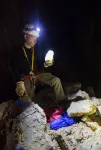
The Grand Canyon’s valleys and millions of years of rock layers spanning Earth’s history have earned it a designation as one of the Seven Natural Wonders of the World. But, according to a new UNLV study, its marvels extend to vast cave systems that lie beneath the surface, which just might hold clues to better understand the future of climate change — by studying nature’s past. A research team — led by UNLV paleoclimatologist and professor Matthew Lachniet — pulled an ancient stalagmite from the floor of an undisturbed Grand Canyon cave. By studying the mineral deposits’ geochemistry, they were able to analyze precipitation patterns during the rapidly ...

Read the release
Fair and sustainable futures beyond mining
Environment

Fair and sustainable futures beyond mining

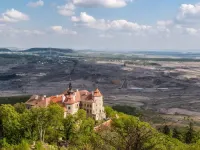
Mining brings huge social and environmental change to communities: landscapes, livelihoods and the social fabric evolve alongside the industry. But what happens when the mines close? What problems face communities that lose their main employer and the very core of their identity and social networks? A research fellow at the University of Göttingen provides recommendations for governments to successfully navigate mining communities through their transition toward non-mining economies. Based on past experiences with industrial transitions, she suggests that a three-step approach centred around stakeholder ...

Read the release
Pumped for frigid weather: study pinpoints cold adaptations in nervous system of Antarctic octopus
Environment

Pumped for frigid weather: study pinpoints cold adaptations in nervous system of Antarctic octopus

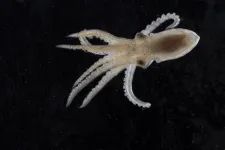
By Wynne Parry Laden with dissolved salt, Antarctic waters can hover just above freezing and even dip below it. Temperatures this low would likely kill the animals that prosper in warmer waters further north. Yet, some creatures have found ways to live in this inhospitable cold. In a new study described in Proceedings of the National Academy of Sciences, researchers at the Marine Biological Laboratory (MBL) and their collaborators focused on how life in such a frigid habitat has altered an enzyme essential ...

Read the release
Environment

Meat taxes and other livestock emissions regulations could be feasible, acceptable and effective, argue climate researchers

Meat taxes and other livestock emissions regulations could be feasible, acceptable and effective, argue climate researchers. #### Article URL: https://journals.plos.org/climate/article?id=10.1371/journal.pclm.0000291 Article Title: High ‘steaks’: Building support for reducing agricultural emissions Author Countries: Germany, UK Funding: This work was financially supported by the Robert Bosch foundation (Junior Professorship grant to LM) The funder had no role in study design, data collection and analysis, decision to publish, ...

Read the release
Environment

Drier savannas, grasslands store more climate-buffering carbon than previously believed

Photos Savannas and grasslands in drier climates around the world store more heat-trapping carbon than scientists thought they did and are helping to slow the rate of climate warming, according to a new study. The study, published online Oct. 2 in Nature Climate Change, is based on a reanalysis of datasets from 53 long-term fire-manipulation experiments worldwide, as well as a field-sampling campaign at six of those sites. Twenty researchers from institutions around the globe, including two at the University of Michigan, looked at where and why fire has changed the amount of carbon stored in topsoil. They found that within savanna-grassland regions, ...

Read the release
Climate and human land use both play roles in Pacific island wildfires past and present
Environment

Climate and human land use both play roles in Pacific island wildfires past and present

DALLAS (SMU) – It’s long been understood that human settlement contributes to conditions that make Pacific Islands more susceptible to wildfires, such as the devastating Aug. 8 event that destroyed the Maui community of Lahaina. But a new study from SMU fire scientist Christopher Roos published in the journal Nature Ecology and Evolution shows that climate is an undervalued part of the equation. Roos, SMU environmental archaeologist and professor of anthropology, traveled with his team to the Sigatoka ...

Read the release
Sustainable protection of rapidly subsiding coastlines with mangroves
Environment

Sustainable protection of rapidly subsiding coastlines with mangroves

Vulnerable coastlines Unfortunately, precisely in these rural densely populated Asian regions, mangroves have in the past been cleared to free up land for other uses such as aquaculture. This has made these coasts vulnerable to rapid erosion. Restoring mangroves seems a logical solution to reverse this process and protect these densely populated coastlines. However, this requires understanding if mangroves can cope with extreme rates of relative sea level rises, as experienced in these subsiding areas. Since 2015 NIOZ researcher Celine van Bijsterveldt visited Indonesia regularly during her studies and her Phd. ...

Read the release
Boreal and temperate forests now main global carbon sinks
Environment

Boreal and temperate forests now main global carbon sinks

Using a new analysis method for satellite images, an international research team, coordinated by the French Alternative Energies and Atomic Energy Commission (CEA) and INRAE, mapped for the first time annual changes in global forest biomass between 2010 and 2019. Researchers discovered that boreal and temperate forests have become the main global carbon sinks. Tropical forests, which are older and degraded by deforestation, fire and drought, are nearly carbon neutral. The findings, published in Nature Geoscience, highlight the importance of accounting for young forests and forest ...

Read the release
Department of Energy funds new center for decarbonization of steelmaking
Environment

Department of Energy funds new center for decarbonization of steelmaking

Center to develop cost-effective method for decarbonized manufacturing for steelmaking without a blast furnace. Steel has a major impact on everyone’s lives and our economy. It is crucial to cars, trucks, airplanes, buildings and more. However, there is a significant issue with its production process. Globally, it accounts for a large percentage of greenhouse gas emissions from the industrial sector. The U.S. Department of Energy (DOE) recently announced $19 million in funding over four years for DOE’s Argonne National Laboratory ...

Read the release
Berkeley Lab awarded two new centers to counter climate change
Environment

Berkeley Lab awarded two new centers to counter climate change

The Department of Energy’s Lawrence Berkeley National Laboratory (Berkeley Lab) will host two new centers dedicated to advancing clean energy technology and combating climate change. The awards are part of DOE’s Energy Earthshots Initiative that launched in 2021 with the goal of speeding up technological breakthroughs and lowering costs. DOE has so far launched seven Earthshots spanning clean energy and carbon reduction technologies. The Berkeley Lab programs announced today will address two of them: the Hydrogen ...

Read the release
Ancient plant wax reveals how global warming affects methane in Arctic lakes
Environment

Ancient plant wax reveals how global warming affects methane in Arctic lakes

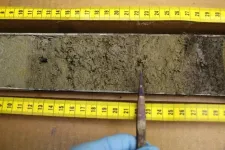
New study makes novel use of plant biomarkers preserved in sediment to reconstruct methane cycling over the past 10,000 years Plant waxes hold an isotopic signature of ancient methane As planet warmed due to slow changes in Earth’s orbit, lakes produced increased amounts of methane, which is a potent greenhouse gas Researcher: ‘Living on a warming planet, we can look to these signs from the past to predict our future’ EVANSTON, Ill. — By studying fossils from ancient aquatic plants, ...

Read the release
Illinois-led team puts cows and microbes to work to reduce greenhouse gases
Environment

Illinois-led team puts cows and microbes to work to reduce greenhouse gases

URBANA, Ill. — As we hurtle toward crucial tipping points on a warming planet, an international team of scientists is recruiting a surprising ally to make a powerful dent in greenhouse gas emissions: the cow. Animal sciences researchers from the University of Illinois Urbana-Champaign are driving a new project to reduce methane production resulting from rumen fermentation in beef and dairy cattle. The 3-year, $3.2-million project is part of the Greener Cattle Initiative, led by the Foundation for Food and Agriculture Research (FFAR). According to the researchers, aggressively targeting methane could help course-correct our climate trajectory on a quicker timeline ...

Read the release
Environment

Climate change and carnivores: shifts in the distribution and effectiveness of protected areas in the Amazon

A new article published in PeerJ Life & Environment, authored by Camila Ferreira Leão at Universidade Federal do Pará sheds light on the effects of climate change on carnivorous mammals in the Amazon and their representation within Protected Areas (PAs). "Climate change and carnivores: shifts in the distribution and effectiveness of protected areas in the Amazon," reveals alarming findings about the vulnerable status of these animals and the effectiveness of conservation measures. Carnivorous ...

Read the release
An intelligent control method reduces carbon emissions in energy-intensive equipment
Environment

An intelligent control method reduces carbon emissions in energy-intensive equipment

A research team led by Professor Tianyou Chai from Northeastern University, China, has developed an innovative intelligent control method for the low-carbon operation of energy-intensive equipment. This groundbreaking research, published in the journal Engineering, presents a significant step towards reducing carbon emissions in the process industry. The research team’s method combines mechanism analysis with deep learning, linking control and optimization with prediction, and integrating decision-making ...

Read the release
Groundbreaking control method reduces carbon emissions from zinc oxide rotary kilns, boosting profits for zinc smelting industry
Environment

Groundbreaking control method reduces carbon emissions from zinc oxide rotary kilns, boosting profits for zinc smelting industry

A research team from Central South University in China develops innovative control method to reduce carbon emissions from zinc oxide rotary kilns. The zinc smelting industry is facing new challenges in meeting China’s carbon peak and carbon neutrality targets. To address these challenges, researchers from Central South University in China have developed a groundbreaking control method that reduces carbon emissions from zinc oxide rotary kilns while maintaining high profits. Their findings have been published in the journal Engineering. Zinc oxide rotary kilns play a crucial role in the zinc smelting process. ...

Read the release
Environment

The University of Manchester secures major bioscience funding to harness the activity of microbiomes for a more sustainable future

Scientists at The University of Manchester are set to receive a multi-million-pound grant to advance our understanding of interactions in microbiomes and how they might impact the world around us. The research, funded by the Biotechnology and Biological Sciences Research Council’s (BBSRC) strategic Longer and Larger (sLoLa) grants programme, takes the first major step towards understanding complex microbial communities and will support the move towards a more sustainable and Net Zero ...

Read the release
Biological particles play crucial role in Arctic cloud ice formation
Environment

Biological particles play crucial role in Arctic cloud ice formation

An international team of scientists from Sweden, Norway, Japan, and Switzerland, has presented research findings that reveal a crucial role of biological particles, including pollen, spores, and bacteria, in the formation of ice within Arctic clouds. These findings, published today in Nature Communications, have far-reaching implications for climate science and our understanding of the rapidly changing Arctic climate. The research, whose outcomes have unveiled the connection between biological particles and the formation of ...

Read the release
Polyps as pixels: innovative technique maps biochemistry of coral reefs
Environment

Polyps as pixels: innovative technique maps biochemistry of coral reefs

Using an innovative new approach to sampling corals, researchers at the University of Hawai‘i (UH) at Mānoa are now able to create maps of coral biochemistry that reveal with unprecedented detail the distribution of compounds that are integral to the healthy functioning of reefs. Their study was published today in Communications Biology. “This work is a major step in understanding the coral holobiont [the coral animal and all of its associated microorganisms], which is critical for reef restoration and management,” said lead author Ty Roach, who conducted this study as a postdoctoral researcher at the Hawai‘i Institute of Marine Biology (HIMB) in the UH ...

Read the release
Environment

Microplastics are found in cave water and sediment, says SLU research

In two recent papers, Saint Louis University researchers report finding high concentrations of microplastics present in a Missouri cave system that had been closed to human visitors for 30 years. Elizabeth Hasenmueller, Ph.D., associate professor of Earth and Atmospheric Sciences and associate director of the WATER Institute at SLU, and her team published findings in the journals, Science of the Total Environment and Water Research, finding significant microplastic levels in Cliff Cave in Saint Louis County, Missouri. The research, which originated from Hasenmueller’s research group and Karst Hydrology class, allowed students on the ...

Read the release
Expert: The current pace of decarbonization in Massachusetts is too low to meet climate goals
Environment

Expert: The current pace of decarbonization in Massachusetts is too low to meet climate goals

Media contacts: Emily Gowdey-Backus, director of media relations, Emily_GowdeyBackus@uml.edu Nancy Cicco, assistant director of media relations, Nancy_Cicco@uml.edu Having worked with renewables for the last 15 years, and listening to the lofty goals political leaders make to achieve net-zero carbon emissions, UMass Lowell mechanical engineering Professor Christopher Niezrecki can tell you that as a state and a nation, we’re not on track. It’s not easy to wrap one’s head around the scale of the problem and even harder to come up with viable solutions. There is global scientific consensus that ...

Read the release
UTA research: Wildlife loss five times slower in protected areas
Environment

UTA research: Wildlife loss five times slower in protected areas

Protecting large areas of land from human activity can help stem the tide of biodiversity loss, especially for vertebrates like amphibians, reptiles, mammals and birds, according to a new study in Nature. In particular, vertebrate population declines were five times slower in conservation areas compared to animals living in areas not protected from development or conversion to agricultural use. “Protected areas take us from a situation in which biodiversity is ebbing away to one where populations are at least close to stable,” said Luke Frishkoff, coauthor of the study and assistant professor of biology at The University of Texas at Arlington. ...

Read the release
Protecting lands slows biodiversity loss among vertebrates by five times
Environment

Protecting lands slows biodiversity loss among vertebrates by five times

Protecting large swaths of Earth’s land can help stem the tide of biodiversity loss—including for vertebrates like amphibians, reptiles, mammals and birds, according to a new study published in Nature Sept. 27. The study, led by the Smithsonian Environmental Research Center (SERC) and Conservation International, emphasizes the importance of proper governance for the success of protected lands, and offers much-needed support for the United Nations’ “30 by 30” initiative to conserve the ...

Read the release
Teams investigate material degradation process of carbon-based catalyst
Environment

Teams investigate material degradation process of carbon-based catalyst

Although a plethora of carbon-based catalysts have been developed to promote oxygen reduction reaction (ORR) in different electrochemical systems, the degradation process of those catalysts remains obscure to date. During certain steps of the ORR on a catalyst's surface in electrochemical systems, hydrogen peroxide (H2O2) is generated. This compound can be detrimental to the catalyst itself because the highly oxidative species produced from H2O2 can attack different moieties of the catalyst, leading to the degradation of its chemical structure. A team of researchers has elucidated how H2O2 affects the degradation of a carbon-based catalyst named N-G/MOF. This catalyst ...

Read the release
Elevating biogas upgrading performance on renewable aqueous ammonia solution via a novel “membrane method”
Environment

Elevating biogas upgrading performance on renewable aqueous ammonia solution via a novel “membrane method”

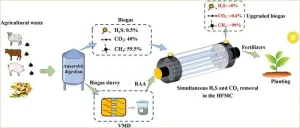
Biogas is usually produced by anaerobic digestion of organic waste such as animal manures and straw wastes, which is a typical green renewable energy and can be used as a fuel for power generation and heat production. China has owned large scale of biogas production, with an annual output of about 15 billion m3 biogas, and the biogas development and utilization provide a new choice for coping with the energy crisis. Factually, biogas contains about 60% CH4 and about ...

Read the release
From the original Press-News collection. Issuers of news releases are responsible for the accuracy of their content.