THE ORIGINAL COLLECTION · SINCE 2010

Environment
press releases.

Research announcements from universities, hospitals and scientific institutions. Explore the stories, people and discoveries behind the headlines.

Original publication datesPage 142
FIND A STORY

Find a past release.

Dates and source material belong to the original release.

Read our research explainers

Browse the collection · original publication order

Environment

Government policies work to reduce greenhouse gas emissions

Policies designed to reduce greenhouse gas emissions have been effective, however more stringent regulations are needed to limit global warming to the Paris temperature goals, finds a new analysis by UCL researchers of international efforts to fight climate change. The research, published in Annual Reviews of Environment and Resources, tracked the rate of greenhouse gas emissions over the last two decades against global efforts to reduce them. Since the early 2000s, governments around the world have enacted numerous regulations to curb greenhouse gas emissions. Over the same ...

Read the release
Aston University research pioneers making renewable hydrogen and propane fuel gases from glycerol
Environment

Aston University research pioneers making renewable hydrogen and propane fuel gases from glycerol

Research shows way forward for making renewable hydrogen from glycerol Crude glycerol from biodiesel production plants cheap and abundant Could benefit the environment and reduce reliance on fuel imports. 26 September 2022 | Birmingham, UK Aston University research has shown the way forward for making renewable hydrogen and propane fuel gases from glycerol. An organic compound, glycerol is produced mainly from fats and oils and is often used in health and beauty products. With crude glycerol from biodiesel production plants cheap and abundant the researchers have ...

Read the release
Arctic sea ice 6th lowest on record; Antarctic sees record low growth
Environment

Arctic sea ice 6th lowest on record; Antarctic sees record low growth

Arctic sea ice likely reached its annual minimum extent on Sept. 19, 2023, making it the sixth-lowest year in the satellite record, according to researchers at NASA and the National Snow and Ice Data Center (NSIDC). Meanwhile, Antarctic sea ice reached its lowest maximum extent on record on Sept. 10 at a time when the ice cover should have been growing at a much faster pace during the darkest and coldest months. Scientists track the seasonal and annual fluctuations because sea ice shapes Earth’s polar ecosystems and plays a significant role in global climate. Researchers at NSIDC ...

Read the release
Researchers build and test a framework for achieving climate resilience across diverse fisheries
Environment

Researchers build and test a framework for achieving climate resilience across diverse fisheries

(Santa Barbara, Calif.) — What makes for a successful climate-resilient fishery, one that sustainably produces resources for human benefit despite increasing climate stressors and human impacts? It’s a question that faces present and future fisheries, their practitioners and fishing communities as the world turns to the ocean to feed its growing population. “For a fishery to be resilient it needs to be able to prepare for, resist, cope with, recover from, or adapt to any given impact,” said Jacob Eurich, who is a research associate at UC Santa Barbara’s Marine Science Institute, and a fisheries scientist at the Environmental Defense Fund (EDF). “In ...

Read the release
Environment

Antarctica’s glacial border migrates for miles with the tide

*Embargoed until 07:00 BST / 08:00 CEST, 26 September 2023* The grounding line of the southern Ronne Ice Shelf in Antarctica can shift up to 15 km (six miles) with changing tides, new analysis shows. The research, published today in The Cryosphere, examines the key region where land-based Antarctic ice spills over into the surrounding ocean. Observing and understanding the dynamics of this region can help scientists predict Antarctica’s response to climate change, and so how much global sea levels will rise. “We typically think of ice sheet change as being very slow, ...

Read the release
Why endangered wildlife needs AML law coverage and banks need to share IWT intelligence
Environment

Why endangered wildlife needs AML law coverage and banks need to share IWT intelligence

The illegal wildlife trade (IWT) is a fast-growing ‘financial portfolio’ within the larger illegal, violent, parallel transnational global economy. As such, it creates state-level security and development risks, especially in source countries. IWT is also known as wildlife trafficking, which includes the illicit trade of animals and plants, and derivative products such as pangolin scales, rhino horn, elephant ivory, lion and tiger bones, and leopard pelts. But many highly developed countries signed up to CITES, are yet to implement a crucial legal instrument required to prosecute IWT and the associated financial ...

Read the release
Environment

Why ecological restoration without Indigenous leadership won’t last

Imagine you’re sitting in your living room on a quiet evening with your family reading a book, when suddenly, complete strangers let themselves in your front door. If that wasn’t enough of a shock, before you can even find your voice to ask who they are, they begin rearranging your furniture, painting your walls different colors, bagging up possessions that are important to you, and appear to be swapping out the food in your refrigerator. They do not seem to mean you any harm and work with such purpose that you question yourself, wondering whether you may have forgotten ...

Read the release
Environment

How to save plants from climate change? Just ask them

Redwoods and oaks that thrive on California’s coastline and coastal mountains might soon start finding it harder to survive. Human-caused climate change is altering the temperatures and rainfall patterns to which those and other trees are accustomed, and many have already been pushed close to the edge of what they can endure. Identifying suitable new habitats will soon become a matter of life or death for some California native species, according to Lawren Sack, a UCLA professor of ecology and evolutionary biology. But if those trees could talk, where would they tell scientists they wanted to live? In a new study, a team led by Sack and other UCLA biologists ...

Read the release
National Science Foundation taps Worcester Polytechnic Institute fire protection expertise and resources for the Wildfire Interdisciplinary Research Center
Environment

National Science Foundation taps Worcester Polytechnic Institute fire protection expertise and resources for the Wildfire Interdisciplinary Research Center

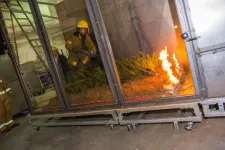
Over the past 22 years, wildfires in the United States have caused damages exceeding $100 billion, and as climate change continues to intensify wildfire frequency and severity, research is essential to protect lives, property, and ecosystems—and to help communities adapt to these changing conditions. To this end, the National Science Foundation (NSF) has added Worcester Polytechnic Institute (WPI) to its Wildfire Interdisciplinary Research Center (WIRC), a collaboration between universities and industry. Supported by a three-year, $450,000 grant with additional direct funding from industry partners, WPI will build upon its longstanding expertise ...

Read the release
Environment

UC Irvine scientists reveal what fuels wildfires in Sierra Nevada Mountains

Irvine, Calif., Sept. 25, 2023 — Wildfires in California, exacerbated by human-driven climate change, are getting more severe. To better manage them, there’s a growing need to know exactly what fuels the blazes after they ignite. In a study published in Environmental Research Letters, Earth system scientists at the University of California, Irvine report that one of the chief fuels of wildfires in California’s Sierra Nevada mountains is the decades-old remains of large trees. “Our findings support the idea that large-diameter fuel build-up is ...

Read the release
Wind energy projects in North America are more likely to be opposed by white, wealthy communities
Environment

Wind energy projects in North America are more likely to be opposed by white, wealthy communities

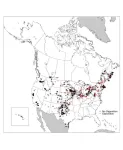
(Santa Barbara, Calif.) — Wind energy is, by far, the most common type of clean energy. And transitioning to clean energy is critical to addressing the climate crisis. Yet local opposition poses a significant barrier to the deployment of wind energy projects. A study published in Proceedings of the National Academy of Sciences (PNAS) by researchers from UC Santa Barbara, the University of Michigan and Gallup Inc. examined wind energy projects throughout the United States and Canada to determine how common opposition is and what factors predict it. The study found that nearly one in five projects faced opposition ...

Read the release
Environment

Naming and shaming can be effective to get countries to act on climate

Enforcement is one of the biggest challenges to international cooperation on mitigating climate change in the Paris Agreement. The agreement has no formal enforcement mechanism; instead, it is designed to be transparent so countries that fail to meet their obligations will be named and thus shamed into changing behavior. A new study from the University of California San Diego's School of Global Policy and Strategy shows that this naming-and-shaming mechanism can be an effective incentive for many countries to uphold their pledges ...

Read the release
Environment

Predicting how climate change affects infrastructure without damaging the subject

A digital twin may sound like something out of a science fiction film, but Pitt engineers are developing new technology to make them a reality in our campus and beyond. Digital twins – a model that serves as a real-time computational counterpart – can be used to help simulate the effects of multiple types of conditions, such as weather, traffic, and even climate change. Still, life-cycle assessments (LCAs) of climate change’s effects on infrastructure are still a work-in-progress, leaving a need ...

Read the release
Environment

Ocean acidification research is robust despite ebbs and flows

A new objective examination of almost a quarter-of-a-century of ocean acidification research shows that, despite challenges, experts in the field can have confidence in their research. The University of Adelaide’s Professor Sean Connell from the Ecology and Evolutionary Biology unit led the study. “In our field, the marine science community was galvanised by the demonstration of how ocean acidification impairs shell-building life, which has profound implications for life on the planet,” ...

Read the release
Environment

How can the use of plastics in agriculture become more sustainable?

It is impossible to imagine modern agriculture without plastics. 12 million tonnes are used every year. But what about the consequences for the environment? An international team of authors led by Thilo Hofmann from the Division of Environmental Geosciences at the University of Vienna addresses this question in a recent study in Nature Communication Earth and Environment. The research shows the benefits and risks of using plastics in agriculture, and identifies solutions that ensure their sustainable use. Once celebrated as a symbol of ...

Read the release
Rivers contain hidden sinks and sources of microplastics
Environment

Rivers contain hidden sinks and sources of microplastics

Significant quantities of microplastic particles are being trapped in riverbed sediments or carried through the air along major river systems, a new study has shown. The research, conducted along the length of the Ganges River in South Asia, found on average about 41 microplastic particles per square metre per day settled from the atmosphere. . In addition, analysis by scientists found 57 particles per kilogram on average in sediment from the riverbed as well as one particle in every 20 litres of ...

Read the release
Texas A&M researchers show endangered parrot species is thriving in urban areas
Environment

Texas A&M researchers show endangered parrot species is thriving in urban areas

A Texas A&M-led research team has discovered that a population of endangered red-crowned parrots is thriving in urban areas of South Texas. The parrots are a unique case, considering that many animal species are affected negatively by the expansion of human urban areas, which can lead to deforestation and pollution of natural habitats. These mostly green parrots, which have a cluster of bright red feathers on their heads, are also an unusual example of a species that has adapted well in the face of poaching and the pet trade ...

Read the release
The potential of solar cars in the world
Environment

The potential of solar cars in the world

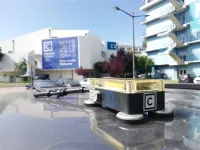
A new study, modeling the potential of solar-powered vehicles in the urban context in 100 cities across the world, shows that solar energy provides a range between 11 and 29 km per day, reducing charging needs by half. Despite the rapid adoption of electric vehicles, the transport sector is still responsible for around a third of global carbon dioxide (CO2) emissions worldwide. Therefore, to achieve decarbonization targets, it is required to significantly decrease the emissions associated with mobility. Integrating photovoltaic modules into ...

Read the release
NASA’s Webb finds carbon source on surface of Jupiter’s moon Europa
Environment

NASA’s Webb finds carbon source on surface of Jupiter’s moon Europa

Jupiter’s moon Europa is one of a handful of worlds in our solar system that could potentially harbor conditions suitable for life. Previous research has shown that beneath its water-ice crust lies a salty ocean of liquid water with a rocky seafloor. However, planetary scientists had not confirmed if that ocean contained the chemicals needed for life, particularly carbon. Astronomers using data from NASA’s James Webb Space Telescope have identified carbon dioxide in a specific region on the icy surface of Europa. Analysis indicates that this carbon likely originated in the subsurface ocean and ...

Read the release
Wildlife mitigating measures no help for Ottawa’s freshwater turtles
Environment

Wildlife mitigating measures no help for Ottawa’s freshwater turtles

Local turtles facing extinction within a decade due to urban growth, says uOttawa study. Urban sprawl and insufficient relief measures have left an Ottawa-area freshwater turtle facing extinction within the decade, says new research from the University of Ottawa and Trent University, which tracked changes to the turtle’s habitat over a 10-year period. Specifically, the development of Terry Fox Drive in the city’s west end has led to a dangerous decline in the Blanding’s turtle’s (Emydoidea blandingii) habitat, leading to a 70% decline in adult population size, despite mitigating measures such as wildlife fencing, new wetlands ...

Read the release
Is there more to palm oil than deforestation?
Environment

Is there more to palm oil than deforestation?

Palm oil is the world's most produced and consumed vegetable oil and everyone knows that its production can damage the environment. But do consumers have the full picture? In fact, replacing palm oil with rapeseed oil would require a four to five-fold increase in the amount of land needed. Research led by the University of Göttingen investigated the attitudes, beliefs and understanding about palm oil of the general public in Germany, and how this links to land use. The researchers show that people find it hard to know the consequences of their buying choices, even when extra information is supplied. The results were published in Sustainable ...

Read the release
Environment

Texas A&M-led humanities project seeks to preserve an endangered language

Texas A&M University historian Dr. Daniel Schwartz has devoted the last decade of his professional life to preserving the past — specifically, the culture of a 2,000-year-old language known as Syriac. He and likeminded colleagues from around the world have been working across place, time and cyberspace to safeguard Syriac cultural heritage, painstakingly creating Syriaca.org, a cyberinfrastructure to link Syriac literature to their persons, places, manuscripts and key concepts. This spring, they received another big assist from the National ...

Read the release
Global study reveals extensive impact of metal mining contamination on rivers and floodplains, suggesting need for new safeguards to address spike in demand for ‘green’ minerals
Environment

Global study reveals extensive impact of metal mining contamination on rivers and floodplains, suggesting need for new safeguards to address spike in demand for ‘green’ minerals

A groundbreaking study, published today in Science, has provided new insights into the extensive impact of metal mining contamination on rivers and floodplains across the world, with an estimated 23 million people believed to be affected by potentially dangerous concentrations of toxic waste. Led by Professors Mark Macklin and Chris Thomas, Directors of the Lincoln Centre for Water and Planetary Health at the University of Lincoln, UK – working with Dr Amogh Mudbhatkal from the University’s Department of Geography – the study offers a comprehensive understanding of the environmental and health challenges associated with metal mining activities. Using ...

Read the release
How climate warming could disrupt a deep-rooted relationship
Environment

How climate warming could disrupt a deep-rooted relationship

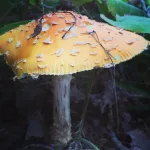
Children are taught to leave wild mushrooms alone because of their potential to be poisonous. But trees on the other hand depend on fungi for their well-being. Look no further than ectomycorrhizal fungi, which are organisms that colonize the roots of many tree species where the boreal ecosystem (zone encompassing Earth’s northernmost forests) and the temperate ecosystem (zone between the tropical and boreal regions) meet. This area features a mix of boreal trees including needle-leaved evergreens and temperate tree species including maple and oak. Just like a healthy human relationship, trees and fungi work well together because they help one another. When the ectomycorrhizal ...

Read the release
Diamond materials as solar-powered electrodes - spectroscopy shows what's important
Environment

Diamond materials as solar-powered electrodes - spectroscopy shows what's important

It sounds like magic: photoelectrodes could convert the greenhouse gas CO2 back into methanol or N2 molecules into valuable fertiliser - using only the energy of sunlight. An HZB study has now shown that diamond materials are in principle suitable for such photoelectrodes. By combining X-ray spectroscopic techniques at BESSY II with other measurement methods, Tristan Petit's team has succeeded for the first time in precisely tracking which processes are excited by light as well as the crucial role of the surface of the diamond materials. At first glance, lab-grown diamond materials ...

Read the release
From the original Press-News collection. Issuers of news releases are responsible for the accuracy of their content.