THE ORIGINAL COLLECTION · SINCE 2010

Environment
press releases.

Research announcements from universities, hospitals and scientific institutions. Explore the stories, people and discoveries behind the headlines.

Original publication datesPage 143
FIND A STORY

Find a past release.

Dates and source material belong to the original release.

Read our research explainers

Browse the collection · original publication order

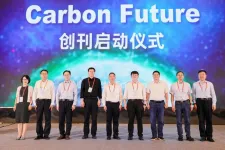
Inauguration ceremony of carbon future
Environment

Inauguration ceremony of carbon future

On September 17th, 2023, Carbon Future, an international interdisciplinary journal sponsored by Tsinghua University, has been officially inaugurated. Carbon Future is an open access, peer-reviewed and international interdisciplinary journal that reports carbon-related materials and processes, including carbon materials, catalysis, energy conversion and storage, as well as low carbon emission process and engineering. The journal is published quarterly by Tsinghua University Press, and publicly released on SciOpen, an internationally digital ...

Read the release
New recycling method fights plastic waste
Environment

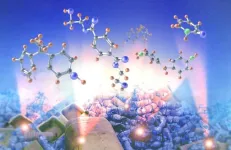
New recycling method fights plastic waste

Almost 80% of plastic in the waste stream ends up in landfills or accumulates in the environment. Oak Ridge National Laboratory scientists have developed a technology that converts a conventionally unrecyclable mixture of plastic waste into useful chemicals, presenting a new strategy in the toolkit to combat global plastic waste. The technology, invented by ORNL’s Tomonori Saito and former postdoctoral researcher Md Arifuzzaman, uses an exceptionally efficient organocatalyst that allows selective deconstruction ...

Read the release
Socially vulnerable populations are disproportionately exposed to wildfires in the West, study finds
Environment

Socially vulnerable populations are disproportionately exposed to wildfires in the West, study finds

CORVALLIS, Ore. – People experiencing a high degree of social vulnerability are also more exposed to wildfires in Oregon and Washington as wildfire risk increases, a new study shows. Social vulnerability is a characteristic of a person or community, such as age, race or ethnicity or socioeconomic status, that affects their susceptibility to incur harm from a hazard. From 2011 through 2021, the number of people with high social vulnerability who were exposed to wildfire in Oregon, Washington and California more than tripled compared to the previous decade. This compounding ...

Read the release
Dolphins, seals, and whales managed by the US are highly vulnerable to climate change
Environment

Dolphins, seals, and whales managed by the US are highly vulnerable to climate change

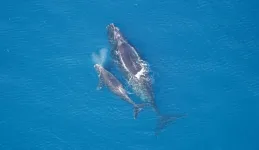
72% of cetacean and pinniped stocks managed under US jurisdiction are highly or very highly vulnerable to climate change, according to a study published in PLOS ONE led by Matthew D. Lettrich at NOAA Fisheries, in Silver Spring, Maryland, United States of America. Climate change could affect the distribution, behavior, and movements of marine mammals via warming ocean temperatures, rising sea levels, decreasing dissolved oxygen, declining sea ice coverage, ocean acidification, and salinity changes. Climate vulnerability assessments (CVAs) provide a framework for evaluating climate impacts over a broad range of species. Prior to the study, no known CVAs specifically assessed US-managed ...

Read the release
Environment

New Mars gravity analysis improves understanding of possible ancient ocean

The first use of a novel method of analyzing Mars’ gravitational force supports the idea that the planet once had an extensive northern ocean. In doing so, the method defines the scope of what scientists refer to as the northern Martian paleo-ocean in more detail. The work was published in July in the journal Icarus, which is affiliated with the American Astronomical Society’s Division for Planetary Sciences. The research was led by Jaroslav Klokočník, professor emeritus at the Astronomical Institute of the Czech Academy of Sciences. Gunther ...

Read the release
Environment

How to tackle the global deforestation crisis

Imagine if France, Germany, and Spain were completely blanketed in forests — and then all those trees were quickly chopped down. That’s nearly the amount of deforestation that occurred globally between 2001 and 2020, with profound consequences. Deforestation is a major contributor to climate change, producing between 6 and 17 percent of global greenhouse gas emissions, according to a 2009 study. Meanwhile, because trees also absorb carbon dioxide, removing it from the atmosphere, they help keep the Earth cooler. ...

Read the release
Environment

Upgrading iron and steel plants could save equivalent of two years of global carbon emissions

Upgrading, or retrofitting, the world's iron and steel processing plants early could reduce carbon emissions by up to 70 gigatonnes by 2050, roughly equivalent to two years' worth of net global carbon emissions, according to a new study led by UCL researchers. Published in the journal Nature, the researchers found that by upgrading the world’s iron and steel production facilities, carbon emissions can be reduced by 58.7 gigatonnes between 2020 and 2050, roughly equivalent to two years’ worth of net global carbon emissions. ...

Read the release
New Si-based photocatalyst enables efficient solar-driven hydrogen production and biomass refinery
Environment

New Si-based photocatalyst enables efficient solar-driven hydrogen production and biomass refinery

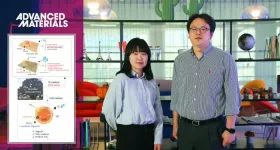
A team of researchers, led by Professor Jungki Ryu in the School of Energy and Chemical Engineering at UNIST and Professor Soojin Park from Pohang University of Science and Technology (POSTECH), have achieved a significant breakthrough in the development of a hybrid silicon photocatalyst. This innovative catalyst utilizes solar power to produce hydrogen and high-value compounds efficiently, marking a major step forward in green hydrogen production technology. The newly developed photocatalyst is both non-toxic and eco-friendly, addressing the limitations associated with ...

Read the release
Effective visual communication of climate change
Environment

Effective visual communication of climate change

Boulder, Colo., USA: The consequences of a warming climate frequently dominated the news this summer, from devastating wildfires and floods to deadly heat waves across the globe. Reducing harm from climate change is a challenging endeavor, and it requires comprehensive public education. Thus, the question arises: How can climate change science be made most accessible to the general population, as well as decision-makers and educators? In a new paper published in the journal Geosphere, Steph Courtney and Karen McNeal explore the effects ...

Read the release
Urban light pollution linked to smaller eyes in birds
Environment

Urban light pollution linked to smaller eyes in birds

PULLMAN, Wash. – The bright lights of big cities could be causing an evolutionary adaptation for smaller eyes in some birds, a new study indicates. Researchers found that two common songbirds, the Northern Cardinal and Carolina Wren, that live year-round in the urban core of San Antonio, Texas, had eyes about 5% smaller than members of the same species from the less bright outskirts. Researchers found no eye-size difference for two species of migratory birds, the Painted Bunting and White-eyed Vireo, no matter which part of the city ...

Read the release
Novel organic light-emitting diode with ultralow turn-on voltage for blue emission
Environment

Novel organic light-emitting diode with ultralow turn-on voltage for blue emission

An upconversion organic light-emitting diode (OLED) based on a typical blue-fluorescence emitter achieves emission at an ultralow turn-on voltage of 1.47 V, as demonstrated by researchers from Tokyo Tech. Their technology circumvents the traditional high voltage requirement for blue OLEDs, leading to potential advancements in commercial smartphone and large screen displays. Blue light is vital for light-emitting devices, lighting applications, as well as smartphone screens and large screen displays. However, it is challenging to develop efficient blue organic light-emitting diodes (OLEDs) ...

Read the release
Environment

Study reveals the most important considerations for grizzly bear conservation

Humans negatively impact the health of grizzly bear populations through top-down influences like direct mortality associated with forestry roads (from conflict or illegal killings) and displacement from high quality habitats, and through bottom-up influences like reducing availability of food resources. Research published in Wildlife Monographs reveals the relationship between these forces, informing a strategic conservation program. Investigators radio-collared and followed numerous grizzly bears over multiple years in southeastern British Columbia. They found an interesting interplay between the most important bottom-up factor, ...

Read the release
Environment

Ponds release more greenhouse gas than they store

ITHACA, N.Y.- Though human-made ponds both sequester and release greenhouse gases, when added up, they may be net emitters, according to two related studies by Cornell University researchers. The studies begin to quantify the significant effects that both human-made and natural ponds have on the global greenhouse gas budget, measurements that aren’t well understood. “Global climate models and predictions rely on accurate accounting of greenhouse gas emissions and carbon storage,” said Meredith Holgerson, assistant professor of ecology and evolutionary biology at Cornell and senior ...

Read the release
Environment

Pediatric endocrinologists concerned for safety amid divisive political climate

WASHINGTON—Pediatric endocrinologists are concerned for their safety and their ability to provide evidenced-based care to transgender and gender-diverse adolescents amid political divides over gender-affirming care, according to a new paper published in the Journal of the Endocrine Society. Pediatric endocrinologists specialize in the care of children and adolescents with disorders related to hormones and the glands that produce them, such as diabetes and disorders of growth, thyroid or puberty. Some pediatric endocrinologists also provide gender-affirming care as part of their medical practice. Among youth ages 13 to 17 in the United States, 1.4% identify as transgender, ...

Read the release
Grant awarded to University of Louisville law professor will fund climate adaptation project
Environment

Grant awarded to University of Louisville law professor will fund climate adaptation project

The Resilience Justice Project (RJ Project) at the University of Louisville’s Brandeis School of Law has been awarded a one-year multi-institutional grant through a national competitive process to evaluate how climate adaptation planning can be more equitable for low-income communities in eight U.S. coastal areas. The RJ Project will use the $75,000 award from the National Sea Grant Law Center through NOAA’s National Coastal Resilience Fund to examine coastal urban adaptation in the eight cities: Boston, Cleveland, Miami, New Orleans, San Diego, Savannah, Seattle and Tampa. Principal ...

Read the release
Laser-based ice-core sampling for studying climate change
Environment

Laser-based ice-core sampling for studying climate change

Researchers led by Yuko Motizuki from the Astro-Glaciology Laboratory at the RIKEN Nishina Center in Japan have developed a new laser-based sampling system for studying the composition of ice cores taken from glaciers. The new system has a 3-mm depth-resolution—about 3 times smaller than what is currently available—meaning that it can detect temperature variations that occurred over much smaller periods of time in the past. The new laser melting sampler, or LMS, is expected to help reconstruct continuous annual temperature changes that occurred thousands to hundreds of thousands of years ago, which will ...

Read the release
The pace of climate-driven extinction is accelerating, a UArizona-led study shows
Environment

The pace of climate-driven extinction is accelerating, a UArizona-led study shows

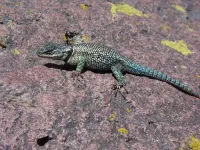
Climate change is causing extinctions at an increasing rate, a new study by the University of Arizona researchers shows. They surveyed populations of the Yarrow's spiny lizard in 18 mountain ranges in southeastern Arizona and analyzed the rate of climate-related extinction over time. "The magnitude of extinction we found over the past seven years was similar to that seen in other studies that spanned almost 70 years," said John J. Wiens, a professor in the Department of Ecology and Evolutionary Biology at UArizona, ...

Read the release
Environment

Remote work can slash your carbon footprint — if done right

ITHACA, N.Y. – Remote workers can have a 54% lower carbon footprint compared with onsite workers, according to a new study by Cornell University and Microsoft, with lifestyle choices and work arrangements playing an essential role in determining the environmental benefits of remote and hybrid work. The study, published in the Proceedings of the National Academy of Sciences, also finds that hybrid workers who work from home two to four days per week can reduce their carbon footprint by 11% to 29%, but working from home one day per week ...

Read the release
DOE backs Rice study of how soils store carbon
Environment

DOE backs Rice study of how soils store carbon

HOUSTON – (Sept. 18, 2023) – Two Rice University scientists have received a 3-year grant from the Department of Energy (DOE) to investigate a form of carbon storage that is as little understood as it is ubiquitous: soil. Mark Torres, an assistant professor of Earth, environmental and planetary sciences, and Evan Ramos, a postdoctoral fellow in the Torres lab, will track how key minerals form in a watershed to build a fuller picture of the processes that allow soil to store carbon as organic matter. “Soil on Earth contains three times more carbon than the atmosphere,” Ramos said. “We ...

Read the release
Environment

Incubator or barrier? Exploring the links between agriculture, biodiversity and the spread of pathogens

Many pathogens, including the virus that causes COVID-19, are thought to have originated in wild animals before spilling into human populations. Agriculture is often blamed for accelerating this process, which is known as zoonotic spillover, through deforestation and habitat fragmentation that reduce biodiversity and increase the likelihood of contact between infected wildlife and humans. But in a Perspectives article published online Sept. 15 in the journal One Earth, University of Michigan ecologist Ivette Perfecto and her colleagues argue that agriculture can both help and hinder: ...

Read the release
Pearl Harbor: Bombed battleships’ boost for climate science
Environment

Pearl Harbor: Bombed battleships’ boost for climate science

Weather data from several ships bombed by Japanese pilots at Pearl Harbor has been recovered in a rescue mission that will help scientists understand how the global climate is changing. Crew members aboard various vessels - such as the USS Pennsylvania and the USS Tennessee - died when their battleships were targeted in December 1941. Despite these losses, many boats returned to service during the Second World War and US naval servicemen continued their daily duties, which included recording weather data. A new research paper, published in Geoscience Data ...

Read the release
Environment

Captive pandas could be ‘jet lagged’ if their body clocks don’t match their environment

All animals have an internal clock called a circadian clock, which is regulated by cues from their environment — but animals in zoos can be exposed to very different cues from animals in the wild. Since all animals’ circadian clocks are linked to their behavior and physiology, this could be significant to their welfare, which is crucial to maintaining captive populations of animals at high risk of extinction in the wild, like giant pandas. Scientists set out to understand how the ‘jet lag’ of living ...

Read the release
Polar experiments reveal seasonal cycle in Antarctic sea ice algae
Environment

Polar experiments reveal seasonal cycle in Antarctic sea ice algae

In the frigid waters surrounding Antarctica, an unusual seasonal cycle occurs. During winter, from March to October, the sun barely rises. As seawater freezes it rejects salts, creating pockets of extra-salty brine where microbes live in winter. In summer, the sea ice melts under constant daylight, producing warmer, fresher water at the surface. This remote ecosystem is home to much of the Southern Ocean’s photosynthetic life. A new University of Washington study provides the first measurements of how sea-ice algae and other single-celled life adjust to these seasonal rhythms, offering clues to what might happen as ...

Read the release
Researchers call for major reforms of the UN Sustainable Development Goals: SDG Summit a decisive moment
Environment

Researchers call for major reforms of the UN Sustainable Development Goals: SDG Summit a decisive moment

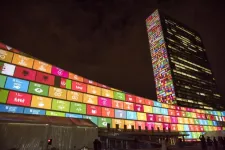
On 18-19 September, the United Nations will convene a major summit to review the state of the Sustainable Development Goals (SDGs)—the 17 global goals that governments agreed upon in 2015 to guide action towards a prosperous and just future. With research showing that the SDGs have since then had little political impact, the UN Summit must pave the way for four major changes in how the SDGs are implemented and governed globally, argues an international group of experts in Science. The article, based on research led by Utrecht University in the Netherlands, brought together a group of scholars with broad expertise in global sustainability governance. “Our ...

Read the release
Environment

A call for better energy system models to enable a decarbonized future

Energy system models fail to accurately represent energy storage and might recommend decarbonization strategies that make electric grids less reliable. Policy makers and utilities need robust energy system models to determine the best strategies to decarbonize the world’s electric grids. But most existing models were designed for grids operating more than a decade ago. Today’s grids are much different. New technologies such as solar power and grid energy storage are being rapidly deployed. To accommodate these and other technologies, utilities must run grids in completely new ways. Improvements are needed in energy system ...

Read the release
From the original Press-News collection. Issuers of news releases are responsible for the accuracy of their content.