THE ORIGINAL COLLECTION · SINCE 2010

Environment
press releases.

Research announcements from universities, hospitals and scientific institutions. Explore the stories, people and discoveries behind the headlines.

Original publication datesPage 144
FIND A STORY

Find a past release.

Dates and source material belong to the original release.

Read our research explainers

Browse the collection · original publication order

Environment

New research published by Nature Food reveals food is primary driver of the EU-27’s outsized Ecological Footprint

One quarter of food consumed in the EU-27 originates from outside the region, highlighting the vulnerability of the EU’s food system. New research coordinated by Global Footprint Network’s sustainability scientists in collaboration with food system experts published the article “EU-27 Ecological Footprint was primarily driven by food consumption and exceeded regional biocapacity from 2004 to 2014” today in Nature Food. The way food is provided to and consumed by Europeans represents ...

Read the release


New tool can reveal inequitable distribution of ‘healing’ green spaces
Environment

New tool can reveal inequitable distribution of ‘healing’ green spaces

Areas in Vancouver with the greatest need for restorative nature often have the least exposure to it, according to a new UBC study published recently in Ambio. These neighbourhoods include Strathcona, downtown Vancouver, the West End, southern Sunset and Marpole. The researchers developed a new tool, the local restorative nature (LRN) index to assess spaces for the presence of qualities that promote mental well-being. While initially applied in Vancouver, the index can also be used in any urban landscape, according to lead author Dr. Tahia Devisscher, an assistant professor in the faculty of forestry. We sat down with Dr. Devisscher to discuss the study findings and ...

Read the release
Pollination by more than one bee species improves cherry harvest
Environment

Pollination by more than one bee species improves cherry harvest

To obtain the biggest cherry harvest, trees should be pollinated by both honey bees and mason bees. A new study led by a researcher at the University of Gothenburg shows yet another benefit of biodiversity. Like many other fruit trees, most sweet cherry cultivars depend on cross-pollination to produce their fruit. This means that there need to be several different cultivars of sweet cherry trees in an orchard for the bees to transport pollen from one to another. “Sweet cherry trees are usually planted in alternate rows of different cultivars. In some cases, you can put different cultivars in the same row, but ...

Read the release
Environment

Durham University leads new £21.3M national research hub to decarbonize UK maritime sector

The UK National Clean Maritime Research Hub (UK-MaRes Hub) aims to accelerate the decarbonisation and elimination of air pollution from maritime activity in ports and at sea. As well as environmental impacts, the Hub will also focus on the potential economic and social benefits of transitioning to a clean maritime future. The UK-MaRes Hub was announced today (Thursday 14 September) by the UK Government’s Maritime Minister, Baroness Vere of Norbiton, during London International Shipping Week. She was joined by the Director of the UK-MaRes Hub, Professor Tony Roskilly, Chair of Energy Systems in the Department of Engineering at Durham University. The Hub will carry out ...

Read the release
Environment

Electrifying vehicles in Chicago would save lives, reduce pollution inequities

If the Chicago region replaced 30% of all on-road combustion-engine vehicles — including motorcycles, passenger cars and trucks, buses, refuse trucks and short- and long-haul trucks — with electric versions, it would annually save more than 1,000 lives and over $10 billion, according to a new Northwestern University study. The new study, which simulates air quality at a neighborhood scale, also found that areas with predominantly Black, Hispanic and Latinx residents would benefit most. The study underscores the potential of electric vehicles (EVs) to improve ...

Read the release
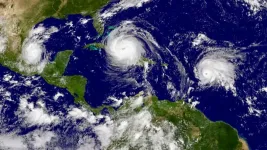
Human emmisions drive changes in north Atlantic ocean temperatures, west African rainfall, hurricanes
Environment

Human emmisions drive changes in north Atlantic ocean temperatures, west African rainfall, hurricanes

A new climate study led by scientists at the University Miami Rosenstiel School of Marine, Atmospheric, and Earth Science found that temperature fluctuations in the tropical Atlantic Ocean temperature is largely driven by human-induced aerosol emissions, impacting rainfall in West Africa’s Sahel region and hurricane formation in the Atlantic. The findings, published in the journal Nature, comes in a year when several hurricanes, including Hurricane Idalia, formed within days of each other over the tropical Atlantic. “Our ...

Read the release
Solving stickiness sustainably
Environment

Solving stickiness sustainably

WEST LAFAYETTE, Ind. – Glue holds the world together. Without adhesives, much of modern human civilization — including our cellphones, cars, furniture, walls and the packages arriving on our doorstep — would simply fall apart. The trouble with all those adhesives is that they are not sustainable. A team of chemists at Purdue University led by Jonathan Wilker, professor of chemistry in the College of Science and of materials engineering, aims to change that with a new, completely sustainable adhesive system. The team’s findings were released in a paper in Nature. Additional Information Shellfish ...

Read the release
Environment

Ohio’s droughts are worse than often recognized, study finds

COLUMBUS, Ohio – A new type of analysis suggests that droughts in Ohio were more severe from 2000 to 2019 than standard measurements have suggested. Researchers at The Ohio State University developed impacts-based thresholds for drought in Ohio, looking specifically at how corn yield and streamflow were affected by various drought indicators, such as notable changes in soil moisture, crops, and even livestock losses in the state. The results suggest this impacts-based approach could give Ohio farmers earlier and more accurate notice when drought conditions are approaching, said Steven Quiring, co-author of the study and a professor ...

Read the release
Environment

100-year floods could occur yearly by end of 21st century

WASHINGTON — Most coastal communities will encounter 100-year floods annually by the end of the century, even under a moderate scenario where carbon dioxide emissions peak by 2040, a new study finds. And as early as 2050, regions worldwide could experience 100-year floods every nine to fifteen years on average. A 100-year flood is an extreme water level that has a 1% chance of being exceeded in any given year and is based on historical data. Despite the name, 100-year floods can strike the same area multiple years in a row or not at all within a century. But a new study finds that those historical trends will no ...

Read the release
Environment

Illuminating the path to sustainable wellbeing

IIASA is proud to announce the launch of its Flagship Report, "Systems Analysis for Sustainable Wellbeing. 50 Years of IIASA Research, 40 Years After the Brundtland Commission, Contributing to the Post-2030 Global Agenda” on Wednesday, 13 September 2023 at an official UN event in the framework of the 78th session of the UN General Assembly and the Sustainable Development Goals mid-term review. The IIASA Flagship Report chronicles the extraordinary 50-year journey of IIASA, a globally renowned institute providing systems analytical expertise on complex global challenges. Co-sponsored by the Permanent Missions of Austria and South Africa ...

Read the release
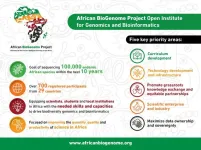
Accelerating knowledge exchange in biodiversity genomics and bioinformatics
Environment

Accelerating knowledge exchange in biodiversity genomics and bioinformatics

Since its inception in 2021, the African BioGenome Project (AfricaBP), has made significant gains towards its ambitious goal of sequencing 100,000 endemic African species within the next 10 years. Recently, AfricaBP reported the successful implementation of the Open Institute in the journal Nature Biotechnology (https://rdcu.be/dlXYT), a pioneering biodiversity genomics and bioinformatics knowledge exchange programme. The AfricaBP Open Institute’s framework will establish openly accessible workshops across Africa, crafted in close collaborations with local African Institutions. ...

Read the release
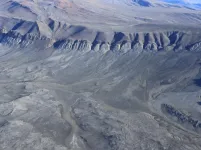
New rivers in the North? Scientists identify how the dissection of Arctic landscapes is changing with accelerating climate change
Environment

New rivers in the North? Scientists identify how the dissection of Arctic landscapes is changing with accelerating climate change

New research co-led by Simon Fraser University and the University of British Columbia shows that amplified global warming in the Canadian High Arctic drove a profound shift in the structure of a river network carved into a permafrost landscape in only 60 years. Documenting a powerful interplay among climate change, the freeze-thaw dynamics of polygonal ground and the delivery of surface water by floods as well as snow and ice melting, the team developed a new view of the physical controls governing the speed and pattern of river channel development in these fragile landscapes. “One ...

Read the release
265-million-year-old fossil reveals oldest, largest predator in South America, long before the rise of dinosaurs
Environment

265-million-year-old fossil reveals oldest, largest predator in South America, long before the rise of dinosaurs

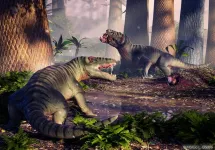
Dinosaurs have quite the reputation for being the largest, fiercest predators in life’s history. Yet, 40 million years before dinosaurs ruled, Pampaphoneus biccai dominated South America as the biggest and most bloodthirsty meat eater of its time. In a new study published in the Zoological Journal of the Linnean Society, an international team of researchers reveal the astounding discovery of a 265-million-year-old, exquisitely preserved fossil species, Pampaphoneus biccai, found in the rural area of São Gabriel, Southern Brazil. The ...

Read the release
Environment

Water quality deteriorating in rivers worldwide due to climate change and increasing extreme weather events

Climate change and increases in drought and rainstorms pose serious challenges to our water management. Not only the availability of water is under pressure, but also its quality. However, according to the most recent IPCC report our current understanding of this issue is inadequate. To fill this gap, an international group of scientists has brought together a large body of research on water quality in rivers worldwide. The study published in Nature Reviews Earth & Environment shows that river water quality tends to deteriorate during extreme weather events. As these events become more frequent and severe due to climate change, ...

Read the release
Environment

New super-fast flood model has potentially life-saving benefits

Published in Nature Water, the new model has major potential benefits for emergency responses, reducing flood forecasting time from hours and days to just seconds, and enabling flood behaviour to be accurately predicted at super-fast speeds as an emergency unfolds. University of Melbourne PHD student Niels Fraehr, alongside Professor Q J Wang, Dr Wenyan Wu and Professor Rory Nathan, from the Faculty of Engineering and Information Technology, developed the Low-Fidelity, Spatial Analysis ...

Read the release
Environment

Art, science merge in Oregon State study of 19th-century landscape paintings’ ecological integrity

CORVALLIS, Ore. – An Oregon State University-led collaboration of ecologists and art historians has demonstrated that landscape paintings from more than 150 years ago can advance environmental science. Researchers from OSU, the U.S. Forest Service, the University of Vermont and the Smithsonian American Art Museum used 19th-century depictions of preindustrial forests in the northeastern United States to show that historical artwork can reveal information about forests and other landscapes from eras that predate modern scientific investigation. The ...

Read the release
Urban parks built on former waste incineration sites could be lead hotspots
Environment

Urban parks built on former waste incineration sites could be lead hotspots

DURHAM, N.C. – For much of the last century, many cities across the United States and Canada burned their trash and waste in municipal incinerators. Most of these facilities were closed by the early 1970s due to concerns about the pollution they added to the air, but a new Duke University study finds that their legacy of contamination could live on in urban soils. “We found that city parks and playgrounds built on the site of a former waste incinerator can still have greatly elevated levels of lead in their surface soils many decades after the incinerator was closed,” ...

Read the release
Scientific ocean drilling discovers dynamic carbon cycling in the ultra-deep-water Japan Trench
Environment

Scientific ocean drilling discovers dynamic carbon cycling in the ultra-deep-water Japan Trench

The Japan Trench is located on the “Pacific Ring of Fire”, a region of special interest in earthquake and deep-water research. “It is here that oceanic plates bend, form ultra-deep-water trenches and move below overriding plates in so-called subduction zones, while accumulating long-term global plate tectonic strain”, says Dr. Ken Ikehara from National Institute of Advanced Industrial Science and Technology, Japan, and co-chief scientist of IODP Expedition 386. “This energy is released cataclysmically during so-called megathrust earthquakes, ...

Read the release
Environment

University of Houston researchers charting a sustainable course in oceanic carbon capture

As researchers around the world race against time to develop new strategies and technologies to fight climate change, a team of scientists at the University of Houston is exploring one possible way to directly reduce the amount of carbon dioxide in the environment: Negative emissions technologies (NETs). Mim Rahimi, assistant professor of environmental engineering at UH’s Cullen College of Engineering is leading the development of an emerging NET called electrochemical direct ocean capture (eDOC), which helps the ocean cleanse itself of harmful carbon dioxide. The concept ...

Read the release
Hybrid catalyst produces critical fertilizer and cleans wastewater
Environment

Hybrid catalyst produces critical fertilizer and cleans wastewater

Agriculture relies on synthetic nitrogen fertilizer, which is made using energy- and carbon-intensive processes and creates nitrate-containing runoff. Researchers have long sought solutions to reduce emissions from the industry that accounts for 3% of energy consumption each year. A collaboration between two labs at Northwestern University, partnering with the University of Toronto, has found that producing the fertilizer urea using electrified synthesis could both denitrify wastewater while enabling low-carbon-intensity urea production. The process, which includes converting carbon ...

Read the release
University of Bath is home to UK’s first pilot plant for recycling plastic lab waste
Environment

University of Bath is home to UK’s first pilot plant for recycling plastic lab waste

A company co-founded by a University of Bath graduate has opened the UK’s first pilot plant that can recycle up to 60% of plastic lab waste, to make back into new lab consumables. LabCycle hopes the technology could be scaled up in the future to recycle waste from healthcare, research and commercial labs that is currently incinerated or sent to landfill. To avoid cross-contamination between experiments, most lab-based scientists use a significant amount of single-use plastic in their daily research, including pipette tips, test tubes, petri dishes and multi-well ...

Read the release
Scientists find evidence of sea star species hybridization
Environment

Scientists find evidence of sea star species hybridization

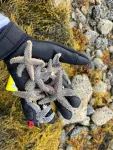
New York, September 11, 2023 – Scientists have long suspected two species of sea stars—commonly referred to as starfish—along rocky European and North American coastlines of crossbreeding in the cool waters of the North Atlantic Ocean. Now, according to recently analyzed genomic data, hybrid starfish are living and thriving, from the shores of New England to the Canadian Maritimes. A new study, published in the journal Molecular Ecology, presents genomic evidence of hybridization between two closely related species of sea stars– Asterias rubens, the common starfish, and Asterias forbesi, known as Forbes’ sea ...

Read the release
Study on consistency of greenhouse gas concentrations between GOSAT and GOSAT-2
Environment

Study on consistency of greenhouse gas concentrations between GOSAT and GOSAT-2

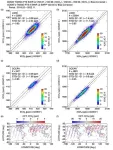
1.Background and objectives The Ministry of the Environment of Japan, the National Institute for Environmental Studies (NIES), and the Japan Aerospace Exploration Agency are jointly promoting the GOSAT series, a series of Earth observation satellites whose main purpose is to observe greenhouse gases from space; the Greenhouse gases Observing SATellite (GOSAT) launched in January 2009 and GOSAT-2 launched in October 2018 are currently in operation, and the Global Observing SATellite for Greenhouse gases and Water cycle (GOSAT-GW) is planned to be launched in Japan’s FY2024. NIES is responsible for developing ...

Read the release
Study reveals human destruction of global floodplains
Environment

Study reveals human destruction of global floodplains

A University of Texas at Arlington hydrologist’s study in the Nature journal Scientific Data provides the first-ever global estimate of human destruction of natural floodplains. The study can help guide future development in a way that can restore and conserve vital floodplain habitats that are critical to wildlife, water quality and reducing flood risk for people. Adnan Rajib, a UT Arlington assistant professor in the Department of Civil Engineering, was the lead author on the published study, “Human Alterations of the Global Floodplains.” His doctoral student, Qianjin Zheng, played a significant ...

Read the release
Environment

MSU research shows table salt could be the secret ingredient for better chemical recycling

Images Researchers at Michigan State University have shown that table salt outperforms other expensive catalysts being explored for the chemical recycling of polyolefin polymers, which account for 60% of plastic waste. The research, published in the journal Advanced Sustainable Systems, shows that sodium chloride could provide a safe, inexpensive and reusable way to make plastics more recyclable. The team also showed that table salt and other catalysts could be used in the recycling of metallized plastic films — like ...

Read the release
From the original Press-News collection. Issuers of news releases are responsible for the accuracy of their content.