THE ORIGINAL COLLECTION · SINCE 2010

Environment
press releases.

Research announcements from universities, hospitals and scientific institutions. Explore the stories, people and discoveries behind the headlines.

Original publication datesPage 147
FIND A STORY

Find a past release.

Dates and source material belong to the original release.

Read our research explainers

Browse the collection · original publication order

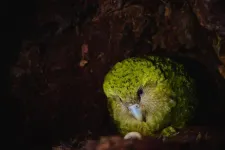
Saving species from extinction - high-quality kākāpō population sequencing provides breakthrough in understanding key conservation genetics
Environment

Saving species from extinction - high-quality kākāpō population sequencing provides breakthrough in understanding key conservation genetics

High-quality sequencing of nearly the entire kākāpō population, funded through a Genomics Aotearoa project, is helping New Zealand to manage the health of this critically endangered species. Not only is it already making a difference to kākāpō survival, but establishing sequencing methods to work with populations under threat is also likely to be the foundation for the future of endangered wildlife science in New Zealand and the rest of the world. The state-of-the-art methods developed by Dr. Joseph Guhlin ...

Read the release
Environment

Past abrupt changes in North Atlantic Overturning have impacted the climate system across the globe

The Dansgaard-Oeschger events are rapid Northern-Hemisphere temperature jumps of up to 15°C in Greenland that repeatedly occurred within a few decades during the last ice age. “These events are the archetype of abrupt climate changes and further increasing our understanding of them is crucial for more reliable assessments of the risk and possible impacts of future large-scale climate tipping events”, says Niklas Boers from the Potsdam Institute for Climate Impact Research (PIK) and the Technical University of Munich, one of the authors of the study to be published in the Proceedings of the National Academy of Sciences PNAS. In the ...

Read the release
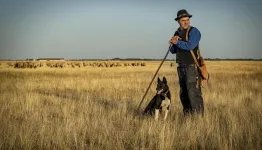
Social justice for traditional knowledge holders will help conserve Europe’s nature
Environment

Social justice for traditional knowledge holders will help conserve Europe’s nature

It is well known that biodiversity of cultural landscapes is threatened by land abandonment and agricultural intensification. Traditional, low chemical and machinery input management systems have long been acknowledged for their diverse benefits to maintain and enhance biodiversity, however, the recognition of traditional knowledge, on which these traditional management practices are based, started only relatively recently. The recognition of traditional knowledge holders themselves is an even more recent phenomenon. A recently published paper aims to ...

Read the release
Auckland wastewater pipe dig reveals 'fossil treasure trove'
Environment

Auckland wastewater pipe dig reveals 'fossil treasure trove'

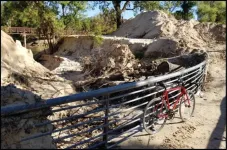
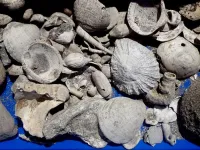
A new New Zealand Journal of Geology and Geophysics paper out today describes the 266 fossil species as one of the richest and most diverse groups of three-million-year-old fauna ever found in New Zealand. At least ten previously unknown species will be described and named in future research. Fossil treasure trove from Auckland’s Mangere Wastewater Treatment Plant In 2020, when Auckland’s Watercare were excavating two huge vertical shafts for a major upgrade of the major pipeline that brings raw sewage for treatment from the central city they dug through an ancient shell bed. Auckland paleontologist Bruce Hayward likened ...

Read the release
Environment

Survey: Tourists’ long-term plans more uncertain under climate change

North Carolina State University researchers found in a new study that while many tourists visiting a mountain destination in southern Mexico wouldn’t change their near-term plans to visit due to climate change, more than two-thirds said they would or might change their plans by 2060 under more drastically changed conditions. In addition, researchers also found that 70% of those surveyed would change the length of their stay in response to climate change by 2060, and some indicated they’d shift the timing of their visit. The findings, published in a ...

Read the release
The recovery of European freshwater biodiversity stops, urgent action needed
Environment

The recovery of European freshwater biodiversity stops, urgent action needed

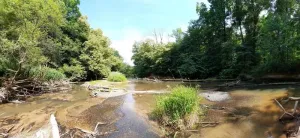
Freshwater ecosystems hold significant significance in the context of global biodiversity. These water bodies provide habitat for numerous plant and animal species, and they play a crucial role in maintaining food chains and preserving ecological balance. Mitigation measures including wastewater treatment and hydromorphological restoration have historically shown promise in improving environmental quality and supporting the recovery of freshwater biodiversity. Together with a large international team the study’s first author, Prof. Dr. Peter Haase of the Senckenberg ...

Read the release
Tides may be responsible for up to 69% of under-ice melting in an Antarctica ice shelf
Environment

Tides may be responsible for up to 69% of under-ice melting in an Antarctica ice shelf

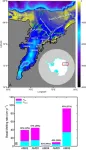
The ice shelves — the marine-terminating glaciers of the Antarctic Ice Sheet — are melting, and it's not just because of rising atmospheric temperatures. In a one-two punch, ice shelves in Antarctica are fighting a losing battle against rising temperatures both at the surface and under their body. Called basal melting, oceanic heat and compression contribute to the phenomenon, but tides may play a bigger role than previously thought, according to a multi-institution research collaboration based in China. Based on observational data in Prydz Bay, which ...

Read the release
Paper cups are just as toxic as plastic cups
Environment

Paper cups are just as toxic as plastic cups

Replacing single use plastic cups with paper ones is problematic. Researchers at the University of Gothenburg show that a paper cup that ends up in nature can also cause damage as they also contain toxic chemicals. Reports of plastics pollution contaminating all parts of the Earth and in all living things has accelerated a shift to alternative materials. The coffee latte you take with you from the kiosk on the corner now comes in paper cups, sometimes even with paper lids. But that cup can also harm living ...

Read the release
Environment

Paper drinking straws may be harmful and may not be better for the environment than plastic versions, researchers warn

“Eco-friendly” paper drinking straws contain long-lasting and potentially toxic chemicals, a new study has concluded. In the first analysis of its kind in Europe, and only the second in the world, Belgian researchers tested 39 brands of straws for the group of synthetic chemicals known as poly- and perfluoroalkyl substances (PFAS). PFAS were found in the majority of the straws tested and were most common in those made from paper and bamboo, the study, published ...

Read the release
Sediment movement during Hurricane Harvey could negatively impact future flooding, prove costly to Houston, UH study finds
Environment

Sediment movement during Hurricane Harvey could negatively impact future flooding, prove costly to Houston, UH study finds

Enormous amounts of sediment, or sand and mud, flowed through Houston waterways during Hurricane Harvey in 2017, due in part to modifications made by humans to bayous, rivers and streams over the past century, that could seriously impact future flooding events and be costly to the City of Houston. New analysis by geology researchers at the University of Houston found 27 million cubic meters of sediment, or 16 Astrodomes, moved through 12 Houston waterways and Addicks and Barker reservoirs during Harvey, the largest rainfall event in U.S. history. After the storm, up to five feet ...

Read the release
Environment

A global observatory to monitor Earth's biodiversity

At a time of nature crisis driven by unparalleled rates of biodiversity loss, a new interconnected system to monitor biodiversity around the world is urgently needed to direct and focus conservation action. "The lethal combination of habitat loss, the exploitation of natural populations, pollution, and climate change is causing species extinction rates not seen since the last mass extinction 65 million years ago," said Prof. Andrew Gonzalez, Liber Ero Chair in Conservation Biology at McGill University, and co-Chair of GEO BON. "We lack the means to monitor these impacts ...

Read the release
New framework for oceanographic research provides potential for broader access to deep sea scientific exploration
Environment

New framework for oceanographic research provides potential for broader access to deep sea scientific exploration

Woods Hole, Mass. (August 23, 2023) -- Scientific exploration of the deep ocean has largely remained inaccessible to most people because of barriers to access due to infrastructure, training, and physical ability requirements for at-sea oceanographic research. Now, a new and innovative framework for oceanographic research provides a way for shore-based scientists, citizen scientists, and the general public to seamlessly observe and control robotic sampling processes. The Shared Autonomy for Remote Collaboration (SHARC) framework “enables remote participants to conduct shipboard operations and control ...

Read the release
Sweet corn yield at the mercy of the environment, except for one key factor
Environment

Sweet corn yield at the mercy of the environment, except for one key factor

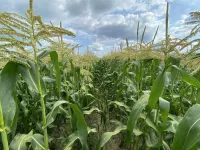
URBANA, Ill. — A new analysis from the University of Illinois Urbana-Champaign and the USDA-Agricultural Research Service (ARS) has identified the top factors accounting for yield variability in processing sweet corn (used for canned and frozen products), including one within the control of processors. “We used a very robust approach to account for sweet corn yield with field-level data across some 16,000 fields and 27 years. Year and production region were the two most important variables, which makes ...

Read the release
Environment

Climate change: Emperor penguin breeding fails due to Antarctic sea ice loss

Four out of five emperor penguin colonies in the Bellingshausen Sea, Antarctica, saw no chicks survive to fledge successfully in the spring of 2022, reports a study published in Communications Earth & Environment. The study suggests that this complete breeding failure is a direct consequence of the unprecedented loss of sea ice recorded in the region in recent years due to climate change. Emperor penguin (Aptenodytes forsteri) colonies generally need stable ice attached to the land between April and January to ensure successful breeding and moulting. Any change in the extent of the Antarctic sea ice can affect their ...

Read the release
Environment

Loss of Antarctic sea ice causes catastrophic breeding failure for emperor penguins

Emperor penguin colonies experienced unprecedented breeding failure in a region of Antarctica where there was total sea ice loss in 2022. The discovery supports predictions that over 90% of emperor penguin colonies will be quasi-extinct by the end of the century, based on current global warming trends. In a new study published today in Communications Earth & Environment, researchers from British Antarctic Survey discussed the high probability that no chicks had survived from four of the five known emperor penguin colonies in the central and eastern Bellingshausen Sea. The scientists examined ...

Read the release
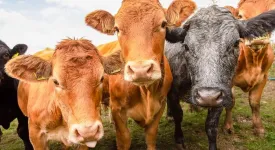
Cattle farming expansion and unchecked climate change would expose more than 1 billion cows to heat stress
Environment

Cattle farming expansion and unchecked climate change would expose more than 1 billion cows to heat stress

More than 1 billion cows around the world will experience heat stress by the end of the century if carbon emissions are high and environmental protection is low, according to new research published today in IOP Publishing’s journal Environmental Research Letters. This would mean cattle farming would face potentially lethal heat stress in much of the world, including Central America, tropical South America, Equatorial Africa, and South and Southeast Asia. The research also found that rapidly reducing greenhouse gas emissions, as well as keeping cattle production close to current levels, would reduce these impacts by at least 50% in Asia, 63% in South America, and ...

Read the release
Deforestation limits nesting habitat for cavity-nesting birds
Environment

Deforestation limits nesting habitat for cavity-nesting birds

With an extendable pole fitted with a small camera, Alison Ke could get a clear view of the inside of a nest box, including one time when a small, green Pacific parrotlet laid eggs. Ke, who earned a Ph.D. in ecology from UC Davis, led a research project to find out how converting rainforest to farmland affects the habitat of birds who rely on tree holes, or cavities, for nesting. Ke worked closely with local scientists and community members to study birds around the Mache-Chindul Ecological Reserve, an area in northwest Ecuador that has experienced rapid deforestation and agricultural expansion in the past 50 years. Their study, ...

Read the release
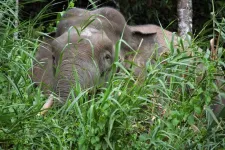
Wildlife overflow enriches biodiversity beyond park boundaries
Environment

Wildlife overflow enriches biodiversity beyond park boundaries

New research has discovered the power of large national parks to not only enhance bird diversity inside their borders but boost mammal diversity in nearby unprotected areas. The University of Queensland’s Dr Matthew Luskin said the study, which involved using more than 2,000 cameras and bird surveys across Southeast Asia, reveals for the first time the benefit of expanding protected land areas around the globe beyond park boundaries. “Protected area expansions are often a difficult and expensive process, but our results show they are absolutely worth it,” Dr Luskin said. “We ...

Read the release
Environment

Graphene discovery could help generate hydrogen cheaply and sustainably

Researchers from The University of Warwick and the University of Manchester have finally solved the long-standing puzzle of why graphene is so much more permeable to protons than expected by theory. A decade ago, scientists at The University of Manchester demonstrated that graphene is permeable to protons, nuclei of hydrogen atoms. The unexpected result started a debate in the community because theory predicted that it would take billions of years for a proton to permeate through graphene’s dense crystalline structure. ...

Read the release
Environment

Solar powered irrigation: a game-changer for small-scale farms in sub-Saharan Africa

In sub-Saharan Africa 80% of agricultural production is from smallholder farmers, who face constraints on increasing farm productivity resulting in a large yield gap. Extensive rain-fed agriculture (90% of all cropland) under unpredictable and erratic rainfall pattern is a leading cause of the low productivity and food insecurity in Africa, together with a low degree of mechanization. This has been reinforcing a persistent poverty trap, triggered by cyclical famines that are jeopardizing local development opportunities. In a new IIASA-led study as part of the research project Renewables for African Agriculture (RE4AFAGRI), an international ...

Read the release
Environment

Despite fears to the contrary, Canadian wildfire smoke exposure was not much worse than a bad pollen day in New York City

New Yorkers can apparently breathe a sigh of relief, at least for now. Their exposure to the smoke in June 2023 from Canadian wildfires led to only a slightly higher bump in visits to New York City hospital emergency departments for breathing problems or asthma attacks than what is seen on days when pollen counts are high. However, authors of a new study say other possible health effects, such as possible heart attacks and stroke, still need to be investigated. For the study, researchers at NYU Grossman School of Medicine analyzed daily levels of air pollution, as measured ...

Read the release
Environment

What’s the best way to prevent tuberculosis transmission from wildlife to cattle?

An analysis of relevant published studies indicates that cattle face a hypothetically high risk of getting tuberculosis from wildlife—such as deer, foxes, and wild boar—through indirect interactions, with a much lower risk from direct interactions. In the analysis, which is published in Mammal Review, data from 31 studies using various methods to assess wildlife-cattle interactions around the world revealed that direct interaction rates were low (an average of 0.03 interactions per month per species pair). In contrast, indirect interaction rates were 154 times higher (an average of 4.63 interactions per month per species pair). Indirect interaction ...

Read the release
Environment

NREL analysis quantifies impacts of setback ordinances on land available for renewable energy deployment

The number of local zoning ordinances governing renewable energy deployment is growing in the United States, according to new research by the U.S. Department of Energy’s National Renewable Energy Laboratory (NREL). The amount of land available to deploy renewables depends on the characteristics of the ordinances. “It’s important to understand the types of ordinances in effect, specifically setback ordinances, or the required distance from a specific feature like a house,” said Anthony ...

Read the release
Environment

Mapping methane emissions from rivers around globe reveals surprising sources

Freshwater ecosystems account for half of global emissions of methane, a potent greenhouse gas that contributes to global warming. Rivers and streams, especially, are thought to emit a substantial amount of that methane, but the rates and patterns of these emissions at global scales remain largely undocumented. An international team of researchers, including University of Wisconsin–Madison freshwater ecologists, has changed that with a new description of the global rates, patterns and drivers of methane emissions from ...

Read the release
Environment

Glitter impairs growth of organisms with key roles in aquatic ecosystems, study shows

A study conducted by researchers affiliated with the University of São Paulo (USP) in Brazil concluded that particles of glitter can hinder the growth of organisms at the base of aquatic ecosystems, such as cyanobacteria (blue-green algae), which play a key role in the biogeochemical cycles of water and soil, as well as being eaten by other organisms. An article on the study is published in the journal Aquatic Toxicology. Ubiquitous in makeup, nail polish, holiday decorations, greeting cards, Carnival costumes and many other places, glitter sticks to skin and clothes and requires a lot of effort to remove. It is made up of microplastics, tiny particles ...

Read the release
From the original Press-News collection. Issuers of news releases are responsible for the accuracy of their content.