THE ORIGINAL COLLECTION · SINCE 2010

Environment
press releases.

Research announcements from universities, hospitals and scientific institutions. Explore the stories, people and discoveries behind the headlines.

Original publication datesPage 146
FIND A STORY

Find a past release.

Dates and source material belong to the original release.

Read our research explainers

Browse the collection · original publication order

Environment

Farms that create habitat key to food security and biodiversity

It seems intuitive that forests would provide better habitat for forest-dwelling wildlife than farms. Yet, in one of the longest-running studies of tropical wildlife populations in the world, Stanford researchers found that over 18 years, smaller farms with varying crop types – interspersed with patches or ribbons of forest – sustain many forest-dependent bird populations in Costa Rica, even as populations decline in forests. In a paper published Sept. 4 in the Proceedings of the National Academy of Sciences, Nicholas Hendershot and colleagues ...

Read the release
Most species are rare. But not very rare
Environment

Most species are rare. But not very rare

Halle/Saale, Fort Lauderdale. More than 100 years of observations in nature have revealed a universal pattern of species abundances: Most species are rare but not very rare, and only a few species are very common. These so-called global species abundance distributions have become fully unveiled for some well-monitored species groups, such as birds. For other species groups, such as insects, however, the veil remains partially unlifted. These are the findings of an international team of researchers led by the German Centre for Integrative Biodiversity Research (iDiv), the Martin Luther University Halle-Wittenberg ...

Read the release
Extreme El Niño weather saw South America’s forest carbon sink switch off
Environment

Extreme El Niño weather saw South America’s forest carbon sink switch off

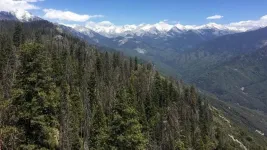
Extreme El Niño weather saw South America’s forest carbon sink switch off Hot and dry conditions resulted in increased tree death Evidence that most forest areas withstand periods of severe drought Greatest impact in forests with drier climates Tropical forests in South America lose their ability to absorb carbon from the atmosphere when conditions become exceptionally hot and dry, according to new research. For a long time, tropical forests have acted as a carbon sink, taking more ...

Read the release
Environment

Blowing snow contributes to Arctic warming

When it comes to global warming trends, the Arctic is a troubling outlier. The Arctic warms nearly four times faster than the global average, and aerosols play an important role in that warming. Scientists have long known that pollutants from other regions can accumulate in the Arctic atmosphere where they alter atmospheric chemistry, absorb sunlight, and affect local weather patterns, leading to localized warming that melts ice and snow. Sea salt particles dominate aerosol mass concentration, but their production mechanisms and impact on Arctic climate have remained unclear. Atmospheric scientists led by Jian Wang, director of the Center for Aerosol ...

Read the release
Korean Scientific payload for observing the lunar space environment begins its transfer to the US for the scheduled 2024 launch
Environment

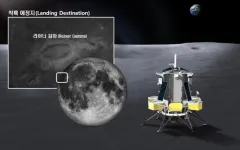
Korean Scientific payload for observing the lunar space environment begins its transfer to the US for the scheduled 2024 launch

The Ministry of Science and ICT (Minister Jong-Ho Lee, hereinafter referred to as 'MSIT') and the Korea Astronomy and Space Science Institute (Director Young-Deuk Park, hereinafter referred to as 'KASI') announced the beginning of the transfer of the lunar space environment monitor, 'LUSEM'(Lunar Space Environment Monitor) that will be aboard United States’ unmanned lunar lander in 2024, has began on September 4th. LUSEM is a payload developed by the Korea Astronomy and Space Science Institute (KASI) in participation with the U.S. NASA's CLPS(Commercial Lunar Payload Services) initiative ...

Read the release
Environment

People with lung conditions face extra risks from climate change

People living with lung conditions, such as asthma and chronic obstructive pulmonary disease (COPD), face even greater risks from climate change, according to an expert report published today (Monday) in the European Respiratory Journal [1]. The report brings together evidence on how the effects of climate change, such as heatwaves, wildfires and flooding, will exacerbate breathing difficulties for millions of people around the world, particularly babies, young children and the elderly. On behalf of the European Respiratory Society, which represents more than 30,000 lung specialists from 160 countries, the authors ...

Read the release
Warming climate worsens groundwater depletion rates in India
Environment

Warming climate worsens groundwater depletion rates in India

Increased withdrawals of groundwater resources are accelerating groundwater depletion rates in India, a groundwater depletion hotspot, a new study finds. The study, published today in the journal Science Advances, is led by University of Oklahoma Department of Geography and Environmental Sustainability assistant professor Nishan Bhattarai. Bhattarai and his collaborators found that under a business-as-usual scenario of groundwater use for irrigation, warming may triple the groundwater depletion rates. Approximately 60% of India’s irrigated agriculture depends on the threatened groundwater. The results of the study indicate that adaptation ...

Read the release
Environment

Groundwater depletion rates in India could triple in coming decades as climate warms, study shows

EMBARGOED FOR RELEASE AT 2 P.M. ET FRIDAY, SEPT. 1, 2023 Photos ANN ARBOR—A new University of Michigan-led study finds that farmers in India have adapted to warming temperatures by intensifying the withdrawal of groundwater used for irrigation. If the trend continues, the rate of groundwater loss could triple by 2080, further threatening India's food and water security. Reduced water availability in India due to groundwater depletion and climate change could threaten the livelihoods of more than one-third of the country's 1.4 billion ...

Read the release
Environment

Alaska scientists heading to Greenland for glacier research, museum project

University of Alaska Fairbanks scientists will make several trips to Greenland over two years to study how meltwater and the ocean affect glacial ice loss. The four-year research project, funded by a $565,000 National Science Foundation grant, will create a traveling museum exhibit about the drivers of Arctic climate change. The exhibit will appear first at the University of Alaska Museum of the North, likely in 2026. Ice loss from the polar ice sheets is the largest anticipated contributor to global mean-sea-level rise in the coming century. Scientists need to better understand glacier behavior to improve predictions of sea-level rise. At the study’s conclusion, ...

Read the release
Environment

New research explains “Atlantification” of the Arctic Ocean

New research by an international team of scientists explains what’s behind a stalled trend in Arctic Ocean sea ice loss since 2007. The findings indicate that stronger declines in sea ice will occur when an atmospheric feature known as the Arctic dipole reverses itself in its recurring cycle. The many environmental responses to the Arctic dipole are described in a paper published online today in the journal Science. This analysis helps explain how North Atlantic water influences Arctic Ocean climate. Scientists call it Atlantification. The research is led by professor Igor Polyakov of the University of Alaska Fairbanks College of ...

Read the release
Landscape-based methodology reveals ecological stability in the Qingzang plateau
Environment

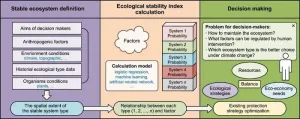
Landscape-based methodology reveals ecological stability in the Qingzang plateau

In a groundbreaking study published in Volume 17 of the journal Environmental Science and Ecotechnology, researchers from the Chinese Academy of Sciences introduced a landscape-oriented framework to assess ecological stability in China's Qingzang Plateau (QP). The QP demonstrated a medium-high stability level with minimal changes in recent years. Ecological stability involves understanding changes in ecosystem components over time, with two major concepts explored: systems close to equilibrium and non-equilibrium behavior. Despite lacking a consensus on the definition of "ecological stability", stability indices ...

Read the release
Study shows making cities greener doesn’t just capture carbon – it reduces it
Environment

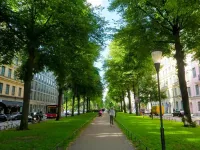
Study shows making cities greener doesn’t just capture carbon – it reduces it

Dozens of European cities could reach net zero carbon emissions over the next 10 years by incorporating nature into their infrastructure, according to a new study. Published recently in the journal, Nature Climate Change, the analysis shows the ways cities can orchestrate a wide range of green solutions like parks, streetscaping and roof gardens to not only capture carbon emissions, but help reduce them. The study was undertaken by researchers from Sweden, the U.S. and China. It recommends the most effective approaches for natural carbon sequestration in 54 cities in the EU. And it shows how blending these steps with other climate ...

Read the release
Environment

Researchers find Antarctic ice shelves thinner than previously thought

COLUMBUS, Ohio – As global ice dams begin to weaken due to warming temperatures, a new study suggests that prior attempts to evaluate the mass of the huge floating ice shelves that line the Antarctic ice sheet may have overestimated their thickness. The research, recently published in the Journal of Glaciology, is the first large-scale study of its kind to compare ice shelf thickness data from ice-penetrating radar measurements to thickness data estimated from contemporary surface elevation measurements. By juxtaposing vast datasets of 20 of the 300 ...

Read the release
Study connects greenhouse gas emissions to polar bear population declines, enabling greater protections under Endangered Species Act
Environment

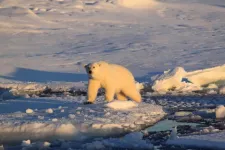
Study connects greenhouse gas emissions to polar bear population declines, enabling greater protections under Endangered Species Act

New research from the University of Washington and Polar Bears International in Bozeman, Montana, quantifies the relationship between greenhouse gas emissions and the survival of polar bear populations. The paper, published online Aug. 31 in Science, combines past research and new analysis to provide a quantitative link between greenhouse gas emissions and polar bear survival rates. A warming Arctic is limiting polar bears’ access to sea ice, which the bears use as a hunting platform. In ice-free summer months the bears must fast. While in a worst-case scenario ...

Read the release
Environment

Penn State professor to lead field campaign to study climate in Baltimore area

UNIVERSITY PARK, Pa. — Kenneth Davis, professor of atmospheric and climate science at Penn State, will lead a team of 23 investigators from 13 research institutions in a new field campaign supported by the U.S. Department of Energy (DOE) to study surface-atmosphere interactions around Baltimore, Maryland, to see how they influence the city’s climate. The new campaign, called the Coast-Urban-Rural Atmospheric Gradient Experiment (CoURAGE), is expected to start in October 2024 and run through September 2025. CoURAGE will contribute to the Baltimore Social-Environmental ...

Read the release
Environment

Coastal fisheries show surprising resilience to marine heat waves

Rutgers-led research found that marine heat waves – prolonged periods of unusually warm ocean temperatures – haven’t had a lasting effect on the fish communities that feed most of the world. The finding is in stark contrast to the devastating effects seen on other marine ecosystems cataloged by scientists after similar periods of warming, including widespread coral bleaching and harmful algal blooms. “There is an emerging sense that the oceans do have some resilience, and while they are changing in response ...

Read the release
Environment

Emphasising the need for energy independence could change the views of climate deniers, study says

Emphasising the need for energy independence and environmental stewardship could help to change people’s minds about the climate crisis, a new study says. Climate change deniers focus on what they can see and have experienced personally, so solutions need to be framed in a way which makes sense to local communities. But for this to work the political-media ecosystem also needs to shift to support climate action, and their corporate backers held accountable for the damage they have wrought, according to the research. The study, published in Ethnos Journal of Anthropology, was carried out by Dr Susannah Crockford from the University of Exeter. Dr Crockford ...

Read the release
Environment

American Meteorological Society announces 2024 weather, water, and climate honorees

[Boston, MA, USA—August 30, 2023] Each year, the American Meteorological Society recognizes outstanding individuals and organizations in the weather, water, and climate community through its Awards and Honors program. The organization is proud to announce its 2024 recipients, who will receive their award or honor at the 104th AMS Annual Meeting in Baltimore, Maryland, 28 January–1 February, 2024. “Working across a wide range of sciences and services, the members of our community are vital to upholding safety and quality of life in the United States and across ...

Read the release
Environment

World’s coastal wetlands and coral reef islands are hanging by a thread, new study shows

Coastal wetlands and coral reef islands will struggle to grow fast enough to keep pace with rising sea levels driven by climate change, according to a new study published in Nature. The study was conducted by an international team that includes a Tulane University researcher. The findings show that the future of marshes and other low-lying coastal areas depend heavily on whether global warming can be limited to less than 2 degrees Celsius (3.6 degrees Fahrenheit) as formulated by the Paris Agreement. A key finding of the paper is that coastal marshes, mangroves, ...

Read the release
Environment

A new way to capture and recycle carbon dioxide from industrial emissions

Carbon capture is a promising method to help slow climate change. With this approach, carbon dioxide (CO­­2) is trapped before it escapes into the atmosphere, but the process requires a large amount of energy and equipment. Now, researchers reporting in ACS Central Science have designed a capture system using an electrochemical cell that can easily grab and release CO2. The device operates at room temperature and requires less energy than conventional, amine-based carbon-capture systems. Many industries are turning ...

Read the release
Environment

Climate extremes hit stressed economies even harder

"The unprecedented societal interruptions during the Covid-19 pandemic of 2020 and onward took their toll on economic activity. Lockdowns disrupted supply chains and caused economic losses with implications for private households," lead author Robin Middelanis from PIK explains. "Global stress like this reduces the economic capacity to cope with additional shocks from weather extremes that put even more pressure on already stressed societies.” For an individual climate disaster, impacts from local production losses can be flexibly reduced to a certain extent by the support ...

Read the release
Can this forest survive? Predicting forest death or recovery after drought
Environment

Can this forest survive? Predicting forest death or recovery after drought

How long can trees tolerate drought before the forest dies? Researchers from UC Davis can now predict which forests could survive despite future drought. Their new method links precipitation to tree growth, and it can help people decide where to put their resources as climate change affects patterns of snow and rainfall that impact the health of forests. “If a forest is doing OK, but in the future we know it’s likely to get only half the average rainfall it used to get, we can calculate the likelihood ...

Read the release
Neptune's disappearing clouds linked to the solar cycle
Environment

Neptune's disappearing clouds linked to the solar cycle

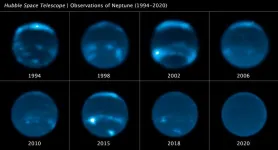
Astronomers have uncovered a link between Neptune's shifting cloud abundance and the 11-year solar cycle, in which the waxing and waning of the Sun's entangled magnetic fields drives solar activity. This discovery is based on three decades of Neptune observations captured by NASA's Hubble Space Telescope and the W. M. Keck Observatory in Hawaii, as well as data from the Lick Observatory in California. The link between Neptune and solar activity is surprising to planetary scientists because Neptune is our solar system's farthest major planet and receives sunlight with about 0.1% ...

Read the release
Rapid shifts from drought to downpour occurring more often
Environment

Rapid shifts from drought to downpour occurring more often

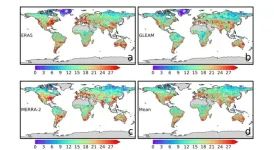
New research shows that wild swings from severe drought to heavy rains are becoming more common with climate change in many parts of the world and that feedback loops from the land itself are likely contributing to the trend. The research looked at four decades of meteorological and hydrological data on a global level and found seven regional hotspots around the world where the trend was getting worse: eastern North America, Europe, East Asia, Southeast Asia, southern Australia, southern Africa, and southern South America. “We are especially concerned with the sudden shift from drought to flood,” said coauthor Zong-Liang Yang, a professor at The University of Texas at Austin Jackson ...

Read the release
Want to fight climate change? Don’t poach gorillas (or elephants, hornbills, toucans, etc.)
Environment

Want to fight climate change? Don’t poach gorillas (or elephants, hornbills, toucans, etc.)

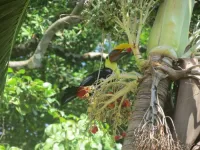
Here’s a climate solution we can all get behind: don’t kill elephants. Or poach gorillas – or wipe out tapirs, hornbills, or other large-bodied wildlife that eat fruit and disperse large seeds. That’s because a new paper by the Wildlife Conservation Society (WCS) found that overhunting of these species makes forests less able to store or sequester carbon. The authors describe their results in the journal PLOS Biology. The authors found that many of the mammals and birds targeted by illegal and commercial hunting are fruit eaters that disperse large seeds from tree ...

Read the release
From the original Press-News collection. Issuers of news releases are responsible for the accuracy of their content.