THE ORIGINAL COLLECTION · SINCE 2010

Environment
press releases.

Research announcements from universities, hospitals and scientific institutions. Explore the stories, people and discoveries behind the headlines.

Original publication datesPage 150
FIND A STORY

Find a past release.

Dates and source material belong to the original release.

Read our research explainers

Browse the collection · original publication order

Mars: new evidence of an environment conducive to the emergence of life
Environment

Mars: new evidence of an environment conducive to the emergence of life

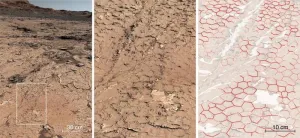
The surface of Mars, unlike the Earth's, is not constantly renewed by plate tectonics. This has resulted in the preservation of huge areas of terrain remarkable for their abundance in fossil rivers and lakes dating back billions of years. Since 2012, NASA's Curiosity, the first rover to ever explore such ancient remains, had already detected the presence of simple organic molecules which can be formed by geological as well as biological processes. However, the emergence of primitive life forms, as hypothesised by scientists, initially requires environmental conditions favourable to the spontaneous organisation ...

Read the release

Carpets retain a stubborn grip on pollutants from tobacco smoke
Environment

Carpets retain a stubborn grip on pollutants from tobacco smoke

– By Christina Nunez In rooms where smoking has taken place regularly, tobacco's imprint lingers on indoor surfaces, even long after regular smoking has stopped. The leftover residues, known as thirdhand smoke, can be a long-term source of indoor pollutants. New research from a team led by the Department of Energy's Lawrence Berkeley National Laboratory (Berkeley Lab) zeroes in on carpets as an especially potent – and difficult to clean – reservoir of tobacco contaminants. When thirdhand smoke settles into surfaces, it doesn't ...

Read the release
Environment

Telecommunications cable used to track sea ice extent in the Arctic

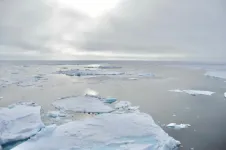
A telecommunications fiber optic cable deployed offshore of Oliktok Point, Alaska recorded ambient seismic noise that can be used to finely track the formation and retreat of sea ice in the area, researchers report in The Seismic Record. Andres Felipe Peña Castro of the University of New Mexico and colleagues used distributed acoustic sensing, or DAS, to identify seismic signals related to the motion of waves on open water and the sea ice that suppresses that wave action. The technique offers a way to track sea ice with increasing spatial and temporal resolution—on the scale of hours and kilometers--compared to satellite images that are updated ...

Read the release
Then vs. now: Did the Horn of Africa reach a drought tipping point 11,700 years ago?
Environment

Then vs. now: Did the Horn of Africa reach a drought tipping point 11,700 years ago?

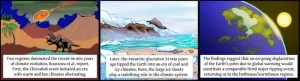
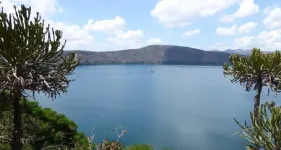
New research suggests that the Horn of Africa is likely to become even drier, not wetter in the future as predicted by most climate models. ‘Wet gets wetter, dry gets drier’. That mantra has been used for decennia to predict how global warming will affect the hydrological cycle in different world regions. But if climate models predict that much of tropical Africa will enjoy a future with wetter weather, then why does it keep getting drier in certain parts of the African tropics, like the Horn of Africa? An international team of researchers ...

Read the release
Oldest extant plant has adapted to extremes and is threatened by climate change
Environment

Oldest extant plant has adapted to extremes and is threatened by climate change

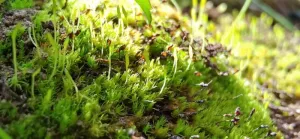
The rare moss Takakia has adapted over millions of years to a life at high altitudes. An international research team led by Prof. Dr. Ralf Reski from the University of Freiburg and Prof. Dr. Yikun He from the Capital Normal University / China has now discovered exactly how it has developed the ability to survive frost and life-threatening high UV radiation. In the renowned journal Cell, they describe the genetic traits that protect the moss from extreme environmental conditions. At the same time, they document how climate change greatly altered the natural habitat of this highly specialized species within just a few years. The ...

Read the release
Huge tipping events dominated the evolution of the climate system
Environment

Huge tipping events dominated the evolution of the climate system

An analysis of the hierarchy of tipping points suggests that during the last 66 million years two events set the scene for further climate tipping and for the evolution of the climate system in particular. If the anthropogenic climate change of today leads to complete deglaciation, the evolution of Earth's climate will be influenced on a geological time scale, the authors suggest. The work by Denis-Didier Rousseau, Université Montpellier, France, Witold Bagniewski, Ecole Normale Supérieure, Paris, France, and Valerio Lucarini, University of Reading, UK is published in Scientific Reports and is part of the European TiPES project on tipping points ...

Read the release
The voices of indigenous peoples and local communities as an important part of the climate fight
Environment

The voices of indigenous peoples and local communities as an important part of the climate fight

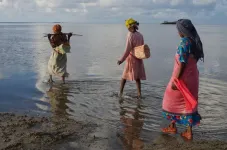
Coinciding with the International Day of Indigenous Peoples, an ICTA-UAB study calls for indigenous peoples' in-depth knowledge of climate change to be considered. Indigenous Peoples and local communities around the world have a rich and extensive general knowledge of climate change impacts and possible ways to adapt. This knowledge should be recognised by both science and climate policy. This is the main conclusion of an international study led by the Institute of Environmental Science and Technology of the Universitat Autònoma de Barcelona (ICTA-UAB) which has spent five years analysing and providing detailed data on how Indigenous Peoples and local communities ...

Read the release
Sustainable Cocoa Innovation Challenge for Colombia: Supporting innovation in the cocoa value chain to foster climate change mitigation and peacebuilding
Environment

Sustainable Cocoa Innovation Challenge for Colombia: Supporting innovation in the cocoa value chain to foster climate change mitigation and peacebuilding

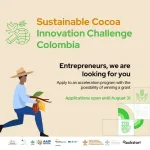
Bogotá, 04 August 2023. The Sustainable Cocoa Innovation Challenge for Colombia has been launched as the result of the joint effort between CGIAR research initiatives AgriLAC Resiliente and Mitigate+ and the project “Implementing Sustainable Agricultural and Livestock Systems for Simultaneous Targeting of Forest Conservation for Climate Change Mitigation (REDD+) and Peacebuilding in Colombia,” otherwise known as the IKI-SLUS Project. The CGIAR Accelerate for Impact ...

Read the release
Environment

Nitrogen runoff strategies complicated by climate change

Washington, DC— As climate change progresses, rising temperatures may impact nitrogen runoff from land to lakes and streams more than projected increases in total and extreme precipitation for most of the continental United States, according to new research from a team of Carnegie climate scientists led by Gang Zhao and Anna Michalak published in the Proceedings of the National Academy of Sciences. The conditions predicted by these findings are opposite to recent decades, when increasing precipitation has outpaced warming and led to more aquatic nitrogen pollution. Understanding the relative roles of changes in temperature and rainfall is critical for designing ...

Read the release
Meet the Persian Gold Tarantula: a new species discovery just on time for Tarantula Appreciation Day 2023
Environment

Meet the Persian Gold Tarantula: a new species discovery just on time for Tarantula Appreciation Day 2023

The Persian Gold Tarantula (Chaetopelma persianum) is a newly described species recently discovered in northwestern Iran. In fact, the “woolly, golden hairs” the scientists observed and examined on a single specimen, were one of the features so unique that it was not necessary for additional individuals to be collected and physically studied. It was clear enough that it was a species previously unknown to the scientific community. The paper, authored by Iranian arachnologist and taxonomist Dr Alireza Zamani (University of Turku, Finland) and his Canadian colleague Rick C. West, was published in the peer-reviewed, open-access scientific journal ZooKeys on the observance ...

Read the release
New Antarctic extremes ‘virtually certain’ as world warms
Environment

New Antarctic extremes ‘virtually certain’ as world warms

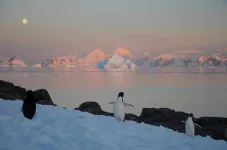
Extreme events in Antarctica such as ocean heatwaves and ice loss will almost certainly become more common and more severe, researchers say. With drastic action now needed to limit global warming to the Paris Agreement target of 1.5°C, the scientists warn that recent extremes in Antarctica may be the tip of the iceberg. The study reviews evidence of extreme events in Antarctica and the Southern Ocean, including weather, sea ice, ocean temperatures, glacier and ice shelf systems, and biodiversity on land and sea. It concludes that Antarctica’s fragile environments “may well be subject to considerable stress and ...

Read the release
Bat activity lower at solar farm sites, study finds
Environment

Bat activity lower at solar farm sites, study finds

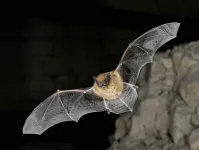
The activity level of six bat species was significantly reduced at solar farm sites, researchers have observed. Their findings, published today in Journal of Applied Ecology, have the potential to impact and inform planning legislation and policy so that the benefits of solar power are reaped without impacting wildlife. Renewable technologies are important in meeting energy demands sustainably. This is of vital importance given the roles of fossil fuels in producing carbon dioxide, a key driver of climate change. Renewable energy is growing at a rapid pace globally, with solar photovoltaic power ...

Read the release
Whale like filter-feeding discovered in prehistoric marine reptile
Environment

Whale like filter-feeding discovered in prehistoric marine reptile

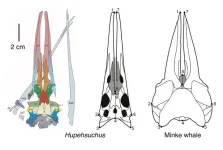
A remarkable new fossil from China reveals for the first time that a group of reptiles were already using whale-like filter feeding 250 million years ago. New research by a team from China and the UK has shown details of the skull of an early marine reptile called Hupehsuchus that indicate it had soft structures such as an expanding throat region to allow it to engulf great masses of water containing shrimp-like prey, and baleen whale-like structures to filter food items as it swam forward. The team also found that the Hupehsuchus skulls show the same grooves and notches along the edges of its jaws similar to baleen whales, ...

Read the release
Environment

NCEAS’s Alexandra Phillips is the first climate scientist awarded a Legislative Branch fellowship by the American Association for the Advancement of Science

(Santa Barbara, Calif.) — She’s heading to The Hill! Alexandra Phillips, science communication and policy officer at UC Santa Barbara’s National Center for Ecological Analysis and Synthesis (NCEAS), goes to Washington, D.C., this month to begin a yearlong congressional fellowship, sponsored by the American Association for the Advancement of Science (AAAS). The first-ever AAAS Legislative Branch Fellow in Climate Science, Phillips hopes to use her own ocean science background to help inform policy and shed light on emerging climate-related ...

Read the release
Environment

Breakthrough polymer research promises to revolutionize recycling

A team of researchers led by Brent Sumerlin, the George B. Butler Professor in the University of Florida Department of Chemistry, has made a breakthrough with the potential to transform how we recycle plastics. Their innovative approach to working with polymers has led them to develop a new method for recycling that promises to lower the energy requirement without sacrificing the quality of the plastic. It’s no secret that the U.S. and the Earth at large have a pressing plastic problem. Despite a meteoric rise in usage over the past few decades, only about 10% of our plastic currently ends up getting recycled. “Our work is a response ...

Read the release
Environment

Carbon dioxide – not water – triggers explosive basaltic volcanoes

ITHACA, N.Y. – Geoscientists have long thought that water – along with shallow magma stored in Earth’s crust – drives volcanoes to erupt. Now, thanks to newly developed research tools at Cornell, scientists have learned that gaseous carbon dioxide can trigger explosive eruptions. A new model suggests that basaltic volcanoes, typically located on the interior of tectonic plates, are fed by a deep magma within the mantle, stored about 20 to 30 kilometers below Earth’s surface. The research, which offers a clearer picture of our planet’s deep internal dynamics and composition, with ...

Read the release
Century-old coral reveals Pacific western boundary current strengthened as climate warmed, impacting El Niño
Environment

Century-old coral reveals Pacific western boundary current strengthened as climate warmed, impacting El Niño

Chestnut Hill, Mass. (8/7/2023) - The Pacific Ocean’s western boundary current, which forms a critical regulator of sea surface temperature and weather patterns, has significantly strengthened as the planet warms, according to a new study published in the journal Nature Geoscience. The study provides the first evidence that the western boundary current in the South Pacific has significantly strengthened during the 20th century in response to global warming, contributing to an intensified equatorial undercurrent, according to Boston College Assistant Professor of Earth and Environmental Sciences Xingchen (Tony) Wang, a co-author ...

Read the release
NRL and NASA to launch ComPair instrument to measure gamma-ray emissions
Environment

NRL and NASA to launch ComPair instrument to measure gamma-ray emissions

WASHINGTON – The U.S. Naval Research Laboratory (NRL) and NASA Goddard Space Flight Center (GSFC) will launch ComPair aboard a high-altitude balloon from Fort. Sumner, New Mexico Aug. 10. The ComPair mission instrument measures and detects gamma-ray emissions from astrophysical objects. The NRL instrument is one of the four subsystem instruments led by NASA GSFC. The mission name – ComPair – is inspired by the mechanisms by which gamma rays interact with matter. “They do so via three dominant processes – photoelectric effect, ...

Read the release
Environment

MSU School of Packaging researchers make a sustainable plastic more compostable

Highlights: Researchers led by Rafael Auras in the Michigan State University School of Packaging have shown how to make a bio-based polymer compostable in both home and industrial settings. The team said its research, published in ACS Sustainable Chemistry & Engineering, can help divert plastic packaging that’s been soiled by food, the vast majority of which is not recycled. Another end-of-use option, like composting, can thus help keep plastics out of landfills and the environment. To make the compostable polymer, the team blended bioplastics known as polylactic acid, or PLA, and thermoplastic ...

Read the release
Environment

Research reveals the ecological threats of small-scale fisheries in Thailand

Marine conservation experts have revealed the extent of marine megafauna catch by small-scale fisheries, in Thailand for the first time. The Newcastle University study provides the first-ever estimate of the annual catch of marine megafauna species, including rays, sharks, sea turtles, dolphins, and dugongs, in Thailand’s small-scale fisheries – those fisheries using small boats, low tech equipment and often haul their fishing gear by hand. Published in the journal Aquatic Conservation: Marine and Freshwater Research, the results ...

Read the release
In the treetops: USU ecologist studies canopy soil abundance, chemistry
Environment

In the treetops: USU ecologist studies canopy soil abundance, chemistry

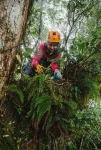
LOGAN, UTAH, USA - When we think of soil, most of us think of dirt on the ground. But a surprising amount of the planet’s soil thrives in the treetops of old-growth forests, high above terra firma. This organic matter, composed of decaying leaves and branches, airborne particulates and moisture, is called canopy soil or arboreal soil. Its study is relatively new, says Utah State University ecologist Jessica Murray. She’s among researchers unraveling mysteries of the dense, mossy humus that provides rich habitat for insects, birds, fungi, worms and plants, as well as a generous reservoir for carbon storage. Murray and colleagues from Texas ...

Read the release
Invasion of the Arctic Ocean by Atlantic plankton species reveals a seasonally ice-free ocean during the last interglacial
Environment

Invasion of the Arctic Ocean by Atlantic plankton species reveals a seasonally ice-free ocean during the last interglacial

A subpolar species associated with Atlantic water expanded far into the Arctic Ocean during the Last Interglacial, analysis of microfossil content of sediment cores reveals. This implies that summers in the Arctic were ice free during this period. The findings are published in Nature Geoscience. Arctic sea ice, an important component of the Earth system, is disappearing fast under climate warming. Summer sea ice is anticipated to vanish entirely within this century. To gain a deeper understanding of the climate dynamics in a world without Arctic sea ice, researchers have turned to analogues from the geological past. ”The Last Interglacial, between ...

Read the release
Environment

Study examines Earth and Mars to determine how climate change affects the paths of rivers

In a new study published in Nature Geosciences, researchers, led by a Tulane University sedimentologist , investigated why the paths of meandering rivers change over time and how they could be affected by climate change. Chenliang Wu, PhD, a postdoctoral researcher at Tulane University School of Science and Engineering, began this research by looking at the Mississippi River before adding other rivers on Earth and ancient riverbeds on Mars to the study. The study specifically looks at river sinuosity, or how much rivers curve. The sinuosity of rivers changes over time, depending on the age of the river and environmental changes. Some of these changes ...

Read the release
Tropical trees use social distancing to maintain biodiversity
Environment

Tropical trees use social distancing to maintain biodiversity

Tropical forests often harbor hundreds of species of trees in a square mile, but scientists often struggle to understand how such a diversity of species can coexist. In a study published in Science, researchers at The University of Texas at Austin have provided new insights into the answer by uncovering a key characteristic of the spatial distribution of adult trees. Combining computational modeling with data collected during a 30-year period, the researchers discovered that adult trees in a Panamanian forest are three times as distant from other adults of the same species as what the proverbial “the apple doesn’t fall far from ...

Read the release
Environment

Adult tropical trees of the same species grow farther apart than factors like seed dispersal limits can explain

Tropical trees distance themselves from members of their own species more than they do other species, a new study shows. What’s more, trees of the same species exist at distances farther apart than would be expected by chance or the limits of seed dispersal. The results reveal pervasive within-species spatial repulsion in adult trees, providing new insights into the ecological dynamics that stabilize species diversity and enable the exceptionally high diversity of tropical forests. Tropical forests host an unusually high diversity of tree species. For example, some tropical forests contain more than 250 tree species per hectare. However, how hundreds of species coexist on relatively small ...

Read the release
From the original Press-News collection. Issuers of news releases are responsible for the accuracy of their content.