THE ORIGINAL COLLECTION · SINCE 2010

Environment
press releases.

Research announcements from universities, hospitals and scientific institutions. Explore the stories, people and discoveries behind the headlines.

Original publication datesPage 68
FIND A STORY

Find a past release.

Dates and source material belong to the original release.

Read our research explainers

Browse the collection · original publication order

Human-related activities continue to threaten global climate and productivity
Environment

Human-related activities continue to threaten global climate and productivity

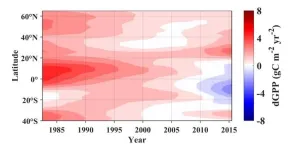
The pace at which anthropogenic climate change has altered the terrestrial carbon stores is making our current climate-change mitigation efforts seem fruitless, unless behaviors are quickly changed. Climate change induced by human behaviors, or anthropogenic climate change, has been a hot topic for decades and is not going away. As with any problem, reviewing datasets from the past to analyze trends and garner information is one of the first steps towards a solution. Gross primary productivity, or GPP, is a key indicator of the overall health of an ecosystem and is the amount of CO2 fixed by plants per unit of time and area. Researchers ...

Read the release

Environment

Texas A&M researchers illuminate the mysteries of icy ocean worlds

As NASA’s Europa Clipper embarks on its historic journey to Jupiter’s icy moon, Europa, Dr. Matt Powell-Palm, a faculty member at Texas A&M University’s J. Mike Walker ‘66 Department of Mechanical Engineering, has unveiled groundbreaking research that could transform our understanding of icy ocean worlds across the solar system. The study published in Nature Communications, co-authored with planetary scientist Dr. Baptiste Journaux of the University of Washington, introduces a novel thermodynamic concept called the “centotectic” and investigates the stability of liquids in extreme conditions - critical ...

Read the release
Breakthrough new material brings affordable, sustainable future within grasp
Environment

Breakthrough new material brings affordable, sustainable future within grasp

HOUSTON, Dec. 20, 2024 –While lithium-ion batteries have been the go-to technology for everything from smartphones and laptops to electric cars, there are growing concerns about the future because lithium is relatively scarce, expensive and difficult to source, and may soon be at risk due to geopolitical considerations. Scientists around the world are working to create viable alternatives. An international team of interdisciplinary researchers, including the Canepa Research Laboratory at the University of Houston, has developed a new type of material for sodium-ion batteries that could ...

Read the release
Environment

Construction materials and household items are a part of a long-term carbon sink called the “technosphere”

We know a lot about how much fossil-derived carbon is emitted to the atmosphere but less about how much is stored in human-made products. In a study publishing December 20 in the Cell Press journal Cell Reports Sustainability, ecological economists estimate that each year, humans add around 400 million tons of fossil carbon to long-lasting products such as plastics, buildings, and human infrastructure. Although these products could be considered a “carbon sink,” proper waste management is essential ...

Read the release
ESA and NASA satellites deliver first joint picture of Greenland Ice Sheet melting
Environment

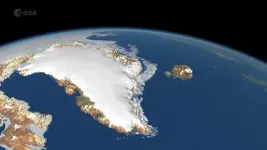
ESA and NASA satellites deliver first joint picture of Greenland Ice Sheet melting

Academics from Northumbria University are part of an international research team which has used data from satellites to track changes in the thickness of the Greenland Ice Sheet. Global warming is causing the Ice Sheet to melt and flow more rapidly, raising sea levels and disturbing weather patterns across our planet. Because of this, precise measurements of its changing shape are of critical importance for tracking and adapting to the effects of climate warming. Scientists have now delivered the first measurements of Greenland Ice Sheet thickness change using CryoSat-2 and ICESat-2 – the ESA and ...

Read the release
Geothermal aquifers offer green potential but quality checks required
Environment

Geothermal aquifers offer green potential but quality checks required

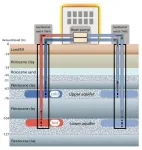
The aquifer thermal energy storage (ATES) system, which uses geothermal heat as a renewable energy source, is one of the solutions to reducing fuel consumption and carbon dioxide emission. This system stores heat underground in aquifers, using groundwater as a heat medium. The heat is then extracted as needed according to the season to efficiently heat and cool buildings. Its use is mainly expanding in Europe, and its widespread introduction is expected in Japan. However, regular inspection is required to utilize ...

Read the release
Environment

Filling a gap: New study uncovers Proterozoic eukaryote diversity, and how environment was a driver

Advanced tools and expanded fossil datasets have painted a clearer picture of the eukaryotic diversity of the Proterozoic eon, which has been hard to quantify. The findings show that Earth's severe Cryogenian glaciations catalyzed a pivotal shift in the evolution and diversity of early eukaryotes during this eon, 2500 to 538 million years ago. This work underscores the interplay between Earth’s environmental perturbations and the evolutionary trajectories of early life. Quantifying global fossil diversity provides valuable insights into the evolutionary history of life on Earth and its relationship with environmental changes. This is exemplified by the well-known mass extinction ...

Read the release
Are particle emissions from offshore wind farms harmful for blue mussels?
Environment

Are particle emissions from offshore wind farms harmful for blue mussels?

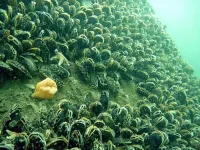
After several years of service under harsh weather conditions, the rotor blades of offshore wind parks are subjected to degradation and surface erosion, releasing sizeable quantities of particle emissions into the environment. A team of researchers led by the Alfred Wegener Institute has now investigated the effects of these particle on blue mussels – a species also being considered for the multi-use of wind parks for aquaculture. In the experiment, the mussels absorbed metals from the rotor blades’ coatings, as the team describes in a study just released in the journal Science of the Total Environment, where they also discuss ...

Read the release
Empowering young scientists to build a sustainable future
Environment

Empowering young scientists to build a sustainable future

As the world faces the pressing challenge of climate change, global and national organizations are on the constant lookout for strategies to combat this concern. In this vein, world leaders adopted the ‘Pact for the Future,’ including a Global Digital Compact and a Declaration on Future Generations as annexes, at the ‘Summit of the Future’ held at the United Nations (UN) Headquarters in September 2024. To align with the UN initiatives, the Global Young Academy (GYA), the International Research Center of Big Data for Sustainable ...

Read the release
First-of-its-kind study uses remote sensing to monitor plastic debris in rivers and lakes
Environment

First-of-its-kind study uses remote sensing to monitor plastic debris in rivers and lakes

MINNEAPOLIS / ST. PAUL (12/19/2024) — A first-of-its-kind study from researchers at the University of Minnesota Twin Cities shows how remote sensing can help monitor and remove plastic debris from freshwater environments like the Mississippi River. The research, published in Nature, a peer-reviewed scientific journal, helps to increase the understanding of plastic debris behavior in freshwater environments. Plastic pollution in oceans continues to be a growing environmental issue, with the United Nations Environment Programme naming it one of the leading pollution challenges. ...

Read the release
Living in the deep, dark, slow lane: Insights from the first global appraisal of microbiomes in earth’s subsurface environments
Environment

Living in the deep, dark, slow lane: Insights from the first global appraisal of microbiomes in earth’s subsurface environments

WOODS HOLE, Mass. -- Which microbes thrive below us in darkness – in gold mines, in aquifers, in deep boreholes in the seafloor – and how do they compare to the microbiomes that envelop the Earth’s surfaces, on land and sea? The first global study to embrace this huge question, conducted at the Marine Biological Laboratory (MBL), Woods Hole, reveals astonishingly high microbial diversity in some subsurface environments (up to 491 meters below the seafloor and up to 4375 m below ground). This discovery ...

Read the release
Small habitats, big consequences: Connectivity loss in pond networks threatens microbial biodiversity
Environment

Small habitats, big consequences: Connectivity loss in pond networks threatens microbial biodiversity

In the midst of the ongoing global biodiversity crisis, even the smallest habitats like ponds demand our attention. Fragmentation of these habitats—driven by human activities like urbanization, agriculture, and land-use changes—poses a significant threat to biodiversity. Often overlooked in conservation efforts, ponds serve as vital ecological hotspots, supporting diverse species and sustaining essential ecosystem processes. These waterbodies are home to various microbial communities that, despite their tiny size play an indispensable role in ecosystem functioning, acting ...

Read the release
Environment

Research uncovers high extinction risk for many Amazonian tree species

Among tree species in the Ecuadorian Amazon, investigators at the Universidad de las Américas, in Ecuador, found that 14% are critically endangered and 47% are endangered. The Plants, People, Planet study indicates that trees with smaller fruits face the greatest threats due to declines of specific animal species that disperse them. The findings reveal that the extinction risk for endemic trees is associated not only with extrinsic factors such as deforestation but also with complex relationships with other living organisms in their environment. “Thus, our results highlight the importance ...

Read the release
Step forward in generating solar-powered hydrogen
Environment

Step forward in generating solar-powered hydrogen

Another advance has been made by experts in nano-scale chemistry to propel further development of sustainable and efficient generation of hydrogen from water using solar power. In a new international collaborative study – led by Flinders University with collaborators in South Australia, the US and Germany – experts have identified a novel solar cell process to potentially use in future technologies for photocatalytic water splitting in green hydrogen production. Combined with a catalyst – developed by US research led by Professor Paul Maggard – for water splitting, the study found the new class of kinetically stable ...

Read the release
Environment

Wildfire surges in East, Southeast US fueled by new trees and shrubs

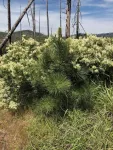
AGU press contact: Liza Lester, +1 (202) 777-7494, news@agu.org (UTC-5 hours) Researcher contact: Victoria Donovan, University of Florida, victoria.donovan@ufl.edu (UTC-5 hours) WASHINGTON — The eastern U.S. has more trees and shrubs than three decades ago. This growth, driven by processes such as tree and understory infilling in unmanaged forests, is helping fuel wildfires, contributing to changing fire regimes in the eastern half of the country, according to a new study. Some parts of the eastern and southeastern United States have experienced a tenfold increase ...

Read the release
The high cost of carbon
Environment

The high cost of carbon

The social cost of carbon — an important figure that global policymakers use to analyze the benefits of climate and energy policies — is too low, according to a study led by the University of California, Davis. The study, published today in the journal Proceedings of the National Academy of Sciences (PNAS), shows that current estimates for the social cost of carbon, or SCC, fail to adequately represent important channels by which climate change could affect human welfare. When included, the SCC increases to just over $280 per ton of CO2 emitted in 2020 — more than double the ...

Read the release
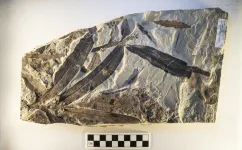
This mysterious plant fossil belongs to a family that no longer exists
Environment

This mysterious plant fossil belongs to a family that no longer exists

In 1969, fossilized leaves of the species Othniophyton elongatum — which translates to “alien plant” — were identified in eastern Utah. Initially, scientists theorized the extinct species may have belonged to the ginseng family (Araliaceae). However, a case once closed is now being revisited. New fossil specimens show that Othniophyton elongatum is even stranger than scientists first thought. Steven Manchester, curator of paleobotany at the Florida Museum of Natural History, has studied 47-million-year-old fossils from Utah for several years. While visiting ...

Read the release
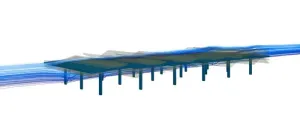
Training solar panels to dance with the wind
Environment

Training solar panels to dance with the wind

WASHINGTON, Dec. 17, 2024 – Solar power is currently the fastest growing energy sector worldwide. Solar photovoltaic power plants convert sunlight into electricity and their vast potential for producing clean, renewable energy make solar power a cornerstone of the NetZero Emissions by 2050 initiative, which seeks to cut carbon dioxide emissions to zero by the year 2050. Wind has both positive and negative effects on solar power grids. It helps maintain solar panel performance by eliminating the buildup of dirt and dust, and ...

Read the release
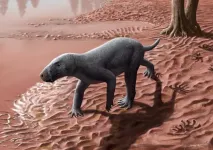
Fossil predator is the oldest known animal with “saber teeth”
Environment

Fossil predator is the oldest known animal with “saber teeth”

The first true mammals evolved roughly 200 million years ago, during the early days of the dinosaurs. But mammals are the last surviving members of an older group, called the therapsids. At first glance, many therapsids weren’t obviously mammal-like , but they also had subtle features that we recognize in mammals today, like a hole on the sides of their skull for the jaw muscle to attach and structures on their jaw bones that would eventually evolve into mammals' distinctive middle ear bones. In a new paper in the journal Nature Communications, scientists announce the discovery of a fossil therapsid ...

Read the release
Environment

Most coastal Arctic infrastructure faces instability by 2100

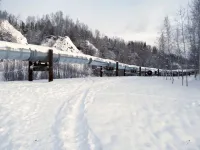
Researcher contacts: Annett Bartsch, b.geos GmbH, annett.bartsch@bgeos.com (UTC+1 hour) Rodrigue Tanguy, b.geos GmbH, rodrigue.tanguy@bgeos.com (UTC+1 hour) AGU press contact: Rebecca Dzombak, news@agu.org (UTC-5 hours) WASHINGTON — A new study has produced the first map of all coastal communities and infrastructure across the Arctic, showing the vulnerability of the built environment to threats from climate change. Erosion is currently the biggest threat to Arctic coastlines; some places are already experiencing ...

Read the release
Threat of abrupt mortality events keeps endangered monkey population at risk, despite decades of growth
Environment

Threat of abrupt mortality events keeps endangered monkey population at risk, despite decades of growth

Despite the population being almost four times larger than it was in 1982, a new study published in the journal Ecology suggests the northern muriqui monkeys remain at risk, especially in the face of ongoing habitat disturbances. Northern muriquis, which live in the Atlantic Forest of Brazil, are much more peaceful and egalitarian compared to other primates. They are also one of the most endangered species of monkey in the world. Karen Strier, a professor of anthropology at UW–Madison and lead author of the paper, has spent 40 years studying the behavior and ecology of these monkeys in a small, preserved portion ...

Read the release
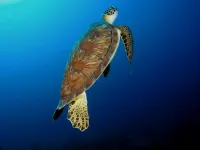
New study finds marine animals save energy by swimming in a depth ‘sweet spot’
Environment

New study finds marine animals save energy by swimming in a depth ‘sweet spot’

R,esearchers from Swansea and Deakin Universities have found that marine animals across mammals, birds and reptiles swim at similar relative depths when travelling and not feeding to save energy. Dr Kimberley Stokes, Professor Graeme Hays and Dr Nicole Esteban from Swansea and Deakin Universities, led research across six institutes in five countries comparing the swim depths of several sea turtle, penguin and whale species. All travelled at around three body depths from the surface in order to swim in the 'sweet spot' that minimises wave formation at the surface and vertical distance travelled. Some semi-aquatic animals, such as mink, swim at the surface where wave generation ...

Read the release
Shrubs can help or hinder a forest’s recovery after wildfire
Environment

Shrubs can help or hinder a forest’s recovery after wildfire

Research from the University of California, Davis, is shedding light on when and where to plant tree seedlings to help restore forests after high-severity wildfires, and it has a lot to do with shrubs. In hotter, drier areas where natural regeneration is weaker, well-timed tree planting can boost recovery by up to 200%, but the outcome also depends on competition with shrubs, a paper in the journal Forest Ecology and Management concludes. “Generally, where there are more shrubs, the climate and soil are more hospitable for plant growth,” ...

Read the release
New research about drought impacts on wildlife can inform conservation strategies
Environment

New research about drought impacts on wildlife can inform conservation strategies

FORT COLLINS, Colo., December 11, 2024 — People around the world are dealing with drought, so it’s not shocking that it affects wildlife, too: lack of moisture contributes to habitat loss, affects how animals compete for resources, and leads to dehydration and heat stress. The surprising part? The extreme degree to which many animals may need to adapt. New research predicts that many wildlife species in the continental United States will experience year-long droughts nearly five times as often in the coming decades (2050-2080) than they did historically (1950-2005). In an even more dramatic turn of events, three-year droughts ...

Read the release
Microplastics floating in water, caught by floating drones
Environment

Microplastics floating in water, caught by floating drones

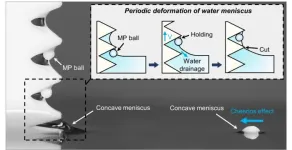
In recent years, microplastics have garnered significant attention due to their detection in tap and bottled water, as well as in rivers, lakes, and oceans. Conventional filtering technologies for water treatment have difficulty effectively filtering out microplastics of various sizes and shapes and are prone to clogging. Additionally, recovering small particles requires extremely fine filter meshes, which increases pressure and drastically reduces filter efficiency. Furthermore, they are not effective in open spaces such as lakes, rivers, or oceans, where microplastic pollution is increasing. Dr. Seong Jin Kim ...

Read the release
From the original Press-News collection. Issuers of news releases are responsible for the accuracy of their content.