THE ORIGINAL COLLECTION · SINCE 2010

Environment
press releases.

Research announcements from universities, hospitals and scientific institutions. Explore the stories, people and discoveries behind the headlines.

Original publication datesPage 81
FIND A STORY

Find a past release.

Dates and source material belong to the original release.

Read our research explainers

Browse the collection · original publication order

Brazilian fossils reveal jaw-dropping discovery in mammal evolution
Environment

Brazilian fossils reveal jaw-dropping discovery in mammal evolution

These fossils, belonging to the mammal-precursor species Brasilodon quadrangularis and Riograndia guaibensis, offer critical insights into the development of the mammalian jaw and middle ear, revealing evolutionary experiments that occurred millions of years earlier than previously thought. Mammals stand out among vertebrates for their distinct jaw structure and the presence of three middle ear bones. This transition from earlier vertebrates, which had a single middle ear bone, has long fascinated scientists. The new study explores how mammal ancestors, known as cynodonts, evolved these features ...

Read the release

Major boost in carbon capture and storage essential to reach 2°C climate target
Environment

Major boost in carbon capture and storage essential to reach 2°C climate target

Large expansion of carbon capture and storage is necessary to fulfill the Paris Climate Agreement. Yet a new study led by Chalmers University of Technology, in Sweden and University of Bergen, in Norway, shows that without major efforts, the technology will not expand fast enough to meet the 2°C target and even with major efforts it is unlikely to expand fast enough for the 1.5°C target. The idea behind carbon capture and storage (CCS) technology is to capture carbon dioxide then store it deep underground. Some applications of CCS, such ...

Read the release
‘Invisible forest’ of algae thrives as ocean warms
Environment

‘Invisible forest’ of algae thrives as ocean warms

An “invisible forest” of phytoplankton is thriving in part of our warming ocean, new research shows. Phytoplankton are tiny drifting organisms that do about half of the planet’s “primary production” (forming living cells by photosynthesis). The new study, by the University of Exeter, examined phytoplankton at the ocean surface and the “subsurface” – a distinct layer of water beneath – to see how climate variability is affecting them. Published in the journal Nature Climate Change, the findings show these two communities are reacting differently. Over the last decade, the total “biomass” (living material) of subsurface ...

Read the release
Nanostructures in the deep ocean floor hint at life’s origin
Environment

Nanostructures in the deep ocean floor hint at life’s origin

Researchers led by Ryuhei Nakamura at the RIKEN Center for Sustainable Resource Science (CSRS) in Japan and The Earth-Life Science Institute (ELSI) of Tokyo Institute of Technology have discovered inorganic nanostructures surrounding deep-ocean hydrothermal vents that are strikingly similar to molecules that make life as we know it possible. These nanostructures are self-organized and act as selective ion channels, which create energy that can be harnessed in the form of electricity. Published Sep. 25 in Nature Communications, the findings impact not only our understanding of how life began, but can also ...

Read the release
Citizen scientists help discover microplastics along the entire German coastline
Environment

Citizen scientists help discover microplastics along the entire German coastline

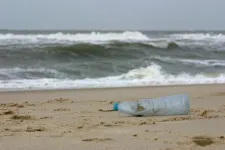
The global production of plastics and the resulting plastic waste has increased to such an extent that plastics have become ubiquitous in our environment. Plastics of various sizes are also found along the German North Sea and Baltic coasts. Previous studies of microplastic pollution on German beaches have often been limited to a few locations. In the citizen science project “Microplastic Detectives”, researchers from the Alfred Wegener Institute, together with citizens, have now collected samples from beaches along the entire German coast to be analyzed for microplastics. The resulting dataset is the first to be large enough to ...

Read the release
Fossils from the Adriatic Sea show a recent and worrying reversal of fortunes
Environment

Fossils from the Adriatic Sea show a recent and worrying reversal of fortunes

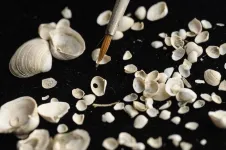
If you’d stopped monitoring the Adriatic Sea’s marine life in the mid-20th century, the outlook would have been promising. Snails and the clams they hunt for food increased in abundance for several decades during the late 1800s and early 1900s, evidence of a vibrant and healthy ecosystem. Then, a threshold was crossed. Populations of both predator and prey abruptly plummeted and in some cases disappeared entirely. They were replaced by the common corbulid clam (Varicorbula gibba), which has the ability to slow down its metabolism in unfavorable conditions. Whenever paleontologists find an abundance of this species in the marine fossil record, it often means ...

Read the release
With curtailed carbon emissions, corals can survive climate change
Environment

With curtailed carbon emissions, corals can survive climate change

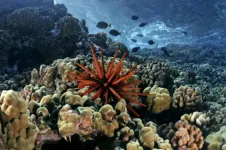
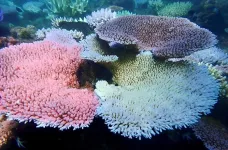
KANEOHE, HI (Sept 24, 2024 1:05 p.m. HST)- In a study published today in Proceedings of the Royal Society B, researchers at the UH Hawaiʻi Institute of Marine Biology (HIMB) Toonen- Bowen “ToBo” Lab have identified scenarios under which eight of the most common species of coral found in Hawaiʻi can adapt to and survive ocean warming and acidification. The corals in the study are prevalent throughout the Indo-Pacific, a region that comprises more than two-thirds of the coral reefs on planet Earth, and were found to be capable of surviving a “low ...

Read the release
Atmospheric blocking slows ocean-driven melting of Greenland’s largest glacier tongue
Environment

Atmospheric blocking slows ocean-driven melting of Greenland’s largest glacier tongue

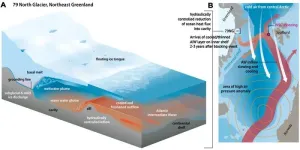
Northeast Greenland is home to the 79° N Glacier – the country’s largest floating glacier tongue, but also one seriously threatened by global warming: warm water from the Atlantic is melting it from below. Experts from the Alfred Wegener Institute have however now determined that the temperature of the water flowing into the glacier cavern declined from 2018 to 2021, even though the ocean has steadily warmed in the region over the past several decades. This could be due to temporarily changed atmospheric circulation patterns. ...

Read the release
Abrupt intensification of northern wildfires due to future permafrost thawing
Environment

Abrupt intensification of northern wildfires due to future permafrost thawing

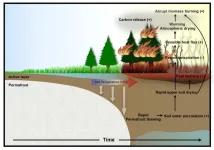
A study, published in the journal Nature Communications by an international team of climate scientists and permafrost experts shows that, according to new climate computer model simulations, global warming will accelerate permafrost thawing and as a result lead to an abrupt intensification of wildfires in the Subarctic and Arctic regions of northern Canada and Siberia. Recent observational trends suggest that warm and unusually dry conditions have already intensified wildfires in the Arctic region. To understand ...

Read the release
Greenhouse gas emissions from silage fed to livestock
Environment

Greenhouse gas emissions from silage fed to livestock

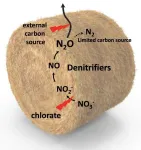
Changes in silage production could help cut greenhouse gas emissions from agriculture. Agriculture is the largest source of nitrous oxide (N2O) emissions in the United States. N2O is the third most impactful greenhouse gas, yet one potential source—silage—has not been thoroughly studied. Silage, which is moist, harvested plant material used to feed livestock during the winter, is preserved through fermentation. During this process, anaerobic bacteria produce lactic acid, which prevents the plants from spoiling. Jeongdae Im and colleagues suggest that silage could be a significant ...

Read the release
New species of flatworm invading the United States
Environment

New species of flatworm invading the United States

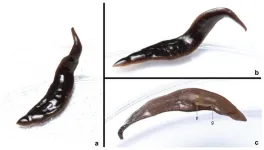
A new species of flatworm has been discovered and has already invaded several states in the southern United States. The particularity of the new species is that it looks a lot like Obama nungara, a species that has invaded much of Europe. The new species has been named Amaga pseudobama in reference to this resemblance. An international team reports the discovery of a new species of flatworm. The team includes researchers from National Museum of Natural History in Paris, France, Drexel University and North Carolina State ...

Read the release
New catalyst developed for sustainable propylene production from biomass
Environment

New catalyst developed for sustainable propylene production from biomass

Achieving carbon neutrality requires the effective use of renewable biomass. In the production of biodiesel, for instance, glycerol is generated as a major byproduct. Researchers at Osaka Metropolitan University have developed a new catalyst that efficiently converts a derivative of glycerol into bio-based propylene, contributing to sustainable chemical production. Propylene is typically produced from petroleum and is widely used in the manufacture of plastics, such as automobile bumpers and food containers. The research team, led by Associate Professor Shin Takemoto and Professor Hiroyuki Matsuzaka from the Graduate School of Science, developed a catalyst that ...

Read the release
Environment

New study raises questions about validity of standard model of solar flares

Solar flares are extremely intense events that occur in the Sun’s atmosphere, lasting anywhere from a few minutes to several hours. According to the standard flare model, the energy that triggers these explosions is transported by accelerated electrons that hurtle from the magnetic reconnection region in the corona to the chromosphere. As the electrons collide with the chromospheric plasma, they deposit their energy in the plasma, which is heated and ionized as a result. They also cause intense radiation in several ...

Read the release
Wayne State University awarded grant to combat microplastics in the Great Lakes
Environment

Wayne State University awarded grant to combat microplastics in the Great Lakes

DETROIT — Wayne State University researchers recently received a grant from the Great Lakes Protection Fund to team with the Huron River Watershed Council, the Cleveland Water Alliance, Buffalo Niagara Waterkeeper and Resource Recycling Systems to help communities combat microplastics in water sources. The project, “Mobilizing a Great Lakes Microplastic Action Network,” is led by Yongli Wager, Ph.D., associate professor of civil and environmental engineering and director of the Sustainable Water-Environment-Energy Technologies Lab in Wayne State’s College of Engineering. The project’s goal is to create ...

Read the release
Environment

Unlocking the secrets of multispecies hunting

The diving gear is on, the cameras are ready – biologist Eduardo Sampaio and his colleagues are set to go. They dive in the Red Sea, scanning left and right underwater – and wonder: Where can an octopus hunting be found? Finally, they spot one. The team operates the two cameras they have with them, and station many more to collect data. Then, it’s time to wait. Months later, after analyzing more than 100h of film material from dives in Israel, Egypt, and Australia, Eduardo Sampaio is more ...

Read the release
Environment

Transforming agriculture from carbon source to sink

The food system is one of the most significant sources of greenhouse gas emissions on the planet, making the reduction of emissions in this sector a priority for policymakers around the world. IIASA researchers explored the potential of carbon sequestration on farmland to combat climate change, offering insights into economic effects as well as its climate change mitigation potential. Carbon sequestration on agricultural land refers to the process of capturing and storing carbon dioxide (CO2) from the atmosphere in soil and plants on farms. According to the authors of ...

Read the release
Study reveals high rates of seafood mislabeling and ambiguous market names in Calgary, Alberta, highlighting species of conservation concern
Environment

Study reveals high rates of seafood mislabeling and ambiguous market names in Calgary, Alberta, highlighting species of conservation concern

A new peer-reviewed study published in PeerJ Life and Environment has uncovered alarming levels of seafood mislabeling and the use of ambiguous market names in Calgary's seafood market, often concealing species of conservation concern. This research marks the first Canadian study to investigate both invertebrate and finfish mislabeling and the implications of unclear market names. The study, titled "Mislabeled and Ambiguous Market Names in Invertebrate and Finfish Seafood Conceal Species of Conservation ...

Read the release
Environment

Leading scientists redefine ‘sustainability’ to save the ocean and feed a hungry and warming planet

Top ocean experts have published a report that redefines the concept of “sustainable fishing” and proposes 11 “golden rules” that radically challenge the flawed approach that currently prevails in fisheries management. Published a week before Brussels’ Ocean Week, and a few months before the UN Ocean Conference in Nice, the rules have been devised to put an end to the ongoing destruction of the oceans caused by fishing, and ensure the renewal of abundant fish populations to feed future generations. They come at a time when scientists have drastically downgraded their assessment of the ocean’s health status. The rules ...

Read the release
How remarkable diversity in heat tolerance can help protect coral reefs
Environment

How remarkable diversity in heat tolerance can help protect coral reefs

New research out of Southern Cross University has found previously undocumented variation in coral heat tolerance on Australia's Great Barrier Reef, giving hope that corals’ own genetic resources may hold the key for us to help in its recovery and adaptation. In a study to be published (at 10am BST, Mon Sept 23, 2024) in Communications Earth and Environment, researchers measured the bleaching thresholds of more than 500 colonies of the table coral, Acropora hyacinthus, using a portable experimental system that was used at sea at 17 reefs spanning the Great Barrier Reef. The study was led by Southern Cross University PhD candidate Melissa ...

Read the release
Study reveals large ocean heat storage efficiency during the last deglaciation
Environment

Study reveals large ocean heat storage efficiency during the last deglaciation

As one of the largest heat reservoirs in the climate system, the global ocean absorbs more than 90% of the excess energy from ongoing anthropogenic warming. In the last century, the greatest warming in the ocean has occurred in the upper 500 m, with relatively weak warming in the deep ocean, corresponding to a small ocean heat storage efficiency of ~0.1. Paleoceanographic observations, however, suggest that on long time scales, the deep ocean warming can be comparable to or larger than the surface ocean warming, with ocean heat storage efficiency during the last ...

Read the release
Wastewater monitoring can detect foodborne illness, researchers find
Environment

Wastewater monitoring can detect foodborne illness, researchers find

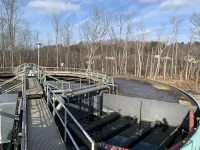
UNIVERSITY PARK, Pa. — First used in the 1940s to monitor for polio, wastewater surveillance proved such a powerful disease monitoring tool that the U.S. Centers for Disease Control and Prevention (CDC) established the National Wastewater Surveillance System to support SARS-CoV-2 monitoring in September of 2020. Now, a team of scientists from Penn State and the Pennsylvania Department of Health have shown that domestic sewage monitoring is useful for a foodborne pathogen as well. In findings published today (Sept. 19) in the Journal of Clinical ...

Read the release
Deforestation in the Amazon is driven more by domestic demand than by the export market
Environment

Deforestation in the Amazon is driven more by domestic demand than by the export market

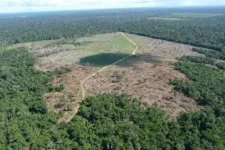
Brazilian Legal Amazonia (BLA) – which comprises the entirety of the Amazon Basin located in Brazil and vast adjacent swathes of the Cerrado, spanning nine states – is more than 5 million square kilometers (km2) in area and corresponds to almost 60% of the country’s land mass. Almost a quarter of this area (23%) has been deforested, and over 1 million km2 are degraded, so that the region risks reaching an ecological tipping point at which ecosystems collapse and billions of tons of carbon are released into the atmosphere. Some parts of ...

Read the release
Microplastics found in coral skeletons
Environment

Microplastics found in coral skeletons

Fukuoka, Japan—Researchers from Japan and Thailand investigating microplastics in coral have found that all three parts of the coral anatomy—surface mucus, tissue, and skeleton—contain microplastics. The findings were made possible thanks to a new microplastic detection technique developed by the team and applied to coral for the first time. These findings may also explain the ‘missing plastic problem’ that has puzzled scientists, where about 70% of the plastic litter that has entered the oceans cannot be found. The team hypothesizes ...

Read the release

European Green Deal: a double-edged sword for global emissions
Environment

European Green Deal: a double-edged sword for global emissions

The European Union aims to be carbon-neutral by 2050 as part of the comprehensive Green Deal that was agreed upon four years ago. However, an analysis of the policy documents outlining the practical measures of the Green Deal shows that it will decrease carbon emissions in Europe, but also increase carbon emissions outside of the EU. This increase is more than double the amount of carbon emissions saved by the Green Deal. This analysis was published in Nature Sustainability on by an international team of scientists led by Klaus Hubacek, Professor of Science, Technology and Society ...

Read the release
Environment

Oceanic life found to be thriving thanks to Saharan dust blown from thousands of kilometers away

Iron is a micronutrient indispensable for life, enabling processes such as respiration, photosynthesis, and DNA synthesis. Iron availability is often a limiting resource in today’s oceans, which means that increasing the flow of iron into them can increase the amount of carbon fixed by phytoplankton, with consequences for the global climate. Iron ends up in oceans and terrestrial ecosystems through rivers, melting glaciers, hydrothermal activity, and especially wind. But not all its chemical forms are ‘bioreactive’, that is, available for organisms ...

Read the release
From the original Press-News collection. Issuers of news releases are responsible for the accuracy of their content.