THE ORIGINAL COLLECTION · SINCE 2010

Environment
press releases.

Research announcements from universities, hospitals and scientific institutions. Explore the stories, people and discoveries behind the headlines.

Original publication datesPage 82
FIND A STORY

Find a past release.

Dates and source material belong to the original release.

Read our research explainers

Browse the collection · original publication order

Innovating alloy production: A single step from ores to sustainable metals
Environment

Innovating alloy production: A single step from ores to sustainable metals

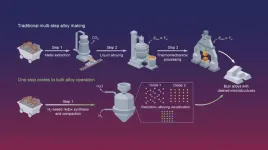
Metal production is responsible for 10% of global CO2 emissions, with iron production emitting two tons of CO2 for every ton of metal produced, and nickel production emitting 14 tons of CO2 per ton and even more, depending on the ore used. These metals form the foundation of alloys that have a low thermal expansion, called Invar. They are critical for the aerospace, cryogenic transport, energy and precision instrument sectors. Recognizing the environmental toll, scientists at the Max Planck Institute for Sustainable Materials (MPI-SusMat) have now developed a new method to produce Invar alloys without emitting ...

Read the release

New study charts how Earth’s global temperature has drastically changed over the past 485 million years, driven by carbon dioxide
Environment

New study charts how Earth’s global temperature has drastically changed over the past 485 million years, driven by carbon dioxide

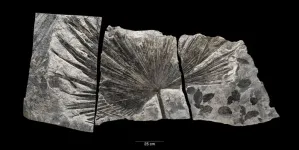
A new study co-led by the Smithsonian and the University of Arizona offers the most detailed glimpse yet of how Earth’s surface temperature has changed over the past 485 million years. In a paper published today, Sept. 19, in the journal Science, a team of researchers, including paleobiologists Scott Wing and Brian Huber from the Smithsonian’s National Museum of Natural History, produce a curve of global mean surface temperature (GMST) across deep time—the Earth’s ancient past stretching over many millions of years. ...

Read the release
Environment

Scientists say we have enough evidence to agree global action on microplastics

Science has provided more than sufficient evidence to inform a collective and global approach to tackle the continued spread of plastic pollution, according to a new report. Writing in the journal Science, an international group of experts say the need for worldwide action to tackle all forms of plastic and microplastic debris has never been more pressing. It is clear that existing national legislation alone is insufficient to address the challenge, they say, and the United Nations’ Plastic Pollution Treaty ...

Read the release
Environment

485 million-year temperature record of Earth reveals Phanerozoic climate variability

Estimating past global temperature is important for understanding the history of life on Earth and for predicting future climate. Now, a new reconstruction of Earth’s temperature history over the past 485 million years – based on a method that combines diverse physical proxy data with climate model predictions – reveals a much wider range of climate variability across the Phanerozoic eon than previously understood. The findings highlight atmospheric carbon dioxide (CO2) as the dominant factor controlling climate variability throughout this period, offering new ...

Read the release
Environment

Atmospheric blocking slows ocean-driven glacier melt in Greenland

Cooling in the subsurface waters beneath Greenland’s Nioghalvfjerdsfjorden Glacier (79NG) from 2018 to 2021 was driven by European atmospheric blocking, which forced changes in the large-scale ocean circulation of the Nordic seas, researchers report, slowing glacial melt, despite ongoing global warming trends. The findings highlight the importance of regional atmospheric dynamics in influencing glacier stability. Understanding these dynamics is key to predicting the future of glaciers like ...

Read the release
Study: Over nearly half a billion years, Earth’s global temperature has changed drastically, driven by carbon dioxide
Environment

Study: Over nearly half a billion years, Earth’s global temperature has changed drastically, driven by carbon dioxide

Published in the journal Science, the study presents a curve of global mean surface temperature that reveals Earth's temperature has varied more than previously thought over much of the Phanerozoic Eon a period of geologic time when life diversified, populated land and endured multiple mass extinctions. The curve also confirms Earth's temperature is strongly correlated to the amount of carbon dioxide in the atmosphere. The start of the Phanerozoic Eon 540 million years ago is marked by the Cambrian ...

Read the release
Global assessment: How to make climate adaptation a success
Environment

Global assessment: How to make climate adaptation a success

Climate change is forcing people to adapt to changing environmental conditions. But what really makes the difference is how they do it. The recently published Hamburg Climate Futures Outlook 2024 by 73 authors shows that, in the long run, only sustainable adaptation can succeed. This global assessment by University of Hamburg’s Cluster of Excellence Climate, Climatic Change, and Society (CLICCS) also provides practical recommendations. “Successfully adapting to the impacts of climate change is just as difficult and challenging as reducing emissions of every kind,” says Anita Engels, Professor of Sociology ...

Read the release
Global warming leads to drier and hotter Amazon: reducing uncertainty in future rainforest carbon loss
Environment

Global warming leads to drier and hotter Amazon: reducing uncertainty in future rainforest carbon loss

The Amazon, often called the "lungs of the planet", is the world’s largest tropical forest, playing a crucial role in the global climate system due to its vast carbon storage. While it is typically warm and humid all year round, continued climate change poses the threat of more frequent and severe droughts and heat extremes. A new study, published in Nature Communications delves into future projections of the Amazon carbon cycle, focusing specifically on the impacts driven by climate change. Scientists use the latest generation of Earth system models from the Coupled Model Intercomparison Project which contributed to ...

Read the release
Environment

Reducing floodplain development doesn’t need to be complex

A new paper in Oxford Open Climate Change, published by Oxford University Press, uncovers evidence suggesting that, contrary to expectations, most U.S. cities are not doing too badly in avoiding development in areas prone to flooding, and those that are effective appear to be applying existing tools and strategies well, rather than doing anything particularly novel. Despite billions of dollars of investments and widespread mitigation efforts, the costs of disasters in the United States have grown dramatically. ...

Read the release
Exotic species invasions enhance biodiversity response to climate change
Environment

Exotic species invasions enhance biodiversity response to climate change

Globally, more than 13,000 plant species, equivalent to the entire native flora of Europe, have been naturalized outside their native ranges. A recent study, jointly conducted by scientists from China and the USA, has provided new insights about biodiversity, exotic invasion, and their relationship to climate change. Published in Nature Plants, the research uncovers the climatic niche mechanisms that shape both the vulnerability of native ecosystems and the invasiveness of exotic species in a warming world. A long-standing debate exists over the impact of exotic species on native ecosystems and ...

Read the release
Arctic warming may fuel ice formation in clouds
Environment

Arctic warming may fuel ice formation in clouds

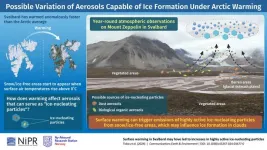
The Arctic frequently experiences temperatures that support the formation of mixed-phase clouds that contain supercooled liquid droplets and ice crystals. The composition of such clouds plays a crucial role in the region's energy balance and climate system. Clouds with more liquid last longer and reflect more sunlight than those with more ice crystals. With Arctic warming, meteorologists have been interested in determining the effect of rising temperatures on cloud composition and its broader effect on the region. Climate models generally predict that as the Arctic warms, clouds in the region will ...

Read the release
South African rock art possibly inspired by long-extinct species
Environment

South African rock art possibly inspired by long-extinct species

A mysterious tusked animal depicted in South African rock art might portray an ancient species preserved as fossils in the same region, according to a study published September 18, 2024 in the open-access journal PLOS ONE by Julien Benoit of the University of the Witwatersrand, Johannesburg, South Africa. The Horned Serpent panel is a section of rock wall featuring artwork of animals and other cultural elements associated with the San people of South Africa, originally painted between 1821 and 1835. Among the painted figures is ...

Read the release
Even marine animals in untouched habitats are at risk from human impacts
Environment

Even marine animals in untouched habitats are at risk from human impacts

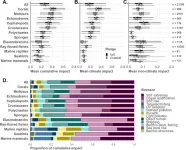
Climate change and a range of other human impacts are putting marine animals at risk of extinction – even those living in almost pristine marine habitats and diverse coastal regions – reports a new study by Casey O'Hara of the National Center for Ecological Analysis and Synthesis at the University of California, Santa Barbara, USA, and colleagues, published September 18, 2024 in the open-access journal PLOS ONE. Human activities on land and sea, in combination with climate change, are degrading coastal ...

Read the release
Environment

If you build it, will they come? Wildlife corridors need smarter design

As human population and development continue to expand, it’s more important than ever to set aside corridors of undeveloped land where wildlife can travel safely, helping to ensure their long-term survival. However, a recent study by the University of Maryland reveals that current methods of designing and evaluating wildlife corridors may not be adequate to ensure wildlife protection, and suggests that Best Management Practices should include analyzing corridors with a smarter and more thorough framework. University researchers tested different ...

Read the release
Another new wasp species discovered by researchers Rice campus
Environment

Another new wasp species discovered by researchers Rice campus

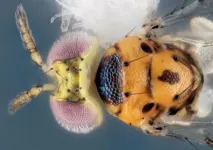
A newly identified wasp species, Chrysonotomyia susbelli, has been discovered in Houston, Texas, marking the 18th new species identified by Rice University’s Scott Egan and his research team since 2014. The discovery, the fourth wasp species found on the university grounds in seven years, reveals the hidden world of parasitoid wasps and the intricate ecosystems that thrive outside our doors. The Chrysonotomyia susbelli is a parasitoid wasp, about 1 millimeter long, that emerges from galls, or tumorlike growths created by the gall wasp Neuroterus bussae found on southern live oak leaves. The galls serve as microhabitats within which larvae feed, develop and pupate. ...

Read the release
Greenhouse gains: cucumbers get a genetic upgrade through innovative pollen tech
Environment

Greenhouse gains: cucumbers get a genetic upgrade through innovative pollen tech

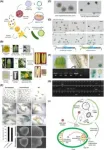
Researchers have achieved a groundbreaking advancement in plant biotechnology by using a magnetofected pollen gene delivery system to genetically transform cucumbers. This cutting-edge method uses DNA-coated magnetic nanoparticles to introduce foreign genes into pollen, producing genetically modified seeds without the need for traditional tissue culture or regeneration steps. This technique significantly streamlines and accelerates crop genetic modification, opening up new avenues to boost agricultural productivity and resilience. Genetic modification in horticultural crops, particularly within the Cucurbitaceae family, is often hindered by complex tissue culture requirements and ...

Read the release
How can climate adaptation succeed in the long run?
Environment

How can climate adaptation succeed in the long run?

Invitation for Members of the Press How can climate adaptation succeed in the long run? On the basis of nine case studies from around the world, the Hamburg Climate Futures Outlook 2024 identifies the conditions for successfully and sustainably adapting to the impacts of climate change. A study recently released by the University of Hamburg’s Cluster of Excellence for climate research (CLICCS) demonstrates the urgent need for developing new adaptation strategies while also reducing climate-harmful emissions – and offers corresponding practical recommendations. As in past installments, the experts assessed ten key social processes that are relevant for deep ...

Read the release
Moving particle simulation-aided soil plasticity analysis for earth pressure balance shield tunnelling
Environment

Moving particle simulation-aided soil plasticity analysis for earth pressure balance shield tunnelling

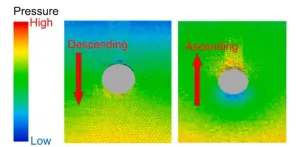
Infrastructures often suffer severe damage due to geotechnical hazards of both natural kinds such as floods or earthquakes and man-made ones like underground construction work and excavations. The fields of civil engineering and disaster risk management have extensively studied methods to prevent these risks and are still looking for more effective ways of avoiding large-scale deformations associated with said hazards. The advent of computer-aided simulations has provided researchers with particle-based methods such as moving particle ...

Read the release
How does a tiny shrimp find its way home in a vast ocean? Study finds it’s down to their cave’s special smell
Environment

How does a tiny shrimp find its way home in a vast ocean? Study finds it’s down to their cave’s special smell

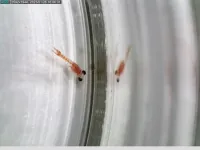
Homing is an animal’s ability to navigate towards an original location, such as a breeding spot or foraging territory. Salmon and racing pigeons are famous for homing, but similar behaviors occur in groups as diverse as bees, frogs, rats, and sea turtles. There, homing individuals are known or suspected to rely on landmarks, the Earth’s magnetic field, or the sky’s pattern of polarized light to find their way back. Another group known to display homing are cave-dwelling mysid shrimp, also known as possum shrimp for the pouches in which females carry ...

Read the release
Environment

‘Marine identity’ can help restore the ocean

People’s deep connection with the ocean – their “marine identity” – can help us reset society’s relationship with the seas, new research led by Dr Pamela Buchan, from the University of Exeter, suggests. A diverse, international group of marine researchers and practitioners met to discuss marine identity – based on testimony and photos from multiple countries. The group included Diz Glithero of the Canadian Ocean Literacy Coalition, Dr Emma McKinley of Cardiff University who helped deliver the workshop, and others from across Europe, Africa, Indonesia, North America, and Australasia. They found many common themes, including traditions ...

Read the release
Under-plant mirrors improve endangered plant survival and growth
Environment

Under-plant mirrors improve endangered plant survival and growth

The most endangered plant species in the Mariana Islands, the legume tree Serianthes nelsonii, faces persistent threats in its recovery. These have been identified as a short lifespan of habitat seedlings and rapid death of saplings transplanted from conservation nurseries. The Plant Physiology Laboratory at the University of Guam addressed this conundrum by improving growth and survival of Serianthes seedlings through strategically placed mirrors beneath deeply shaded seedlings to increase available ambient light. The resulting paper has been published ...

Read the release
Fraunhofer IAF low-noise amplifiers aboard the Arctic Weather Satellite
Environment

Fraunhofer IAF low-noise amplifiers aboard the Arctic Weather Satellite

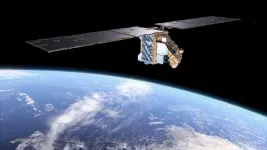
The Arctic Weather Satellite (AWS) of the European Space Agency (ESA) was sent on its journey to a polar orbit 600 km above the Earth on August 16, 2024. On board: four low-noise amplifiers (LNAs) from the Fraunhofer Institute for Applied Solid State Physics IAF in Freiburg. They are essential components of the passive microwave radiometer with which the AWS measures temperature and humidity in the Arctic more precisely than ever before. This should contribute to a better understanding of both the Arctic and the climate change that is particularly visible in it. If the mission is successful, ...

Read the release
Urgent conservation efforts needed: Small population size and possible extirpation of the threatened malagasy poison frog Mantella cowanii
Environment

Urgent conservation efforts needed: Small population size and possible extirpation of the threatened malagasy poison frog Mantella cowanii

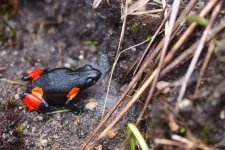
New research highlights the precarious status of one of Madagascar's most threatened amphibians, the harlequin mantella (Mantella cowanii), revealing small population sizes and the possible extirpation of the species from several of its historic habitats. The findings underscore the urgent need for targeted conservation action to prevent the species from slipping further towards extinction. Research Findings: A Dire Situation Amphibians around the world are facing unprecedented population declines, and Mantella cowanii is no exception. The study, which focused on confirming the frog’s presence at historic localities and estimating its population size ...

Read the release
Environment

Contrail avoidance is less likely to damage climate by mistake than previously thought

A new study allays fears that rerouting flights to avoid forming climate-warming contrails could result in inadvertently making climate warming worse. Researchers from Sorbonne Universite and the University of Reading found that for most flights that form contrails in the North Atlantic, the climate benefit of avoiding the contrail outweighs the extra carbon dioxide emitted from flying a different route. Contrail avoidance requires comparing the climate impacts of carbon dioxide and contrails, called CO2 equivalence. Different methods have been proposed, and the choice of which has been largely political. Scientists feared that some choices ...

Read the release
An ‘invasive’ marine organism has become an economic resource in the eastern Mediterranean
Environment

An ‘invasive’ marine organism has become an economic resource in the eastern Mediterranean

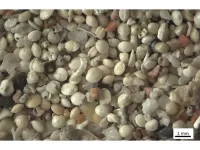
Media Contact: John Dudley (814) 490-3290 (cell) jjdudley@usf.edu KEY TAKEAWAYS: A species of single-celled organisms called foraminifera (forams) is increasing in warm, alkaline waters of the eastern Mediterranean, building beaches with their calcium carbonate skeletons. In regions like Turke, forams are creating sandy shorelines where there used to be rocky terrain, benefiting tourism. Forams thrive in warm waters with high CO2, suggesting they might continue growing as climate change accelerates. This species of foram, once native to the Mediterranean, is returning as human activities make ...

Read the release
From the original Press-News collection. Issuers of news releases are responsible for the accuracy of their content.