THE ORIGINAL COLLECTION · SINCE 2010

Environment
press releases.

Research announcements from universities, hospitals and scientific institutions. Explore the stories, people and discoveries behind the headlines.

Original publication datesPage 83
FIND A STORY

Find a past release.

Dates and source material belong to the original release.

Read our research explainers

Browse the collection · original publication order

UTA harvests first climate-smart soybean crop
Environment

UTA harvests first climate-smart soybean crop

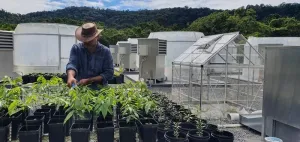
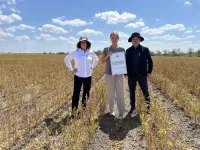
UT Arlington biologists, working with underserved farmers in South Texas, have harvested their first crop of climate-smart soybeans. This harvest is part of a four-and-a-half-year, $5 million project funded by the U.S. Department of Agriculture (USDA) to test whether climate-smart agricultural practices can reduce emissions of greenhouse gases (GHGs) responsible for climate change—including carbon dioxide, methane, and nitrous oxide—while simultaneously increasing crop production. “We ...

Read the release
Environment

US food waste bans fail to reduce landfill waste, except in Massachusetts

State-level bans on commercial organic waste disposal have largely failed to reduce landfilled waste across the U.S., with one state standing out as the lone success, according to a new study. Massachusetts alone achieved a significant reduction in landfilled waste when it implemented food waste bans. The findings underscore the importance of well-designed and enforced policies, with Massachusetts offering a potential model for effective waste management. “Our study shows that food waste bans are far from guaranteed to be successful,” ...

Read the release
Environment

Greenland landslide-induced tsunami produced global seismic signal that lasted 9 days

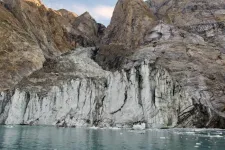
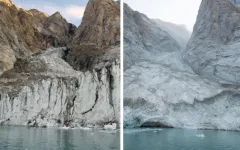
In 2023, a massive rockslide in East Greenland, driven by glacial melt, triggered a towering tsunami and a rare global seismic signal that resonated for nine days, according to a new study. The study provides insights into how climate change-induced events like glacial thinning can lead to significant geophysical phenomena with impacts extending throughout the Earth system. Due to climate change, steep slopes are increasingly vulnerable to landslides. In Arctic regions – which are undergoing the most rapid warming globally ...

Read the release
Climate change-triggered landslide unleashes a 650-foot mega-tsunami
Environment

Climate change-triggered landslide unleashes a 650-foot mega-tsunami

In September 2023, scientists around the world detected a mysterious seismic signal that lasted for nine straight days. An international team of scientists, including seismologists Alice Gabriel and Carl Ebeling of UC San Diego’s Scripps Institution of Oceanography came together to solve the mystery. A new study published today in Science provides the stunning solution: In an East Greenland fjord, a mountaintop collapsed into the sea and triggered a mega-tsunami about 200 meters (650 feet) tall. The giant ...

Read the release
Environment

New study reveals food waste bans ineffective in reducing landfill waste, except in Massachusetts

Of the first five U.S. states to implement food waste bans, only Massachusetts was successful at diverting waste away from landfills and incinerators, according to a new study from the University of California Rady School of Management. The paper, published today in Science, suggests a need to reevaluate current strategies, citing Massachusetts' approach as a benchmark for effective policy implementation. Between 2014 and 2024, nine U.S. states made it unlawful for commercial waste generators—such as grocery chains—to dispose of their food waste in landfills, expecting a 10–15% waste reduction. “We ...

Read the release

Climate-change-triggered landslide caused Earth to vibrate for nine days
Environment

Climate-change-triggered landslide caused Earth to vibrate for nine days

A landslide in a remote part of Greenland caused a mega-tsunami that sloshed back and forth across a fjord for nine days, generating vibrations throughout Earth, according to a new study involving UCL researchers. The study, published in the journal Science, concluded that this movement of water was the cause of a mysterious, global seismic signal that lasted for nine days and puzzled seismologists in September 2023. The initial event, not observed by human eye, was the collapse of a 1.2km-high mountain peak into the remote Dickson Fjord beneath, causing a backsplash of water 200 metres in the air, with a wave up to 110 metres high. This ...

Read the release
Development strategies for using carbon-based catalysts in CO2 conversion
Environment

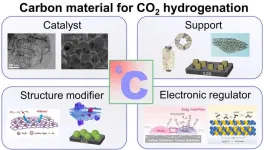
Development strategies for using carbon-based catalysts in CO2 conversion

One of the primary drivers of climate change, CO2 emissions, have reached over 35 million tons worldwide. With global annual temperatures still rising, reducing CO2 emissions has become a necessity. To turn this necessity into an opportunity, researchers have been working to find ways to capture the CO2, thereby reducing emissions and then converting that CO2 into valuable chemicals and fuels. One of the difficulties in working with CO2 is that it is very thermodynamically stable. To overcome this, additional ...

Read the release
New fossil fish species scales up evidence of Earth’s evolutionary march
Environment

New fossil fish species scales up evidence of Earth’s evolutionary march

Access VIDEO, photos and captions here Climate change and asteroids are linked with animal origin and extinction – and plate tectonics also seems to play a key evolutionary role, ‘groundbreaking’ new fossil research reveals. The discovery of an exceptionally well preserved ancient primitive Devonian coelacanth fish in remote Western Australia has been linked to a period of heightened tectonic activity, or movement in the Earth’s crust, according ...

Read the release
Environment

Personal carbon footprint of the rich is vastly underestimated by rich and poor alike, study finds

The personal carbon footprint of the richest people in society is grossly underestimated, both by the rich themselves and by those on middle and lower incomes, no matter which country they come from. At the same time, both the rich and the poor drastically overestimate the carbon footprint of the poorest people. An international group of researchers, led by the Copenhagen Business School, the University of Basel and the University of Cambridge, surveyed 4,000 people from Denmark, India, Nigeria and the United States about inequality in personal carbon footprints – the total amount of greenhouse gases ...

Read the release
Ozone pollution reduces tropical forest growth
Environment

Ozone pollution reduces tropical forest growth

Ozone gas is reducing the growth of tropical forests – leaving an estimated 290 million tonnes of carbon uncaptured each year, new research shows. The ozone layer in the stratosphere shields our planet from harmful ultraviolet radiation – and protecting it is one of the major successes of environmental action. But ozone at ground level – formed by the combination of pollutants from human activities in the presence of sunlight – interferes with plants’ ability to absorb carbon dioxide. Ozone is also harmful to human health. The new study, published in ...

Read the release
Trilobite fossils from upstate New York reveal “extra” set of legs
Environment

Trilobite fossils from upstate New York reveal “extra” set of legs

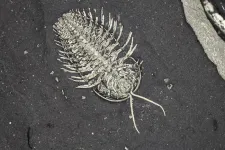
A new study finds that a trilobite species with exceptionally well-preserved fossils from upstate New York has an additional set of legs underneath its head. The research, led by the American Museum of Natural History and Nanjing University in China, suggests that having a fifth pair of head appendages might be more widespread among trilobites than once thought. Published today in the journal Palaeontology, the study helps researchers better understand how trilobite heads are segmented. Trilobites are ...

Read the release
Groundbreaking achievement: NSF Daniel K. Inouye solar telescope produces its first magnetic field maps of the sun’s corona
Environment

Groundbreaking achievement: NSF Daniel K. Inouye solar telescope produces its first magnetic field maps of the sun’s corona

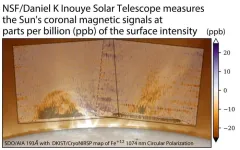
Summary: The U.S. National Science Foundation (NSF) Daniel K. Inouye Solar Telescope, the world’s most powerful solar telescope, operated by the NSF National Solar Observatory (NSO), achieved a major breakthrough in solar physics by successfully producing its first detailed maps of the Sun’s coronal magnetic fields. This milestone, led by NSO Associate Astronomer Dr. Tom Schad, was recently published in Science Advances, and promises to enhance our understanding of the Sun's atmosphere and how its changing conditions lead to impacts on Earth's technology-dependent society. The corona, or the Sun’s ...

Read the release
Turning seawater into fresh water through solar power
Environment

Turning seawater into fresh water through solar power

Researchers at the University of Waterloo have designed an energy-efficient device that produces drinking water from seawater using an evaporation process driven largely by the sun. Desalination is critical for many coastal and island nations to provide access to fresh water, given water scarcity concerns due to rapid population growth and increasing global water consumption. Roughly 2.2 billion people worldwide have no access to clean water, emphasizing the urgent need for new technologies to generate fresh water, according to the UN World Water Development Report 2024. Current desalination systems pump seawater through membranes to ...

Read the release
Environment

Can green finance effectively reduce carbon dioxide emissions while promoting economic growth?

New research published in Business Strategy and the Environment based on information from G7 countries demonstrates that green finance—loans, investments, and incentives that support environmentally-friendly projects and activities—can reduce carbon dioxide emissions. Also, data indicate that investments in green projects are profitable. The study found that G7 countries' environmental conditions have been negatively impacted by economic development; however, there are advantages of green finance solutions for economic growth. The study’s investigators ...

Read the release
Don’t judge a fossil by its teeth: despite its toothy beak, this ancient bird ate fruit, not fish
Environment

Don’t judge a fossil by its teeth: despite its toothy beak, this ancient bird ate fruit, not fish

For paleontologists who study animals that lived long ago, fossilized remains tell only part of the story of an animal’s life. While a well-preserved skeleton can provide hints at what an ancient animal ate or how it moved, irrefutable proof of these behaviors is hard to come by. But sometimes, scientists luck out with extraordinary fossils that preserve something beyond the animal’s body. Case in point: in a new study published in the journal Current Biology, researchers found fossilized seeds in the stomachs of one of the earliest birds. This discovery shows that these birds were eating ...

Read the release
Environment

Methane emissions are rising faster than ever

The world has not hit the brakes on methane emissions, a powerful driver of climate change. More than 150 nations have pledged to slash by 30% this decade under a global methane pledge, but new research shows global methane emissions over the past five years have risen faster than ever. The trend “cannot continue if we are to maintain a habitable climate,” the researchers write in a Sept. 10 perspective article in Environmental Research Letters published alongside data in Earth System Science Data. Both papers are the work of the Global ...

Read the release
Researchers develop reaction-induced molybdenum carbides for efficient carbon dioxide conversion
Environment

Researchers develop reaction-induced molybdenum carbides for efficient carbon dioxide conversion

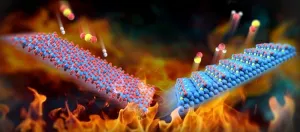
Molybdenum (Mo) carbides, known for their unique electronic and structural properties, are considered promising alternatives to noble metal catalysts in heterogeneous catalysis. However, traditional methods for preparing Mo carbides suffer from complex processes, stringent synthesis conditions, challenging crystal regulation, and high energy consumption. Additionally, Mo carbides are susceptible to oxidation and deactivation, which poses a significant barrier to their widespread application. In a study published in Nature Chemistry, a research group led by Prof. SUN Jian from the Dalian Institute ...

Read the release
Protecting just 0.7% of world’s land could help save a third of most unique and endangered species
Environment

Protecting just 0.7% of world’s land could help save a third of most unique and endangered species

Conservation efforts directed towards just 0.7% of the world’s land mass could help protect one third of the world’s threatened and unique tetrapod (four-limbed vertebrate) species, new research by Imperial College London, On the Edge, and ZSL has shown. The study, led by researchers at Imperial College London and published this week in Nature Communications, finds that large gains in conservation are possible by focusing on areas home to exceptional biodiversity and species with high levels of evolutionary distinctiveness and global ...

Read the release
5 lessons to level up conservation successfully
Environment

5 lessons to level up conservation successfully

Conservation needs to scale successfully to protect nature. A new paper takes lessons from around the world to show how that might be done. To reverse biodiversity loss and meet ambitious global targets, conservation programmes designed to preserve everything from forests to fish need to work ‘at scale’. Scaling can mean three things. Scaling ‘out’ means expanding a programme to new people and places, while scaling ‘up’ means bringing in higher-level institutions, such as governments introducing policies or incentives that make it easier for individuals and private companies to engage. Scaling ‘deep’ means changing hearts and minds – ...

Read the release
A chemical cocktail of micropollutants amplified the effect of algal toxins causing mass fish mortality on the River Oder in 2022
Environment

A chemical cocktail of micropollutants amplified the effect of algal toxins causing mass fish mortality on the River Oder in 2022

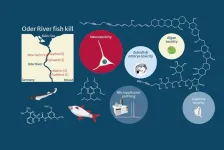
Summer 2022’s environmental disaster led to the death of up to 60 per cent of fish biomass and up to 85 per cent of mussel and snail biomass in the River Oder. In August 2022, the UFZ set up an interdisciplinary ad hoc working group together with researchers from the Leibniz Institute of Freshwater Ecology and Inland Fisheries (IGB), the University of Veterinary Medicine, Vienna (Vetmeduni) and the University of Birmingham. They took water samples at five locations along the Oder, extracted poisoned ...

Read the release
New research from Swansea University shines a light on how solar power and farming can coexist
Environment

New research from Swansea University shines a light on how solar power and farming can coexist

Scientists from Swansea University have developed a new tool to help identify optimal photovoltaic (PV) materials capable of maximising crop growth while generating solar power. In a recent study published in Solar RRL, academics from the University’s Department of Physics have been exploring the effect of semi-transparent PV materials placed over crops – an exemplary application of agrivoltaics (solar panels combined with agricultural settings). As part of this work, the team has developed an innovative freeware tool that predicts the light transmission, absorption, and power generation of different PV materials nearly anywhere on the globe using ...

Read the release
Environment

Study suggests US droughts, rainy extremes becoming more severe

COLUMBUS, Ohio – Severe drought in the American Southwest and Mexico and more severe wet years in the Northeast are the modern norm in North America, according to new research – and the analysis suggests these seasonal patterns will be more extreme in the future. The middle of the United States, meanwhile, can expect bigger swings between wetter wet periods – high-rainfall years known as pluvials – and drier summers through the rest of this century, the study predicts. Researchers at The Ohio State University say the findings, based on modern precipitation data, historical tree rings and climate models ...

Read the release
Environment

Research vessel Resilience charts course to the future of marine research

SEQUIM, Wash.—Officials gathered at the Sequim campus of the Department of Energy’s Pacific Northwest National Laboratory today to dedicate DOE’s first hybrid-electric research vessel, RV Resilience. The event marks the start of a new era of marine energy research at PNNL-Sequim, part of DOE’s Office of Science national laboratory system and Resilience’s new home port. Speakers at the dedication included U.S. Sen. Maria Cantwell, U.S. Rep. Derek Kilmer, Washington State Rep. Steve Tharinger and representatives from DOE and PNNL. “DOE is focused on ...

Read the release
FAMU-FSU College of Engineering researchers examine how drought and water volume affect nutrients in Apalachicola River
Environment

FAMU-FSU College of Engineering researchers examine how drought and water volume affect nutrients in Apalachicola River

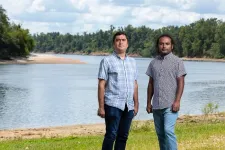
Near the Florida-Georgia border, the Chattahoochee and Flint rivers meet and become the Apalachicola River, which carries freshwater and nutrients downstream to the Apalachicola Bay. New research led by FAMU-FSU College of Engineering Assistant Professor Ebrahim Ahmadisharaf examined how drought and water volume in the Lower Apalachicola River watershed affect nitrogen and phosphorous, crucial nutrients for a healthy aquatic ecosystem. The study was published in Water Research. “In watershed systems like this, that are subject to regulations upstream, knowing how the ecosystem reacts to changes helps us manage it effectively,” said Ahmadisharaf, ...

Read the release
Research news from the Ecological Society of America
Environment

Research news from the Ecological Society of America

The Ecological Society of America (ESA) presents a roundup of seven research articles recently published across its esteemed journals. Widely recognized for fostering innovation and advancing ecological knowledge, ESA’s journals consistently feature illuminating and impactful studies. This compilation of papers explores the impact of rising temperatures on pathogens, dynamics of predatory seabirds and their penguin prey in Antarctica, factors determining the speed of coral reef recovery from disturbance and more. From Ecology: Some pathogens can’t ...

Read the release
From the original Press-News collection. Issuers of news releases are responsible for the accuracy of their content.