THE ORIGINAL COLLECTION · SINCE 2010

Environment
press releases.

Research announcements from universities, hospitals and scientific institutions. Explore the stories, people and discoveries behind the headlines.

Original publication datesPage 84
FIND A STORY

Find a past release.

Dates and source material belong to the original release.

Read our research explainers

Browse the collection · original publication order

Research shows queen conch populations in marine reserves replenish populations beyond the reserve in The Bahamas
Environment

Research shows queen conch populations in marine reserves replenish populations beyond the reserve in The Bahamas

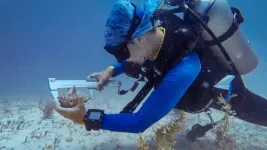
A new study published in Conservation Science and Practice uncovers how breeding populations of queen conch (Aliger gigas) within a protected marine reserve, where fishing is prohibited, sustain populations beyond the borders of the reserve. This research, based on surveys conducted in The Bahamas by Shedd Aquarium and Bahamian partners, identifies where additional protections could help to ensure the survival of future queen conch generations. In The Bahamas, queen conch is an economic and cultural ...

Read the release

Environment

State-by-state data boosts bird conservation planning

ITHACA, N.Y. – New data summaries from the Cornell Lab of Ornithology’s eBird platform will help state wildlife planners assess the status of bird populations that live in or pass through their state – a crucial tool in protecting species. A team of data scientists at eBird, the participatory science platform, has packaged summaries covering every bird species, in every state, and made them available online for free. These data summaries will help states prepare their federally required ...

Read the release
Using 3D imaging to transform plastic waste recycling
Environment

Using 3D imaging to transform plastic waste recycling

In a global first, University of Waterloo researchers have used 3D imaging technology to understand the fine details of microplastics, paving the way for more effective methods of plastic waste recycling. Micro and nanoplastics, tiny particles of plastic that come from the breakdown of larger plastic items, have become an exponentially worsening environmental crisis. Due to their difficulties in safely decomposing, plastic pollution poses significant threats to ecosystems, wildlife and human health. Scientists have struggled to understand the exact process of ...

Read the release
Environment

Air pollution linked to higher risk of infertility in men

Long term exposure to fine particulate matter (PM2.5) air pollution is linked to a higher risk of infertility in men, whereas road traffic noise is linked to a higher risk of infertility in women over 35, finds a Danish study published by The BMJ today. If these findings are confirmed in future studies, they could help guide strategies to regulate noise and air pollution to protect the general population from these exposures, say the researchers. Infertility is a major global health problem affecting one in seven couples trying to conceive. Several ...

Read the release
Environment

Children switch to walking and cycling to school after introduction of London’s Ultra-Low Emission Zone

Four in ten children in Central London who travelled to school by car switched to more active modes of transport, such as walking, cycling, or public transport, following the introduction of the Ultra-Low Emission Zone (ULEZ), according to new research. In the comparison area with no ULEZ, Luton, only two in ten children made this switch over the same period. Car travel contributes to air pollution, a major cause of heart and lung diseases including asthma attacks. Beyond this, it limits children's opportunities for physical activity, hindering their development and mental health, and increasing their risk of obesity and chronic illnesses. Despite ...

Read the release
Notre Dame researchers create new tool to analyze embodied carbon in more than 1 million buildings in Chicago
Environment

Notre Dame researchers create new tool to analyze embodied carbon in more than 1 million buildings in Chicago

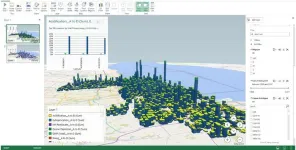
The built environment — which includes the construction and operation of buildings, highways, bridges and other infrastructure — is responsible for close to 40 percent of the global greenhouse gas emissions contributing to climate change. While many building codes and benchmarks have focused on constructing “greener,” more energy-efficient new buildings, it is not enough to seek to reduce emissions in operations, said Ming Hu, the associate dean for research, scholarship and creative work in Notre Dame’s School of Architecture. Rather, policymakers and industry leaders ...

Read the release
SMU researcher helps develop new technique to explore oceanic microbes
Environment

SMU researcher helps develop new technique to explore oceanic microbes

DALLAS (SMU) – When SMU researcher Alexander Chase was a young boy, the sheer diversity of plants in Earth’s tropical rainforests fascinated him. He found himself wondering, what new species were out there, waiting to be unearthed? That curiosity is why Chase now collects samples from Earth’s oceans using a new technique called Small Molecule In situ Resin Capture (SMIRC), which could be the first step in uncovering compounds that lead to next-generation antibiotics. Microbial natural products come from microorganisms, or microbes, and account for many of today’s essential medicines, including most antibiotics. Microbes are too small to see without ...

Read the release
Environment

Making desalination more efficient, by way of renewable energy

(Santa Barbara, Calif.) — With freshwater becoming an ever scarcer resource, desalination of ocean water is increasingly employed to bridge the gap between supply and demand. However, desalination is energy-intensive, often powered by fossil fuels, so meeting the need for freshwater can exacerbate the challenge of reducing atmospheric CO2, the main driver of climate change. Yangying Zhu, an assistant professor in the Department of Mechanical Engineering at UC Santa Barbara, wants to address that conundrum. Now, a two-year, $500,000 seed grant from the Advanced Research Projects Agency-Energy (ARPA-E) ...

Read the release
Environment

WashU scientists uncover hidden source of snow melt: Dark brown carbon

Wildfires leave potent climate heaters behind in their wake, particles that enhance the absorption of sunlight and warm the atmosphere. Dropped on snow like a wool poncho, these aerosols darken and decrease the surface reflectance of snowy places. But it was not yet understood just how different types of smoke particles contribute to these effects. In a study recently published in npj Climate and Atmospheric Science, researchers at Washington University in St. Louis model how dark-brown carbon (d-BrC) – light absorbing, water insoluble organic carbon – from wildfires plays a much larger role as a snow-warming agent than previously recorded. ...

Read the release
How Earth’s most intense heat wave ever impacted life in Antarctica
Environment

How Earth’s most intense heat wave ever impacted life in Antarctica

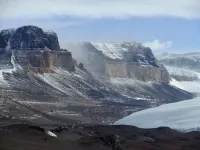
Summer 2024 is on track to be the hottest on record for hundreds of cities across the U.S. and globe. Even in Antarctica, during the peak of its winter, extreme heat pushed temperatures in parts of the continent more than 50°F above the July normal. In a study published on July 31 in the journal Earth’s Future, scientists, including researchers at the University of Colorado Boulder, revealed how heat waves, especially those occurring in Antarctica’s cold seasons, may impact the animals living there. The research illustrates how extreme weather events intensified by climate change could have profound implications for the ...

Read the release
Environment

Traditional infrastructure design often makes extreme flooding events worse

Images Much of the nation's stormwater infrastructure, designed decades to a century ago to prevent floods, can exacerbate flooding during the severe weather events that are increasing around the globe, new research led by the University of Michigan demonstrates. The problem lies in traditional planning's failure to recognize flood connectivity: how surface runoff from driveways, lawns and streets—and the flows in river channels and pipes—are all interlinked. The result ...

Read the release
Environment

Study shows how oceans are key to addressing global challenges

New research shows how oceans can be used to help address major challenges such as the shortage of antimicrobial medicines, solutions for plastic pollution and novel enzymes for genome editing. In the past 20 years, scientists have greatly increased the number of microbial genomes they have collected from the ocean. However, using this information for biotechnology and medicine has been difficult. For this new study, led by BGI Research in China in collaboration with the Shandong University, Xiamen University, ...

Read the release
SwRI signs MOU with Blade Energy Partners to support carbon dioxide sequestration research
Environment

SwRI signs MOU with Blade Energy Partners to support carbon dioxide sequestration research

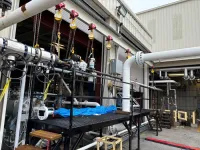
SAN ANTONIO — September 4, 2024 — Southwest Research Institute has signed a memorandum of understanding (MOU) with Blade Energy Partners, establishing a new research collaboration focused on advancing carbon dioxide storage technology to reduce greenhouse gas emissions. Carbon capture, utilization, and storage (CCUS) refers to the practices of capturing CO2 from its industrial sources or the atmosphere, transport it using pipelines and other means, using it as alternative fuel or other industrial applications, and storing it for later use. The drive to meet net-zero greenhouse gas emissions goals and ...

Read the release
How to solve the challenges faced by the carbon sequestration function of Chinese plantations in the future?
Environment

How to solve the challenges faced by the carbon sequestration function of Chinese plantations in the future?

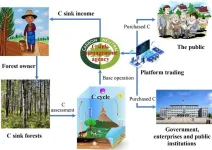
Since the first industrial revolution, the rapid development of the human economy and society has directly exacerbated the process of CO2 emission from human activities such as fossil fuel combustion, industrial processes, agriculture, and land use activities. With the continuous increase of global greenhouse gas concentration dominated by CO2, the greenhouse effect is becoming more and more obvious, and the trend of global warming is becoming more and more serious. To cope with the continuous warming of the global climate and mitigate ...

Read the release
Environment

New species of pāua found

The naming of a new species of pāua further highlights the importance of biodiversity research in Aotearoa. Described in a study led by the University of Otago – Ōtākou Whakaihu Waka and the Museum of New Zealand Te Papa Tongarewa, the species, Haliotis pirimoana, is only found at Manawatāwhi Three Kings Islands, off the northern North Island. Lead author Kerry Walton, an invertebrate curator at Te Papa who is undertaking his PhD in the Department of Zoology, says this is one of many species that are only found on Manawatāwhi. “We are facing a biodiversity crisis. Species around the world are going ...

Read the release
People eating beef are less likely to live near the industry’s pollution, Pitt researchers found
Environment

People eating beef are less likely to live near the industry’s pollution, Pitt researchers found

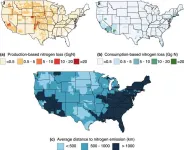
Anyone who’s researched ways to lower their environmental impact has likely heard they should eat less meat, particularly beef. Even at scale, cows are an inefficient way to feed people — it takes nearly four tons of water to recoup one ton of beef, and many farming practices emit greenhouse gasses and pollutants. University of Pittsburgh researchers are the first to trace one of those pollutants, nitrogen, along the U.S. beef supply chain at the county level. They found high spatial disconnect between where ...

Read the release
Infertility challenges amongst endangered wild songbird population revealed in new study
Environment

Infertility challenges amongst endangered wild songbird population revealed in new study

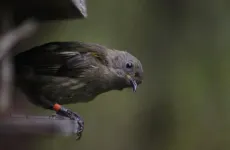
A new study using 10 years of data has provided the most comprehensive estimate of infertility rates to date in a threatened wild animal population Researchers from the University of Sheffield found infertility accounts for 17 per cent of hatching failure in an endangered songbird, the hihi, with the majority of hatching failure being caused by embryo death This is the first study to find a link between small population size, sex ratio bias, and reduced fertilisation rates in wild animals By considering the impacts of population size and sex ratio on fertility, conservationists can better manage the numbers and composition of animals in populations ...

Read the release
Environment

Natural selection may create inter-species exploitation

A modeling study suggests that one-sided interspecies cooperation can spontaneously emerge and persist over time, despite only one species benefitting. Evolutionary game theory, and the prisoner’s dilemma in particular, are often used to model the evolution of cooperation within a single species. In the prisoner’s dilemma, both parties benefit by cooperating, but the greatest benefit is earned by a defector who plays with a cooperator. The temptation to cheat tends to push players towards defection, ...

Read the release
Gigantic asteroid impact shifted the axis of Solar System's biggest moon
Environment

Gigantic asteroid impact shifted the axis of Solar System's biggest moon

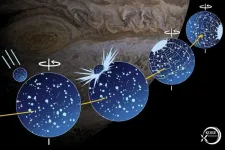
Around 4 billion years ago, an asteroid hit the Jupiter moon Ganymede. Now, a Kobe University researcher realized that the Solar System's biggest moon's axis has shifted as a result of the impact, which confirmed that the asteroid was around 20 times larger than the one that ended the age of the dinosaurs on Earth, and caused one of the biggest impacts with clear traces in the Solar System. Ganymede is the largest moon in the Solar System, bigger even than the planet Mercury, and is also interesting for the liquid water oceans beneath its icy surface. Like the Earth’s moon, it is tidally locked, meaning that it always shows the ...

Read the release
Environment

Global South cities lack cooling green spaces

Cities in the Global South are more exposed to extreme heat because they lack cooling green spaces, new research shows. The study found that Global South cities have just 70% of the “cooling capacity” provided by urban greenery in the Global North. With temperatures rising, combined with the “urban heat island” effects that make cities hotter than rural areas, heat-related illness and death in cities are becoming more common. Urban green spaces can help reduce this risk, cooling down outdoor environments and providing vital refuges. The research – led by an international team including Nanjing, Exeter, Aarhus and North Carolina State universities – ...

Read the release
Exclusive chemical recycling of PET from cloth waste and plastic waste mixtures
Environment

Exclusive chemical recycling of PET from cloth waste and plastic waste mixtures

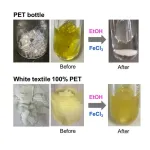
Tokyo, Japan – A research team led by Professor Kotohiro Nomura from Tokyo Metropolitan University has developed a method for the depolymerization of PET (polyethylene terephthalate) using alcohols and an inexpensive, readily available iron trichloride catalyst. This method can be applied to the selective chemical recycling of both textile and plastic waste mixtures. Plastic waste is a significant environmental issue that requires urgent attention. However, the rate of plastic reuse (material recycling) remains low, particularly in the case of chemical recycling into raw materials, a process known as chemical recycling. Polyesters, which ...

Read the release
New species of Antarctic dragonfish highlights its threatened ecosystem
Environment

New species of Antarctic dragonfish highlights its threatened ecosystem

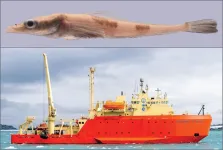
A new species of Antarctic dragonfish, Akarotaxis gouldae or Banded Dragonfish, has been discovered in waters off the western Antarctic Peninsula by researchers at William & Mary’s Virginia Institute of Marine Science (VIMS). The species, named in honor of the recently decommissioned Antarctic research and supply vessel (ARSV) Laurence M. Gould and its crew, exemplifies both the unknown biodiversity and fragile state of the Antarctic ecosystem. Described in the journal Zootaxa, Akarotaxis gouldae was initially identified through genetic analysis. Larval specimens collected off the coast of Antarctica while trawling for zooplankton ...

Read the release
NASA, ESA missions help scientists uncover how solar wind gets energy
Environment

NASA, ESA missions help scientists uncover how solar wind gets energy

Since the 1960s, astronomers have wondered how the Sun’s supersonic “solar wind,” a stream of energetic particles that flows out into the solar system, continues to receive energy once it leaves the Sun. Now, thanks to a lucky lineup of a NASA and an ESA (European Space Agency)/NASA spacecraft both currently studying the Sun, they may have discovered the answer — knowledge that is a crucial piece of the puzzle to help scientists better forecast solar activity between the Sun and Earth. A paper published in the Aug. 30, 2024, issue of the journal Science provides persuasive ...

Read the release
Biodiversity loss: Many students of environment-related subjects are partly unaware of the causes
Environment

Biodiversity loss: Many students of environment-related subjects are partly unaware of the causes

Worldwide survey by Goethe University FrankfurtFRANKFURT. Of the estimated 10 million, mostly still undiscovered species of flora and fauna on Earth, one million could become extinct in the next decades. This loss of biodiversity would have dramatic consequences, as animals and plants are providers of multiple services: They maintain ecosystems, ensure a more balanced climate on our planet, and supply us with food and active substances for medical drugs. Put bluntly: Without biodiversity, we humans will not survive. That is why there is an urgent need for resolute political measures to counter the “sixth mass extinction” in Earth’s history. One group of people who are particularly ...

Read the release
Environment

Upcycling excess carbon dioxide with tiny microbes

While some microbes can make people sick or spoil food, others are critical for survival. These tiny organisms can also be engineered to make specific molecules. Researchers reporting in ACS Sustainable Chemistry & Engineering have rewired one such microbe to help tackle greenhouse gases in the atmosphere: It takes in carbon dioxide (CO2) gas and produces mevalonate, a useful building block for pharmaceuticals. The increasing concentration of greenhouse gases in the atmosphere has led to widespread global warming. To begin to address the problem, greenhouse gas emissions, including CO2, need to be significantly ...

Read the release
From the original Press-News collection. Issuers of news releases are responsible for the accuracy of their content.