THE ORIGINAL COLLECTION · SINCE 2010

Environment
press releases.

Research announcements from universities, hospitals and scientific institutions. Explore the stories, people and discoveries behind the headlines.

Original publication datesPage 85
FIND A STORY

Find a past release.

Dates and source material belong to the original release.

Read our research explainers

Browse the collection · original publication order

Drought risk and awareness gaps in global society
Environment

Drought risk and awareness gaps in global society

Natural disasters have threatened to human beings and the ecosystem. Among the various natural disasters, drought is one of the most insidious and costliest, adversely affecting the global economy and livelihoods. Unlike sudden disasters such as earthquakes or hurricanes, drought is a slow-onset phenomenon that gradually intensifies. This prolonged nature of drought often results in the shortage of drinking water and the disruption of local economies. The Slow Onset and Impact of Drought Drought creeps in gradually, often going unnoticed until it reaches a critical stage. This slow progression makes drought particularly challenging to manage and mitigate. Initially, ...

Read the release

How a salt giant radically reshaped Mediterranean marine biodiversity
Environment

How a salt giant radically reshaped Mediterranean marine biodiversity

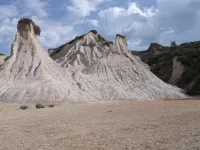
A new study paves the way to understanding biotic recovery after an ecological crisis in the Mediterranean Sea about 5.5 million years ago. An international team led by Konstantina Agiadi from the University of Vienna has now been able to quantify how marine biota was impacted by the salinization of the Mediterranean: Only 11 percent of the endemic species survived the crisis, and the biodiversity did not recover for at least another 1.7 million years. The study was just published in the renowned journal Science. Lithospheric movements throughout Earth history have repeatedly led to the isolation of regional seas from the ...

Read the release
Environment

Cultural traditions, not genetics or environment, inform nest architecture among white-browed sparrow weaver birds

Challenging long-held beliefs that bird nest building is solely influenced by genetics or the environment, researchers report that the white-browed sparrow weavers of the Kalahari Desert, Africa, build nests with distinct architectural styles that reflect group-specific cultural traditions. “Behavioral traditions in birds have been well documented for song, migration, foraging, and tool use. Here, we add building behavior and show that architectural styles emerge from birds that build together,” write the ...

Read the release
Environment

Messinian salinity crisis nearly reset Mediterranean biodiversity

A meta-analysis of Mediterranean Sea marine species reveals the profound impact of the Messinian Salinity Crisis – a drastic environmental event that resulted in the almost complete evaporation of the Mediterranean Sea roughly 5.5 million years ago. According to the new study’s findings, the event nearly reset the region’s biodiversity. The findings offer novel insights linking tectonic and palaeoceanographic changes to marine biodiversity, highlighting the significant role of salt giants in shaping biogeographic patterns, including those that still influence ecosystems today. The Messinian Salinity Crisis (MSC), ...

Read the release
Environment

Greenhouse gas emissions and costs of inhaler devices in the US

About The Study: Inhaler prescriptions filled by Centers for Medicare & Medicaid Services beneficiaries in 2022 resulted in an estimated 1.15 million metric tons of carbon dioxide equivalent emissions, equivalent to 226,960 homes’ yearly electricity use. Metered-dose inhalers were responsible for nearly all inhaler-related emissions, with the largest contribution arising from short-acting β-agonist medications. Although dry-powder and soft-mist inhalers had substantially lower emissions, they accounted for a disproportionate amount of spending, representing nearly two-thirds ...

Read the release
Environment

Climate change increases foodborne illness risk from raw produce

Highlights: Salmonella enterica causes disease in 1.2 million people in the U.S. annually. The most common way people get infected is by consuming contaminated fresh produce. New research shows that bacterial leaf spot of lettuce and high humidity promote S. enterica growth in lettuce, and climate change is predicted to increase humid periods. Washington, D.C.—Climate change will increase the risk of the foodborne illness from Salmonella enterica, according to a new study. The research was published today in Applied and Environmental Microbiology, a journal of the American Society for Microbiology. S. enterica causes disease in 1.2 million people in the ...

Read the release
NSF Grant empowers FAU to explore Caribbean climate crisis with ethnography
Environment

NSF Grant empowers FAU to explore Caribbean climate crisis with ethnography

Transformations in the global climate system are profoundly destabilizing ecosystems across the Caribbean, with South Florida and Puerto Rico experiencing notable impacts. To address this challenge, researchers from Florida Atlantic University and the University of Puerto Rico (UPR) in Cayey, are turning to ethnography – an in-depth, immersive research method that involves observing and interviewing people in their natural settings. FAU’s Dorothy F. Schmidt College of Arts and Letters, in collaboration with UPR Cayey, has received a $650,000 grant from ...

Read the release
Global timber supply threatened as climate change pushes cropland northwards
Environment

Global timber supply threatened as climate change pushes cropland northwards

Climate change will move and reduce the land suitable for growing food and timber, putting the production of these two vital resources into direct competition, a new study has found. The sight of vineyards in Britain is becoming more common as hotter summers create increasingly suitable conditions for growing grapes. But behind this success story is a sobering one: climate change is shifting the regions of the world suitable for growing crops. Researchers at the University of Cambridge have uncovered a looming issue: as the ...

Read the release
Land-sea “tag-team” devastated ocean life millions of years ago reveal scientists
Environment

Land-sea “tag-team” devastated ocean life millions of years ago reveal scientists

Scientists have revealed how a “tag-team” between the oceans and continents millions of years ago devastated marine life – and altered the course of evolution on Earth. Their study has unearthed a new explanation for a string of severe environmental crises, called oceanic anoxic events, which happened between 185 and 85 million years ago. These occurred when the seas became critically depleted of dissolved oxygen. Experts from the University of Southampton, which led the study, said these events triggered significant biological upheavals, including ...

Read the release
Can fungi turn food waste into the next culinary sensation?
Environment

Can fungi turn food waste into the next culinary sensation?

Chef-turned-chemist Vayu Hill-Maini has a passion: to turn food waste into culinary treats using fungi. One of his collaborators is Rasmus Munk, head chef and co-owner of the Michelin two-star restaurant Alchemist in Copenhagen, who serves a dessert — orange-colored Neurospora mold grown on rice — inspired by Hill-Maini. For the past two years, Hill-Maini has worked with a team of chefs at Blue Hill at Stone Barns, a Michelin two-star restaurant in Pocantico Hills, New York, to generate tasty morsels from Neurospora mold grown on grains and pulses, including the pulp left over from making oat ...

Read the release
Making waves in hurricane prediction
Environment

Making waves in hurricane prediction

More accurately predicting periods of increased hurricane activity weeks in advance may become possible due to new research published this month. The study, led by the U.S. National Science Foundation National Center for Atmospheric Research (NSF NCAR), shows that twice as many hurricanes form two days after the passing of large-scale atmospheric waves called Kelvin waves than in the days before. This finding may enable forecasters and emergency managers to anticipate clusters of hurricanes days to weeks in advance. The research team used an innovative ...

Read the release
New data: Solar at K-12 schools quadrupled nationwide during the last ten years
Environment

New data: Solar at K-12 schools quadrupled nationwide during the last ten years

Charlottesville, VA — Schools across the country are rapidly switching to solar power to meet their energy needs while gaining significant cost-savings, boosting climate resilience, and supporting workforce development, according to a new report from clean energy nonprofit Generation180. Since the start of 2014, the amount of solar capacity installed at K-12 schools has more than quadrupled nationwide. According to Brighter Future: A Study of Solar on K-12 Schools, 5th edition, over 6.2 million U.S. K-12 students– or more than one in nine students – now attend a school that utilizes solar power. In 2022-2023, over 800 schools added solar arrays, which is enough ...

Read the release
Half of Uber, Lyft trips replace more sustainable options
Environment

Half of Uber, Lyft trips replace more sustainable options

More than 50% of ride-hailing trips taken by surveyed riders in California replaced more sustainable forms of transportation — such as walking, cycling, carpooling, and public transit — or created new vehicle miles, according to a study from the University of California, Davis Institute of Transportation Studies. The study was conducted to help guide development of the Clean Miles Standard, a state regulation designed by the California Air Resources Board to reduce the greenhouse gas emissions from ride-hailing services. Published in Transportation Research ...

Read the release
Environment

Study finds limits to storing CO2 underground to combat climate change

Imperial College London press release Under strict embargo until: Wednesday 28 August 2024 10am UK time/5am Eastern Study finds limits to storing CO2 underground to combat climate change Imperial research has found limits to how quickly we can scale up technology to store gigatonnes of carbon dioxide under the Earth’s surface. Current international scenarios for limiting global warming to less than 1.5 degrees by the end of the century rely on technologies that remove carbon dioxide (CO2) from the Earth’s atmosphere faster than humans release it. This means removing ...

Read the release
Environment

NREL advances method for recyclable wind turbine blades

Researchers at the U.S. Department of Energy’s National Renewable Energy Laboratory (NREL) see a realistic path forward to the manufacture of bio-derivable wind blades that can be chemically recycled and the components reused, ending the practice of old blades winding up in landfills at the end of their useful life. The findings are published in the new issue of the journal Science. The new resin, which is made of materials produced using bio-derivable resources, performs on par with the current industry standard of blades made from a thermoset resin and outperforms certain thermoplastic resins intended to be recyclable. The researchers built a prototype 9-meter blade to ...

Read the release
How much microplastic are you drinking? New UBC tool can tell you in minutes
Environment

How much microplastic are you drinking? New UBC tool can tell you in minutes

Micro- and nanoplastics are in our food, water and the air we breathe. They are showing up in our bodies, from testicles to brain matter. Now, University of British Columbia researchers have developed a low-cost, portable tool to accurately measure plastic released from everyday sources like disposable cups and water bottles. The device, paired with an app, uses fluorescent labeling to detect plastic particles ranging from 50 nanometres to 10 microns in size – too small to be detected by the naked eye – and delivers results in minutes. The method and findings are detailed in ACS Sensors. “The breakdown of larger plastic pieces into microplastics ...

Read the release
Insights from satellite data pave the way to better solar power generation
Environment

Insights from satellite data pave the way to better solar power generation

Amidst the ongoing energy crisis and under the threat of climate change, exploiting renewable energy sources has quickly become a global necessity. Though our options are varied, solar energy seems to be our best bet—experts estimate that it may become our main energy source well before the turn of the century. Despite its clear advantages, solar energy generation has some limitations. Much like the wind, solar irradiance in a given region can vary quickly depending on weather conditions, causing fluctuations in power ...

Read the release
Environment

American Meteorological Society announces 2025 weather, water, and climate honorees

The American Meteorological Society is proud to announce its 2025 Awards and Honors, recognizing outstanding contributions to the weather, water, and climate community. 2025 recipients will be honored at the 105th AMS Annual Meeting in New Orleans, 12–16 January, 2025. “One of our key priorities at AMS is to recognize the work of our global weather, water, and climate enterprise for the impact they have on scientific advancement and public safety, as well as on economic growth for all communities,” says Awards Oversight Committee Chair ...

Read the release
Marine science oxygen produced in the deep sea raises questions about extraterrestrial life
Environment

Marine science oxygen produced in the deep sea raises questions about extraterrestrial life

Over 12,000 feet below the surface of the sea, in a region of the Pacific Ocean known as the Clarion-Clipperton Zone (CCZ), million-year-old rocks cover the seafloor. These rocks may seem lifeless, but nestled between the nooks and crannies on their surfaces, tiny sea creatures and microbes make their home, many uniquely adapted to life in the dark. These deep-sea rocks, called polymetallic nodules, don’t only host a surprising number of sea critters. A team of scientists that includes Boston University experts has discovered they ...

Read the release
What microscopic fossilized shells tell us about ancient climate change
Environment

What microscopic fossilized shells tell us about ancient climate change

At the end of the Paleocene and beginning of the Eocene epochs, between 59 to 51 million years ago, Earth experienced dramatic warming periods, both gradual periods stretching millions of years and sudden warming events known as hyperthermals. Driving this planetary heat up were massive emissions of carbon dioxide (CO2) and other greenhouse gases, but other factors like tectonic activity may have also been at play. New research led by University of Utah geoscientists pairs sea surface temperatures with levels ...

Read the release
NSF funds research on the effects of evolution and food webs in climate change response
Environment

NSF funds research on the effects of evolution and food webs in climate change response

Colorado State University is leading a new interdisciplinary research project into the ways predators and prey in sensitive ecosystems may react to climate change based on their physiology, genetics and relationships to each other. Led by Professor Chris Funk in the Department of Biology, the project is funded by the National Science Foundation’s Organismal Response to Climate Change program and will focus on interactions between cutthroat trout and tailed frogs in Pacific Northwest streams. This approach is one of the first times researchers have tried to test both the effects of evolution and ...

Read the release
Uncovering the role of oxygen concentration in the formation of early earth magma ocean
Environment

Uncovering the role of oxygen concentration in the formation of early earth magma ocean

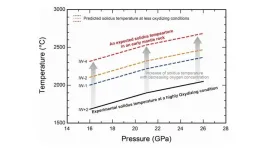
It is widely accepted that the early Earth largely consisted of molten magma, forming a global ocean of magma. This extreme state of Earth was likely caused by the intense heat generated from accretionary impacts, meaning the collision of smaller celestial bodies with Earth. Understanding the formation of this magma ocean is crucial for comprehending Earth’s formation. A major problem with current magma ocean formation models is the lack of consensus on the melting temperatures of deep mantle rocks. Models explaining Earth’s core formation use a specific ...

Read the release
Environment

Scientific consensus can strengthen pro-climate attitudes in society

Climate scientists have long agreed that humans are largely responsible for climate change. A new study, co-led by Bojana Većkalov from the University of Amsterdam and Sandra Geiger from the University of Vienna, finds that communicating the scientific consensus about climate change can clear up misperceptions and strengthen beliefs about the existence and the causes of climate change. The team surveyed over 10,000 people from 27 countries on 6 continents. The study has just been published in the renowned journal Nature Human Behaviour. Scientific consensus identifying humans as primarily responsible ...

Read the release
Environment

Communicating consensus strengthens beliefs about climate change

Climate scientists have long agreed that humans are largely responsible for climate change. However, people often do not realize how many scientists share this view. A new 27-country study published in the journal Nature Human Behaviour finds that communicating the consensus among scientists can clear up misperceptions and strengthen beliefs about climate change. The study is co-led by Bojana Većkalov at the University of Amsterdam and Sandra Geiger of the University of Vienna. Kai Ruggeri, professor of health policy and management at Columbia University Mailman School of Public Health, is the corresponding author. Scientific consensus identifying humans as primarily ...

Read the release
Matching dinosaur footprints found on opposite sides of the Atlantic Ocean
Environment

Matching dinosaur footprints found on opposite sides of the Atlantic Ocean

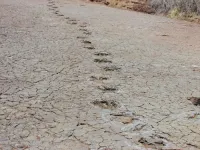
DALLAS (SMU) – An international team of researchers led by SMU paleontologist Louis L. Jacobs has found matching sets of Early Cretaceous dinosaur footprints on what are now two different continents. More than 260 footprints were discovered in Brazil and in Cameroon, showing where land-dwelling dinosaurs were last able to freely cross between South America and Africa millions of years ago before the two continents split apart. “We determined that in terms of age, these footprints were similar,” Jacobs said. “In their geological and plate ...

Read the release
From the original Press-News collection. Issuers of news releases are responsible for the accuracy of their content.