THE ORIGINAL COLLECTION · SINCE 2010

Environment
press releases.

Research announcements from universities, hospitals and scientific institutions. Explore the stories, people and discoveries behind the headlines.

Original publication datesPage 86
FIND A STORY

Find a past release.

Dates and source material belong to the original release.

Read our research explainers

Browse the collection · original publication order

Environment

A leaky sink: Carbon emissions from forest soil will likely grow with rising temperatures

Photos The soils of northern forests are key reservoirs that help keep the carbon dioxide that trees inhale and use for photosynthesis from making it back into the atmosphere. But a unique experiment led by Peter Reich of the University of Michigan is showing that, on a warming planet, more carbon is escaping the soil than is being added by plants. "This is not good news because it suggests that, as the world warms, soils are going to give back some of their carbon to the atmosphere," said Reich, director of the Institute for Global Change ...

Read the release

DRI’s AWE+ Summit tackles wildfire resilience and recovery
Environment

DRI’s AWE+ Summit tackles wildfire resilience and recovery

LAS VEGAS, Nevada — DRI, one of our nation’s leading applied environmental research institutes, together with the DRI Foundation, this week held its inaugural AWE+ Summit -Wildfire Recovery and Resilience: Working Across Silos to Drive Solutions. The summit is a call-to-action for communities to implement measures that support resilience and human adaptability to devastating wildfire events. Nationally recognized scientific leaders discussed challenges, progress, and hope through actions that will lead to solutions. Speakers included: President of the National Academy of ...

Read the release
Environment

Scientists propose guidelines for solar geoengineering research

Scientists for several years have studied the theoretical effectiveness of injecting sulfur dioxide into the stratosphere to reflect heat from the Sun and offset Earth’s warming temperatures. But they also want to ensure that the solar geoengineering approaches being studied are evaluated for their technical feasibility, as well as their cooling potential and possible ecological and societal side effects. To guide future work, an international team of scientists led by the U.S. National Science Foundation National Center for Atmospheric Research (NSF NCAR) has published a paper with specific recommendations for evaluating proposals to inject sulfur dioxide, which is known as stratospheric ...

Read the release
Slow down in China’s methane emission growth
Environment

Slow down in China’s methane emission growth

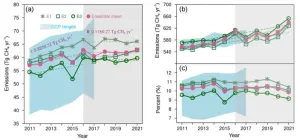
Methane is a potent greenhouse gas. Since the Industrial Revolution, atmospheric methane concentrations have nearly doubled, with its radiative forcing accounting for one-third of all greenhouse gases. As one of the world's largest methane emitters, China made a clear commitment as early as 2007 to "strive to control the growth rate of methane emissions." The country's 12th, 13th, and 14th Five-Year Plans all proposed measures to control methane emissions. In 2023, China released the "Methane Emission Control Action ...

Read the release
New gels could protect buildings during wildfires
Environment

New gels could protect buildings during wildfires

As climate change creates hotter, drier conditions, we are seeing longer fire seasons with larger, more frequent wildfires. In recent years, catastrophic wildfires have destroyed homes and infrastructure, caused devastating losses in lives and livelihoods of people living in affected areas, and damaged wildland resources and the economy. We need new solutions to fight wildfires and protect areas from damage. Researchers at Stanford have developed a water-enhancing gel that could be sprayed on homes and critical infrastructure to help keep them from burning during wildfires. The research, published Aug. ...

Read the release
Environment

Analysis of 1,500 climate policies reveals only a small fraction achieved significant emission reductions

A new machine learning analysis has revealed the most effective climate policies out of 1,500 implemented worldwide over the last two decades. Some of the success stories – numbered at about 63 – involve rarely studied policies and unappreciated policy combinations. “Our results provide a clear yet sobering perspective on the policy effort necessary for closing the remaining emissions gap of 23 billion tons carbon dioxide (CO2) by 2023,” write the authors. To achieve the Paris Agreement’s climate targets, it is essential to know which ...

Read the release
Environment

Fatty-acid derived polymers yield recyclable and highly versatile adhesives

Researchers have presented a new family of polymer adhesives that offer a sustainable and recyclable alternative to conventional polymer adhesives and can be used across a wide range of applications, from industrial adhesives to surgical superglues. The new chemical approach to aLA polymerization addresses the performance and environmental challenges of traditional polymers, providing environmentally friendly adhesive solutions. Polymer adhesives are ubiquitous in modern life and are widely used in many medical, consumer, and industrial products. Given this diversity, each adhesive material is often tailored ...

Read the release
Meteor showers shed light on where comets formed in the early solar system
Environment

Meteor showers shed light on where comets formed in the early solar system

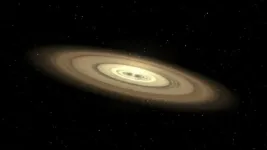
An international team of 45 researchers studying meteor showers has found that not all comets crumble the same way when they approach the Sun. In a paper published in the journal Icarus this week, they ascribe the differences to the conditions in the protoplanetary disk where comets formed 4.5 billion years ago. “The meteoroids we see as meteors in the night sky are the size of small pebbles,” said lead author and SETI Institute and NASA Ames meteor astronomer Peter Jenniskens. “They are, in fact, the same size as the pebbles that collapsed into comets during the formation of ...

Read the release
Environment

When climate reporting fails to create impact

This year, New Zealand became among the first countries in the world to force their largest companies and financial institutions (about 200 in all) to disclose their climate-related risks and opportunities in their annual reports, and make regulatory filings. Over the last month, these reports have been filed under the disclosure regime led by the Financial Markets Authority. But do these kinds of initiatives improve environmental outcomes? A new study, co-authored by Professor Charl de Villiers (University of Auckland, Business ...

Read the release
Environment

Antarctica vulnerable to invasive species hitching rides on plastic and organic debris

Antarctica’s unique ecosystems could be threatened by the arrival of non-native marine species and marine pollution from Southern Hemisphere landmasses, new oceanographic modelling shows. In a study published today in Global Change Biology, scientists from UNSW Sydney, ANU, University of Otago and the University of South Florida suggest that floating objects can reach Antarctic waters from more sources than previously thought. “An increasing abundance of plastics and other human made debris in the oceans means there are potentially more opportunities ...

Read the release
Environment

Human-wildlife overlap expected to increase across more than half of land on Earth by 2070

ANN ARBOR—As the human population grows, more than half of Earth's land will experience an increasing overlap between humans and animals by 2070, according to a University of Michigan study. Greater human-wildlife overlap could lead to more conflict between people and animals, say the U-M researchers. But understanding where the overlap is likely to occur—and which animals are likely to interact with humans in specific areas—will be crucial information for urban planners, conservationists and countries that have pledged international conservation commitments. Their findings ...

Read the release
Environment

Greenhouse gas HFC-23: Abatement of emissions is achievable

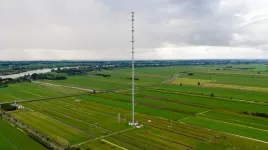
Hydrofluorocarbons (HFCs) are potent greenhouse gases (GHGs). The most potent of these compounds is trifluoromethane, also known as HFC-23. One kilogram of HFC-23 in the atmosphere contributes as much to the greenhouse effect as 12,000 kilograms of CO₂. It takes around 200 years for the gas to break down in the atmosphere. For this reason, more than 150 countries have committed to significantly reducing their emissions of HFC-23 as part of the Kigali Amendment to the Montreal Protocol. The main source of HFC-23 ...

Read the release
Pioneering study shows effective regulation and monitoring is key to tackling emissions of a super-greenhouse gas
Environment

Pioneering study shows effective regulation and monitoring is key to tackling emissions of a super-greenhouse gas

New research has revealed factories globally are not properly destroying one of the most potent greenhouse gases emitted from the production of fluoropolymers like Teflon, and refrigerants. The study investigated a known disparity between real and reported emissions of this gas, prompting calls for more countries to sign up to official agreements to limit emissions and for their Teflon factories to be independently audited to ensure compliance. The study, published today in the journal Nature, scrutinised emissions of one of the most potent hydrofluorocarbon (HFC) greenhouse gases called trifluoromethane, also ...

Read the release
Self-repairing mitochondria use novel recycling system, study finds
Environment

Self-repairing mitochondria use novel recycling system, study finds

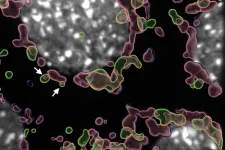
Mitochondria, the so-called “powerhouse of the cell,” depend on a newly discovered recycling mechanism identified by scientists at The Hospital for Sick Children (SickKids). Mitochondria are tiny structures inside of cells that carry out a wide range of critical functions, including generating energy to help keep cells healthy. Every mitochondrion has two layers of membranes: the outer membrane and the inner membrane. On the inner membrane, folds called cristae contain proteins and molecules needed for energy production. ...

Read the release
Mobile species are ‘glue’ which connect different habitats together, study finds
Environment

Mobile species are ‘glue’ which connect different habitats together, study finds

A groundbreaking study conducted across 30 field sites in the southwest UK has revealed the importance of incorporating varied habitats into the landscape at large. The research, published today in Nature and led by ecologists at the University of Bristol, addresses critical questions in conservation and land management, shedding new light on species interactions and how food chains operate across multiple habitats. The study found significant differences in food web structures among landscapes with one, two, or three habitats, including a more evenly distributed abundance of species. Multi-habitat landscapes host a higher number ...

Read the release
FAU engineering to lead $1.3 million collaborative conservation project
Environment

FAU engineering to lead $1.3 million collaborative conservation project

The United States National Science Foundation (NSF) and the Paul G. Allen Family Foundation have announced a $1.3 million collaborative grant to the College of Engineering and Computer Science at Florida Atlantic University, Mote Marine Laboratory & Aquarium, and Old Dominion University, for a project designed to cost-effectively identify and track wildlife using artificial intelligence. Xingquan “Hill” Zhu, Ph.D., principal investigator and a professor in the FAU Department of Electrical Engineering and Computer Science, is spearheading the project in collaboration with FAU’s Harbor Branch Oceanographic Institute and Charles ...

Read the release
Pilot study uses recycled glass to grow plants for salsa ingredients
Environment

Pilot study uses recycled glass to grow plants for salsa ingredients

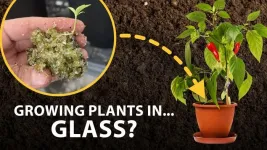
DENVER, Aug. 21, 2024 — Tortilla chips and fresh salsa are tasty in themselves, but they could be even more appealing if you grow the ingredients in a sustainable way. Researchers report that cilantro, bell pepper and jalapeño can be cultivated in recycled glass from discarded, pulverized bottles like those from beer or soda. The pilot study found that partially substituting soil in a planter with recycled glass fragments speeds up plant development and reduces unwanted fungal growth. The researchers will present their results at the fall meeting of the American Chemical Society (ACS). ACS Fall 2024 is ...

Read the release
Environment

Research shows reducing future global flooding hinges on cutting greenhouse gas emissions

Pioneering research forecasts worldwide flooding is likely to be significantly worse in future decades if countries fail to meet official pledges to cut carbon emissions. The study, published today and led by experts from the University of Bristol and global water risk intelligence firm Fathom, reveals projections of different types of flooding in various climate change scenarios with unprecedented precision. Through deploying the most comprehensive mapping framework, findings indicate overall global flooding could increase by around half between 2020 and the turn ...

Read the release
Renewable energy policies provide benefits across state lines
Environment

Renewable energy policies provide benefits across state lines

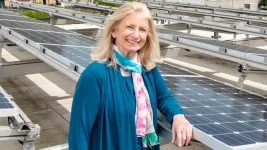
While the U.S. federal government has clean energy targets, they are not binding. Most economically developed countries have mandatory policies designed to bolster renewable electricity production. Because the U.S. lacks an enforceable federal mandate for renewable electricity, individual states are left to develop their own regulations. Marilyn Brown, Regents’ and Brook Byers Professor of Sustainable Systems in Georgia Tech’s School of Public Policy; Shan Zhou, an assistant professor at Purdue University and Georgia Tech Ph.D. alumna; and Barry Solomon, a professor emeritus of environmental policy at Michigan Technological University, investigated ...

Read the release
Fossil hotspots in Africa obscure a more complete picture of human evolution
Environment

Fossil hotspots in Africa obscure a more complete picture of human evolution

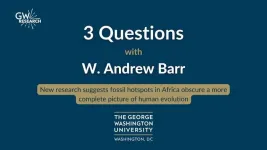
WASHINGTON (August 20, 2024) – Much of the early human fossil record originates from just a few places in Africa, where favorable geological conditions have preserved a trove of fossils used by scientists to reconstruct the story of human evolution. One of these fossil hotspots is the eastern branch of the East African Rift System, home to important fossil sites such as Oldupai Gorge in Tanzania. Yet, the eastern branch of the rift system only accounts for 1% of the surface area of Africa—a fact that makes it possible to estimate how much information scientists who rely on such small samples are missing. In ...

Read the release
Electric reactor could cut industrial emissions
Environment

Electric reactor could cut industrial emissions

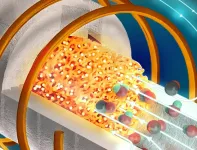
Currently, industrial processes in the U.S. account for approximately a third of the country’s carbon dioxide emissions – even more than the annual emissions from passenger vehicles, trucks, and airplanes combined. Decarbonizing this sector is a challenging but vital step in mitigating impacts on our future climate. Researchers at Stanford Engineering have designed and demonstrated a new type of thermochemical reactor that is capable of generating the immense amounts of heat required for many industrial processes using electricity instead of burning fossil fuels. The design, published Aug. ...

Read the release
Understanding of early life ecosystems highlighted in new publication
Environment

Understanding of early life ecosystems highlighted in new publication

STARKVILLE, Miss.—With a new understanding of past life on the planet through fossils, a Mississippi State biological sciences faculty member is helping researchers better predict Earth’s future. In a new paper published in July in the esteemed peer-reviewed journal Proceedings of the National Academy of Sciences, Donald L. Hall Professor of Biology Matthew Brown unearths a specific area of under-studied fossils: microbial eukaryotes—more specifically, testate amoebae from 750 million ...

Read the release
New insights on how bird flu crosses the species barrier
Environment

New insights on how bird flu crosses the species barrier

In recent years, public health measures, surveillance, and vaccination have helped bring about significant progress in reducing the impact of seasonal flu epidemics, caused by human influenza viruses A and B. However, a possible outbreak of avian influenza A (commonly known as ‘bird flu’) in mammals, including humans, poses a significant threat to public health. The Cusack group at EMBL Grenoble studies the replication process of influenza viruses. A new study from this group sheds light on the different mutations that the avian influenza virus can undergo to be able to replicate in mammalian cells. Some avian influenza ...

Read the release
Environment

UC Irvine team says urban street networks, building density shape severity of floods

Irvine, Calif., Aug. 19, 2024 — Cities around the globe are experiencing increased flooding due to the compounding effects of stronger storms in a warming climate and urban growth. New research from the University of California, Irvine suggests that urban form, specifically the building density and street network of a neighborhood, is also affecting the intensity of flooding. For a paper published today in Nature Communications, researchers in UC Irvine’s Department of Civil and Environmental Engineering turned to statistical mechanics ...

Read the release
From the original Press-News collection. Issuers of news releases are responsible for the accuracy of their content.