THE ORIGINAL COLLECTION · SINCE 2010

Environment
press releases.

Research announcements from universities, hospitals and scientific institutions. Explore the stories, people and discoveries behind the headlines.

Original publication datesPage 89
FIND A STORY

Find a past release.

Dates and source material belong to the original release.

Read our research explainers

Browse the collection · original publication order

Sea lion camera crews help researchers explore previously unmapped ocean habitats
Environment

Sea lion camera crews help researchers explore previously unmapped ocean habitats

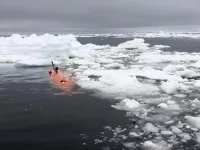
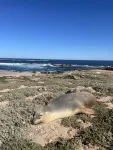
The world’s seabeds are little explored, and the knowledge we have is patchy. Using remotely operated underwater vehicles to learn about seabeds is expensive, requires certain weather conditions, and is difficult in deep, remote, and offshore habitats. To circumvent these challenges, researchers in Australia have now enlisted endangered Australian sea lions (Neophoca cinerea) to carry cameras. The resulting videos allowed the researchers to identify previously unmapped benthic habitats used by the sea lions on the continental shelf. They published their results in Frontiers in Marine Science. “Using ...

Read the release
Preventing heat stroke in tennis: insights into the heat environments of tennis courts
Environment

Preventing heat stroke in tennis: insights into the heat environments of tennis courts

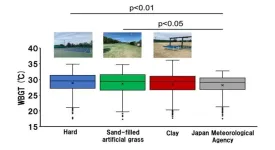
With rising global temperatures due to global warming, the risk of heat strokes has increased and is expected to grow even further. This is particularly troubling for athletes participating in competitive sports. In tennis, multiple matches are played daily, lasting up to five hours. Playing such matches in sweltering conditions could be highly detrimental. The Tokyo Olympic Games in 2021 faced extremely hot conditions with many players calling for appropriate countermeasures. Consequently, the International Tennis Federation (ITF) formulated and issued the “Extreme Weather Policy” at the Tokyo Olympics to manage matches based ...

Read the release
Environment

No room for nuance in polarized political climate: SFU study

Sometimes you just can’t win, and that goes double for people navigating the increasingly polarized political landscape in the United States. Having nuanced opinions of politics in the U.S. turns out to be a very lonely, and unpopular, road, according to a recent study from a research team that includes assistant professor Aviva Phillipp-Muller from Simon Fraser University’s Beedie School of Business. Published in the Journal of Experimental Social Psychology, the study found that people who express ambivalence about political topics – ranging from COVID-19 mask mandates, immigration and the death ...

Read the release
Environment

New substrate material for flexible electronics could help combat e-waste

Electronic waste, or e-waste, is a rapidly growing global problem, and it’s expected to worsen with the production of new kinds of flexible electronics for robotics, wearable devices, health monitors, and other new applications, including single-use devices. A new kind of flexible substrate material developed at MIT, the University of Utah, and Meta has the potential to enable not only the recycling of materials and components at the end of a device’s useful life, but also the scalable manufacture of more ...

Read the release
Smallest arm bone in human fossil record sheds light on the dawn of Homo floresiensis
Environment

Smallest arm bone in human fossil record sheds light on the dawn of Homo floresiensis

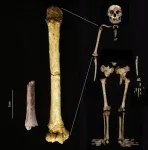
A paper out today in Nature Communications reports the discovery of extremely rare early human fossils from the Indonesian island of Flores, including an astonishingly small adult limb bone. Dated to about 700,000 years old, the new findings shed light on the evolution of Homo floresiensis, the so-called ‘Hobbits’ of Flores whose remains were uncovered in 2003 at Liang Bua cave in the island’s west by a team co-led by Australian-New Zealand archaeologist Professor Mike Morwood (1950–2013). Archaeological evidence suggests these diminutive, small-brained humans inhabited Liang Bua ...

Read the release
The race to discover biodiversity: 11 new marine species and a new platform for rapid species description
Environment

The race to discover biodiversity: 11 new marine species and a new platform for rapid species description

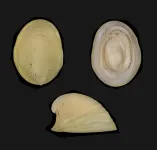
Accelerating global change continues to threaten Earth’s vast biodiversity, including in the oceans, which remain largely unexplored. To date, only a small fraction of an estimated two million total living marine species have been named and described. A major challenge is the time it takes to scientifically describe and publish a new species, which is a crucial step in studying and protecting these species. The current scientific and publishing landscape often results in decade-long delays (20-40 years) from the discovery of a new species to its official description. As an ...

Read the release
Environment

DRI’s STEM education team receives EPA grant to support microplastics education for Nevada students and communities

Reno, Nev. (August 5, 2024) – DRI’s STEM Education Team has received a grant from the Environmental Protection Agency (EPA) to support environmental education in Nevada’s schools. The $100,000 grant will fund the production of additional educational kits known as Greenboxes that raise awareness and understanding of the prevalence and role of microplastics in the environment. “DRI is honored to be awarded this EPA grant, and we are eager to continue our outreach to underserved rural and urban communities across Nevada,” said DRI STEM Education Program Manager Emily McDonald-Williams. “Middle school students ...

Read the release
Environment

An overlooked side-effect of the housing crisis may be putting Californians at increased risk from climate disasters

In a new article for the journal Proceedings of the National Academy of Sciences, UC Santa Cruz researchers laid out the foundation for their highly-anticipated upcoming study of how lack of affordable housing in urban areas of California may be driving increased development in and near wildlands, leading to more severe climate change impacts. Since the 1990s, California has led the nation in the growth of Wildland-Urban Interface (WUI) development, with more than one in three households in the state now located immediately next to or within ...

Read the release
Greenland fossil discovery reveals increased risk of sea-level catastrophe
Environment

Greenland fossil discovery reveals increased risk of sea-level catastrophe

The story of Greenland keeps getting greener—and scarier. A new study provides the first direct evidence that the center—not just the edges—of Greenland’s ice sheet melted away in the recent geological past and the now-ice-covered island was then home to a green, tundra landscape. A team of scientists re-examined a few inches of sediment from the bottom of a two-mile-deep ice core extracted at the very center of Greenland in 1993—and held for 30 years in a Colorado storage facility. They were amazed to discover ...

Read the release
FAU lands $1.3M NSF grant to boost dryland soil quality amid climate stressors
Environment

FAU lands $1.3M NSF grant to boost dryland soil quality amid climate stressors

Drylands, found across every continent, cover about 45% of the Earth's land surface and support 38% of the human population. In these regions, precipitation is low and evaporation rates are typically high, leading to an arid or semi-arid climate. Due to scarce water resources and sparse vegetation, drylands present formidable challenges for agriculture and human habitation. As the climate continues to warm, drylands are rapidly expanding. A particularly urgent problem in drylands is climate-driven soil degradation, which affects about 33% of the planet’s land surface. Drylands host ...

Read the release
Self-powered pump harnesses light and chemistry to target, capture pollutants
Environment

Self-powered pump harnesses light and chemistry to target, capture pollutants

Dartmouth researchers have developed a self-powered pump that uses natural light and chemistry to target and remove specific water pollutants, according to a new report in the journal Science. As water enters the pump, a wavelength of light activates a synthetic molecular receptor designed to bond to negatively charged ions, or anions, a class of pollutants linked to metabolic disruptions in plants and animals. A second wavelength deactivates the receptors as water exits the pump and causes them to release the ...

Read the release
Environment

How the rising earth in Antarctica will impact future sea level rise

COLUMBUS, Ohio – The rising earth beneath the Antarctic Ice Sheet will likely become a major factor in future sea level rise, a new study suggests. Despite feeling like a stationary mass, most solid ground is undergoing a process of deformation, sinking and rising in response to many environmental factors. In Antarctica, melting glacial ice means less weight on the bedrock below, allowing it to rise. How the rising earth interacts with the overlying ice sheet to affect sea level rise is not well-studied, said Terry Wilson, co-author of the study and a senior research scientist at the Byrd Polar and Climate Research Center ...

Read the release
Environment

Not the day after tomorrow: Why we can't predict the timing of climate tipping points

A new study published in Science Advances reveals that uncertainties are currently too large to accurately predict exact tipping times for critical Earth system components like the Atlantic Meridional Overturning Circulation (AMOC), polar ice sheets, or tropical rainforests. These tipping events, which might unfold in response to human-caused global warming, are characterized by rapid, irreversible climate changes with potentially catastrophic consequences. However, as the new study shows, predicting when these events will occur is more difficult than previously thought. Climate scientists from the Technical University of Munich (TUM) and ...

Read the release
Combined effects of plastic pollution and seawater flooding amplify threats to coastal plant species
Environment

Combined effects of plastic pollution and seawater flooding amplify threats to coastal plant species

Two of the planet’s more pressing environmental stressors have the potential to alter the growth and reproductive output of plants found right along the world’s coastlines, a new study suggests. The research, published in the journal Environmental Pollution, is one of the first to examine the combined effects of seawater flooding and microplastic pollution on coastal plants. It showed that both stressors had some effects on the species tested, with microplastics impacting the plants’ reproduction while flooding caused greater tissue death. However, being exposed to both microplastics ...

Read the release
Sea level changes shaped early life on Earth, fossil study reveals
Environment

Sea level changes shaped early life on Earth, fossil study reveals

A newly developed timeline of early animal fossils reveals a link between sea levels, changes in marine oxygen, and the appearance of the earliest ancestors of present-day animals. The study reveals clues into the forces that drove the evolution of the earliest organisms, from which all major animal groups descended. A team from the University of Edinburgh studied a compilation of rocks and fossils from the so-called Ediacaran-Cambrian interval – a slice of time 580–510 million years ago. This period witnessed an explosion of biodiversity according to fossil records, the causes of which have ...

Read the release
Environment

Retreat of tropical glaciers foreshadows changing climate's effect on the global ice

MADISON — As they are in many places around the globe, glaciers perched high in the Andes Mountains are shrinking. Now, researchers at the University of Wisconsin–Madison and their collaborators have uncovered evidence that the high-altitude tropical ice fields are likely smaller than they've been at any time since the last ice age ended 11,700 years ago. That would make the tropical Andes the first region in the world known to pass that threshold as a result of the steadily warming global climate. It also makes them possible harbingers of what's to come for glaciers globally. "We think these are the canary ...

Read the release
Environment

Current Andean glacier loss is unprecedented in the Holocene

Andean tropical glaciers are experiencing unprecedented retreat, according to a new study that reveals their current sizes are the smallest in over 11,700 years. “Our finding … identifies this region as a hot spot in our understanding of the changing state of the cryosphere,” say the authors. Glaciers act as important indicators of climate change, with their global retreat accelerating over recent decades. Examining this retreat in the context of the previous 11,700 years of the Holocene interglacial highlights the impact of modern global warming. Although many glaciers worldwide are smaller today compared to ...

Read the release
Environment

New fossil resembling a bristly durian fruit reveals insights into the origin of molluscan skeletons

The early evolution of mollusks has been hard to pin down, but now a newly discovered fossil – of a shell-less, soft-bodied, spiny mollusk from the early Cambrian – provides crucial insights, researchers report. The findings suggest that this fossil, of a creature called Shishania aculeata, is a stem mollusk – representative of an intermediate between early members of the superphylum lophotrochozoans and more derived mollusks. Mollusks are one of the most diverse groups of animals, encompassing various well-known forms such as clams, ...

Read the release
Study shows link between asymmetric polar ice sheet evolution and global climate
Environment

Study shows link between asymmetric polar ice sheet evolution and global climate

Recent joint research led by Professor AN Zhisheng from the Institute of Earth Environment of the Chinese Academy of Sciences has revealed the pivotal role of the growth of the Antarctic ice sheet and associated Southern Hemisphere sea ice expansion in triggering the mid-Pleistocene climate transition (MPT). It has also shown how asymmetric polar ice sheet evolution affects global climate. The MPT refers to a shift in Earth’s climate system between about ~1.25–0.7 million years ago, marking a shift to more pronounced and regular ...

Read the release
Andean glaciers have retreated to lowest levels in 11,700 years, news study finds
Environment

Andean glaciers have retreated to lowest levels in 11,700 years, news study finds

Chestnut Hill, Mass (8/1/2024) – Rocks recently exposed to the sky after being covered with prehistoric ice show that tropical glaciers have shrunk to their smallest size in more than 11,700 years, revealing the tropics have already warmed past limits last seen earlier in the Holocene age, researchers from Boston College report today in the journal Science. Scientists have predicted glaciers would melt, or retreat, as temperatures warm in the tropics – those regions bordering the Earth’s ...

Read the release
Environment

Research catalogs greenhouse gas emissions tied to energy use for interbasin water transfers

Much of the water in the West is transported across vast geographical areas by large infrastructure projects known as interbasin water transfers. Two of these projects in particular make up 85% of all energy-related greenhouse gas emissions associated with U.S. interbasin transfers — one in Arizona and the other in California — according to the new research published this week in the journal Nature Water. The project in Arizona is known as the Central Arizona Project and in California it’s the State Water Project. “You hear a lot about these big projects and how much energy they use,” said Avery Driscoll, a doctoral student in ...

Read the release
Scientists set sail to study Greenland glaciers from underwater
Environment

Scientists set sail to study Greenland glaciers from underwater

The University of Texas at Austin has embarked on a mission to explore the underwater edges of Greenland’s coastal glaciers to learn more about future sea level rise. The four-week expedition conducted with international partners will investigate processes that control how these giant glaciers melt and what that means for the future of the Greenland ice sheet, which has about 23 feet (7 meters) of potential sea level rise locked away in its ice. Joining the researchers is a robotic submersible that will gather measurements of the glaciers’ underwater walls and sediment-laden meltwater, a feat that’s never been ...

Read the release
A whole new view on glacier melting in Antarctica
Environment

A whole new view on glacier melting in Antarctica

An international research team deployed the unmanned submarine ‘Ran’ from the University of Gothenburg underneath thick ice in Antarctica. They got back the very first detailed maps of the underside of a glacier, revealing clues to future sea level rise. The autonomous underwater vehicle, Ran, was programmed to dive into the cavity of Dotson ice shelf in West Antarctica, and scan the ice above it with an advanced sonar system. For 27 days, the submarine travelled a total of over 1.000 kilometres back and forth under the glacier, reaching 17 kilometres into the cavity. An ice shelf is a mass of glacial ice, fed from land by tributary glaciers, that floats ...

Read the release
Environment

Underwater mapping reveals new insights into melting of Antarctica's ice shelves

Clues to future sea level rise have been revealed by the first detailed maps of the underside of a floating ice shelf in Antarctica. An international research team - including scientists from the University of East Anglia (UEA) - deployed an unmanned submersible beneath the Dotson Ice Shelf in West Antarctica. The underwater vehicle, ‘Ran’, was programmed to dive into the cavity of the 350metre-thick ice shelf and scan the ice above it with an advanced sonar. Over 27 days, the submarine travelled more than 1000 kilometres back and forth under the shelf, reaching 17 kilometres into the cavity. An ice shelf is a mass of glacial ice, fed from land by tributary glaciers, that ...

Read the release
Barriers designed to prevent saltwater intrusion may worsen inland flooding
Environment

Barriers designed to prevent saltwater intrusion may worsen inland flooding

As Earth continues to warm, sea levels have risen at an accelerating rate – from 1.4 millimeters a year to 3.6 millimeters a year between 2000 and 2015. Flooding will inevitably worsen, particularly in low-lying coastal regions, where more than a billion people are estimated to live. Solutions are needed to protect homes, property and groundwater from flooding and the intrusion of saltwater. Seawalls and similar infrastructure are obvious options to protect against flooding. In fact, cities such as New York and San Franciso have already thrashed out potential plans with the Army Corps of Engineers that will heavily rely ...

Read the release
From the original Press-News collection. Issuers of news releases are responsible for the accuracy of their content.