THE ORIGINAL COLLECTION · SINCE 2010

Environment
press releases.

Research announcements from universities, hospitals and scientific institutions. Explore the stories, people and discoveries behind the headlines.

Original publication datesPage 90
FIND A STORY

Find a past release.

Dates and source material belong to the original release.

Read our research explainers

Browse the collection · original publication order

Smithsonian scientists devise method to secure Earth’s biodiversity on the moon
Environment

Smithsonian scientists devise method to secure Earth’s biodiversity on the moon

New research led by scientists at the Smithsonian proposes a plan to safeguard Earth’s imperiled biodiversity by cryogenically preserving biological material on the moon. The moon’s permanently shadowed craters are cold enough for cryogenic preservation without the need for electricity or liquid nitrogen, according to the researchers. The paper, published today in BioScience and written in collaboration with researchers from the Smithsonian’s National Zoo and Conservation ...

Read the release
Environment

520-million-year-old worm fossil solves mystery of how modern insects, spiders and crabs evolved

A new study led by researchers at Durham University have uncovered an incredibly rare and detailed fossil, named Youti yuanshi, that gives a peek inside one of the earliest ancestors of modern insects, spiders, crabs and centipedes. This fossil dates back over 520 million years to the Cambrian period, when the major animal groups we know today were first evolving. This fossil belongs to a group called the euarthropods, which includes modern insects, spiders and crabs. What makes this fossil so special ...

Read the release
New method recovers phosphorus from wastewater to power the future of lithium-iron phosphate batteries
Environment

New method recovers phosphorus from wastewater to power the future of lithium-iron phosphate batteries

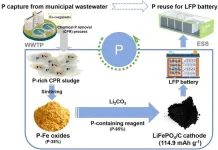
In a recent study published in Engineering, a research team from the Shenzhen Engineering Research Laboratory for Sludge and Food Waste Treatment and Resource Recovery has introduced a pioneering method to tackle the critical global issue of phosphorus (P) scarcity. Their innovative approach leverages municipal wastewater to produce phosphorus vital for the manufacture of lithium iron phosphate (LiFePO4) batteries, a key component in the rapidly growing electric vehicle market. As the demand for LiFePO4 batteries ...

Read the release
Environment

With biodiversity under threat, scientists suggest the need for a new biorepository—on the moon

With numerous species facing extinction, an international team of researchers has proposed an innovative solution to protect the planet's biodiversity: a lunar biorepository. This concept, detailed in a recent article in the journal BioScience, is aimed at creating a passive, long-lasting storage facility for cryopreserved samples of Earth's most at-risk animal species. Led by Dr. Mary Hagedorn of the Smithsonian's National Zoo and Conservation Biology Institute, the team envisions taking advantage of the Moon's naturally cold temperatures, particularly in permanently shadowed regions near the poles, where temperatures remain consistently below –196 degrees ...

Read the release
Invasive insect herbivore alters ecosystem services delivered by cycads
Environment

Invasive insect herbivore alters ecosystem services delivered by cycads

A study published in the June 2024 issue of the journal Pedosphere looks at how a non-native armored scale insect alters the leaf litter decomposition dynamics of the novel host cycad species in newly invaded islands. The scale insect, known as cycad aulacaspis scale, or CAS, has been invading new territories around the globe for decades, killing the resident cultivated and natural cycad populations. Non-native insect herbivores that invade island communities often threaten native plants that serve as newly discovered hosts. The scientific community often quantifies plant ...

Read the release
Is that glass bottle of OJ better for the planet than a plastic container?
Environment

Is that glass bottle of OJ better for the planet than a plastic container?

Which packaging type for a 12-ounce, single-serve container of orange juice would you choose as the most sustainable option: Aluminum/canned, made with recycled material; Carton, described as biodegradable/compostable; Glass, 100% recyclable; or Plastic, described as biodegradable/compostable? If you were like the U.S. consumers surveyed by food scientists in a University of Massachusetts Amherst study, you’d prefer glass and believe it was the most sustainable choice. And you all would be mistaken. “Glass was ...

Read the release
Breakthrough in Z-alkene synthesis: Scientists develop efficient and sustainable method
Environment

Breakthrough in Z-alkene synthesis: Scientists develop efficient and sustainable method

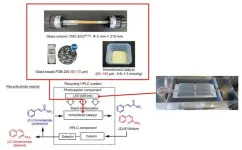
Z-alkenes are organic compounds with a double bond between two carbon atoms and two substituents attached to the carbon atoms on the same side of the double bond. They are ubiquitous structural components of organic compounds in chemistry and biology. It is well known that many of the Z-alkenes cannot be prepared through conventional methods involving thermodynamic methods while photoisomerization can offer good yields. Photoisomerization is a process in which the structural arrangement of an isomer of a molecule is changed to another isomer by absorption of light. The photoisomerization of E-alkenes to produce Z-alkenes ...

Read the release
Environment

Oil and gas extraction causes pollution to spike 10,000%

North Sea oil and gas extraction can cause pollution to spike by more than 10,000% within half a kilometre around off-shore sites, a study has found for the first time. The University of Essex, Natural History Museum and Centre for Environment, Fisheries and Aquaculture Science (CEFAS) research has uncovered the true impact on Britain’s seabed life - with the number of species plummeting nearly 30% near platforms. The findings, published in Science of The Total Environment, come in the face of continued global fossil fuel exploration. The study discovered pollutants like hydrocarbons were up to 10,613% higher within 500m ...

Read the release
Three-step plan to cut overlooked methane emissions could help us stop global warming faster
Environment

Three-step plan to cut overlooked methane emissions could help us stop global warming faster

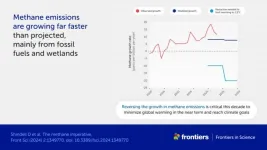
To control the climate crisis, we must tackle methane emissions now. Methane has contributed about half the global warming we’ve experienced so far, and emissions are climbing rapidly. An international team of climate researchers writing in Frontiers in Science set out three imperatives to cut methane emissions and share a new tool to help us find the most cost-effective ways of doing so. “The world has been rightly focused on carbon dioxide, which is the largest driver of climate change to date,” said Professor ...

Read the release
Environment

Scientists untangle interactions between the Earth’s early life forms and the environment over 500 million years

The atmosphere, the ocean and life on Earth interacted over the past 500-plus million years in ways that improved conditions for early organisms to thrive. Now, an interdisciplinary team of scientists has produced a perspective article of this co-evolutionary history published in multidisciplinary open-access journal National Science Review (Oxford University Press, Impact Factor 20.7). “One of our tasks was to summarize the most important discoveries about carbon dioxide and oxygen in the atmosphere and ocean over the past 500 million ...

Read the release
California a botanical and climate change hot spot
Environment

California a botanical and climate change hot spot

From coastal redwoods and Joshua trees to golden poppies and sagebrush, California is a global botanical hotspot. It’s also a place confronted with extreme heat, wildfires and crumbling coastlines. The state’s natural beauty and history of pioneering conservation efforts make it a test bed for protecting biodiversity in the face of current and future climate change, argues a study led by the University of California, Davis. Published July 29 in Proceedings of the National Academy of Sciences, the study, “Climate Change and California’s Terrestrial Biodiversity,” is part of a special ...

Read the release
Local food production saves costs and carbon
Environment

Local food production saves costs and carbon

Local foods are critical to the food security and health of Indigenous peoples around the world, but local "informal" economies are often invisible in official economic statistics. Consequently, these economies may be overlooked in the policies designed to combat climate change. For instance, Indigenous communities in the North American Arctic are characterized by mixed economies featuring hunting, fishing, gathering and trapping activities, alongside the formal wage economy. The region is also undergoing a rapid transformation due to social, economic and climatic changes. In Canada, the introduction ...

Read the release
Bold moves needed for California agriculture to adapt to climate change
Environment

Bold moves needed for California agriculture to adapt to climate change

California should take urgent and bold measures to adapt its $59 billion agriculture sector to climate change as the amount of water available for crops declines, according to a collaborative report by University of California faculty from four campuses. Published in the Proceedings of the National Academy of Sciences, the report provides a roadmap for more water capture, storage, and distribution systems that are in harmony with climate projections and ecosystems. It further considers how runoff and groundwater can be used repeatedly ...

Read the release
Environment

PSU awarded $1.9M NOAA grant to address microplastic pollution in coastal communities

Portland State University (PSU) has been awarded $1,976,806 from the National Oceanic and Atmospheric Administration's (NOAA) National Sea Grant Marine Debris Challenge Award Program to lead an innovative and collaborative three-year project to address microplastic pollution on the Oregon coast. This grant is part of a $27 million project between the U.S. Department of Commerce and NOAA. Portland State will host one of 11 projects that received a total of $25 million in funding across Alabama, California, Florida, Illinois, Massachusetts, New York, North Carolina, Oregon, Texas and Wisconsin. These projects ...

Read the release
Two shark species documented in Puget Sound for first time by Oregon State researchers
Environment

Two shark species documented in Puget Sound for first time by Oregon State researchers

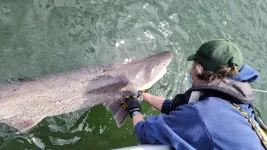
CORVALLIS, Oregon – Oregon State University researchers have made the first scientific confirmation in Puget Sound of two distinct shark species, one of them critically endangered. The presence of the broadnose sevengill shark and endangered soupfin shark in the sound, the southern portion of the Salish Sea, may indicate changes in what biologists in OSU’s Big Fish Lab describe as an economically, culturally and ecologically valuable inland waterway. The Salish Sea separates northwest Washington from British Columbia’s Vancouver Island. The ...

Read the release
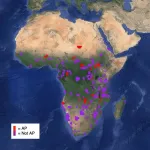
Outsourcing conservation in Africa
Environment

Outsourcing conservation in Africa

(Santa Barbara, Calif.) — There’s an experiment going on in conservation in Africa. With biodiversity imperiled, and nations facing financial and political crises, some governments are transferring the management of protected areas to private, non-governmental organizations (NGOs). This strategy seems to be paying off. NGOs can better manage corruption, making them attractive to large donors like the World Bank and European Union. Their capital can fund personnel, research and technology to more effectively manage protected areas and species. While these management changes appear ...

Read the release
Media Tip Sheet: Urban Ecology at #ESA2024
Environment

Media Tip Sheet: Urban Ecology at #ESA2024

Interest in urban ecology is growing rapidly as cities expand and the need to understand urban ecosystems becomes more pressing. The Ecological Society of America’s upcoming Annual Meeting in Long Beach, Calif., Aug. 4–9, features a diverse array of talks and posters dedicated to this dynamic field. Researchers from around the world will present their latest findings on how urban environments impact biodiversity, ecosystem services and human well-being. In addition to a Symposium devoted to the urban ecology of Greater Los Angeles, dozens of talks and posters will offer valuable insights ...

Read the release
Environment

Climate is most important factor in where mammals choose to live, study finds

While human activity has had a massive effect on the natural world, a new study from North Carolina State University finds that climate is still the most influential factor in determining where mammals can thrive. The work sheds light on how climate change will affect wildlife populations. Roland Kays, lead author of a paper on the work, said the study’s goal was to compare the importance of climate versus human factors in where mammals chose to live. To do so, researchers collected data on 25 mammal species from 6,645 locations across the United States. The study is one of the largest camera trap data analyses ever done. The data came ...

Read the release
Green hydrogen from direct seawater electrolysis- experts warn against hype
Environment

Green hydrogen from direct seawater electrolysis- experts warn against hype

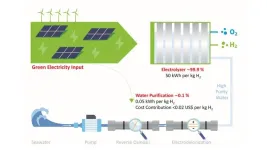
At first glance, the plan sounds compelling: invent and develop future electrolysers capable of producing hydrogen directly from unpurified seawater. But a closer look reveals that such direct seawater electrolysers would require years of high-end research. And what is more: DSE electrolyzers are not even necessary - a simple desalination process is sufficient to prepare seawater for conventional electrolyzers. In a commentary in Joule, international experts compare the costs and benefits of the different approaches and come to a clear recommendation. Fresh water is a limited ...

Read the release
Innovative fire stewardship techniques to reshape landscape design to better adapt to and coexist with wildfire-prone environments
Environment

Innovative fire stewardship techniques to reshape landscape design to better adapt to and coexist with wildfire-prone environments

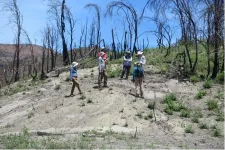
Over the past few decades, many parts of the world have experienced record-breaking wildfire events—a trend that is, unfortunately, expected to rise. These extreme events not only result in mass evacuations, but also release greenhouse gases like carbon dioxide, pose risks to life, devastate buildings and essential infrastructure, and fundamentally disrupt and detrimentally transform native ecosystems. In response to the increased risk of catastrophic wildfires, many planning and site design practices have sought to protect the trends and status quo of land development. These measures strive to resist and, ...

Read the release
Kepler’s 1607 pioneering sunspot sketches solve solar mysteries 400 years later
Environment

Kepler’s 1607 pioneering sunspot sketches solve solar mysteries 400 years later

Using modern techniques, researchers have re-examined Johannes Kepler's half-forgotten sunspot drawings and revealed previously hidden information about the solar cycles before the grand solar minimum. By recreating the conditions of the great astronomer’s observations and applying Spörer's law in the light of modern statistics, an international collaborative group led by Nagoya University in Japan has measured the position of Kepler’s sunspot group, placing it at the tail-end of the solar cycle before the cycle that Thomas Harriot, Galileo Galilei, and other ...

Read the release
NYUAD researcher receives National Science Foundation grant to study the role of tiny diatoms in protecting endangered marine animals
Environment

NYUAD researcher receives National Science Foundation grant to study the role of tiny diatoms in protecting endangered marine animals

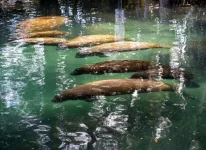
Abu Dhabi, UAE, July 25, 2024: NYU Abu Dhabi (NYUAD) Associate Professor of Biology Shady Amin has received a grant of more than USD 500,000 from the National Science Foundation (NSF). He will lead a project that is aimed at elevating the understanding and awareness of the essential role played by diatoms, the tiny microalgae that can live in oceans or in symbiosis with endangered marine animal hosts like whales, dolphins, dugongs, and manatees and play a fundamental role in maintaining Earth’s delicate ecosystem. Diatoms are microalgae ...

Read the release
Environment

Climate change will bring more turbulence to flights in the Northern Hemisphere

American Geophysical Union 25 July 2024 AGU Release No. 24-28 For Immediate Release This press release is available online at: https://news.agu.org/press-release/climate-change-will-bring-more-turbulence-to-flights-in-the-northern-hemisphere/ Climate change will bring more turbulence to flights in the Northern Hemisphere Disruptive clear air turbulence is predicted to increase over most northern mid-latitude regions AGU press contact: Liza Lester, +1 (202) 777-7494, news@agu.org (UTC-5 hours) Contact information for the researchers: Mohamed ...

Read the release
Tackling industrial emissions begins at the chemical reaction
Environment

Tackling industrial emissions begins at the chemical reaction

University of Sydney researchers are proposing a new way to curb industrial emissions, by tapping into the “atomic intelligence” of liquid metals to deliver greener and more sustainable chemical reactions. Despite global efforts towards renewable energy and electrification, chemical production accounts for approximately 10-15 percent of total greenhouse gas emissions. More than 10 percent of the world’s total energy is used in chemical factories, with these numbers rising. This is due to the large amounts of energy required to cause ...

Read the release
Scientists study how to bring you ‘climate-smart coffee’
Environment

Scientists study how to bring you ‘climate-smart coffee’

Crave that cup of coffee in the morning? Globally, consumers drink more than 2.2 billion cups daily. Someone grows all that joe: More than 100 million farmers worldwide produce coffee. Coffee beans consumed across the globe come from two species: Coffea arabica and Coffea canephora, also known as Robusta (or Conilon) coffee. Historically, coffee drinkers prefer Arabica beans for their specific flavor and aroma, said Felipe Ferrao, a University of Florida research assistant scientist in horticultural sciences. But by 2050, about 80% of Arabica production is predicted to decrease because of climate change. So, Ferrao and colleagues from France (RD2 Vision) and Brazil (Incaper ...

Read the release
From the original Press-News collection. Issuers of news releases are responsible for the accuracy of their content.