THE ORIGINAL COLLECTION · SINCE 2010

Environment
press releases.

Research announcements from universities, hospitals and scientific institutions. Explore the stories, people and discoveries behind the headlines.

Original publication datesPage 91
FIND A STORY

Find a past release.

Dates and source material belong to the original release.

Read our research explainers

Browse the collection · original publication order

A recipe for zero-emissions fuel: Soda cans, seawater, and caffeine
Environment

A recipe for zero-emissions fuel: Soda cans, seawater, and caffeine

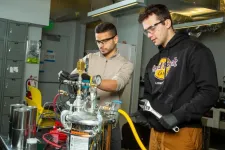
A sustainable source for clean energy may lie in old soda cans and seawater. MIT engineers have found that when the aluminum in soda cans is exposed in its pure form and mixed with seawater, the solution bubbles up and naturally produces hydrogen — a gas that can be subsequently used to power an engine or fuel cell without generating carbon emissions. What’s more, this simple reaction can be sped up by adding a common stimulant: caffeine. In a study appearing today in the journal Cell Reports Physical Science, the researchers show they can produce hydrogen gas by dropping pretreated, pebble-sized aluminum pellets into a beaker ...

Read the release

Oregon State University research uncovers better way to produce green hydrogen
Environment

Oregon State University research uncovers better way to produce green hydrogen

CORVALLIS, Ore. – Researchers at Oregon State University have developed a material that shows a remarkable ability to convert sunlight and water into clean energy. A collaboration led by Kyriakos Stylianou of the OSU College of Science created a photocatalyst that enables the high-speed, high-efficiency production of hydrogen, used in fuel cells for cars as well as in the manufacture of many chemicals including ammonia, in the refining of metals and in making plastics. The findings represent a potential new tool to use against greenhouse gas emissions and climate change, said Stylianou, whose research focuses ...

Read the release
Royal Ontario Museum scientist identifies Great Salt Lake as a significant source of greenhouse gas emissions
Environment

Royal Ontario Museum scientist identifies Great Salt Lake as a significant source of greenhouse gas emissions

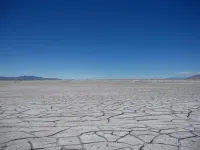
Newly announced research by Royal Ontario Museum (ROM) examining greenhouse gas emissions from the drying lake bed of Great Salt Lake, Utah, calculates that 4.1 million tons of carbon dioxide and other greenhouse gases were released in 2020. This research suggests that drying lake beds are an overlooked but potentially significant source of greenhouse gases, which may further increase due to climate change. These results were announced in the paper, “A desiccating saline lake bed is a significant source of anthropogenic greenhouse gas emissions,” published in the journal One Earth. “Human-caused ...

Read the release
Svalbard: Non-native species are threatening vulnerable plant life
Environment

Svalbard: Non-native species are threatening vulnerable plant life

New, non-native plant species are constantly being discovered in Svalbard, and researchers are working to ascertain what threat these species pose to the native plants. So far, the Arctic has managed to avoid one of the most serious threats to biodiversity on Earth. This is also true for Svalbard, but things could change very quickly, and researchers want to find out how to counteract this threat. “Increased human activity heightens the risk of new plant species being introduced. And climate change increases the risk of invasive species establishing themselves,” says Kristine Bakke Westergaard. She is an associate ...

Read the release
Warming has more impact than cooling on Greenland's "firn"
Environment

Warming has more impact than cooling on Greenland's "firn"

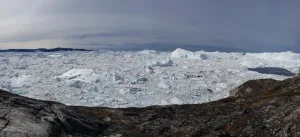
Scientists have known from ice core research that it's easier to melt an ice sheet than to freeze it up again. Now, they know at least part of the reason why, and it has to do with ice's "sponginess," according to a new study published July 24 in The Cryosphere. The study uses a physics-based numerical model to assess the impacts of warming and cooling on firn, the porous layer between snow and glacial ice, over the entire Greenland Ice Sheet. Megan Thompson-Munson, a CIRES and ATOC PhD student, led the study alongside ...

Read the release
Ancient marine animal had inventive past despite being represented by few species, new study finds
Environment

Ancient marine animal had inventive past despite being represented by few species, new study finds

The findings, published today in Nature Ecology & Evolution, sheds light on some core principles of the evolution of modern biodiversity. In current oceans, molluscs such as clams, oysters, and snails are hugely diverse, with over 50,000 species, whereas brachiopods are rare by comparison with only 394 species known. But this was not always the case. The team have found that brachiopods were evolving new shell shapes and ecological behaviours following the end-Permian mass extinction which compromised their numbers. “In the Palaeozoic, from 540 to 250 million years ago, brachiopods ruled the seabed,” ...

Read the release
Rice researchers develop innovative battery recycling method
Environment

Rice researchers develop innovative battery recycling method

A research team at Rice University led by James Tour, the T.T. and W.F. Chao Professor of Chemistry and professor of materials science and nanoengineering, is tackling the environmental issue of efficiently recycling lithium ion batteries amid their increasing use. The team has pioneered a new method to extract purified active materials from battery waste as detailed in the journal Nature Communications on July 24. Their findings have the potential to facilitate the effective separation and recycling of valuable battery materials ...

Read the release
Environment

Nationwide flood models poorly capture risks to households and properties

Irvine, Calif., July 24, 2024 – Government agencies, insurance companies and disaster planners rely on national flood risk models from the private sector that aren’t reliable at smaller levels such as neighborhoods and individual properties, according to researchers at the University of California, Irvine. In a paper published recently in the American Geophysical Union journal Earth’s Future, experts in UC Irvine’s Department of Civil and Environmental Engineering caution that relatively new, nation-scale flood data provides an inadequate representation of local topography and infrastructure, factors known to control the spread of floods ...

Read the release
Southern Ocean absorbing more CO2 than previously thought, study finds
Environment

Southern Ocean absorbing more CO2 than previously thought, study finds

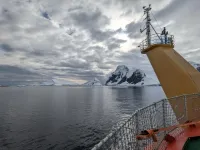
New research led by the University of East Anglia (UEA) and Plymouth Marine Laboratory (PML) has found that the Southern Ocean absorbs more carbon dioxide (CO2) than previously thought. Using direct measurements of CO2 exchange, or fluxes, between the air and sea, the scientists found the ocean around Antarctica absorbs 25% more CO2 than previous indirect estimates based on shipboard data have suggested. The Southern Ocean plays a major role in absorbing CO2 emitted by human activities, a process vital for controlling the Earth's climate. However, there are big uncertainties ...

Read the release
Environment

Saharan dust regulates hurricane rainfall

Giant plumes of Sahara Desert dust that gust across the Atlantic can suppress hurricane formation over the ocean and affect weather in North America. But thick dust plumes can also lead to heavier rainfall – and potentially more destruction – from landfalling storms, according to a July 24 study in Science Advances. The research shows a previously unknown relationship between hurricane rainfall and Saharan dust plumes. “Surprisingly, the leading factor controlling hurricane precipitation is not, as traditionally thought, sea surface temperature or humidity in the atmosphere. Instead, it’s Sahara dust,” said the corresponding ...

Read the release
Lyda Hill Philanthropies funds innovative wildfire solutions in Colorado
Environment

Lyda Hill Philanthropies funds innovative wildfire solutions in Colorado

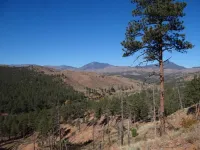
Lyda Hill Philanthropies has donated $290,000 to Cary Institute of Ecosystem Studies for the Western Fire & Forest Resilience Collaborative. The two-year grant will help to engage a research team within the Collaborative that is focused on wildfire-related challenges and solutions in Colorado, where Lyda Hill has deep family ties. Led by Winslow Hansen at Cary Institute and launched with seed funding from the Gordon and Betty Moore Foundation, the Western Fire & Forest Resilience Collaborative joins together multidisciplinary ...

Read the release
Environment

Trees reveal climate surprise – bark removes methane from the atmosphere

Tree bark surfaces play an important role in removing methane gas from the atmosphere, according to a study published today (24 July) in Nature. While trees have long been known to benefit climate by removing carbon dioxide from the atmosphere, this new research reveals a surprising additional climate benefit. Microbes hidden within tree bark can absorb methane – a powerful greenhouse gas – from the atmosphere. An international team of researchers led by the University of Birmingham has shown for ...

Read the release
From grey to green: unveiling the future of renewable e-methanol for cleaner shipping fuels
Environment

From grey to green: unveiling the future of renewable e-methanol for cleaner shipping fuels

Methanol is a crucial chemical feedstock and a potential green fuel, particularly for the shipping industry. Currently, its production predominantly relies on fossil feedstocks, leading to high greenhouse gas emissions. With the global push towards decarbonization, there is an urgent need to explore cleaner alternatives like renewable e-methanol. Based on these challenges, there is a need for in-depth research to develop sustainable methanol production methods. A team of researchers from Tsinghua ...

Read the release
Reducing carbon dioxide to acetate with a polyaniline catalyst coated in cobalt oxide nanoparticles
Environment

Reducing carbon dioxide to acetate with a polyaniline catalyst coated in cobalt oxide nanoparticles

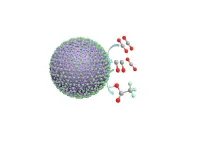
Acetic acid, also known as acetate, and other products that can be developed from acetic acid are used in a variety of industries, from food production to medicine to agriculture. Currently, acetate production uses a significant amount of energy and results in harmful waste products. The efficient and sustainable production of acetate is an important target for researchers interested in improving industrial sustainability. A paper published in Carbon Future on July 9 outlines a method using a polyaniline catalyst with cobalt oxide nanoparticles to produce acetate through carbon dioxide electroreduction. “The polyaniline catalyst with cobalt ...

Read the release
How well does tree planting work in climate change fight? It depends, OSU research shows
Environment

How well does tree planting work in climate change fight? It depends, OSU research shows

CORVALLIS, Ore. – Using trees as a cost-effective tool against climate change is more complicated than simply planting large numbers of them, an international collaboration that includes an Oregon State University scientist has shown. Jacob Bukoski of the OSU College of Forestry and seven other researchers synthesized data from thousands of reforestation sites in 130 countries and found that roughly half the time it’s better just to let nature take its course. Findings of the study led by Conservation International were published today in Nature ...

Read the release
Environment

How is biodiversity changing in one of the world’s most productive ocean ecosystems?

In research published in Global Change Biology, investigators examined DNA within ocean bottom sediment cores to assess changes in living organisms within one of the world’s most productive marine ecosystems: the Atacama Trench in the eastern Pacific Ocean, which is located about 100 miles off the coast of Peru and Chile and lies at a depth of up to 5 miles below the surface. The study is important because ecosystems around the Atacama Trench have been intensively fished and are affected by climate change. Analyses showed a severe drop in biodiversity from 1970 to 1985 that aligns with one of the strongest known El Niño events, as well as extensive fishing efforts in the ...

Read the release
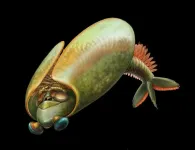
Taco-shaped arthropod from Royal Ontario Museum’s Burgess Shale fossils gives new insights into the history of the first mandibulates
Environment

Taco-shaped arthropod from Royal Ontario Museum’s Burgess Shale fossils gives new insights into the history of the first mandibulates

A new study, led by palaeontologists at the Royal Ontario Museum (ROM) is helping resolve the evolution and ecology of Odaraia, a taco-shaped marine animal that lived during the Cambrian period. Fossils collected by ROM reveal Odaraia had mandibles. Palaeontologists are finally able to place it as belonging to the mandibulates, ending its long enigmatic classification among the arthropods since it was first discovered in the Burgess Shale over 100 years ago and revealing more about early evolution and diversification. The study The Cambrian Odaraia alata and the colonization of nektonic suspension-feeding niches by early mandibulates was published ...

Read the release
Environment

NREL researchers highlight opportunities for manufacturing perovskite solar panels with a long-term vision

Researchers working at the forefront of an emerging photovoltaic (PV) technology are thinking ahead about how to scale, deploy, and design future solar panels to be easily recyclable. Solar panels made of perovskites may eventually play an important role amid global decarbonization efforts to reduce greenhouse gas emissions. As the technology emerges from the testing stages, it is a perfect time to think critically about how best to design the solar panels to minimize their impact on the environment decades from now. “When you have a technology in its very early stages, you have the ability to design it better. It’s a cleaner slate,” said Joey Luther, a senior ...

Read the release
Better carbon storage better carbon storage with stacked geology with stacked geology
Environment

Better carbon storage better carbon storage with stacked geology with stacked geology

The overarching goal of all carbon capture and storage projects is the same: Keep carbon dioxide (CO2) emissions out of the atmosphere by storing them in the subsurface for good. One way to do that is to inject the CO2 into a reservoir space that’s covered with a big lid – an impermeable caprock that can keep the gas in place and stop any upward flow in its tracks. That’s the model that petroleum exploration has relied on for decades when searching for oil traps, and it works for both oil and CO2. But according to research led by The University of Texas at Austin’s Bureau of Economic Geology, subsurface ...

Read the release
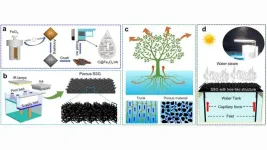
3D-printed microstructure forest facilitates solar steam generator desalination
Environment

3D-printed microstructure forest facilitates solar steam generator desalination

WASHINGTON, July 23, 2024 — Faced with the world’s impending freshwater scarcity, a team of researchers in Singapore turned to solar steam generators (SSGs), which are emerging as a promising device for seawater desalination. Desalination can be a costly, energy-intensive solution to water scarcity. This renewable-powered approach mimics the natural water cycle by using the sun’s energy to evaporate and isolate water. However, the technology is limited by the need to fabricate complex topologies to increase the surface area necessary to achieve high water evaporation efficiency. To overcome this ...

Read the release
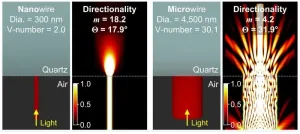
Light emission from nanostructures, revealed using 3D printing method for the first time
Environment

Light emission from nanostructures, revealed using 3D printing method for the first time

Dr. Jaeyeon Pyo’s team at the Korea Electrotechnology Research Institute (KERI) has become the first in the world to reveal light emission patterns from 3D-printed nanowires, which has been published as a cover article in the prestigious scientific journal ACS Nano. The higher resolution in display devices signifies the more of pixels in a given screen size. As pixel density increases, movies and images are displayed with greater precision and detail. In this regard, ongoing research aims to fabricate ...

Read the release
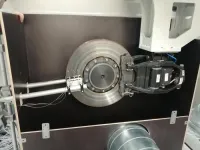
Study by TU Graz shows that abrasion emissions from trains are not negligible
Environment

Study by TU Graz shows that abrasion emissions from trains are not negligible

In addition to exhaust emissions, abrasion emissions from tyres and brakes have become increasingly important when assessing the environmental impact of traffic. However, the focus here was on road vehicles; rail was hardly considered. In a study commissioned by the German Centre for Rail Transport Research (DZSF), researchers from the Institute of Thermodynamics and Sustainable Propulsion Systems at Graz University of Technology (TU Graz) have now been able to prove that so-called non-exhaust emissions from rail transport also have a relevant influence on air quality and soil pollution. Half of the daily particulate matter limit due to trains ...

Read the release
Environment

Heat-sensitive trees move uphill seeking climate change respite

Trees in the Brazilian Atlantic Forest are migrating in search of more favourable temperatures with species in mountain forests moving uphill to escape rising heat caused by climate change, a new study reveals. Most species in higher parts of the Brazilian Atlantic Forest are moving upwards as temperatures rise, but scientists say that those trees which thrive in colder temperatures are at risk of dying out as the world continues to warm. Researchers studying the forest, which stretches along the Brazil’s Atlantic seaboard, have also discovered that some trees in ...

Read the release
Environment

A window of opportunity for climate change and biodiversity

World leaders must take advantage of a pivotal window of opportunity for forging a much-needed joined-up approach to tackle climate change and biodiversity loss, say scientists from ZSL and York University. Without this, work on tackling either crisis could inadvertently harm progress on the other. Published today (Tuesday 23 July) in the Journal of Applied Ecology, a paper from international conservation charity ZSL and researchers at York University, Toronto, titled ‘The Kunming-Montreal Global Biodiversity Framework and the Paris Agreement need a joint work programme for climate, nature, and people’ conceptualises how a joint work ...

Read the release
Recent progress on VOC pollution control via the catalytic method
Environment

Recent progress on VOC pollution control via the catalytic method

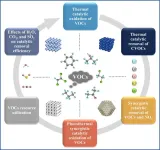
Volatile organic compounds (VOCs), with toxicity and irritability, could cause atmospheric environmental problems such as haze and photochemical smog, seriously threatening the ecological environment and human health. The primary source of VOCs is human production, such as the petrochemical industry, pharmaceutical industry, footwear industry, electronic manufacturing, and cooking fumes. Catalytic oxidation technology can highly effectively remove organic pollutants without secondary pollution, and it is receiving increasing attention in VOC pollution control. In real-world operating conditions, the ...

Read the release
From the original Press-News collection. Issuers of news releases are responsible for the accuracy of their content.