THE ORIGINAL COLLECTION · SINCE 2010

Environment
press releases.

Research announcements from universities, hospitals and scientific institutions. Explore the stories, people and discoveries behind the headlines.

Original publication datesPage 92
FIND A STORY

Find a past release.

Dates and source material belong to the original release.

Read our research explainers

Browse the collection · original publication order

Media Tip Sheet: Fire Ecology at ESA2024
Environment

Media Tip Sheet: Fire Ecology at ESA2024

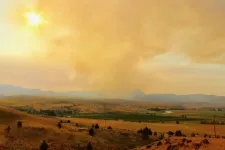
Experts in fire ecology will converge at the Ecological Society of America’s upcoming Annual Meeting in Long Beach, Calif., Aug. 4–9, presenting the latest research on the causes and consequences of wildland fire in dozens of talks and posters. The growing threat of wildfire makes understanding the past, present and future of fire regimes essential. Fire ecology addresses crucial questions such as how different species and ecosystems respond to burns, which habitats are most vulnerable and how forests recover—or fail to recover—after ...

Read the release
Researchers enhance tool to better predict where and when wildfires will occur
Environment

Researchers enhance tool to better predict where and when wildfires will occur

CORVALLIS, Ore. – A newly enhanced database is expected to help wildfire managers and scientists better predict where and when wildfires may occur by incorporating hundreds of additional factors that impact the ignition and spread of fire. “There is a tremendous amount of interest in what enables wildfire ignitions and what can be done to prevent them,” said Erica Fleishman, an Oregon State University professor. “This database increases the ability to access relevant information and contribute to wildfire ...

Read the release
Tropical plant species are as threatened by climate change as widely feared, study confirms
Environment

Tropical plant species are as threatened by climate change as widely feared, study confirms

PROVIDENCE, R.I. [Brown University] — Brown University biologists who set out to better understand the effects of climate change on plant species in tropical mountain regions found that even small variations in temperature and moisture can have massive impacts, threatening not only plants that live there, but also the ecosystems they support. Emily Hollenbeck, who conducted the research while earning her Ph.D. in ecology and evolutionary biology from Brown, made the discoveries through a series of laborious yet informative experiments conducted in the Monteverde mountain ...

Read the release
Environment

Converting captured carbon to fuel: Study assesses what’s practical and what’s not

The struggle to cut emissions is real. Last year, the world emitted more than 37 billion metric tons of carbon dioxide, setting a new record high. As a result, sucking CO2 out of the atmosphere has become an increasingly popular idea. Governments worldwide are banking on this technology, called direct air capture, to help them achieve climate goals and avoid the worst consequences of climate change. But despite more than a dozen direct air capture facilities being up and running around the globe already, the technology ...

Read the release
Argonne-led research working toward reducing electronic waste with biodegradable luminescent polymers
Environment

Argonne-led research working toward reducing electronic waste with biodegradable luminescent polymers

From your car’s navigation display to the screen you are reading this on, luminescent polymers — a class of flexible materials that contain light-emitting molecules — are used in a variety of today’s electronics. Luminescent polymers stand out for their light-emitting capability, coupled with their remarkable flexibility and stretchability, showcasing vast potential across diverse fields of application. However, once these electronics reach their end use, they are discarded, piling up in landfills or buried underground. Recycling this electronic waste is complex, requiring expensive ...

Read the release
Environment

Understanding how a red seaweed reduces methane emissions from cows

Methane is the second-largest contributor to climate warming after carbon dioxide, and so scientists have put a lot of attention toward addressing one of the top sources: methane emissions from livestock. In other words, cow burps are bad for the planet. Farmers add various seaweeds to cow diets as a source of protein, unsaturated fats, and other health-promoting ingredients that provide immediate energy, says Dipti Pitta of the University of Pennsylvania School of Veterinary Medicine, and a 2016 study in Australia found that feeding sheep a species ...

Read the release
Deep-ocean floor produces its own oxygen
Environment

Deep-ocean floor produces its own oxygen

An international team of researchers, including a Northwestern University chemist, has discovered that metallic minerals on the deep-ocean floor produce oxygen — 13,000 feet below the surface. The surprising discovery challenges long-held assumptions that only photosynthetic organisms, such as plants and algae, generate Earth’s oxygen. But the new finding shows there might be another way. It appears oxygen also can be produced at the seafloor — where no light can penetrate — to support the oxygen-breathing (aerobic) sea life living in complete darkness. The ...

Read the release
Decomposing 'refrigerants', a potent greenhouse gas, using industrial waste
Environment

Decomposing 'refrigerants', a potent greenhouse gas, using industrial waste

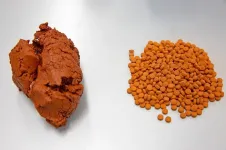
A technology has been developed to decompose refrigerants, a greenhouse gas 1,300 times more potent than carbon dioxide, using challenging-to-handle industrial waste. Dr. Ryi, Shin-kun’s research team at the Hydrogen Convergence Materials Lab of the Korea Institute of Energy Research (KIER) has successfully developed a catalyst from industrial waste known as 'red mud,' a byproduct of aluminum production. This catalyst can decompose HFC-134a refrigerant, commonly used in household appliances like air conditioners and refrigerators, with an efficiency of 99%. * Red Mud: An industrial byproduct remaining after extracting aluminum ...

Read the release
Environment

Submarine canyons are crucial for the instability of the Antarctic ice sheet

Submarine canyons are crucial for the instability of the Antarctic ice sheet Antarctic canyons play a crucial role in the instability of the East Antarctic Ice Sheet, as they facilitate the transfer of relatively warm water (Circumpolar Deep Water) from the abyssal areas to the continental shelf and from there to the base of the ice sheet, thus contributing to its melting. The new study, conducted by an international team of researchers led by the National Institute of Oceanography and Applied Geophysics (OGS) and including the University of Southampton, ...

Read the release
Environment

EPA awards UMass Amherst nearly $6.4 million to help shrink the steel industry’s carbon footprint

AMHERST, Mass. – The building and construction industry accounts for 37% of global greenhouse emissions—and the steel production process can be a significant contributor to these emissions. To steer the industry in a new direction, the University of Massachusetts Amherst has been selected to lead a $6.37 million five-year grant by the Environmental Protection Agency (EPA). “We’re trying to recalibrate the industry,” says Kara Peterman, associate professor ...

Read the release
Global study by Hawaiʻi Institute of Marine Biology demonstrates benefit of marine protected areas to recreational fisheries
Environment

Global study by Hawaiʻi Institute of Marine Biology demonstrates benefit of marine protected areas to recreational fisheries

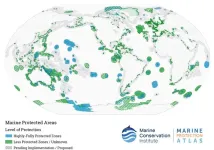
Marine Protected Areas (MPAs) are having a positive spillover effect, producing more “trophy-size” fish just outside of the fully protected areas, and the effect is growing stronger over time. That’s according to research led by University of Hawaiʻi at Mānoa scientists at the Hawaiʻi Institute of Marine Biology (HIMB) published today in Science Advances. The research provides the first global assessment of the benefits of MPAs. “Trophy-size” refers to fish that are exceptionally long or heavy and are considered a rare, ...

Read the release
Plastic waste can now be converted to electronic devices
Environment

Plastic waste can now be converted to electronic devices

University of Delaware and Argonne National Laboratory have come up with a chemical reaction that can convert Styrofoam into a high-value conducting polymer known as PEDOT:PSS. In a new paper published in JACS Au, the study demonstrates how upgraded plastic waste can be successfully incorporated into functional electronic devices, including silicon-based hybrid solar cells and organic electrochemical transistors. The research group of corresponding author Laure Kayser, assistant professor in the Department of Materials Science and Engineering in ...

Read the release
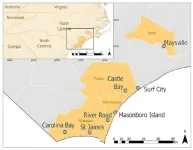
Research will establish best ‘managed retreat’ practices for communities faced with climate change disaster
Environment

Research will establish best ‘managed retreat’ practices for communities faced with climate change disaster

LAWRENCE — Around the globe, communities at risk from repeated flooding due to climate change face stark decisions. Some communities in peril of flooding may resolve, or be urged, to relocate to a safer location — something known as “managed retreat.” In the United States, flood-prone communities in coastal states like Louisiana and Alaska already have commenced managed retreat inland. “It's retreating from risk, and we hope to provide decision support for the equitable implementation ...

Read the release
Wetland wonders unfold: Aerial systems shed light on ecosystem services
Environment

Wetland wonders unfold: Aerial systems shed light on ecosystem services

A cutting-edge study revolutionizes coastal wetland mapping by integrating unmanned aerial systems with light detection and ranging (LiDAR) and multispectral sensors. This innovative approach provides detailed elevation data and vegetation analysis, enabling highly accurate classifications of diverse wetland types. The research advances conservation by offering a scalable, efficient, and cost-effective method that is instrumental in climate change mitigation strategies and informs policy-making for coastal resilience. Coastal wetlands, situated at the junction of land and water, are vital ecosystems known for their high productivity. They play a key role in carbon ...

Read the release
Environment

Chemists design novel method for generating sustainable fuel

COLUMBUS, Ohio – Chemists have been working to synthesize high-value materials from waste molecules for years. Now, an international collaboration of scientists is exploring ways to use electricity to streamline the process. In their study, recently published in Nature Catalysis, researchers demonstrated that carbon dioxide, a greenhouse gas, can be converted into a type of liquid fuel called methanol in a highly efficient manner. This process happened by taking cobalt phthalocyanine (CoPc) molecules and spreading them evenly on carbon nanotubes, graphene-like tubes that have unique electrical properties. On their surface was an electrolyte ...

Read the release
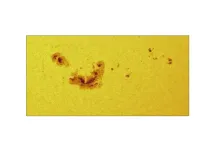
Early riser! The Sun is already starting its next solar cycle – despite being halfway through its current one
Environment

Early riser! The Sun is already starting its next solar cycle – despite being halfway through its current one

Early riser! The Sun is already starting its next solar cycle – despite being halfway through its current one Royal Astronomical Society press release RAS PR 24/21 (NAM 7) Embargoed until 00:01 BST on Friday 19 July 2024 The first rumblings of the Sun's next 11-year solar cycle have been detected in sound waves inside our home star – even though it is only halfway through its current one. This existing cycle is now at its peak, or 'solar maximum' - which is when the Sun’s magnetic field flips and its poles swap places - until mid-2025. It affects ...

Read the release
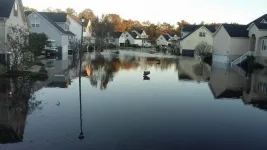
First-ever hurricane evacuation order database may hold keys to future readiness
Environment

First-ever hurricane evacuation order database may hold keys to future readiness

A team of University of Virginia researchers released the first-ever database of hurricane evacuation orders in the United States. By examining what has worked (and hasn’t) in the face of oncoming hurricanes, leaders and government officials can increase community resilience, create better policy and, ultimately, reduce loss of life. The project, seed-funded by UVA’s Environmental Institute, teamed Majid Shafiee-Jood and Negin Alemazkoor and Harsh Anand, an engineering doctoral candidate, from the School of Engineering and Applied Science. The trio spent countless hours gathering all nationwide public-facing evacuation orders and created a database that can ...

Read the release
Environment

How pollution may remain in water after oil spill cleanups

Oil drops from underwater oil spills can break into tinier droplets at the surface that remain suspended in the water, according to research from the University of Illinois Chicago. That means cleanups after disasters like the Deepwater Horizon spill may be removing less oil from the environment than was thought. Because oil is lighter than water, it rises through the ocean after spills, which are usually caused by leaking underwater pipelines or sometimes by natural processes. It was believed that when these ...

Read the release
Researcher receives NASA funding to study ozone pollution
Environment

Researcher receives NASA funding to study ozone pollution

NORMAN, OKLA. – University of Oklahoma professor Chenghao Wang has received three years of funding through the National Aeronautics and Space Administration Early Career Investigator Program in Earth Science. Wang, an assistant professor in both the OU School of Meteorology and the Department of Geography and Environmental Sustainability, will study compound heat and ozone pollution episodes in urban environments. Heat waves and air pollution are two increasingly occurring challenges that disproportionately impact urban areas. When multiple stressor events happen simultaneously, these compound events can have more significant impacts than isolated events. ...

Read the release
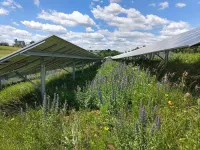
Solar farms with stormwater controls mitigate runoff, erosion, study finds
Environment

Solar farms with stormwater controls mitigate runoff, erosion, study finds

UNIVERSITY PARK, Pa. — As the number of major utility-scale ground solar panel installations grows, concerns about their impacts on natural hydrologic processes also have grown. However, a new study by Penn State researchers suggests that excess runoff or increased erosion can be easily mitigated — if these “solar farms” are properly built. Solar panels are impervious to water, and vast arrays of them, it was feared, could increase the volume and velocity of stormwater runoff similar ...

Read the release
Against the odds: The genetic secrets of a rare conifer's climate change defiance
Environment

Against the odds: The genetic secrets of a rare conifer's climate change defiance

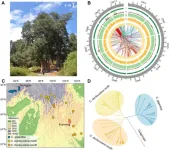
In a remarkable twist of evolutionary adaptation, the rare Tibetan cypress, Cupressus gigantea, has shown unexpected genetic resilience. Despite facing the brink of extinction due to climate change and habitat loss, the species has experienced a significant reduction in harmful genetic mutations. This discovery sheds new light on the complex interplay between genetic diversity and population decline, challenging conventional understandings of genetic load in endangered species. Conifers, including Cupressus species, are ecologically and culturally significant, but many are threatened by climate change and human activities. ...

Read the release
Environment

A “wrenaissance” for House Wrens; species and genus splits for Barn Owls and Plovers; and lumping of Redpolls included in 2024 Check-list changes

CHICAGO — July 18, 2024 — The 65th Supplement to the American Ornithological Society’s (AOS’s) Check-list of North American Birds, published today in Ornithology, includes several updates to the classifications of bird species found in North America, Central America, and the Caribbean. A few highlights from this year’s supplement, detailed below, include species splits for Troglodytes aedon (House Wren) and Tyto alba (Barn Owl); a lumping of Acanthis flammea (Common Redpoll), Acanthis ...

Read the release
Although tiny, peatland microorganisms have a big impact on climate
Environment

Although tiny, peatland microorganisms have a big impact on climate

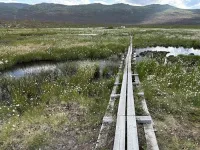
The Science Polyphenols are a diverse group of organic compounds produced by plants. These compounds are often toxic to microorganisms. In peatlands, scientists thought that microorganisms avoided this toxicity by degrading polyphenols using an enzyme that requires oxygen. However, when there is little or no oxygen, like after flooding due to climate induced thawing, the enzyme is inactive, and polyphenols accumulate. This inhibits microbes’ carbon cycling. In this study, scientists mined data for thousands of microbial genomes recovered from Stordalen Mire, an Arctic peatland in Sweden. They discovered that these microorganisms used alternative polyphenol-active ...

Read the release
The most endangered fish are the least studied
Environment

The most endangered fish are the least studied

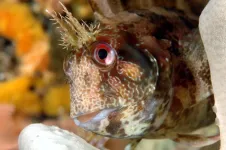
The most threatened reef fishes are also the most overlooked by scientists and the general public. That is the startling finding of a team of scientists led by a CNRS researcher.1 In a study to be published in Science Advances on July 17, they measured the level of human interest in 2,408 species of marine reef fish and found that the attention of the scientific community is attracted by the commercial value more than the ecological value of the fishes. The public, on the other hand, is primarily influenced by the aesthetic characteristics of certain species, such as the red lionfish ...

Read the release
Environment

Diatom surprise could rewrite the global carbon cycle

When it comes to diatoms that live in the ocean, new research suggests that photosynthesis is not the only strategy for accumulating carbon. Instead, these single-celled plankton are also building biomass by feeding directly on organic carbon in wide swaths of the ocean. These new findings could lead researchers to reduce their estimate of how much carbon dioxide diatoms pull out of the air via photosynthesis, which in turn, could alter our understanding of the global carbon cycle, which is especially relevant given the changing climate. This research is led by bioengineers, bioinformatics experts and other genomics researchers ...

Read the release
From the original Press-News collection. Issuers of news releases are responsible for the accuracy of their content.