THE ORIGINAL COLLECTION · SINCE 2010

Environment
press releases.

Research announcements from universities, hospitals and scientific institutions. Explore the stories, people and discoveries behind the headlines.

Original publication datesPage 93
FIND A STORY

Find a past release.

Dates and source material belong to the original release.

Read our research explainers

Browse the collection · original publication order

Environment

Living in greener neighborhoods during midlife can slow cognitive decline

A new study found that increased exposure to residential greenery may help stave off cognitive decline by an annual rate of eight months. This delay was observed more among people living in low-socioeconomic status and highly populated neighborhoods, as well as people who carry the APOE-ɛ4 gene, which is associated with an increased risk of Alzheimer’s disease. Research has shown that about 40 percent of dementia could be prevented or delayed worldwide by addressing modifiable risk factors associated with the condition, particularly during midlife. A new study led by a Boston University School of Public Health (BUSPH) ...

Read the release
Logged forests can still have ecological value – if not pushed too far
Environment

Logged forests can still have ecological value – if not pushed too far

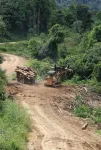
Researchers have analysed data from 127 studies to reveal ‘thresholds’ for when logged rainforests lose the ability to sustain themselves. The results could widen the scope of which forests are considered ‘worth’ conserving, but also show how much logging degrades forests beyond the point of no return. The first-of-its-kind study, led by researchers from the Department of Life Sciences at Imperial College London with collaborators from around the world, is published today in ...

Read the release
Groundwater is key to protecting global ecosystems
Environment

Groundwater is key to protecting global ecosystems

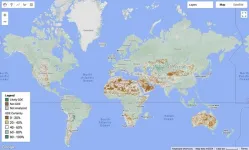
(Santa Barbara, Calif.) — Where hidden water tables meet the Earth’s surface, life can thrive even in the driest locations. Offering refuge during times of drought, shallow groundwater aquifers act like water savings accounts that can support ecosystems with the moisture required to survive, even as precipitation dwindles. As climate change and human water use rapidly deplete groundwater levels around the world, scientists and policy makers need better data for where these groundwater-dependent ecosystems exist. Now, a new study maps ...

Read the release
Understanding willingness to pay for nationwide wastewater surveillance in Japan
Environment

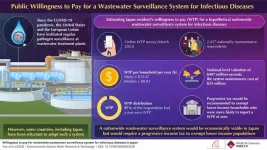
Understanding willingness to pay for nationwide wastewater surveillance in Japan

Globally, the COVID-19 pandemic and the increased likelihood of other such outbreaks in the future warrant the strengthening of epidemic surveillance systems. Among these, continuous wastewater surveillance at wastewater treatment plants is considered more advantageous for understanding the community-level disease dynamics, as compared to clinical surveillance. This is because such a continuous system captures the epidemic status of a larger population without any selection bias and provides higher testing capacity even during an outbreak. Moreover, such a system is relatively inexpensive. ...

Read the release
UTA biologist wins national fellowship to study historic pollution
Environment

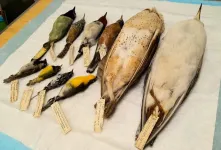
UTA biologist wins national fellowship to study historic pollution

A biology researcher at The University of Texas at Arlington has received a prestigious grant to continue and expand his research on how pollution affects wildlife. Jordan Brown, a postdoctoral research associate in biology, was awarded a Postdoctoral Research Fellowship from the National Science Foundation’s (NSF) Directorate for Biological Sciences. The award supports researchers whose work focuses on how environmental changes affect animals. Dr. Brown works in the lab of Shane DuBay, UTA assistant professor of biology, who studies evolutionary ecology, environmental science, and natural history to better understand the consequences of environmental change ...

Read the release
Nature-based solutions to disaster risk from climate change are cost effective, UMmass Amherst study confirms
Environment

Nature-based solutions to disaster risk from climate change are cost effective, UMmass Amherst study confirms

AMHERST, Mass. – A new global assessment of scientific literature led by researchers at the University of Massachusetts Amherst finds that nature-based solutions (NbS) are an economically effective method to mitigate risks from a range of disasters—from floods and hurricanes to heatwaves and landslides—which are only expected to intensify as Earth continues to warm. NbS are interventions where an ecosystem is either preserved, sustainably managed or restored to provide benefits to society and to nature. For instance, they can mitigate risk from a natural disaster, or facilitate climate mitigation and adaptation. NbS ...

Read the release
E-sales of a wild bat sold as décor threaten species
Environment

E-sales of a wild bat sold as décor threaten species

A fiery orange bat, its wings folded and tiny teeth forever bared on its fuzzy face, is mounted inside a 6-inch, black coffin. Its retail price: $59. Or, for $140, you can get one framed with its black and orange wings spread, deliverable in two days. Despite declining numbers in the wild, hundreds of specimens like this of Kerivoula picta—or painted woolly bat—are being sold on Etsy, eBay and Amazon as jewelry, Halloween decorations, and jarred curios. A study published July 9 in the European Journal of Wildlife Research found “abundant evidence that ...

Read the release
Foreign direct investments may fuel tropical deforestation
Environment

Foreign direct investments may fuel tropical deforestation

Foreign direct investments (FDI) in tropical countries in extractive industries like mining, logging and fossil fuels have a long, environmentally destructive track record in tropical countries. Are FDI in food systems another extractive industry? Highlights: Foreign direct investment (FDI) in food systems are a major contributor to deforestation in tropical countries, an advanced machine learning model shows Laws requiring deforestation-free exports are welcome but likely address only a fraction of forest loss potentially linked to FDI in food systems in domestic markets Better regulation of FDI in domestic food production is needed to save more forest ...

Read the release
Oil and natural gas development in Permian is a key source of ozone pollution in Carlsbad Caverns National Park
Environment

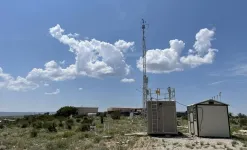
Oil and natural gas development in Permian is a key source of ozone pollution in Carlsbad Caverns National Park

EMBARGO: THIS CONTENT IS UNDER EMBARGO UNTIL 9 A.M. U.S. EASTERN STANDARD TIME ON JULY 16. INTERESTED MEDIA MAY RECIVE A PREVIEW COPY OF THE JOURNAL ARTICLE IN ADVANCE OF THAT DATE OR CONDUCT INTERVIEWS, BUT THE INFORMATION MAY NOT BE PUBLISHED, BROADCAST, OR POSTED ONLINE UNTIL AFTER THE RELEASE WINDOW. New research shows that ozone concentrations at Carlsbad Caverns National Park frequently exceed Environmental Protection Agency health standards, likely due to oil and natural gas development in the Permian Basin and surrounding region. The work was led through the Department of Atmospheric Science at Colorado State University and is part of ...

Read the release
Capturing carbon with energy-efficient sodium carbonate−nanocarbon hybrid material
Environment

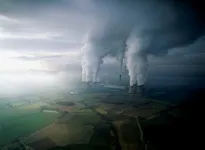
Capturing carbon with energy-efficient sodium carbonate−nanocarbon hybrid material

Industrial emissions are one of the main sources of climate change-inducing carbon dioxide (CO2). While adopting renewable and clean energy alternatives is one option for mitigating these carbon emissions, carbon capture technology is another solution to control CO2 emissions. In big CO2-emitting industries, such as cement, oil refineries, and thermal power plants, carbon capture technology can be easily applied to remove CO2 emissions directly at the source at a feasible cost and with low energy consumption. Different materials have been explored for CO2 capture in factories, including zeolites, metal−organic frameworks, natural minerals, alkalis, ...

Read the release
Making rechargeable batteries more sustainable with fully recyclable components
Environment

Making rechargeable batteries more sustainable with fully recyclable components

UNIVERSITY PARK, Pa. — Rechargeable solid-state lithium batteries are an emerging technology that could someday power cell phones and laptops for days with a single charge. Offering significantly enhanced energy density, they are a safer alternative to the flammable lithium-ion batteries currently used in consumer electronics — but they are not environmentally friendly. Current recycling methods focus on the limited recovery of metals contained within the cathodes, while everything else goes to waste. A team of Penn State researchers may have solved this issue. Led by Enrique Gomez, interim associate dean for equity and inclusion and professor of chemical engineering ...

Read the release
Environment

How climate change is altering the Earth’s rotation

Climate change is causing the ice masses in Greenland and Antarctica to melt. Water from the polar regions is flowing into the world’s oceans –and especially into the equatorial region. “This means that a shift in mass is taking place, and this is affecting the Earth’s rotation,” explains Benedikt Soja, Professor of Space Geodesy at the Department of Civil, Environmental and Geomatic Engineering at ETH Zurich. “It’s like when a figure skater does a pirouette, first holding her arms close to her body and then stretching ...

Read the release
Environment

New concept explains how tiny particles navigate water layers – with implications for marine conservation

A new UBC study published recently in Proceedings of the National Academy of Science (PNAS) has unveiled insights into how microscopic organisms such as marine plankton move through water with different density layers. Researchers Gwynn Elfring and Vaseem Shaik found that density layers, created by variations in temperature or salinity, influence the swimming direction and speed of tiny particles navigating a liquid. Pushers and pullers “There are two different types of microscopic swimmers – ...

Read the release
Environment

UC Irvine Earth system scientists discover missing piece in climate models

Irvine, Calif., July 15, 2024 — As the planet continues to warm due to human-driven climate change, accurate computer climate models will be key in helping illuminate exactly how the climate will continue to be altered in the years ahead. In a study published in the Journal of Geophysical Research: Atmospheres, a team led by researchers from the UC Irvine Department of Earth System Science and the University of Michigan Department of Climate and Space Sciences and Engineering reveal how a climate model commonly used by geoscientists currently overestimates ...

Read the release
Wildfire smoke has a silver lining: It can help protect vulnerable tree seedlings
Environment

Wildfire smoke has a silver lining: It can help protect vulnerable tree seedlings

CORVALLIS, Ore. – Forest scientists at Oregon State University studying tree regeneration have found that wildfire smoke comes with an unexpected benefit: It has a cooling capacity that can make life easier for vulnerable seedlings. An OSU College of Forestry collaboration led by faculty research assistant Amanda Brackett made the discovery while working to determine the effect of forest canopy cover on summer maximum temperatures near ground level. The study’s goal was to describe how heat waves and other future climate conditions might affect canopy cover’s influence on temperature. The scientists used previously established heat stress responses of seedlings from ...

Read the release
A new method for sustainable synthesis of acetylene from carbon dioxide
Environment

A new method for sustainable synthesis of acetylene from carbon dioxide

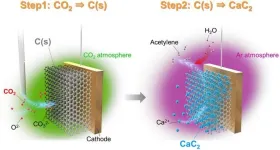
Since its discovery, in 1836, acetylene has emerged as an essential chemical compound in industry, widely used as a chemical building block and fuel. It has applications in the raw material for resins, such as vinyl chloride, welding gas, and illumination. Recent developments aimed at reducing the dependence on petroleum feedstocks have shown that acetylene is a promising platform molecule for producing various base chemicals. Additionally, polyacetylene, a crucial semiconducting material, is made from acetylene. Currently, acetylene is mainly produced through two methods: ...

Read the release
Atomically controlled MXenes enable cost-effective green hydrogen production
Environment

Atomically controlled MXenes enable cost-effective green hydrogen production

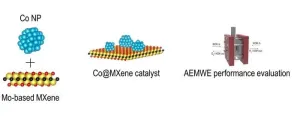
137 countries around the world have signed a "net-zero" climate change agreement to end fossil fuel use and achieve zero carbon emissions by 2050. Hydrogen is being touted as the next green energy source because it emits only water and oxygen when utilized as an energy source. Hydrogen production methods are divided into gray hydrogen, blue hydrogen, and green hydrogen depending on the energy source and carbon emissions. Among them, green hydrogen production method is the most eco-friendly method that produces hydrogen without carbon emissions by electrolyzing water using green energy. A research team led by Dr. ...

Read the release
Environment

Complex impact of large wildfires on ozone layer dynamics unveiled by new study

In a revelation that highlights the fragile balance of our planet's atmosphere, scientists from China, Germany, and the USA have uncovered an unexpected link between massive wildfire events and the chemistry of the ozone layer. Published in Science Advances, this study reveals how wildfires, such as the catastrophic 2019/20 Australian bushfires, impact the stratosphere in previously unseen ways. The ozone layer, a crucial shield protecting life on Earth from harmful ultraviolet (UV) radiation, has been on a path to ...

Read the release
Environment

Complex impact of large wildfires on ozone layer dynamics

The ozone layer, a crucial shield protecting life on Earth from harmful ultraviolet (UV) radiation, has been on a path to recovery thanks to the Montreal Protocol. This landmark international treaty, adopted in 1987, successfully led to phasing out the production of numerous substances responsible for ozone depletion. Over the past decades, the ozone layer has shown significant signs of healing, a testament to global cooperation and environmental policy. However, the stability of this vital atmospheric layer is now facing a new and unexpected challenge. During the 2019/20 Australian wildfires, ...

Read the release
Environment

UC3M student startup, Solaris Vita, awarded in Europe's largest entrepreneurship competition

Solaris Vita, a startup created by students at Universidad Carlos III de Madrid (UC3M), has won second place in the "Innovation of the Year" category at Gen-E 2024, the largest European youth entrepreneurship competition, organized by Junior Achievement Europe. This is the first time that a Spanish university team has won this award. The promoters of Solaris Vita, Miguel Iglesias (Industrial Engineering graduate from UC3M) and Yann Guichard (Economics student at the University), competed ...

Read the release
How plant cold specialists can adapt to the environment
Environment

How plant cold specialists can adapt to the environment

Plant cold specialists like the spoonworts have adapted well to the cold climates of the Ice Ages. As cold and warm periods alternated, they developed a number of species that also resulted in a proliferation of the genome. Evolutionary biologists from the universities of Heidelberg, Nottingham, and Prague studied the influence this genome duplication has on the adaptive potential of plants. The results show that polyploids – species with more than two sets of chromosomes – can have an accumulation of structural mutations with signals for a possible local ...

Read the release
Unprecedented warming threatens earth’s lakes and their ecosystems
Environment

Unprecedented warming threatens earth’s lakes and their ecosystems

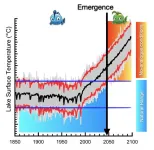
Lakes, with their rich biodiversity and important ecological services, face a concerning trend: rapidly increasing temperatures. A recent study published in Nature Geoscience by an international team of limnologists and climate modelers reveals that if current anthropogenic warming continues until the end of this century, lakes worldwide will likely experience pervasive and unprecedented surface and subsurface warming, far outside the range of what they have encountered before. The study uses lake temperature ...

Read the release
Real-life ‘stillsuit’: Dune-inspired upgrade for spacesuits allow astronauts to recycle urine into water
Environment

Real-life ‘stillsuit’: Dune-inspired upgrade for spacesuits allow astronauts to recycle urine into water

Astronauts on spacewalks famously have to relieve themselves inside their spacesuits. Not only is this uncomfortable for the wearer and unhygienic, it is also wasteful, as – unlike wastewater on board the International Space Station (ISS) – the water in urine from spacewalks is not recycled. A solution for these challenges would be full-body ‘stillsuits’ like those in the blockbuster Dune franchise, which absorbed and purified water lost through sweating and urination, and recycled it into drinkable water. Now, this sci-fi ...

Read the release
$3 million federal grant to fund University of Montana research on bats, climate change
Environment

$3 million federal grant to fund University of Montana research on bats, climate change

MISSOULA – Since 2006, a fast-moving disease known as white-nose syndrome has killed an estimated 6.7 million bats, wiping out entire colonies and decimating creatures that provide an integral means of pest control. In response, a first-of-its-kind study by the University of Montana recently was funded by the National Science Foundation to provide critical insights on three North American bat species that are adapting to the dual threats of this disease and climate change. Awarded nearly $3 million dollars, the project will officially start Sept. 1, but groundwork already is well underway this summer. Although infectious diseases occur naturally in wildlife ...

Read the release
Environment

Barley’s rapid climate-driven adaption revealed in century-old biological experiment

Leveraging one of the world’s oldest biological experiments – which began in 1929 – researchers have uncovered how a major crop, barley, was shaped by both agricultural pressures and its changing natural environment. The results underscore the power of long-term studies in understanding the dynamics of adaptive evolution. The survival of cultivated plants after their dispersal across different environments is a classic example of rapid adaptive evolution. For example, barley, an important neolithic crop, spread widely after domestication over 10,000 years ago to become a staple source of nutrition for humans and livestock throughout Europe, Asia, and Northern ...

Read the release
From the original Press-News collection. Issuers of news releases are responsible for the accuracy of their content.