THE ORIGINAL COLLECTION · SINCE 2010

Environment
press releases.

Research announcements from universities, hospitals and scientific institutions. Explore the stories, people and discoveries behind the headlines.

Original publication datesPage 98
FIND A STORY

Find a past release.

Dates and source material belong to the original release.

Read our research explainers

Browse the collection · original publication order

A conservation market could incentivize global ocean protection
Environment

A conservation market could incentivize global ocean protection

(Santa Barbara, Calif.) — The countries of the world agreed: Our planet needs more protection from human activity. And with the globe facing an assortment of environmental crises, they realized the plan needed to be ambitious. Thirty-by-thirty was their proposal: protect 30% of the planet by 2030. But while conservation is popular in principle, the costs of actually enacting it often stall even the most earnest efforts. Three researchers at UC Santa Barbara have proposed a market-based approach to achieving the 30x30 targets in the ocean. They tested whether a system that allowed countries to trade conservation ...

Read the release


Environment

Public more confident connecting increasing heat, wildfires with climate change than other extreme weather events, study finds

Oregon State University researchers found that U.S. adults are fairly confident in linking wildfires and heat to climate change, but less confident when it comes to other extreme weather events like hurricanes, flooding or tornadoes. The recent study found that politics and personal experience played significant roles in people’s responses: Self-identified Republicans were less likely than Democrats to attribute extreme weather events to climate change, though Republicans who had personally experienced negative impacts from extreme weather events were more likely to link them to climate change than those who hadn’t. Looking at ...

Read the release
Marine heatwaves devastate red gorgonians in the Medes Islands
Environment

Marine heatwaves devastate red gorgonians in the Medes Islands

The increase in the frequency and intensity of marine heatwaves in recent decades is one of the effects of global climate change. A study by the University of Barcelona, published in the Journal of Animal Ecology, shows that the extreme heatwave of 2022 caused an “unprecedented” increase in mortality of the red gorgonian Paramuricea clavata, affecting 70% of the colonies located in the Montgrí Natural Park, the Medes Islands and the Baix Ter. According to the researchers, these results are “alarming ...

Read the release
The yuck factor counteracts sustainable laundry habits
Environment

The yuck factor counteracts sustainable laundry habits

Most people today would lean towards environmentally friendly life choices, but not at the expense of being clean. When it comes to our washing habits, the fear of being perceived as dirty often wins out over the desire to act in an environmentally friendly way. And the more inclined we are to feel disgusted, the more we wash our clothes. This is shown by a unique study from Chalmers University of Technology, Sweden, that examines the driving forces behind our laundering behaviours and provides new tools for how people's environmental impact can be reduced. Today, we wash our clothes more than ever ...

Read the release
Scientists unravel drivers of the global Zinc cycle in our oceans, with implications for a changing climate
Environment

Scientists unravel drivers of the global Zinc cycle in our oceans, with implications for a changing climate

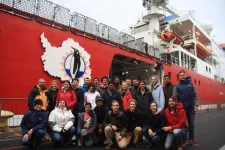
The important role of the Southern Ocean in global biological processes and the carbon cycle has been confirmed anew by a study published in Science this week that, for the first time based on field evidence, reveals the underappreciated role of inorganic Zinc particles in these cycles. The Southern Ocean plays the greatest role in global phytoplankton productivity, which is responsible for absorbing atmospheric carbon dioxide. In these processes, Zinc, present in trace quantities in seawater, is an essential micronutrient critical to many biochemical processes in marine organisms and particularly for polar phytoplankton ...

Read the release
Environment

Rising carbon dioxide may be diluting plant nutrients, threatening herbivores

Smithsonian Conservation Research Brief: Carbon dioxide-fueled accelerated plant growth dilutes nutrients, impacting herbivore populations. A new study from researchers at the Smithsonian’s National Zoo and Conservation Biology Institute (NZCBI) warns that as human activities increase carbon dioxide (CO2) levels in the atmosphere, they may decrease the nutrient contents of plants. Declines in nutrient content, known as Nutrient Dilution, may already be harming plant-eating animals and could cause further population declines farther up the ecological chain. The paper, published today in the journal Trends ...

Read the release
New study: Outdoor recreation noise affects wildlife behavior and habitat use
Environment

New study: Outdoor recreation noise affects wildlife behavior and habitat use

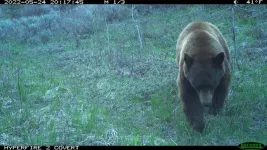
FORT COLLINS, Colo., June 13, 2024 — We may go to the woods seeking peace and quiet, but are we taking our noise with us? A recent study published in the journal, Current Biology, led by scientists from the USDA Forest Service Rocky Mountain Research Station indicates that the answer is yes—and that this noise can trigger a fear response, as if escaping from predators. This new science calls into question whether otherwise high-quality habitat truly provides refugia for wildlife when recreationists are present and underscores the challenges land managers face in balancing ...

Read the release
Antarctica's strongest ice melt phases of the past as a gauge of the coming sea level rise
Environment

Antarctica's strongest ice melt phases of the past as a gauge of the coming sea level rise

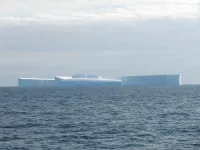
Of all the polar regions, the West Antarctic Ice Sheet is the most sensitive to a warming ocean due to climate change. This is already causing a long-term ice sheet melt, and the question is how fast that melting process will take place. It may be that this enormous mass of ice already passed the tipping point, with irreversibly fast melting. This has the potential to sharply accelerate sea level rise in the near future, but the processes causing this are not yet well understood. That is why paleoclimatologists from the Faculty ...

Read the release
Australian solar panel recycling tech on show in Spain
Environment

Australian solar panel recycling tech on show in Spain

Australian researchers are developing solutions to recycle solar panels and recover strategic metals including silver and copper. In Australia alone, it’s estimated more than 100,000 tonnes of solar panels will enter the waste stream by 2035, along with billions of dollars’ worth of materials that could be recaptured. RMIT University is leading an international network of researchers working to advance the reuse and recycling of solar panels, which can contain valuable materials like lead and tin. Thursday 13 June was the opening of a work and exhibition space at engineering company EDIPAE’s ...

Read the release
Ancient ocean slowdown warns of future climate chaos
Environment

Ancient ocean slowdown warns of future climate chaos

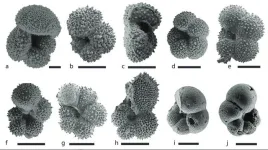
When it comes to the ocean’s response to global warming, we’re not in entirely uncharted waters. A UC Riverside study shows that episodes of extreme heat in Earth’s past caused the exchange of waters from the surface to the deep ocean to decline. This system has been described as the "global conveyer belt," because it redistributes heat around the globe through the movement of the ocean waters, making large portions of the planet habitable. Using tiny, fossilized shells recovered from ancient deep-sea sediments, the study in the Proceedings of the National Academy of Sciences demonstrates how the conveyor belt responded around 50 ...

Read the release
Environment

New way to spot beetle-killed spruce can help forest, wildfire managers

A new machine-learning system developed at the University of Alaska Fairbanks can automatically produce detailed maps from satellite data to show locations of likely beetle-killed spruce trees in Alaska, even in forests of low and moderate infestation where identification is otherwise difficult. The automated process can help forestry and wildfire managers in their decisions. That’s critical as the beetle infestation spreads. The Alaska Division of Forestry and Fire Protection calls the spruce beetle “the most damaging ...

Read the release
Western agricultural communities need water conservation strategies to adapt to future shortages
Environment

Western agricultural communities need water conservation strategies to adapt to future shortages

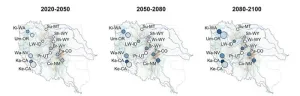
Reno, Nev. (June 12, 2024) – The Western U.S. is heavily reliant on mountain snowpacks and their gradual melt for water storage and supply, and climate change is expected to upend the reliability of this natural process. Many agricultural communities in this part of the country are examining ways to adapt to a future with less water, and new research shows that a focus on supplementing water supply by expanding reservoir capacity won’t be enough to avert future water crises. Led by scientists at the Desert Research Institute ...

Read the release
What the geologic record reveals about how oceans were oxygenated 2.3 billion years ago
Environment

What the geologic record reveals about how oceans were oxygenated 2.3 billion years ago

About 2.5 billion years ago, free oxygen, or O2, first started to accumulate to meaningful levels in Earth’s atmosphere, setting the stage for the rise of complex life on our evolving planet. Scientists refers to this phenomenon as the Great Oxidation Event, or GOE for short. But the initial accumulation of O2 on Earth was not nearly as straightforward as that moniker suggests, according to new research led by a University of Utah geochemist. This “event” lasted at least 200 million years. And tracking the accumulation of O2 in the oceans has been very difficult until now, ...

Read the release
Overcoming the volatility of renewable energy, green hydrogen is 'the best'
Environment

Overcoming the volatility of renewable energy, green hydrogen is 'the best'

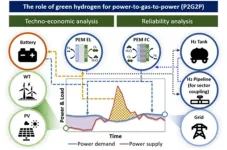
A research team in Korea Institute of Energy Research has successfully demonstrated the effectiveness of a green hydrogen system used to supplement the volatility of renewable energy. *Green hydrogen: Hydrogen obtained by electrolysis of water, in which electrical energy derived from renewable sources such as solar and wind power is applied to water to produce hydrogen and oxygen. This production method is an environmentally friendly hydrogen production process with no carbon dioxide emissions. Dr. Joungho Park and his research team at the Energy ...

Read the release
Humans are the elephant in the room where conservation is debated
Environment

Humans are the elephant in the room where conservation is debated

Humans are outsized actors in the world’s wild places where there are struggles to preserve and protect vital natural resources and animals, birds and plants. Yet people and their plus-sized footprint are rarely discussed in models seeking to predict and plan for trajectories of endangered species. Sustainability scholars at Michigan State University in this week’s journal Nature Ecology and Evolution reveal the decades-long gaps in research and propose a new way of creating accurate visions for endangered species. To map and predict species ...

Read the release
No bones about it: 100-million-year-old bones reveal new species of pterosaur
Environment

No bones about it: 100-million-year-old bones reveal new species of pterosaur

New Curtin University-led research has identified 100-million-year-old fossilised bones discovered in western Queensland as belonging to a newly identified species of pterosaur, which was a formidable flying reptile that lived among the dinosaurs. Unearthed in 2021 by Kronosaurus Korner museum curator Kevin Petersen, the fossilised remains have been found to belong to Haliskia peterseni, a new genus and species of anhanguerian pterosaur. Based on the shape of its skull, arrangement of teeth and shape of the shoulder bone, a research team led by ...

Read the release
The role of biodiversity in mitigating rapid loss of plant community stability in drylands during changing climate
Environment

The role of biodiversity in mitigating rapid loss of plant community stability in drylands during changing climate

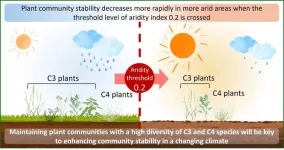
An international research team undertook a study of plants in the Mongolian grasslands to evaluate the stability of these plant communities over time. They specifically looked at how the dryness of the climate impacted the plant communities and determined that the stability of the plant communities decreased more rapidly in more arid areas. This research helps in the development of effective management strategies that promote stable ecosystems in a time of changing climate. The research is published in the journal Global Change Biology on June 12, 2024. Scientists know that climate change affects the way biodiversity influences the stability of plant ...

Read the release
New study finds human-caused nitrous oxide emissions grew 40 percent from 1980-2020, greatly accelerating climate change
Environment

New study finds human-caused nitrous oxide emissions grew 40 percent from 1980-2020, greatly accelerating climate change

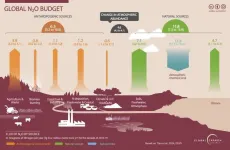
Chestnut Hill, Mass. (6/11/24) – Emissions of nitrous oxide – a greenhouse gas more potent than carbon dioxide or methane – continued unabated between 1980 and 2020, a year when more than 10-million metric tons were released into the atmosphere primarily through farming practices, according to a new report by the Global Carbon Project. Agricultural production accounted for 74 percent of human-driven nitrous oxide emissions in the 2010s – attributed primarily to the use of chemical fertilizers and ...

Read the release
Environment

Study reveals significant increasing nitrous-oxide emissions from human activities, jeopardizing climate goals

Emissions of nitrous-oxide (N2O) - a potent greenhouse gas - have continued to rise unabated over the past four decades, according to an international team of scientists. The new report 'Global nitrous oxide budget (1980–2020)' is published in the journal Earth System Science Data. It is the most comprehensive accounting to date of nitrous-oxide emissions from human activities and natural sources. It was led by researchers from Boston College in the US and involved an international team of scientists including researchers from the University of East Anglia (UEA), UK, under the umbrella of the Global Carbon Project. ...

Read the release
Environment

Specialist and migratory birds at greater risk under climate change

URBANA, Ill. -- Following decades of decline, even fewer birds will darken North American skies by the end of the century, according to a new analysis by scientists at the University of Illinois Urbana-Champaign. Their study is the first to examine the long-term effects of climate change on the abundance and diversity of bird groups across the continent as a whole while accounting for additional factors that put birds at risk, such as pesticides, pollution, land use change, and habitat loss. “Many studies try to attribute causes like climate ...

Read the release
Environment

Special issue on “Safety and intelligent maintenance of offshore structures” by China Ocean Engineering

The ocean, rich in mineral resources such as oil, natural gas, polymetallic nodules, cobalt-rich ferromanganese crusts, polymetallic sulfides, and rare earth ore, plays an increasingly important role in resource development and economic growth. It is also regarded as an essential strategic space for sustainable development with abundant wind, wave, tidal, and solar energy. Compared with onshore structures, however, offshore structures, being complex, bulky, and expensive, have to endure various random loads that change over time and space, including wind, waves, currents, tides, sea ice, and even coupled with ...

Read the release
FAU Harbor Branch launches ‘eConch’ to grow and conserve the queen conch
Environment

FAU Harbor Branch launches ‘eConch’ to grow and conserve the queen conch

The queen conch (Aliger gigas) is a prized delicacy long harvested for food and revered for its beautiful shell. With a lifespan between 25 to 40 years, the queen conch is second only to the spiny lobster fishery and is the most important molluscan fishery in the Caribbean region. Deeply rooted in the way of life in the Caribbean, many island communities depend on queen conch for their livelihoods. However, intensive fishing and habitat degradation from urbanization and climate change have caused conch populations ...

Read the release
Environment

New discovery reveals unexpected ocean algae help cool the Earth

Peer-reviewed – observational study - cells A common type of ocean algae plays a significant role in producing a massively abundant compound that helps cool the Earth’s climate, new research has discovered. The findings of the study by the University of East Anglia (UEA) and Ocean University of China (OUC) could change our understanding of how these tiny marine organisms impact our planet. The team identified the bloom-forming Pelagophyceae algae as potentially abundant and important producers ...

Read the release
May research news from the Ecological Society of America
Environment

May research news from the Ecological Society of America

The Ecological Society of America (ESA) presents a roundup of four research articles recently published across its six esteemed journals. Widely recognized for fostering innovation and advancing ecological knowledge, ESA’s journals consistently feature illuminating and impactful studies. This compilation of papers explores how wolf reintroduction affects other carnivores, how drought and grazing snails together drive salt marsh productivity, the key to an invasive fish’s success and the plight of backyard trees, ...

Read the release
Income inequality and carbon dioxide emissions have a complex relationship
Environment

Income inequality and carbon dioxide emissions have a complex relationship

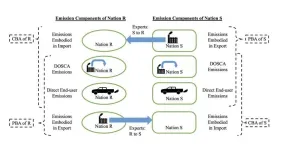
Income inequality and carbon dioxide emissions for high-income nations such as the United States, Denmark and Canada are intrinsically linked – but a new study from Drexel University has taken a deeper look at the connection and found this relationship is less fixed, can change over time, and differ across emission components. The findings could help countries set a course toward reducing emissions of the harmful greenhouse gas and alleviating domestic income inequality at the same time. The ...

Read the release
From the original Press-News collection. Issuers of news releases are responsible for the accuracy of their content.