THE ORIGINAL COLLECTION · SINCE 2010

Environment
press releases.

Research announcements from universities, hospitals and scientific institutions. Explore the stories, people and discoveries behind the headlines.

Original publication datesPage 97
FIND A STORY

Find a past release.

Dates and source material belong to the original release.

Read our research explainers

Browse the collection · original publication order

New study finds dinosaur fossils did not inspire the mythological griffin
Environment

New study finds dinosaur fossils did not inspire the mythological griffin

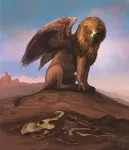
A popular and widely-promoted claim that dinosaur fossils inspired the legend of the griffin, the mythological creature with a raptorial bird head and wings on a lion body, has been challenged in a new study. The specific link between dinosaur fossils and griffin mythology was proposed over 30 years ago in a series of papers and books written by folklorist Adrienne Mayor. These started with the 1989 Cryptozoology paper entitled ‘Paleocryptozoology: a call for collaboration between classicists and cryptozoologists’, and was cemented in the seminal 2000 ...

Read the release
Environment

Iron meteorites hint that our infant solar system was more doughnut than dartboard

Key takeaways Iron meteorites are remnants of the metallic cores of the earliest asteroids in our solar system. Iron meteorites contain refractory metals, such as iridium and platinum, that formed near the sun but were transported to the outer solar system. New research shows that for this to have happened, the protoplanetary disk of our solar system had to have been doughnut-shaped because the refractory metals could not have crossed the large gaps in a target-shaped disk of concentric rings. The paper suggests that the refractory metals moved outward ...

Read the release
Environment

Old bombs reveal new insights: Plants store more carbon, but for a shorter time frame, than we thought

Analysis of radiocarbon produced during nuclear bomb testing in the 1960s suggests that current Earth system models underestimate carbon uptake into terrestrial vegetation and soils. But, say the study’s authors, this storage is more short-lived than previously thought. The findings suggest that anthropogenic carbon dioxide will not reside as long in the terrestrial biosphere as models currently predict. Accurate climate predictions, crucial for developing effective climate policies, require a robust representation of the global carbon cycle. It’s thought that vegetation and soils account for taking up approximately 30% of anthropogenic carbon dioxide (CO2) ...

Read the release
Hurricane changed ‘rules of the game’ in monkey society
Environment

Hurricane changed ‘rules of the game’ in monkey society

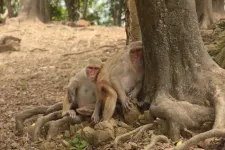
A devastating hurricane transformed a monkey society by changing the pros and cons of interacting with others, new research shows. Hurricane Maria hit Puerto Rico in 2017, killing more than 3,000 people. It also destroyed 63% of vegetation on Cayo Santiago (also known as Monkey Island), which is home to a population of rhesus macaques. Even now, tree cover remains far below pre-hurricane levels and – in this hot part of the world – that makes shade a scarce and precious resource for the macaques. The new study, led by the universities of Pennsylvania and Exeter and published in the journal Science, shows the storm ...

Read the release
New catalyst unveils the hidden power of water for green hydrogen generation
Environment

New catalyst unveils the hidden power of water for green hydrogen generation

Hydrogen is a promising chemical and energy vector to decarbonize our society. Unlike conventional fuels, hydrogen utilization as a fuel does not generate carbon dioxide in return. Unfortunately, today, most of the hydrogen that is produced in our society comes from methane, a fossil fuel. It does so in a process (methane reforming) that leads to substantial carbon dioxide emissions. Therefore, the production of green hydrogen requires scalable alternatives to this process. Water electrolysis offers a path to generate green hydrogen which can be ...

Read the release
First conclusive evidence that a terrestrial leech species can jump
Environment

First conclusive evidence that a terrestrial leech species can jump

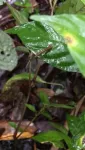
A new study presents video evidence that at least one species of terrestrial leech can jump, behavior that scientists have debated for more than a century. Researchers from the American Museum of Natural History, Fordham University, and City University of New York (CUNY)’s Medgar Evers College published the footage and corresponding analysis today in the journal Biotropica. “We believe this is the first convincing evidence that leeches can jump and do so with visible energy expenditure,” said lead author Mai Fahmy, a visiting scientist at the Museum and a postdoctoral researcher ...

Read the release
Changing climate will make home feel like somewhere else
Environment

Changing climate will make home feel like somewhere else

Changing climate will make home feel like somewhere else Interactive app shows how climate change will make places around the world feel like they are closer to the equator FROSTBURG, MD (June 20, 2024)—The impacts of climate change are being felt all over the world, but how will it impact how your hometown feels? An interactive web application from the University of Maryland Center for Environmental Science allows users to search 40,581 places and 5,323 metro areas around the globe to match the expected future climate in each city with the current climate of another location, ...

Read the release
When in drought: Researchers map which parts of the Amazon are most vulnerable to climate change
Environment

When in drought: Researchers map which parts of the Amazon are most vulnerable to climate change

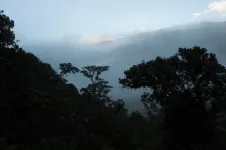
In the late 2000s, Scott Saleska noticed something strange going on in the Amazon rainforest. In 2005, a massive drought struck the region. Two years later, Saleska – a University of Arizona professor in the Department of Ecology and Evolutionary Biology – published surprising research that used satellite images to find that the drought resulted in more green growth in large swaths of the Amazon. On the other hand, field researchers saw plants brown and some die in response to the drought. Research published today in the journal Nature reveals what caused the scientific mismatch. Shuli Chen, a doctoral degree candidate in ecology and evolutionary ...

Read the release
New research illuminates the ecological importance of gray wolves in the American West
Environment

New research illuminates the ecological importance of gray wolves in the American West

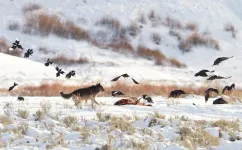
Corvallis, OR — A study published today in the journal BioScience sheds light on the importance of gray wolves in western United States. Led by William Ripple, a scientist at Oregon State University and the Conservation Biology Institute, the research delves into the implications of large predator absence on plant and animal communities, and ecosystem functions. It calls attention to “shifting baselines” wherein increasingly degraded conditions are viewed as reflecting the historical state of a system. "By the 1930s, wolves were largely absent from the American West, including its national parks. Most published ecological ...

Read the release
Environment

Forgotten predators: Ecological understanding is often marred by the exclusion of extirpated species

New research published in the journal BioScience describes how the removal large predators is often unrecognized in ecological scholarship, creating an issue of "shifting baselines," with profound implications for restoration efforts. A team led by researchers from Oregon State University, including co-lead authors William J. Ripple and Christopher Wolf, reviewed 96 published studies from 1955 to 2021 that were conducted in 11 national parks where gray wolves had been extirpated. Their analysis found that ...

Read the release
Environment

STUDY: Sourcing genomically diverse seedlings to create climate-change resilient forests brings optimism for partnerships between science and practice

The roots of the project formed during a CASRI conference in 2018 when experts from various organizations learned about red spruce genetic research being conducted by Keller’s lab and collaborators at University of Maryland with funding by the National Science Foundation. The group saw an opportunity to join forces to take an on-the-ground approach to utilizing the genetic data for red spruce restoration. In 2019, funding from the Wildlife Conservation Society’s Climate Adaptation Fund enabled this group to pursue science-informed restoration at scale. “Science-informed ...

Read the release
New findings: East Palestine train derailment caused chemical pollution falling to the earth surface across the US and beyond
Environment

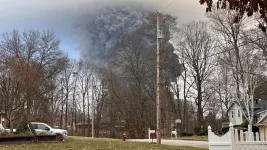
New findings: East Palestine train derailment caused chemical pollution falling to the earth surface across the US and beyond

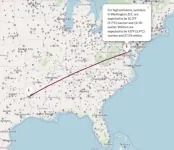
A new study published in the academic journal Environmental Research Letters, reveals that the environmental impact of the February 3, 2023, Norfolk Southern train accident in East Palestine, Ohio covered a very large geographical area. Inorganic pollutants released due to the accident were found in wet weather downfall (wet deposition) from the Midwest through the Northeast reaching as far as southern Canada and North Carolina. The findings are significant as many inorganic pollutants in rain and snow have chemical effects on - aquatic flora and fauna. According to the paper, these pollutants spread over at least portions of 16 states and an area of 1.4 million ...

Read the release
This new way to recycle steel could reduce the industry’s carbon footprint
Environment

This new way to recycle steel could reduce the industry’s carbon footprint

University of Toronto engineering researchers have designed a new way to recycle steel that has the potential to decarbonize a range of manufacturing industries and usher in a circular steel economy. The method is outlined in a new paper published in Resources, Conservation & Recycling and co-authored by Jaesuk (Jay) Paeng, William Judge and Professor Gisele Azimi. It introduces an innovative oxysulfide electrolyte for electrorefining, ...

Read the release
Environment

Non-native plants and animals expanding ranges 100 times faster than native species, finds new research led by UMass Amherst

June 18, 2024 Non-native Plants and Animals Expanding Ranges 100 Times Faster than Native Species, Finds New Research Led by UMass Amherst Native species cannot move fast enough on their own to avoid climate-driven chaos AMHERST, Mass. – An international team of scientists has recently found that non-native species are expanding their ranges many orders of magnitude faster than native ones, in large part due to inadvertent human help. Even seemingly sedentary non-native plants are moving at three times the speed ...

Read the release
For sustainable livestock farming bordering the Amazon Rainforest, look to the women
Environment

For sustainable livestock farming bordering the Amazon Rainforest, look to the women

When trees and livestock compete for land, the trees usually lose. It doesn’t have to be this way. But centrally designed plans to implement tree-livestock coexistence in deforested areas don’t always work on faraway farmland. The ineffectiveness can be due to trying to accomplish too much too quickly. Transforming hundreds of thousands of hectares of treeless or degraded pastures into sustainable landscapes for livestock, nature and people should be a gradual, low-disruption process. And it should start ...

Read the release
Wildfire resilience initiative launches with $3.7 million in seed funding from the Gordon and Betty Moore Foundation
Environment

Wildfire resilience initiative launches with $3.7 million in seed funding from the Gordon and Betty Moore Foundation

The Gordon and Betty Moore Foundation has awarded $3.7 million to kickstart the Western Fire & Forest Resilience Collaborative, led by Winslow Hansen, a forest ecologist at Cary Institute of Ecosystem Studies. Funds are enabling the formation of an interdisciplinary collaborative that will advance science-based management solutions to the growing wildfire crisis. In the Western US, climate change and a legacy of fire suppression have led to larger, more severe, and more frequent fires — with devastating consequences for people, natural resources, and the climate. By dramatically speeding ...

Read the release
Large wildfires create weather that favors more fire
Environment

Large wildfires create weather that favors more fire

A new UC Riverside study shows soot from large wildfires in California traps sunlight, making days warmer and drier than they ought to be. Many studies look at the effect of climate change on wildfires. However, this study sought to understand the reverse — whether large fires are also changing the climate. “I wanted to learn how the weather is affected by aerosols emitted by wildfires as they’re burning,” said lead study author and UCR doctoral candidate James Gomez. To find his answers, Gomez analyzed peak fire days and ...

Read the release
Recent Georgia Tech grad earns ACM Doctoral Dissertation Award for creating devices that look like stickers and can harvest energy from the environment
Environment

Recent Georgia Tech grad earns ACM Doctoral Dissertation Award for creating devices that look like stickers and can harvest energy from the environment

ACM, the Association for Computing Machinery, today announced that Nivedita Arora, of Northwestern University is the recipient of the ACM Doctoral Dissertation Award for her dissertation “Sustainable Interactive Wireless Stickers: From Materials to Devices to Applications,” which demonstrated wireless and batteryless sensor nodes using novel materials and radio backscatter. Arora’s research envisions creating sustainable computational materials that operate by harvesting energy from the environment and, at the end ...

Read the release
Environment

Spinning up hurricane communications

Forecasters can use images in social media to better communicate weather related hazards of hurricanes, according to a pair of new studies. Scientists at the U.S. National Science Foundation National Center for Atmospheric Research (NSF NCAR) analyzed 2017 Twitter (now X) data related to two hurricanes – Harvey and Irma. The researchers found that forecast information communicated in the early stages of storm development, when the threat posed by a hurricane is uncertain, sets the stage for how people react to subsequent ...

Read the release
Environment

Polarization and risk perception could play important roles in climate-policy outcomes

Times of crises often call for strong and rapid action, but in polarized societies, strong top-down policies can backfire. In a paper published on June 17, 2024, in Environmental Research Letters, SFI Applied Complexity Fellow Saverio Perri, SFI Science Board Fellow Simon Levin (Princeton University), and colleagues present a conceptual model of how these dynamics could play out in efforts to decarbonize our energy supply. The model illustrates the complex interplay between strong policies, people’s perception of risk, and the amount of polarization in a society. They show that in situations where the perception of risk is low — where the ...

Read the release
Ancient polar sea reptile fossil is oldest ever found in Southern Hemisphere
Environment

Ancient polar sea reptile fossil is oldest ever found in Southern Hemisphere

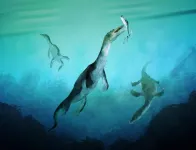
An international team of scientists has identified the oldest fossil of a sea-going reptile from the Southern Hemisphere – a nothosaur vertebra found on New Zealand’s South Island. 246 million years ago, at the beginning of the Age of Dinosaurs, New Zealand was located on the southern polar coast of a vast super-ocean called Panthalassa. Reptiles first invaded the seas after a catastrophic mass extinction that devastated marine ecosystems and paved the way for the dawn of the Age of Dinosaurs almost 252 million years ago. Evidence for this evolutionary milestone has only been discovered in a few places around the world: on the Arctic island of Spitsbergen, northwestern North ...

Read the release
Novel method for measuring nano/microplastic concentrations in soil using spectroscopy
Environment

Novel method for measuring nano/microplastic concentrations in soil using spectroscopy

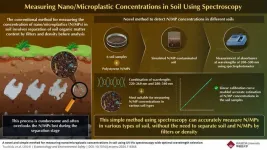
Nano and microplastics are a well-known menace, found practically everywhere in nature, including soil, oceans, drinking water, air, and even the human body. Studies show that soils in particular hold a significant portion of N/MPs. The problem with these N/MPs is their microscopic size, which allows them to easily migrate through soil into the ground or freshwater bodies due to rainwater leaching. From there, they enter the human body. Hence, it is imperative to understand the distribution and movement of the soil’s N/MPs to gauge their threat and mitigate it. Current ...

Read the release
Environment

Endangered sea cucumbers for sale in NYC food markets

ITHACA, N.Y. - After surveying food market retailers in three New York City Chinatown districts, Cornell University researchers have found genetic evidence that some endangered species of sea cucumbers – considered a pricey but nutritious dried delicacy – are being sold to consumers. The researchers collected 103 samples of dried sea cucumbers from retail food shops. By using mitochondrial DNA testing, they successfully identified 74 examples of sea cucumbers. Eight were classified as brown sea cucumbers– which are threatened and found on the International Union for the Conservation of Nature (IUCN) Red List due to overharvesting. “We ...

Read the release
New carbon nitride membrane revolutionizes lithium extraction from salt lakes
Environment

New carbon nitride membrane revolutionizes lithium extraction from salt lakes

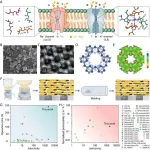
In a major breakthrough for lithium recovery technologies, researchers from the Qingdao Institute of Bioenergy and Bioprocess Technology (QIBEBT) of the Chinese Academy of Sciences, together with collaborators, have developed a crystalline carbon nitride membrane that could transform the lithium extraction industry. The innovative design, which mimics biological ion channels, shows remarkable efficiency and durability in separating lithium ions from magnesium ions in salt-lake brine. The study, published in Science Advances on June 14, introduces a ...

Read the release
Q&A: Finding varieties of corn that are adapted to future climates
Environment

Q&A: Finding varieties of corn that are adapted to future climates

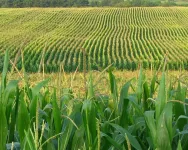
Corn is one of the planet’s most important crops. It not only provides sweet kernels to flavor many dishes, but it’s also used in oils, as a sweetener syrup, and as a feed crop for livestock. Corn has been bred to maximize its yield on farms around the world. But what will happen under climate change? Research led by the University of Washington combined climate projections with plant models to determine what combination of traits might be best adapted to future climates. The study used projections of weather and climate across ...

Read the release
From the original Press-News collection. Issuers of news releases are responsible for the accuracy of their content.